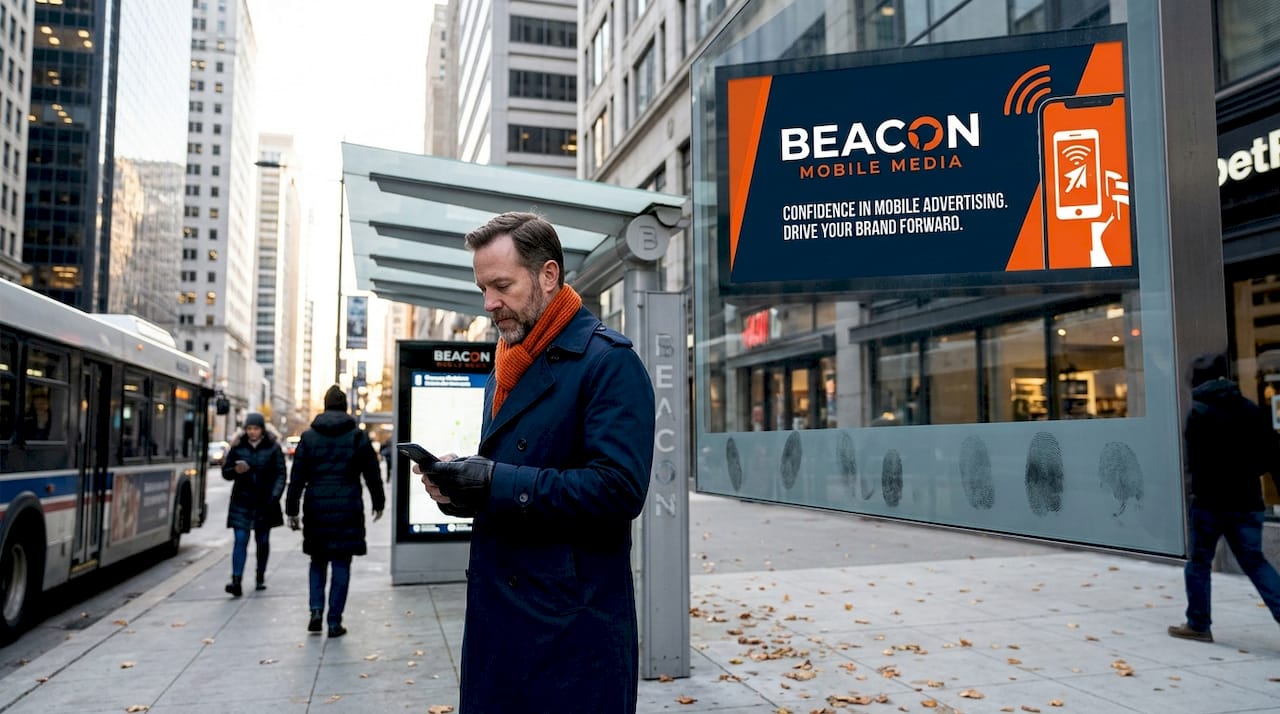
Most marketing managers assume localized advertising is simply a matter of dropping a pin on a map and serving ads to everyone within a five-mile radius. That assumption leaves serious performance on the table. True localized ad targeting draws on multiple overlapping location signals, behavioral data, contextual event triggers, and locally adapted creative to reach the right person at the right moment with a message that actually resonates. This article breaks down the methods, frameworks, and mindset shifts that separate high-performing localized campaigns from the ones that merely check a geographic box.
Table of Contents
- Defining localized ad targeting
- Location signals and targeting methods
- Local relevance: Adaptation versus uniform creative
- Practical frameworks for implementing localized ad targeting
- A new mindset for localized ad targeting
- Drive engagement with advanced localized ad solutions
- Frequently asked questions
Key Takeaways
| Point | Details |
|---|---|
| Precision matters | Choosing the right location signal increases campaign accuracy and engagement. |
| Local relevance drives ROI | Adapting creative and activation for local markets consistently improves results over uniform campaigns. |
| Frameworks enable scale | Structured steps for implementing localized targeting make campaigns easier to manage and optimize. |
| Combine tech and creativity | Successful campaigns balance advanced tools with local cultural insights for meaningful impact. |
Defining localized ad targeting
Having set up why basic geo-targeting is only part of the story, let’s clarify what localized ad targeting really encompasses.
At its core, localized ad targeting means serving ads based on a person’s physical location, often at very granular levels such as a specific neighborhood, retail corridor, or event venue. But the technical definition only scratches the surface. Localized ad targeting is usually implemented with geo-targeting using signals such as IP address, GPS, and platform location features, and then layered with behavioral, demographic, and contextual data to sharpen relevance.
Think of it this way: geo-targeting tells you where someone is. Localized ad targeting tells you who they are, what they’re doing nearby, and why they might respond to your message right now. That distinction drives meaningfully different outcomes.
Key components of localized ad targeting
Here are the primary building blocks that define a mature localized targeting strategy:
- Location signals: IP address, GPS coordinates, Wi-Fi triangulation, and Bluetooth beacons
- Platform-defined zones: City boundaries, ZIP codes, Designated Market Areas (DMAs), and custom radius targeting
- Behavioral signals: Past purchase data, app usage patterns, and search history tied to local intent
- Event-based triggers: Concerts, sports games, conferences, and pop-up retail activations
- Device type: Mobile-first behavior differs meaningfully from desktop, especially for location-dependent decisions
- Affinity categories: Interest segments that overlap with your target geography
The combination of these signals is what transforms a basic geo-fence into a precision targeting engine. Brands that use route planning for local ads alongside digital signals consistently see stronger engagement because they’re thinking about physical movement patterns, not just static location zones.
| Targeting layer | Signal type | Precision level | Best use case |
|---|---|---|---|
| IP address | Approximate | City/region | Broad awareness campaigns |
| GPS | High precision | Street level | Hyper-local offers |
| Platform zones | Defined boundary | ZIP/DMA/radius | Structured market coverage |
| Behavioral data | Inferred | Individual level | Retargeting and intent |
| Event triggers | Time-bound | Venue/block | Event-based activation |
One critical statistic worth noting: brands that prioritize local relevance at scale consistently outperform those running uniform national campaigns on engagement metrics. When ad content matches both location and context, click-through and foot-traffic lift increase significantly. Pairing physical placements with digital touchpoints like smart QR codes extends that relevance into a measurable data loop, capturing audience behavior directly at the point of exposure.
Location signals and targeting methods
Now that we know what localized targeting is, it’s essential to understand how different location signals and tools impact campaign precision and outcomes.
Not all location signals are created equal. Location signals can include IP address (approximate), GPS (more precise), and platform-defined areas such as city, ZIP, DMA, or radius boundaries. Each has trade-offs, and choosing the wrong one for a given campaign objective is one of the most common and costly mistakes we see.
IP address targeting is the most broadly used because it requires the least technical setup. It works well for regional brand awareness but tends to be imprecise at the neighborhood level. Someone browsing from a corporate Wi-Fi network might show an IP address registered in a different city entirely.
GPS targeting is the gold standard for hyper-local precision. It powers the real-time location data that enables campaigns at specific venues, street corners, or event perimeters. If you’re targeting conferences or trade shows with mobile billboard placements, GPS-level targeting for your digital retargeting layer ensures the follow-up ads reach the exact audience that saw your physical creative.

Platform-defined zones offer a middle ground. Most major advertising platforms allow you to draw custom radius boundaries, select ZIP codes, or target by DMA. These zones are useful for campaign planning because they’re easy to communicate to clients and straightforward to measure. The limitation is that they’re static, while audiences are mobile.
Steps to select the right signal for your campaign
- Define your precision requirement. Are you targeting a neighborhood, a venue, or an entire city? The answer determines your minimum signal quality.
- Check platform capabilities. Not every platform supports GPS-level targeting. Verify before building your strategy around a signal your platform can’t deliver.
- Layer behavioral data on top. A GPS zone without behavioral filters still captures a broad audience. Add purchase intent or category affinity to sharpen it.
- Test with smaller budgets. Run a one-week signal test in a single market before scaling. Compare engagement rates across IP, GPS, and platform zones.
- Measure location lift separately. Use attribution tools that track foot traffic or store visits, not just clicks, to evaluate which signal actually drove real-world behavior.
- Iterate based on physical movement. Audience movement patterns shift by day of week and time of day. Build in schedule-based adjustments to your targeting logic.
Pro Tip: Combine GPS-level mobile targeting with platform-defined zones to capture both precision and scale. A user who enters your GPS geo-fence on a Tuesday morning can be retargeted via a broader platform zone later that week, reinforcing your message without requiring them to re-enter the precise boundary. Explore how geo-targeted advertising platforms handle cross-device signal merging before finalizing your attribution model.
Comparison of location signal methods
| Signal | Precision | Setup complexity | Ideal for |
|---|---|---|---|
| IP address | Low (city level) | Very low | Regional awareness |
| GPS | High (street level) | Moderate | Event and venue targeting |
| Platform zones | Medium (ZIP/DMA) | Low | Structured market campaigns |
| Wi-Fi triangulation | Medium-high | Moderate | Indoor venue targeting |
| Behavioral overlay | Inferred | High | Intent-driven retargeting |

Local relevance: Adaptation versus uniform creative
We’ve discussed technical methods, so now let’s examine creative strategies that set apart high-performing localized ad campaigns.
Here’s a truth that many brand teams resist: technical targeting precision means almost nothing if the creative doesn’t feel local. You can place your ad within 300 meters of a target audience, serve it at exactly the right time of day, and still generate zero response because the message has no cultural or contextual resonance with that specific community.
Brands and agencies increasingly position “local relevance at scale” as a strategic shift, moving from centrally uniform creative to locally adapted executions and activation. That shift is not small. It requires rethinking production pipelines, approval workflows, and how you measure success at the market level.
“The brands winning at local aren’t the ones with the biggest national budgets. They’re the ones that figured out how to be meaningfully relevant in each market without losing their brand identity in the process.”
What locally adapted creative actually looks like
Adaptation is not just swapping a city name into a headline. Effective local creative considers:
- Cultural references: Local landmarks, events, sports teams, and community traditions that signal genuine familiarity
- Language and tone: Regional speech patterns and vocabulary that feel natural rather than corporate
- Offer relevance: Promotions tied to local events, seasonal behavior, or community-specific needs
- Visual context: Photography or imagery that reflects the actual environment where the ad will appear
- Community trust signals: Local partnerships, charity involvement, or neighborhood presence that build credibility
Benefits of local creative adaptation
- Higher engagement rates because the message feels personal and contextually relevant
- Stronger brand trust when audiences perceive a brand as understanding their community
- Better return on ad spend because relevant creative drives action, not just impressions
- Reduced ad fatigue since locally adapted creative feels fresh to each audience segment
- Richer data feedback because locally tuned campaigns generate more meaningful performance signals per market
The key insight from optimizing local ad campaigns is that local activation means using local data and technology to optimize, not simply replicating your national campaign at a smaller scale. The scale-first mindset treats local markets as smaller versions of the national audience. The local-first mindset treats each market as its own audience with distinct motivations.
Practical frameworks for implementing localized ad targeting
With a balanced creative and technical foundation, let’s turn to practical frameworks you can use to deploy effective localized targeting.
Knowing the theory is one thing. Executing it across multiple markets simultaneously is where most teams struggle. The gap between understanding localized targeting and implementing it at scale is almost always a process problem, not a technology problem.
Some brands succeed by keeping a coherent global brand while using hundreds of locally adapted executions, and by using local data and technology to activate and optimize locally rather than assuming scale equals performance. That structure requires a clear operational framework from the start.
Framework for designing and activating localized campaigns
- Audit your current location data. Identify what signals you’re already collecting (CRM addresses, app GPS data, store visit data) before investing in new technology.
- Segment markets by priority. Not every market needs the same level of localization. Rank markets by revenue opportunity, competitive pressure, and audience density.
- Define a creative modular system. Build brand-consistent templates that allow local teams or automated tools to swap in local elements without breaking visual identity.
- Set market-level KPIs. National benchmarks hide local underperformance. Each market should have its own engagement, conversion, and local lift targets.
- Integrate physical and digital touchpoints. Align out-of-home placements with digital retargeting windows so audiences receive reinforcing messages across channels. QR code data tools bridge the physical-to-digital gap by capturing real-time audience data at the point of exposure.
- Build a rapid iteration cycle. Plan 10- to 14-day review windows at the market level. Local campaigns need faster optimization loops than national ones.
- Document and share learnings across markets. What works in Austin may work in Nashville. Create an internal playbook that captures winning patterns and makes them reusable.
Key KPIs for localized campaigns
| Metric | What it measures | Why it matters for local |
|---|---|---|
| Local lift | Incremental behavior change | Shows true campaign impact in market |
| Engagement rate | Interaction with creative | Signals local creative relevance |
| Foot traffic attribution | Store or venue visits | Connects ad exposure to physical action |
| QR scan rate | Direct audience action | Measures real-time local response |
| Conversion rate by market | Purchase or lead generation | Reveals market-level ROI |
Pro Tip: Use real-time geographic performance data to adjust your geo-fence boundaries mid-campaign. If a specific boundary is pulling in low-intent audiences, tighten it around higher-performing zones. The ability to edit boundaries without pausing the campaign is one of the most underused features in location-based advertising platforms.
A new mindset for localized ad targeting
Here’s the uncomfortable reality we’ve observed across campaigns of all sizes: most brands dramatically underestimate both the complexity and the upside of localized targeting. They implement it as a bolt-on to an existing national strategy, allocating minimal creative resources to local adaptation while expecting local-level results.
The trap of “scale equals performance” runs deep in marketing culture. It’s the belief that a campaign performing well at national scale will perform proportionally well when zoomed into a local market. It rarely does. Local audiences have context, history, and community identity that national creative simply cannot address.
What’s counterintuitive is that advanced targeting technology actually makes this problem worse if you’re not careful. Precise GPS geo-fencing can place a nationally uniform ad directly in front of a hyper-local audience, which means that audience will notice even more quickly that the message wasn’t made for them. Technology amplifies relevance when creative is locally adapted. It amplifies irrelevance when creative is not.
The brands that win at local advertising are the ones that treat local campaign optimization as a strategic discipline, not a budget line item. They invest in market research at the local level, build creative systems that allow for meaningful adaptation, and use data not just to measure what happened but to shape what happens next.
The shift worth making is from asking “How do we run our national campaign locally?” to “What does this specific community need to hear from us, and how do we say it in a way that earns their attention?” That question changes everything: the creative brief, the targeting logic, the KPIs, and the way success gets reported.
Drive engagement with advanced localized ad solutions
Localized targeting works best when your physical and digital strategies reinforce each other across every touchpoint. Beacon Mobile Media’s platform is built exactly for that kind of integration, combining LED mobile billboards and wrapped rideshare vehicles with advanced digital targeting to reach audiences where they actually are.

Whether you’re refining targeted route planning for a multi-market campaign or adding smart QR codes to capture real-time audience data at street level, Beacon’s tools connect physical exposure to measurable digital outcomes. If you’re ready to move beyond pin-drop targeting and build localized campaigns that actually convert, explore the full Beacon solution overview to see what’s possible for your next campaign.
Frequently asked questions
How is geo-targeting different from localized ad targeting?
Geo-targeting focuses on location alone, while localized ad targeting adapts creative and activation for local relevance using location signals, behavioral context, and community-specific messaging.
What location signals are most effective for hyper-local campaigns?
GPS and platform-defined radius boundaries are most effective for precision, and location signals like GPS allow campaigns to focus on specific neighborhoods, event zones, or individual venues with street-level accuracy.
Should brands use uniform or adapted creative for local campaigns?
Brands should use locally adapted creative for higher engagement, since shifting from uniform creative to locally tailored executions consistently drives stronger community resonance while still maintaining overall brand consistency.
How do I measure the effectiveness of localized campaigns?
Track local lift, engagement rates by market, foot traffic attribution, QR scan rates, and conversion performance per market to get a complete picture of how well your campaign is resonating in each targeted area.