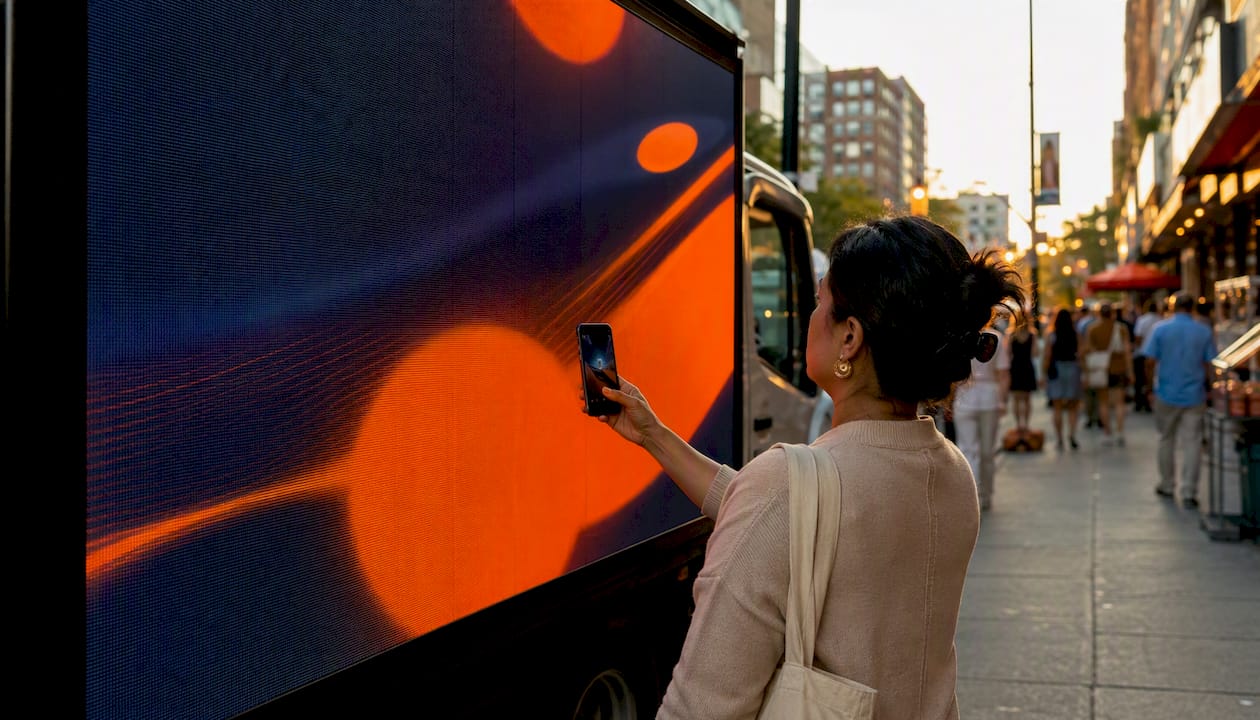
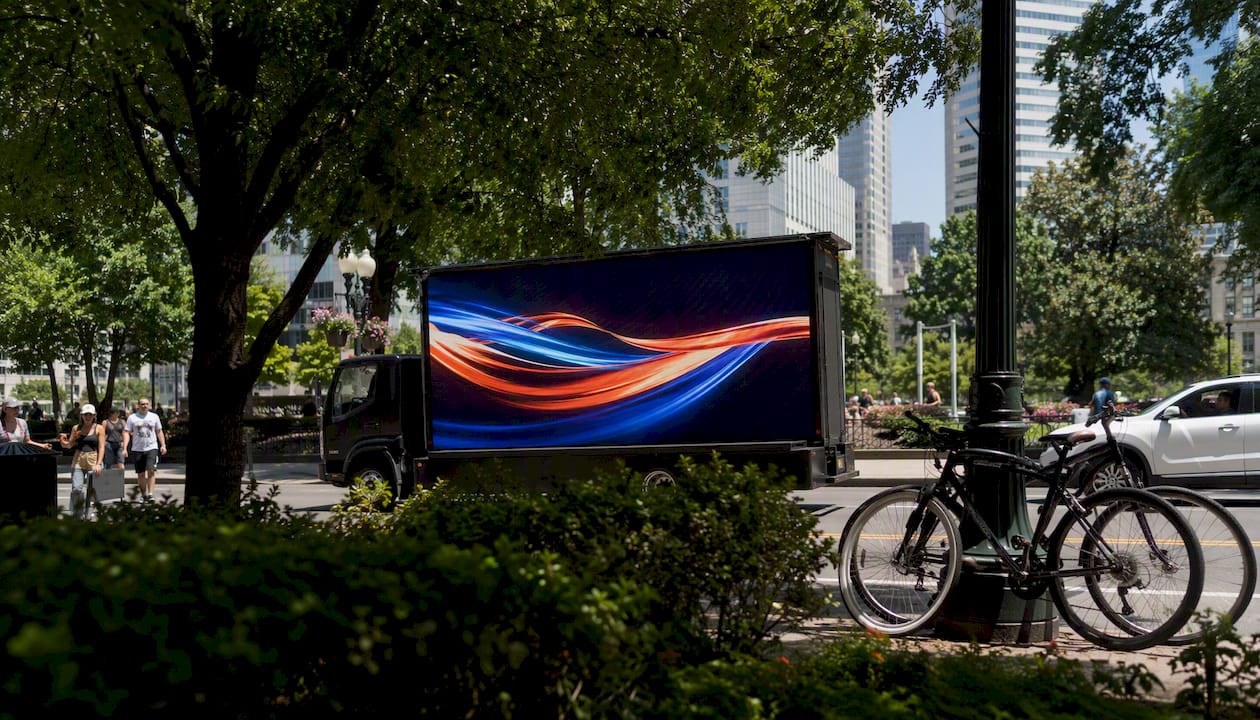
Out-of-home ad retargeting, formally called DOOH (digital out-of-home) retargeting, is the practice of re-engaging audiences who were exposed to a physical ad by following up with targeted digital ads across mobile, social, and programmatic channels. This out-of-home ad retargeting tutorial covers everything marketing professionals need to implement it: QR code tracking, geofencing audience builds, Google Ads Customer Match integration, and incrementality measurement. The core challenge is that physical ad exposure does not generate a click. You must create deterministic signals, like QR code scans or tracked landing page visits, to build retargetable audiences. Measurement focuses on engagement uplift rather than direct click attribution, which is a fundamental shift from standard display retargeting.

What tools and prerequisites does out-of-home ad retargeting require?
Effective DOOH retargeting starts with the right infrastructure before a single ad goes live. You need three things in place: a tracking mechanism on the physical ad, a mobile-optimized destination, and an audience-building platform connected to your digital ad accounts.
Tracking technologies compared
The table below covers the main methods for capturing audience signals from physical ad placements.
| Method | How It Works | Best For | Setup Complexity |
|---|---|---|---|
| QR Codes | Scan triggers tracked URL visit | High-dwell placements (transit, venues) | Low |
| Vanity URLs | Typed URL with UTM parameters | Billboards, print | Low |
| Geofencing | Location signal captured near ad | Broad audience building | Medium |
| Tracking Pixels | Fires on landing page load | Website retargeting pools | Low |
| Customer Match | First-party CRM data upload | Known customer re-engagement | Medium |
Each method serves a different audience capture scenario. QR codes and vanity URLs generate deterministic signals, meaning you know exactly who took action. Geofencing builds probabilistic audiences based on device proximity to your ad placement.
Platforms and audience building methods
Google Ads retargeting now centers on “Your data segments”, which includes Customer Match uploads and website visitor lists. Uploading first-party CRM data through Customer Match lets you target known contacts with personalized follow-up ads, going well beyond generic display retargeting. Platforms like OnSpot Data specialize in cookieless retargeting workflows that blend location signals, site visits, and CRM lists into unified audience segments. Captivate offers DOOH-specific retargeting tools built around post-exposure action tracking.

Before launch, confirm your landing pages load in under three seconds on mobile. A slow page kills scan-to-visit conversion before your retargeting pixel even fires.
How to set up QR code and url-based DOOH retargeting
QR code retargeting is the most reliable method for building deterministic audiences from physical ad placements. Building audiences from post-exposure actions like scans and tracked page visits yields far more reliable retargeting data than trying to map physical exposure to device IDs at scale.
Follow these steps to build a clean retargeting loop from your OOH placement:
- Create a unique QR code and vanity URL for each placement. A billboard in Chicago and a wrapped rideshare vehicle in Austin should have separate codes. Treat each placement as its own ad set with unique UTM parameters (utm_source, utm_medium, utm_campaign, utm_content) for proper attribution.
- Build a mobile-optimized landing page with a tracking pixel. The page should load fast, carry a Google Ads or Meta pixel, and fire a conversion event on key actions like form fills or video plays. This page is where your retargeting audience gets built.
- Set up your retargeting audience in Google Ads or your DSP. Point the audience rule at visitors from your specific UTM parameters. This isolates OOH-driven traffic from organic or paid search visitors.
- Monitor scan-to-action rates against benchmarks. A scan-to-action rate of roughly 12% is a healthy benchmark for QR-based DOOH campaigns. Rates below 1% signal a placement problem, a message mismatch, or a QR code that is too small to scan comfortably.
- Update dynamic QR redirects before creative rotations. In programmatic DOOH environments, creatives can rotate every few seconds. Dynamic QR redirects must update faster than the creative rotation cadence. Stale redirects send scanners to the wrong destination and corrupt your attribution data.
Pro Tip: Never reuse a QR code across multiple campaigns or placements. A recycled code collapses attribution across placements and makes it impossible to identify which location drove performance.
How does geofencing build retargeting audiences for OOH campaigns?
Geofencing captures device location signals from people who pass through a defined geographic zone near your ad placement. Those signals become the seed for a digital retargeting audience. This method works even when no one scans a QR code, making it a strong complement to direct-action tracking.
Key principles for geofencing audience builds in DOOH campaigns:
- Set a realistic lookback window. Location-based retargeting campaigns need 3–5 days to accumulate enough audience volume for meaningful activation. Website or CRM-based audiences can be ready in 24–48 hours, but geofencing requires patience.
- Define tight geographic boundaries. A geofence that is too large pulls in people who never saw your ad. Match the fence radius to the realistic viewshed of your placement, typically 50–150 meters for street-level placements.
- Segment by recency. People captured within 24 hours of ad exposure are higher-intent than those captured five days later. Segmenting by recency and funnel intent improves bid efficiency. Assign higher bids to the freshest segments.
- Avoid restricted location targeting. Health clinics, places of worship, and schools carry compliance restrictions under GDPR and many U.S. state privacy laws. Build exclusion zones around sensitive locations before your campaign goes live.
Pro Tip: Layer geofencing audiences on top of QR scan audiences in your ad platform. The overlap segment, people who both passed near your ad and scanned, represents your highest-intent retargeting pool. Bid aggressively on that group.
A practical workflow: a wrapped Uber vehicle runs a route through a downtown business district for five days. Beacon-ads captures device signals along the route via geofencing. Those devices enter a retargeting audience in Google Display Network. The brand then serves a follow-up offer ad to that audience over the next two weeks, reinforcing the message the commuter saw on the vehicle.
What are the best practices for launching and optimizing retargeting campaigns?
Campaign structure and measurement discipline separate effective out-of-home advertising strategies from wasted spend. Follow this sequence when launching across Google Ads or any programmatic platform.
- Segment your audiences by funnel stage before setting bids. Prioritizing audience tiers by recency and funnel step enables more efficient budget allocation. A person who scanned your QR code and visited a product page is not the same as someone who only passed near your billboard. Bid accordingly.
- Upload Customer Match lists for known contacts. Customer Match remains the strongest first-party retargeting method in Google Ads. If your OOH campaign drives form fills or event registrations, upload those contacts immediately for digital follow-up.
- Set frequency caps at 3–5 impressions per person per day. Frequency caps at this level prevent ad fatigue without sacrificing reach. Exceeding this threshold burns budget and trains audiences to ignore your ads.
- Run a geo holdout test to measure true lift. Divide your market into exposed and unexposed zones. Compare conversion rates between zones to verify that your retargeting is driving real behavior change, not just capturing people who would have converted anyway.
- Sequence creative messaging across channels. The digital retargeting ad should reference or extend the physical ad’s message. If your mobile billboard says “Find us downtown,” the follow-up display ad should say “You saw us. Here’s the offer.” Cross-channel message continuity lifts recall and conversion rates.
| Audience Tier | Signal | Recommended Bid Multiplier | Creative Approach |
|---|---|---|---|
| QR Scanners | Direct scan + page visit | +50% | Conversion offer |
| Geofence + Site Visit | Location + browse | +30% | Product detail |
| Geofence Only | Location proximity | Baseline | Brand awareness |
| Customer Match | CRM upload | +40% | Loyalty or upsell |
What are the most common challenges in DOOH retargeting campaigns?
Even well-planned campaigns hit operational friction. Knowing where things break down saves you weeks of troubleshooting.
- Identity mapping failures. You cannot reliably map a physical ad impression to a specific device ID at scale. Build deterministic audiences from post-exposure actions instead. Scans, form fills, and tracked page visits are your reliable identity bridges.
- Ad fatigue from uncapped frequency. Retargeting without frequency caps is one of the fastest ways to generate negative brand sentiment. Monitor impression-per-user data weekly and adjust caps if engagement rates drop.
- Dynamic QR code management complexity. Programmatic DOOH placements rotate creatives constantly. If your QR redirect management falls behind the rotation schedule, scanners land on stale pages. Assign one team member to own redirect hygiene throughout the campaign.
- Privacy compliance gaps. GDPR requires explicit, unbundled opt-in consent for behavioral advertising. Even if your campaign runs in the U.S., any European visitors to your landing pages trigger GDPR obligations. Use a consent management platform and honor opt-out requests immediately.
“The biggest mistake in DOOH retargeting is treating it like standard display retargeting. Physical ad exposure is not a click. You have to engineer the signal that makes retargeting possible.”
Practical troubleshooting: if your retargeting audience is not growing, check pixel firing first. Use Google Tag Assistant or Meta Pixel Helper to confirm the pixel fires on your landing page. If the pixel fires but the audience stays flat, check that your UTM parameters match exactly what the audience rule expects.
Key takeaways
Out-of-home ad retargeting works when you build deterministic audience signals from physical ad placements and connect them to structured digital follow-up campaigns with proper segmentation and frequency controls.
| Point | Details |
|---|---|
| Use deterministic signals | QR code scans and tracked page visits build more reliable audiences than probabilistic exposure mapping. |
| Allow 3–5 days for geofencing | Location-based audiences need time to reach actionable volume before digital activation. |
| Cap frequency at 3–5 per day | Exceeding this threshold causes ad fatigue and wastes retargeting budget. |
| Segment audiences by intent | Higher-intent tiers like QR scanners warrant higher bids and conversion-focused creative. |
| Measure lift, not just clicks | Geo holdout tests reveal true campaign impact beyond attributed ROAS. |
Why most marketers underestimate the setup work in DOOH retargeting
After working with brands on data-driven OOH campaigns, the pattern I see most often is this: marketers invest heavily in the physical placement and almost nothing in the tracking infrastructure. They put a QR code on a mobile billboard, send scanners to the homepage, and wonder why the retargeting audience never grows. The homepage has no UTM parameters. The pixel fires on every visitor, not just OOH-driven ones. The audience is polluted from day one.
The fix is not complicated, but it requires discipline before the campaign launches. Every placement needs its own tracked destination. Every destination needs a pixel with a clean audience rule. Every audience needs a segmentation strategy tied to funnel stage.
Privacy regulations are also reshaping how this works. GDPR and U.S. state laws like the California Consumer Privacy Act are pushing the industry toward cookieless, consent-based workflows. The brands that build clean first-party data capture now, through QR scans, form fills, and Customer Match uploads, will have a structural advantage as third-party data becomes less available. This is not a future problem. It is a present one.
My honest advice: start with one placement, one QR code, one tracked landing page, and one retargeting audience. Prove the loop works before scaling. The advanced targeting technology matters far less than the discipline of clean data capture at the source.
— Scott
How Beacon-ads makes DOOH retargeting easier to execute
Beacon-ads builds the tracking infrastructure into every campaign from the start. Their LED mobile billboards and wrapped rideshare vehicles across all 50 states come equipped with smart QR codes that capture scan data directly, feeding retargeting audiences without requiring brands to build custom tracking from scratch.

For brands running localized campaigns, Beacon-ads provides geofencing setup, route customization, and attribution analytics that connect physical ad exposure to digital follow-up performance. Their reporting includes proof-of-posting documentation and funnel metrics, so you know exactly where your retargeting audience came from. Explore Beacon-ads’ full range of OOH advertising formats and digital targeting strategies to see how their platform supports end-to-end retargeting campaign execution.
FAQ
What is DOOH retargeting and how does it work?
DOOH retargeting re-engages people exposed to a physical out-of-home ad by serving them follow-up digital ads based on signals like QR code scans, geofencing data, or tracked landing page visits. It bridges physical ad exposure with digital audience building.
How long does it take to build a geofencing audience?
Location-based retargeting audiences typically require 3–5 days to reach sufficient volume for digital activation. Website and CRM-based audiences can be ready in 24–48 hours.
What is a good scan-to-action rate for QR code OOH ads?
A scan-to-action rate of roughly 12% is a healthy benchmark. Rates below 1% indicate a placement issue, poor message alignment, or a QR code that is too small to scan.
How do i avoid ad fatigue in retargeting campaigns?
Set frequency caps at 3–5 impressions per person per day and rotate creative messaging regularly. Vary ad formats and offers across audience segments to maintain engagement.
Do DOOH retargeting campaigns require consent under privacy laws?
Yes. GDPR requires explicit opt-in consent for behavioral advertising, and U.S. state privacy laws impose similar obligations. Use a consent management platform and build opt-out mechanisms into your landing pages before launching.