For most Cincinnati campaigns, the highest-impact mix is large static bulletins on I-71 and I-75 for sustained reach, digital roadside displays for dayparted or seasonal messaging, and mobile LED trucks for event activations downtown or near Great American Ball Park. Start by requesting an inventory map with proof-of-posting samples from any vendor you consider, and verify permit requirements through the City of Cincinnati before signing.
- Awareness-first campaigns: A static bulletin on a major interstate corridor runs roughly $1,500–$5,000/month and delivers continuous impressions to commuters. Book 4–6 weeks ahead.
- Time-sensitive or event messaging: Digital billboards let you swap creative in hours and target specific dayparts. Budget $500–$3,000/month depending on location and traffic volume.
- Event or footfall targeting: Mobile LED trucks (like those operated by Beacon-ads) reach dense crowds at Reds games, Oktoberfest Zinzinnati, or UC move-in weekend with no fixed-location constraints. Campaigns can launch in days.
Pro Tip: Request proof-of-posting documentation, including GPS coordinates and date-stamped photos, from every vendor before you sign. The OAAA sets the industry standard for what that reporting should include, and any reputable operator will match it.
Key Takeaways
Cincinnati billboard advertising works best when format, location, and measurement are matched to a specific objective from the start.
| Point | Details |
|---|---|
| Match format to objective | Static bulletins for sustained awareness; digital for time-sensitive offers; mobile LED for event targeting. |
| Prioritize I-71, I-75, and downtown | These corridors and venues deliver the highest traffic counts and event-day concentration in Cincinnati. |
| Budget for production | Static vinyl adds 2–4 weeks of lead time and production costs on top of the media rate. |
| Require proof-of-posting | Ask for GPS coordinates, date-stamped photos, and route logs before any campaign ends. |
| Beacon-ads for mobile campaigns | Route-customized LED trucks with QR capture and attribution dashboards launch faster than fixed inventory. |
Table of Contents
- What types of billboard advertising are available in Cincinnati?
- Where should you place billboards in Cincinnati for maximum reach?
- How does Cincinnati billboard pricing typically work?
- How do you search inventory, contract, and book Cincinnati billboard space?
- Digital vs. static billboards in Cincinnati: which should you choose?
- How do you measure OOH results in Cincinnati?
- What actually works in Cincinnati OOH right now
- Beacon-ads brings mobile OOH to Cincinnati with built-in measurement
- Sources
What types of billboard advertising are available in Cincinnati?
Cincinnati’s out-of-home advertising market covers the full spectrum of formats. Here is what each one delivers and who it fits best.
- Bulletin (large-format static): The standard 14×48-foot vinyl board on interstates and major arterials. Best for brand awareness and sustained reach among commuters. Typical minimum booking: one month. Requires print production and installation, so plan for a 2–4 week lead time.
- Poster/junior poster: Smaller format (10×22 feet or less), often placed in neighborhood corridors and retail strips. Good for neighborhood-level targeting and local retail promotions. Monthly booking is standard.
- Digital bulletin/LED display: Same footprint as a bulletin but rotates multiple advertisers on a loop. Allows creative changes without reprinting. Minimum booking ranges from one day to one week depending on the vendor. Creative files must meet specific pixel and file-size specs, so confirm these before designing.
- Wallscapes: Large-format painted or printed murals on building exteriors, often in Over-the-Rhine or downtown. High dwell time, strong creative impact. Availability is limited and lead times are longer.
- Mobile LED trucks: Full-color LED screens mounted on trucks that drive custom routes through high-traffic areas. No fixed location means you can follow the crowd to events, stadiums, or university move-in days. Campaign-based pricing; can launch within days.
- Wrapped rideshare vehicles (Uber/Lyft): Vinyl-wrapped cars that carry your brand through neighborhoods, airports, and entertainment districts. Effective for sustained local brand exposure with a lower per-unit cost than a truck.
- Transit advertising: Metro Cincinnati’s advertising program offers bus wraps and interior transit ads, positioning transit as a high-visibility moving alternative that reaches downtown commuters and event audiences. Contact Metro’s advertising team directly for specs, pricing, and availability, as transit is a separate procurement channel with its own timelines.
Where should you place billboards in Cincinnati for maximum reach?
Location drives everything in outdoor advertising. The right corridor for a commuter-reach campaign is completely different from the right spot for an event activation.
Interstate corridors worth prioritizing
I-71 and I-75 are the two primary arteries feeding downtown Cincinnati from the north and east. Both carry heavy daily commuter and freight traffic, making them the go-to corridors for bulletins targeting regional brand awareness. The I-75/I-71 interchange near downtown is particularly valuable: the Brent Spence Bridge crossing just south of downtown funnels traffic between Ohio and Kentucky, and billboard placements on the approaches to that crossing reach drivers from both states. The I-275 loop is useful for reaching suburban audiences in communities like Blue Ash, Kenwood, and Anderson Township. One local publisher highlights a high-visibility digital display at the I-75/I-71 gateway crossing in Northern Kentucky near Cincinnati as an example of the reach those gateway placements deliver.
Neighborhoods and venues to target
- Downtown/The Banks: High foot traffic near Great American Ball Park and TQL Stadium. Digital and mobile formats work best here because audiences are concentrated and time-sensitive.
- Over-the-Rhine: Dense pedestrian traffic, strong millennial and Gen Z presence. Posters and wallscapes perform well; mobile trucks can loop through easily.
- Clifton/University of Cincinnati: Student-heavy audience. Posters and transit ads reach this demographic at lower cost than bulletins.
- Great American Ball Park and surrounding blocks: Game-day crowds create a captive, high-dwell audience. Mobile LED trucks are the most flexible option here since fixed inventory near the stadium is limited.
Scouting tip: Before committing to any fixed location, use Google Street View to confirm sightlines, approach angles, and obstructions at the exact coordinates. A board that looks great on a map can be partially blocked by a highway overpass or a tree line in practice.
Match your location to your audience: commuters on I-71/I-75 for broad regional awareness, downtown and The Banks for event-goers, Clifton for students, and suburban retail corridors on I-275 for household decision-makers.

How does Cincinnati billboard pricing typically work?
Rates vary by format, location, and traffic volume. The figures below are representative market estimates based on publicly available Cincinnati-area inventory data; actual quotes will differ by vendor and specific placement.
| Format | Typical Rate Range | Pricing Model | Notes |
|---|---|---|---|
| Static bulletin (interstate) | $1,500–$5,000/month | Monthly flat | Estimate; production/installation extra |
| Digital bulletin | $500–$3,000/month | Monthly or weekly | Estimate; creative rotation included |
| Poster/junior poster | $500–$3,000/month | Monthly flat | Estimate; neighborhood corridors |
| Mobile LED truck | $1,500–$5,000/campaign | Campaign/day-rate | Estimate; route and hours variable |
| Transit (bus wrap) | Contact Metro directly | Program-based | Pricing not publicly listed |

The primary cost drivers are location traffic counts, exclusivity (how many advertisers share a digital loop), creative production (printing and installation for vinyl), seasonality (Reds season, Oktoberfest, and UC move-in push demand and rates up), and campaign length. A four-week run on a high-traffic I-71 bulletin will cost more than the same board in a lower-volume suburban corridor, even if the face size is identical.
Pro Tip: Ask vendors about remnant inventory, which is unsold space available on short notice at a discount. This works especially well for digital boards, where a vendor can slot you in for a week or two at reduced rates to fill gaps in their schedule.
Pro Tip: To lower your effective cost per thousand impressions (CPM), compare traffic counts across multiple locations rather than just the monthly rate. A $3,000 board on I-75 with 80,000 daily impressions often beats a $1,500 board on a secondary road with 15,000.
How do you search inventory, contract, and book Cincinnati billboard space?
Step-by-step buying process
- Define your objective and format. Awareness campaigns lean toward static bulletins or digital boards on interstates. Event activations call for mobile or transit options. Nail this before you start scouting.
- Scout inventory. Use vendor inventory maps, self-serve platforms like Blip (which offers pay-as-you-go digital OOH with no long-term contract), or direct outreach to local operators. For transit, contact Metro Cincinnati’s advertising team separately.
- Confirm sightlines. Use Street View and, where possible, drive the route yourself before committing.
- Request a formal proposal. Ask for an itemized quote covering media cost, production, installation, and any electrical fees for digital units.
- Review contract terms. Check cancellation policy, makegood provisions (what happens if the board is dark or damaged), and reporting cadence.
- Submit creative and approve proof. For vinyl, allow 2–4 weeks for printing and installation. For digital, creative approval and upload typically takes 1–2 weeks. Mobile campaigns can often go live within days.
- Confirm proof-of-posting. Get GPS coordinates and date-stamped photos before your campaign ends.
Permits and installation
For fixed billboard placements, the operator typically handles permits and installation. However, if you are placing a temporary or non-standard structure, check with the City of Cincinnati for local zoning and permit requirements before assuming the vendor has it covered. Mobile trucks operating on public streets generally do not require advertiser-side permits, but confirm with your vendor.
Questions to ask every vendor
- Can you show me your inventory map with exact coordinates?
- What is your impression methodology and who audits it?
- What does your proof-of-posting include (photos, GPS, timestamps)?
- What is your reporting cadence during the campaign?
- What are your cancellation and makegood terms?
- Are there any fees beyond the media rate (production, installation, electrical)?
Red flags to watch for
- No proof-of-posting offered or vague about what it includes
- Impression estimates with no stated methodology
- Bundled-only contracts with no visibility into which specific locations you are buying
- No itemized fee breakdown
Digital vs. static billboards in Cincinnati: which should you choose?
| Dimension | Digital Billboard | Static Bulletin |
|---|---|---|
| Creative flexibility | Swap in hours; daypart by time or day | Fixed for the full booking period |
| Creative cost | No print cost; design file only | Print and installation required |
| Exclusivity | Shared rotation (typically 6–8 advertisers) | Exclusive share of voice |
| Minimum booking | 1 day to 1 week (varies by vendor) | Typically 1 month |
| Weather impact | Screen visibility can drop in direct sun | Vinyl unaffected by weather |
| Best for | Time-sensitive offers, A/B testing, events | Sustained brand dominance, single strong creative |
The practical rule: use digital when your message has a short shelf life or you need to react to something (a game result, a weather event, a sale deadline). Use static when you want one powerful image to own a location for a month or more without sharing the frame.
For Cincinnati specifically, digital boards near The Banks or downtown make sense for game-day messaging tied to Reds or FC Cincinnati schedules. Static bulletins on I-71 or I-75 are the better call for a law firm, hospital, or regional retailer building name recognition over a quarter. A university running student-recruitment ads near UC might split the difference: a static poster in Clifton for month-long presence, plus a short digital flight timed to application deadlines.
How do you measure OOH results in Cincinnati?
Measurement is where most local advertisers leave money on the table. Here is a practical playbook.
Four measurement layers to use
- Vendor impression estimates. Every operator provides these, but the methodology varies. Ask whether estimates come from traffic count data, third-party audits, or internal models. The OAAA publishes measurement best practices you can reference when evaluating what a vendor gives you.
- Proof-of-posting. Date-stamped photos and GPS coordinates confirming your creative is live. For mobile campaigns, require route logs showing where the truck traveled and when.
- Mobile movement-based attribution. Geofencing tools can identify devices that were exposed to a billboard location and later visited your store or website. This is increasingly standard for digital OOH buys.
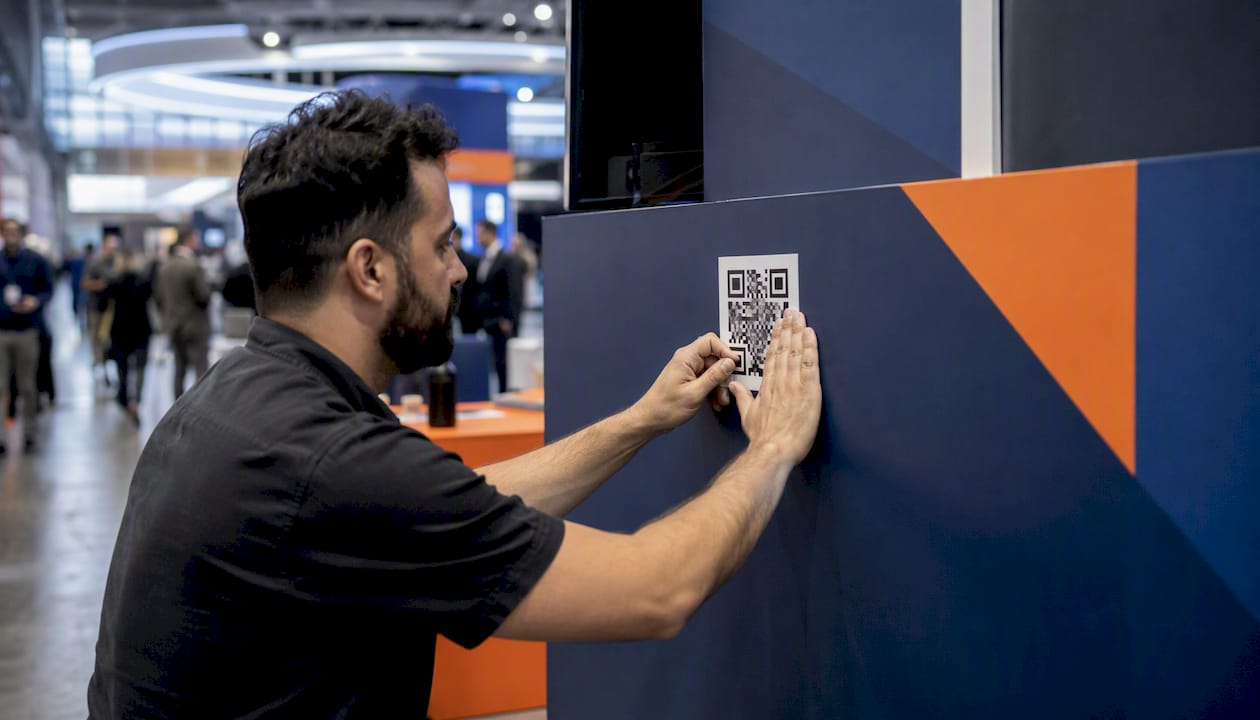
- Unique-response tactics. Smart QR codes, vanity URLs, and promo codes let you tie a direct action to your OOH placement. A QR code on a mobile LED truck at a Reds game can capture scans that feed directly into a retargeting list, giving you a measurable conversion path from a traditionally hard-to-track medium.
What to require from your vendor’s reporting package
- Impression methodology and data source
- Sample proof-of-posting (photo + GPS + timestamp)
- For mobile campaigns: route logs with timestamps
- Analytics dashboard access or regular reporting cadence
- Attribution data if geofencing or device-tracking is included
Illustrative scenario: A Cincinnati retailer runs a mobile LED truck at Oktoberfest Zinzinnati with a smart QR code linking to a landing page. Scans captured during the event feed into a digital retargeting campaign that serves ads to those same devices for the following two weeks. The result is a measurable funnel from physical exposure to online conversion, something a static board alone cannot deliver.
Pro Tip: Pair any QR-driven OOH campaign with a short digital ad flight targeting the same geographic area. Devices that see both the physical board and the digital ad convert at a higher rate than those exposed to either alone. Learn more about digital OOH retargeting strategies to build this into your next campaign.
Pro Tip: For campaigns running one week or less, require daily proof-of-posting. Short runs leave no time to catch a problem after the fact.
What actually works in Cincinnati OOH right now
The conventional wisdom in outdoor advertising is that location is everything. In Cincinnati, that is mostly true, but the format-to-objective match matters just as much. Advertisers who put a static bulletin near UC and expect student engagement often underperform, not because the board is bad, but because students in Clifton are on foot and moving fast. A transit ad or a mobile truck loop through campus covers more ground and stays in view longer.
Two playbooks I keep coming back to for Cincinnati campaigns:
Playbook A: Regional brand awareness. Lock in a static bulletin on I-71 northbound or I-75 southbound approaching downtown for a 4–8 week run. Layer a digital board on the same corridor for dayparted messaging (morning drive for B2B, evening drive for consumer). This combination delivers continuous presence plus the flexibility to react to news or promotions without reprinting vinyl.
Playbook B: Event activation. Deploy a mobile LED truck in the blocks around Great American Ball Park or the Duke Energy Convention Center on event days. Add a smart QR code to the creative and feed scans into a retargeting list. Run a follow-up digital campaign to that list for 7–14 days post-event. The total spend for a weekend activation can be comparable to a single month on a mid-tier static board, but the measurability is far higher.

On timing: Cincinnati’s event calendar is dense from April through October (Reds season, Oktoberfest, UC football). Book fixed inventory for those months at least 6 weeks out. Mobile campaigns have more flexibility, but the best routes and event slots still fill up, so 2–3 weeks of lead time is the floor.
Beacon-ads brings mobile OOH to Cincinnati with built-in measurement
Fixed billboard inventory in Cincinnati is finite, and the best locations book fast. Beacon-ads offers a different route: mobile LED billboard trucks and wrapped rideshare vehicles that go where your audience actually is, with no long-term lease and no waiting for a prime location to open up.

For Cincinnati advertisers, Beacon-ads’s platform covers route customization (you choose the corridors and event zones), smart QR codes for real-time lead capture, GPS-verified proof-of-posting with date-stamped photos, and attribution dashboards that show exactly what happened after someone saw your truck. That combination is particularly strong for event activations, downtown footfall campaigns, and any situation where a fixed board either does not exist or cannot be booked in time. Campaigns can launch in days, not weeks. To see what a Cincinnati route plan looks like and request a proof-of-posting sample, contact Beacon-ads for a local campaign quote.
Sources
Use these resources when researching permits, transit inventory, measurement standards, and location scouting.