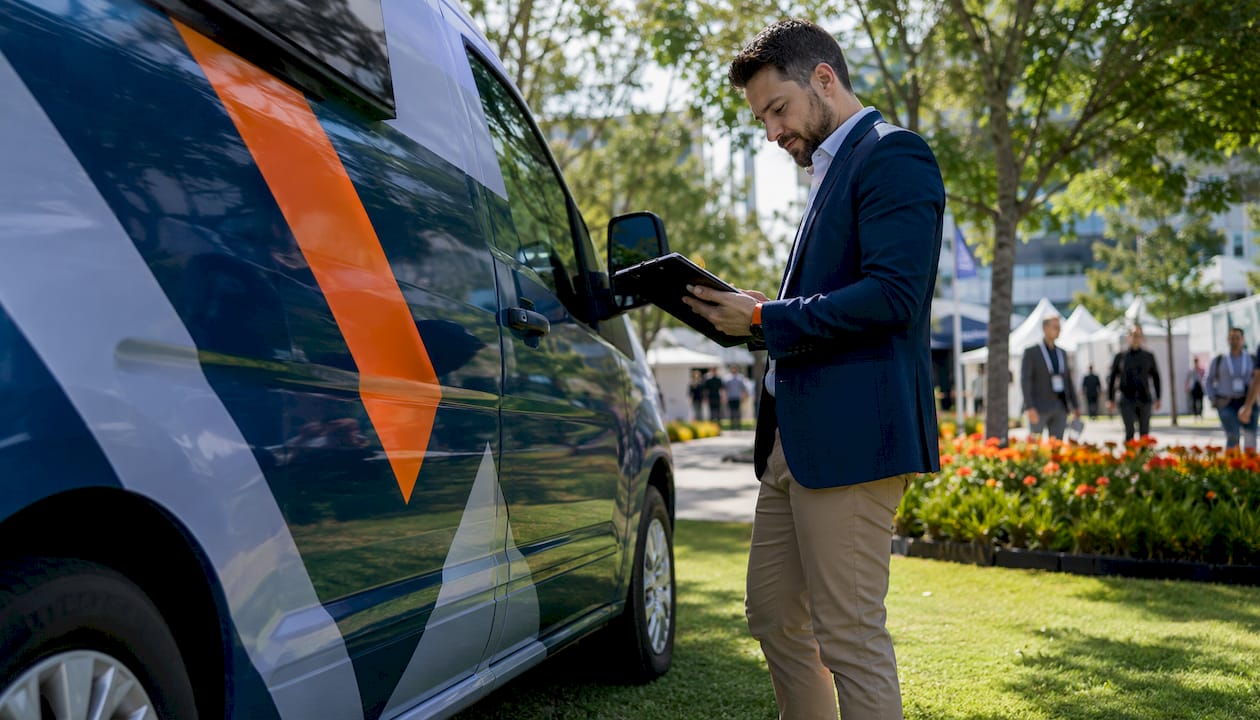
The activations that move fastest are LED trucks, event pop-up trucks, wrapped rideshare vehicles, and mobile pop-up shops. Each works because it puts a brand physically in front of people, but the ones that prove results pair a route with a digital layer: geofencing, a QR code, or a pixel tag that turns a glance into a tracked visit or sale. Pick one or two of these, lock a corridor, and define what you’re measuring before the wrap goes on the truck.
TL;DR:
- Mobile billboard campaigns perform best when paired with digital tracking methods like geofencing, QR codes, or pixel tags to measure actual visits and sales.
- Dynamic LED trucks and wrapped rideshare vehicles are among the most effective formats, especially when routes are concentrated in high-traffic corridors and repeated multiple times.
- Permits, route planning, and budget allocation should prioritize high-demand markets, with a focus on proof-of-posting and attribution metrics such as GPS logs and conversion data.
- Case studies from Ulta Beauty and McDonald’s demonstrate the importance of layering digital tools with physical media to track message impact and store visits.
- Campaigns should run at least two weeks in a single, dense corridor for measurable brand lift and purchase intent, rather than scattering trucks across a metro area.
Table of Contents
- Mobile Billboard Activation Ideas Worth Testing First
- Design Rules for Audiences Who Only Get Three Seconds
- Planning Your Route, Permits, and Budget
- How to Prove a Mobile Billboard Actually Worked
- What the Case Studies and Vendor Reports Show
- When a Mobile Billboard Is the Right Call
- Ready to Put a Truck on the Road?
- Sources
- FAQ
Mobile Billboard Activation Ideas Worth Testing First
Not every idea below deserves equal budget. Some are built for a single event weekend; others work as always-on media. Here’s the priority order, with the execution detail and measurement hook attached to each.
- LED mobile trucks with dynamic, time-of-day creative. Swap creative by daypart, weather, or live data feed (a score, a countdown, a stock ticker) so commuters see something different on the drive home than the drive in. Attach a unique shortlink or QR code plus a geofence around the route so every scan and every store visit ties back to that specific loop. Our LED ad truck guide covers the specs behind this format in more depth.
- Event-branded trucks parked at entry and exit points. Festivals, stadiums, and convention centers create captive foot traffic twice a day. Park at the gate people funnel through, not the lot they park in, and measure with a check-in QR plus a foot-traffic lift comparison against a control day.
- Mobile pop-up shops and sampling trucks. Let people step inside for a product trial rather than just seeing an ad. Sign-ups and QR scans from inside the truck give you first-party data you can’t get from a static billboard.
- Wrapped rideshare cars circling a conference district. Concentrate the fleet during arrival and departure windows around the convention center and host hotels. Promo code redemptions tied to each ride tell you which hours actually converted, and our conference targeting guide walks through route sequencing for this exact use case.
- Delivery-fleet or courier van wraps on fixed routes. Match the wrap’s message to the density of existing customers along that route, then track localized order upticks in the zip codes the van actually serves.
- Experiential trailers with VR demos or 3D builds. These create a destination, not just an impression. Bring a photographer, prompt visitors toward a specific hashtag, and track scans plus tagged posts as your engagement metric.
- Guerrilla projection onto buildings along the truck’s route. Secure written permission before you project anything on private property. Success shows up as a spike in social shares and direct site traffic the night of the projection.
- Sequential-route storytelling across a corridor. Split a message into chapters, one per truck or one per pass, so a commuter sees the story build over several exposures instead of one static line. Track frequency and pair it with a short recall survey.
- Nighttime LED light shows for photo-driven moments. Lock down permits for after-dark parking, since noise and lighting rules vary by city block. The payoff is earned media and social shares that outlast the actual parking time.
- Scavenger hunts with geo-QR check-ins along a route. Send participants chasing the truck through several stops with small prizes at each scan. Participation rate and captured leads become your two headline numbers.
Most of these lean on experiential formats layered with QR codes and social prompts, a combination that consistently pushes engagement and earned media beyond what a static ad delivers on its own.
Design Rules for Audiences Who Only Get Three Seconds
A moving billboard gets read in a glance, not a stare. That constraint should drive every design decision.
- Cut copy to one idea, five to seven words, no subheadline competing for attention.
- Use oversized type and high-contrast color pairs, since a designer’s thumbnail test is the same test a driver runs at 40 miles per hour.
- If the creative includes motion or video, build it around one dominant still frame, because that’s the only frame most people actually register.
- Save dayparting and live triggers for moments they genuinely add value; a clever data feed nobody notices is wasted production budget.
- Stage a photo moment on purpose: an oversized prop, a clear hashtag, a QR code placed where someone standing still can actually scan it.
Pro Tip: Shrink your creative file down to phone-thumbnail size before it ever goes to print. If the message falls apart at that size, it will fall apart on a truck moving past a crosswalk.
Planning Your Route, Permits, and Budget
Treat route planning as frequency planning. A truck circling one dense corridor ten times beats ten trucks each making one pass across town, because repetition inside a tight geography builds the recall that a single exposure never will.
- Book high-demand markets and marquee events 3 to 6 months out; permits and parking slots disappear first in cities with tight event calendars.
- Confirm local parking rules, event permits, and any noise or nighttime restrictions before locking a route.
- Budget around four levers: LED versus static units, creative production, staffing for experiential elements, and permit fees.
- Brief vendors with final creative files, named target corridors, clear KPIs, and a requirement for proof-of-posting documentation before the flight starts.
How to Prove a Mobile Billboard Actually Worked
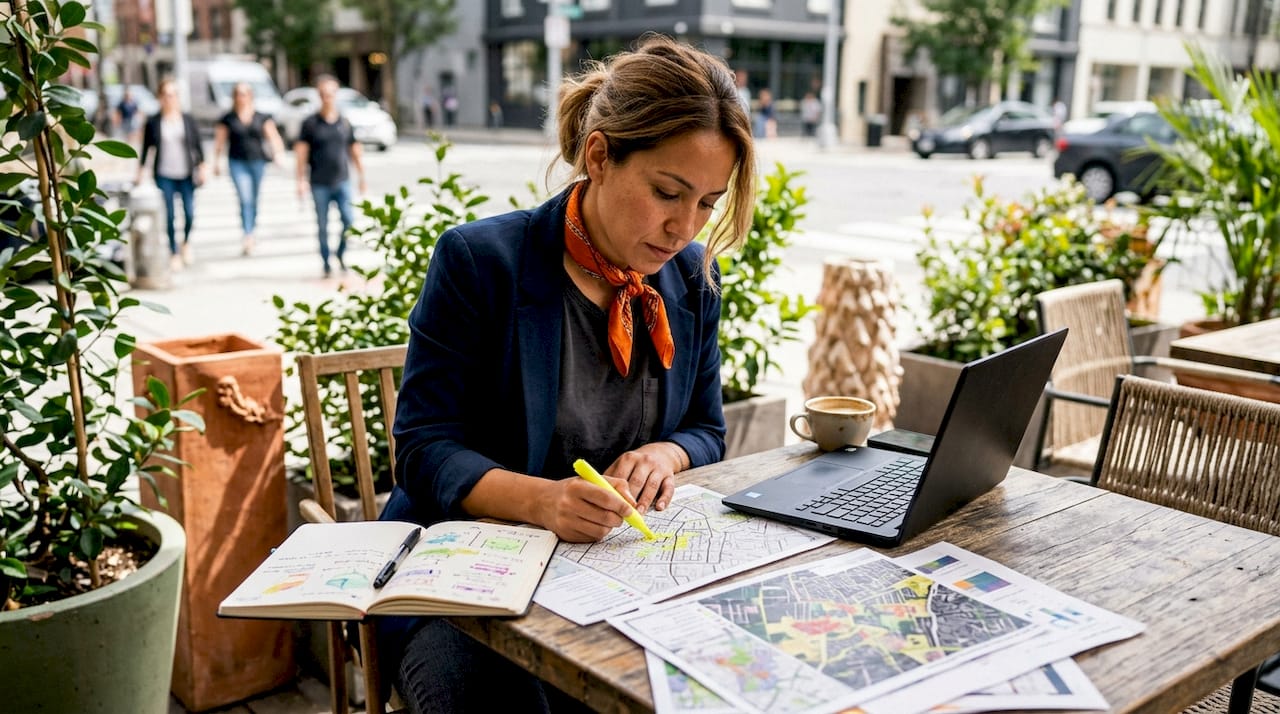
Shadowfencing pairs a GPS-traced truck route with a digital geofence, so every device that enters that zone can be pixel-tagged and followed into a click, a navigation, or a purchase. That’s what turns a truck driving down Main Street into a line item you can report on: impressions, click-through rate, navigations, and conversions, all traceable to the same route. Our geofencing campaign guide breaks down the setup in more detail, and general KPI tracking practices apply just as well once traffic lands on your site.
Proof-of-posting, meaning GPS route logs and time-stamped photos, should be a non-negotiable line in any contract. Without it, there’s no way to confirm the truck ran the route it was paid to run.
- Run a short A/B flight: same creative, two different corridors, compared against a pre-campaign baseline.
- Assign a unique promo code or QR link per route so results don’t blend together.
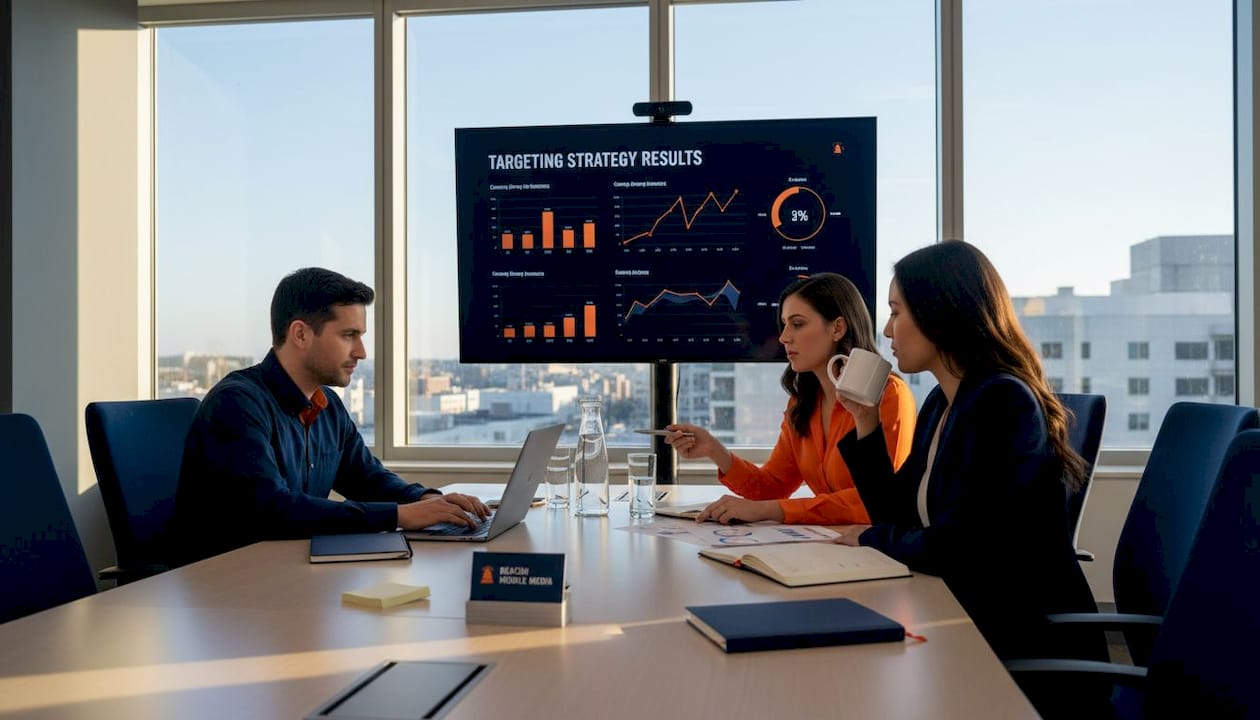
- Report five numbers every time: impressions, click-through rate, navigations, visit lift, and conversions.
McDonald’s tied geofenced billboards to Waze and generated a measurable spike in in-app navigations during the flight, proof that a driving audience will act on a prompt when the geofence and the app experience are synced.
What the Case Studies and Vendor Reports Show
Ulta Beauty’s mobile campaign, tracked with geofencing and pixel tagging, showed a measurable lift in store visits against a control group. McDonald’s OOH flight paired with Waze generated millions of mobile impressions and a tracked rise in navigations and store visits. A separate analysis of mobile OOH attribution found the San Jose Earthquakes’ campaign produced pixel-confirmed ticket-sales lift once a digital layer was added to the physical media.
Physical scale gets attention. A digital layer is what turns that attention into a number a marketing director can defend in a budget meeting.
Mobile billboard vendors offer LED trucks and wrapped rideshare vehicles, often layered with geofencing, QR capture, proof-of-posting documentation, and attribution reporting. Before signing with any vendor, request:
- GPS route logs for the full flight
- Time-stamped photo proof of every posting
- Pixel passback or device-match data
- A visit-lift number benchmarked against a control period
When a Mobile Billboard Is the Right Call
Mobile billboards earn their budget fastest around product launches, event amplification, and drive-to-store pushes, not as a lone test unit parked outside one office. Concentrate the flight in one corridor instead of scattering single trucks across a metro, and treat OOH as a growing share of the media mix rather than an isolated experiment, since OAAA’s benchmarking ties higher OOH share to stronger brand lift and purchase intent. Skip it if you can’t commit to at least a two-week concentrated run.
— Scott
Ready to Put a Truck on the Road?
Some providers run LED mobile billboards and wrapped rideshare cars nationwide, with routes often including geofencing, QR lead capture, proof-of-posting documentation, and attribution reporting. Instead of guessing whether a corridor worked, you get GPS logs, time-stamped photos, and conversion numbers tied to the exact route your truck drove.

If you’re planning a product launch, a conference push, or an event activation, the next move is simple: request a custom media plan scoped to your corridor and KPIs. Start on the Beacon-ads homepage or explore rideshare advertising examples to see what a wrapped fleet run looks like before you commit budget.
Sources
- Ulta Beauty case study (OAAA)
- Physical scale. Digital proof. How mobile OOH is finally closing the full-funnel loop (OOH Today)
FAQ
Are Mobile Billboards Profitable?
They can be, especially when paired with digital tracking that proves the visits and conversions they generate. Case studies from Ulta Beauty show measurable store-visit lift against a control group once geofencing and pixel tracking were added to the mobile flight.
Can You Give Me Some Examples of Mobile Ads?
LED trucks with dynamic creative, wrapped rideshare cars circling a conference district, and mobile pop-up shops with in-truck product sampling are three of the most common formats. Delivery-van wraps and experiential trailers with photo-driven builds round out the list of formats marketers use most.
What Are the Four States That Banned Billboards?
Maine, Vermont, Hawaii, and Alaska restrict or ban most billboard advertising statewide, largely for scenic-preservation reasons. Mobile billboards operate under different local rules than fixed billboards, so check municipal parking and advertising ordinances in the specific city you plan to run in.
Can You Give Me Some Examples of Billboard Ads?
McDonald’s paired geofenced OOH with Waze to drive navigations and in-store visits during a tracked flight. Beacon-ads runs comparable setups using LED mobile billboards and wrapped rideshare vehicles, each paired with QR capture and attribution reporting so results are trackable after the flight ends.