Weather changes who see your outdoor ads, how long they see them, and how likely they are to act, so treat it as a contextual optimization layer rather than background noise. A temperature swing can shift foot traffic toward or away from a location, and the start of rain can spike relevance for the right message at the right moment. The mechanisms and evidence for both follow below.
TL;DR:
- Weather impacts foot traffic patterns, outdoor dwell time, and audience composition, requiring targeted adjustments for outdoor ad placements.
- Dynamic creative that responds in real-time to triggers like temperature and rain significantly improves campaign relevance and consumer engagement.
- Accurate, real-time weather data feeds and measurement with control groups are essential for assessing the true impact of weather-triggered campaigns.
- Severe weather risks can disrupt digital and static placements, so contingency plans and climate-resilient strategies are necessary for maintaining uptime.
- Pilot campaigns using localized weather triggers near points of purchase can validate effectiveness before scaling investment.
Table of Contents
- How weather changes audience behavior for OOH
- Tactics advertisers use to put weather data to work in DOOH
- Getting the data pipeline and measurement right
- Protecting uptime when weather turns severe
- What measured lifts from weather-triggered campaigns actually show
- How Beacon Mobile Media operationalizes weather-aware campaigns
- Run a weather-aware mobile OOH pilot
- When weather targeting is worth the investment
- Sources
- FAQ
How weather changes audience behavior for OOH
Weather affects three things that matter for out-of-home advertising: where people go, how long they linger, and who is actually outside to see your ad. Rain pushes pedestrians toward covered routes and transit, which can drain foot traffic from open-air placements while boosting exposure near transit shelters and parking structures. Heat waves and cold snaps do something similar, rerouting people toward air-conditioned or heated indoor paths and away from exposed walking corridors.
Dwell time follows a similar logic. Pleasant, mild weather tends to keep people outdoors longer, near sidewalk displays, patios, and street-level screens, while heavy precipitation shortens outdoor exposure windows and shifts attention toward getting out of the weather quickly.
Audience composition shifts too. Who is outdoors in a downpour is not the same population as who is outdoors on a sunny Saturday, and that difference matters for anyone doing affinity or demographic targeting.
Weather also colors mood, and mood colors how an ad lands. A conceptual synthesis of weather effects on OOH notes that weather patterns directly affect movement, dwell time, audience composition, and consumer mindset together, not in isolation.
Practical takeaways for planning:
- Expect foot traffic near open-air placements to drop in sustained rain or extreme heat.
- Expect longer dwell times near displays in mild, comfortable conditions.
- Expect the population outdoors during severe weather to skew toward commuters and essential errands rather than leisure browsers.
Tactics advertisers use to put weather data to work in DOOH
Weather-aware OOH works best when it is built around clear triggers, not vague seasonal themes. Common triggers include temperature bands (below 40°F, above 85°F), the onset of precipitation, humidity spikes, and even pollen counts for allergy-related categories. The trigger only matters if it maps to a real behavior change, like hot coffee demand rising at the first cold snap or umbrella and rideshare demand rising the moment rain starts.
Dynamic creative is the operational core of this approach. Instead of running one static ad all month, campaigns swap visuals, headlines, and calls to action based on live conditions: a beverage brand might show an iced drink above 80°F and a hot drink below 50°F. Programmatic DOOH platforms handle this through rule sets and frequency logic, activating specific creative variants only when a weather API confirms the trigger condition, then pausing or falling back to always-on creative when conditions normalize.
A basic implementation sequence looks like this:
- Define the weather condition and threshold tied to a specific consumer behavior.
- Select creative variants and CTAs that match each condition.
- Connect a real-time weather feed to the programmatic buying platform through an API or webhook.
- Set frequency and fallback rules so screens do not sit dark when no trigger is active.
- Align the message with the audience’s actual path to purchase, not just the weather headline.
That last step is where campaigns often go wrong. Weather should inform and inspire creative strategy rather than dictate it. Guidance from The Weather Company’s Randi Stipes stresses using hyper-local, real-time triggers that align with the consumer’s immediate path to purchase, rather than forcing a rigid weather-to-creative rule that ignores context.
Pro Tip: Tie every weather trigger to a specific, nearby point of purchase, a store, a rideshare pickup zone, a drive-through, so the ad’s timing and its call to action point to the same moment.
For teams building out audience logic alongside weather triggers, a DOOH targeting playbook covers how to layer location and demographic filters on top of environmental signals.
Getting the data pipeline and measurement right
Weather-aware DOOH depends on the quality of the data feeding it. Ground station data is accurate but sparse, radar covers wider areas but trades some precision, and satellite data fills gaps in coverage at the cost of resolution. Forecast data lets you plan creative in advance, while nowcast data (conditions in the last few minutes) drives the tightest real-time triggers. Most working campaigns blend a forecast layer for planning with a nowcast layer for activation.
Integration typically runs through an API or webhook that pushes live conditions into a dynamic creative optimization (DCO) engine, which then swaps the active creative on qualifying screens. Retargeting extensions can pass device IDs to digital channels so someone who walked past a weather-triggered billboard sees a matching message later online.
Measurement is where campaigns earn credibility. The strongest approach compares a control group not exposed to the weather-triggered creative against an exposed group that was, then attributes any visit-lift difference to the trigger itself rather than to the weather alone. Weather-adjusted baselines matter here: a campaign that looks flat in raw numbers might actually be outperforming what the season would predict on its own.
- Use control versus exposed groups to isolate the effect of the trigger.
- Adjust KPI baselines for seasonal weather patterns before comparing periods.
- Build in error handling for false triggers, since a bad data feed can activate the wrong creative at the wrong time.
Industry guidance from the OAAA’s Digital Moving OOH Exposure Guidelines recommends recording both time and GPS coordinates for moving screens, since weather can cause schedule deviations that distort exposure counts if location data is missing.
Protecting uptime when weather turns severe
Weather is not only a targeting opportunity, it is also an operational risk. Wind can damage static structures and rideshare wraps, sun exposure fades vinyl and printed creative over time, and digital screens can overheat or lose power during storms.

Digital screens carry their own visibility issues: direct sun creates glare that washes out content, and brightness needs to adjust automatically for legibility, while outdoor units need reliable waterproofing to survive sustained rain.
Contingency planning closes the gap between exposure and disruption. Options include:
- Keep backup placements or route alternatives ready for routes prone to closures.
- Consider indoor or covered hybrid placements for categories especially sensitive to weather downtime.
- Review contracts and insurance coverage for weather-related delays or damage before signing.
- Set a clear decision rule for pausing a placement versus simply adapting the creative during a severe weather event.
Extreme weather trends are pushing more advertisers toward climate-resilient planning, building resilience into both placement choice and technology from the start rather than reacting after a disruption.
What measured lifts from weather-triggered campaigns actually show
Reported outcomes from weather-triggered DOOH campaigns are genuinely strong, within limits worth understanding. A Vistar case study on weather-triggered retail apparel DOOH found consumers exposed to weather-triggered creative were notably more likely to visit a store than those who saw always-on creative, a meaningful signal for categories tied to weather-driven need.
- Store-visit lift is the most commonly reported metric, comparing exposed audiences against a control group.
- Awareness and consideration gains often accompany visit lift in the same studies.
- Combining location-based audiences with weather triggers, rather than using either alone, tends to produce the largest multiplier.
Reported numbers vary by market, sample size, and how tightly the campaign matched trigger to behavior, so treat any single case study as directional rather than a guaranteed outcome. Programmatic industry reporting on weather-triggered DOOH points to strong recall and relevance gains when messaging tightly matches an immediate weather-based need, and weaker results when the match is loose.
How Beacon Mobile Media operationalizes weather-aware campaigns
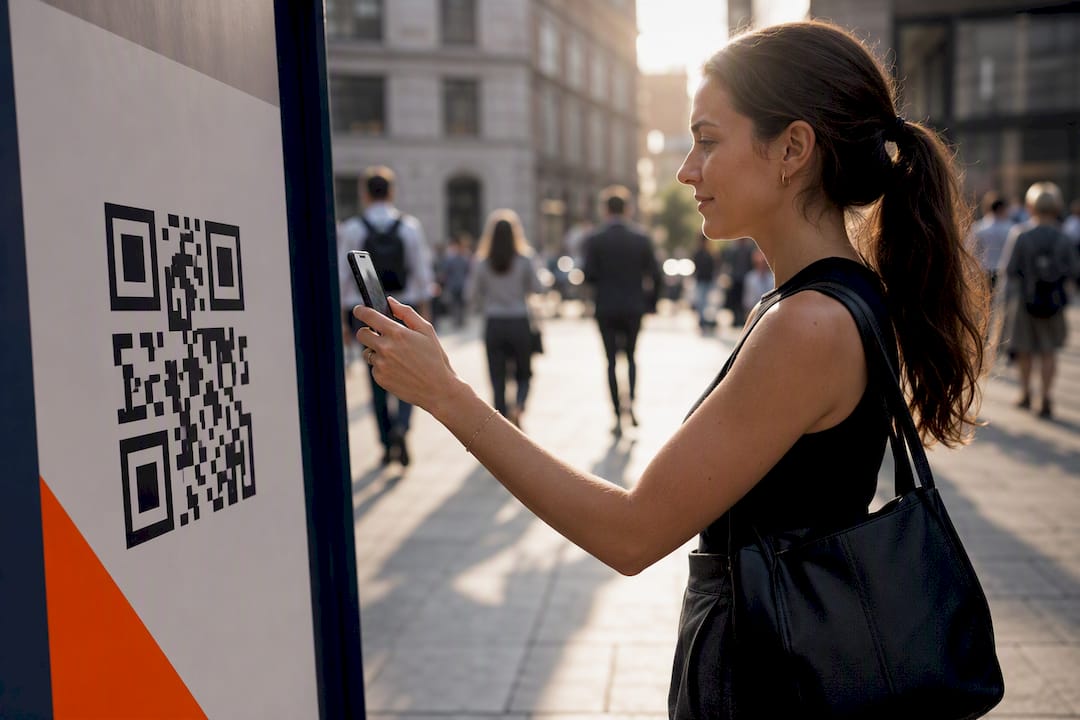
Beacon Mobile Media offers LED mobile billboards and wrapped rideshare vehicles combined with geofencing, real-time retargeting, and QR codes for lead capture. That combination maps naturally onto weather triggers: a truck’s route can shift toward covered or high-traffic zones as conditions change, proximity alerts can fire near relevant points of interest, and a QR scan at the moment of exposure ties a weather-driven impression to a real conversion. Proof-of-posting and attribution reporting document exactly when and where each impression happened.
Run a weather-aware mobile OOH pilot

A short pilot is the fastest way to see whether weather targeting moves your numbers. A typical 4 to 6 week run includes route customization around weather-sensitive zones, a defined measurement window, and a delivery report showing exposure, QR engagement, and attribution data.
- Choose one or two weather triggers tied to a real point of purchase near your route.
- Run LED trucks or wrapped rideshare vehicles on a customized schedule around those triggers.
- Capture engagement through smart QR codes and track it against proof-of-posting records.
National coverage and attribution reporting tools make this kind of test straightforward to set up and to measure. Visit Beacon-ads to scope a pilot for your next campaign.
When weather targeting is worth the investment
Weather targeting earns its keep when your placement sits close to the point of purchase and your category responds to impulse: coffee, ride-hailing, umbrellas, and seasonal apparel all qualify. It gets marginal fast when foot traffic is already low or your weather data is coarse and unreliable, since a bad trigger is worse than no trigger at all. My advice: run one small pilot with a clear control group before committing a full campaign budget to it. Test the trigger, measure the lift, then scale only what the numbers actually support.
— Scott
Sources
- Vistar case study — weather-triggered DOOH retail apparel (PDF)
- Weather-triggered DOOH: Revolutionizing advertising with real-time contextual campaigns
- Marketer mindset with The Weather Company’s Randi Stipes (OAAA blog)
FAQ
What does weather impact mean in outdoor advertising?
Weather impact in OOH refers to how conditions like temperature, rain, and sunlight change who is outdoors, how long they stay, and how receptive they are to an ad’s message. It affects both physical exposure to a placement and the emotional context in which the ad is seen.
What is a weather app used for tracking conditions for campaigns?
Advertisers typically pull data from weather APIs and forecasting services rather than a single consumer app, since campaign triggers need real-time, location-specific feeds that plug directly into a DCO or programmatic platform. The right choice depends on the granularity and latency your campaign needs.
What are some examples of weather-based advertising slogans?
Weather-based creative usually pairs a condition with an immediate benefit, such as a hot-drink line tied to cold snaps or an umbrella brand tied to the first sign of rain. The specific line matters less than aligning it with a nearby point of purchase.
What are the main factors that affect weather relevant to OOH?
Temperature, precipitation, wind, humidity, and sunlight are the factors most commonly used as OOH triggers, since each one changes movement patterns or dwell time in a predictable way. Pollen count is also used for allergy-related categories in some campaigns.
How is weather-triggered OOH performance measured?
Measurement typically compares a control group not exposed to weather-triggered creative against an exposed group, then attributes any difference in store visits or engagement to the trigger. A Vistar case study found weather-triggered creative produced a notable lift in store visits versus always-on creative.