Dynamic targeting is defined as an AI-driven advertising method that continuously updates audience profiles and ad content in real time, replacing fixed demographic segments with fluid behavioral data. Marketing professionals who understand why use dynamic targeting gain a measurable edge: retailers adopting this approach have recorded a 79% reduction in CAC and a 312% increase in ROAS within 90 days. Platforms like AdStellar and Rekla.ai have made this level of personalization accessible at scale. The gap between static and dynamic targeting is no longer a technical detail. It is a revenue gap.
What are the primary benefits of dynamic targeting in marketing?
The benefits of dynamic targeting are measurable, not theoretical. Across 340 online stores, customer acquisition costs dropped from $58.90 to $12.40. That is not an incremental improvement. It is a structural shift in how efficiently ad spend converts to customers.
Here is what drives those numbers:
- Lower customer acquisition costs. AI-driven segmentation eliminates wasted impressions by serving ads only to users whose behavior signals purchase intent. You stop paying to reach people who will never convert.
- Higher engagement rates. Adaptive behavioral targeting improves email open rates by 89%. Behavior-driven content consistently outperforms static messaging because it reflects what the user actually did, not who you assumed they were.
- Stronger ROAS. Dynamic retargeting ads outperform standard retargeting because personalized product feeds match the exact item a user viewed. Relevance drives clicks, and clicks drive revenue.
- Elimination of ad fatigue. According to AdStellar, dynamic ads eliminate ad fatigue by rotating personalized messaging at scale. Users see products tied to their browsing history, not the same generic creative for the third time this week.
- Micro-segment capture. Dynamic systems rebuild audience segments every 4–6 hours based on live behavioral data. That cadence catches intent signals that a weekly or monthly static refresh would miss entirely.
“AI-driven dynamic targeting moves marketers from static snapshots of customers to evolving real-time profiles, enabling hyper-personalized one-to-one engagement.” — Rekla.ai
Predictive capabilities built into these systems are expected to reduce acquisition costs by an additional 25–35% as models mature. That projection reflects the compounding effect of better data feeding better predictions feeding better results.
Pro Tip: Before measuring ROAS improvements from dynamic targeting, establish a 30-day baseline with your current static campaigns. Without a clean benchmark, you cannot isolate what the dynamic layer actually contributed.
How does dynamic targeting work vs. static targeting?
Static targeting assigns users to fixed demographic buckets: age, gender, location, income bracket. Those buckets do not change between campaign launches. A 35-year-old woman in Chicago stays in the same segment whether she just bought running shoes or is researching baby strollers.
Dynamic targeting works differently. AI and machine learning create real-time adaptive profiles that update continuously using behavioral signals, purchase history, browsing patterns, and cross-channel interactions. The profile reflects who the user is right now, not who they were when you built your audience list last quarter.

The technical engine behind dynamic ads follows a three-part structure. AdStellar describes this as a data feed, creative template, and personalization rules. The data feed supplies the product catalog. The creative template provides the visual framework. The personalization rules determine which user sees which product and when. All three components must stay synchronized or the system breaks down.
| Attribute | Static Targeting | Dynamic Targeting |
|---|---|---|
| Audience update frequency | Manual, campaign-level | Automated, every 4–6 hours |
| Ad creative | Fixed variants | Auto-generated from product feed |
| Personalization depth | Demographic segments | Individual behavioral profiles |
| Setup complexity | Low | Moderate to high |
| Optimization effort | High (manual) | Low (AI-managed) |
| Best for | Brand awareness, broad reach | Retargeting, conversion campaigns |

The most common failure point in dynamic campaigns is a product ID mismatch. Item IDs must be case-sensitive identical between your website data layer and your ad platform feed. A single character difference means no dynamic ad generates. This is not a rare edge case. It is the leading cause of dynamic campaigns that launch but never serve.
Pro Tip: Run a feed diagnostic before your campaign goes live. Export your product feed IDs and cross-reference them against the IDs firing in your site’s data layer. Fix mismatches before you spend a dollar on media.
When should you implement dynamic targeting?
The right time to implement dynamic targeting is after you have built a functioning retargeting foundation, not before. Standard retargeting should precede dynamic strategies to build the audience pools and data infrastructure that dynamic systems depend on. Launching dynamic targeting on a site with 500 monthly visitors will produce statistically unreliable results and wasted budget.
Follow this sequence to implement correctly:
- Audit your traffic volume. Dynamic targeting requires sufficient audience size to train its models. A minimum of 1,000 monthly active users is a practical threshold before dynamic retargeting becomes statistically meaningful.
- Validate your product feed. Every item in your catalog needs a clean, consistent ID, a current price, accurate inventory status, and a high-quality image URL. Gaps in the feed produce blank ad units.
- Start with standard retargeting. Run a standard retargeting campaign for 30–60 days. This builds your audience pools and gives you a performance baseline to measure dynamic lift against.
- Layer in personalization rules. Define the logic that governs ad delivery. Rules might specify: show cart abandonment ads within 24 hours of abandonment, show category browse ads for 7 days after a visit, suppress ads after purchase. These rules are what separate a dynamic campaign from a generic one.
- Integrate AI segmentation. Platforms like Rekla.ai apply machine learning to create adaptive customer profiles that update automatically. Connect your CRM data, pixel data, and email engagement data to give the model the richest possible signal set.
- Monitor segment performance separately. Do not evaluate dynamic targeting as a single campaign. Break results down by audience segment, product category, and funnel stage. Optimization happens at the segment level, not the campaign level.
For B2B teams, dynamic targeting applies beyond ecommerce. You can serve different ad creatives to users who visited your pricing page versus users who only read a blog post. The behavioral signal differs, and the ad should reflect that difference. This is where digital targeting strategies built on behavioral data outperform account-based marketing lists that go stale within weeks.
Pro Tip: For B2B campaigns, create a separate audience segment for users who visited your pricing or demo pages. These users have shown high intent. Serve them case studies or testimonial ads, not top-of-funnel awareness content.
Dynamic targeting vs. deliberate targeting: what is the difference?
Deliberate targeting is the practice of manually selecting audience parameters before a campaign launches and holding those parameters fixed throughout the flight. A media planner defines the audience, the creative team builds the ads, and the campaign runs as planned. Adjustments happen at the next planning cycle.
Dynamic targeting inverts that workflow. The system selects and updates audience parameters continuously based on live data. The marketer sets the rules and the feed. The AI executes the matching.
| Attribute | Deliberate Targeting | Dynamic Targeting |
|---|---|---|
| Audience selection | Manual, pre-campaign | Automated, real-time |
| Creative management | Human-produced variants | Feed-generated, auto-assembled |
| Response to behavior change | Delayed (next planning cycle) | Immediate (within hours) |
| Analytical workload | High | Low to moderate |
| Best use case | Brand campaigns, fixed budgets | Performance campaigns, retargeting |
| Scalability | Limited by team capacity | Scales with data volume |
Deliberate targeting works well for brand campaigns where message consistency matters more than individual personalization. A product launch, a seasonal promotion, or a sponsorship activation all benefit from controlled, consistent messaging. Dynamic targeting works best when the goal is conversion and the audience is already familiar with the brand.
The AI-driven approach also frees marketing teams from manual ad variant management. That shift lets strategists focus on audience strategy and creative direction rather than building and trafficking dozens of static ad units. Agencies running multiple client accounts see this productivity gain compound quickly across their portfolio.
Key takeaways
Dynamic targeting delivers measurable performance gains over static methods because it replaces fixed audience snapshots with AI-updated behavioral profiles that respond to real user intent in real time.
| Point | Details |
|---|---|
| CAC reduction is proven | Retailers cut acquisition costs from $58.90 to $12.40 using adaptive segmentation within 90 days. |
| Three-part system is non-negotiable | Data feed, creative template, and personalization rules must all be synchronized for dynamic ads to function. |
| Start with standard retargeting | Build audience pools and a performance baseline before layering in dynamic targeting logic. |
| Product ID accuracy is critical | Case-sensitive ID mismatches between your site and ad platform are the leading cause of dynamic ad failure. |
| Segment-level monitoring wins | Evaluate performance by audience segment and funnel stage, not by campaign totals. |
Dynamic targeting is now the baseline, not the upgrade
I have watched the conversation around dynamic targeting shift from “interesting experiment” to “table stakes” over the past few years. Agencies that treated it as an advanced tactic are now treating it as the default setup for any performance campaign. That shift happened because the data became impossible to ignore.
What I find underappreciated is the organizational change dynamic targeting requires. The technology is not the hard part. The hard part is getting your data infrastructure clean enough to feed it. Bad product feeds, inconsistent pixel firing, and disconnected CRM data will sabotage a dynamic campaign faster than any strategic error. I have seen well-funded campaigns produce zero dynamic ad impressions because no one audited the item IDs before launch.
The other thing worth saying plainly: dynamic targeting does not replace strategic thinking. It executes your rules at a scale and speed no human team can match. But if your personalization rules are shallow or your audience segments are poorly defined, the AI will just deliver mediocre ads faster. The 2026 advertising trends point toward even tighter AI integration in campaign management. Marketers who understand the mechanics now will be the ones setting strategy when the tools get more powerful.
The competitive advantage belongs to teams that combine clean data, well-structured feeds, and thoughtful personalization logic. That combination is not complicated. It is just disciplined.
— Scott
How Beacon-ads brings dynamic targeting to physical advertising
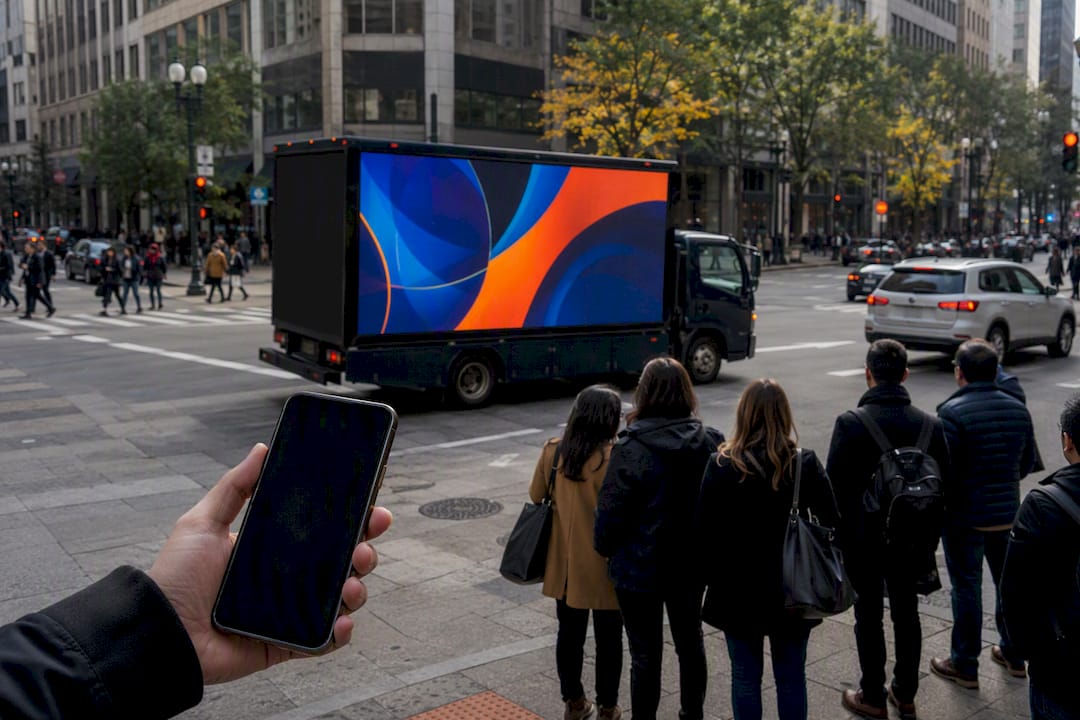
Beacon-ads applies the same data-driven logic that powers digital dynamic targeting to out-of-home advertising through LED mobile billboards and wrapped rideshare vehicles across all 50 states. Geofencing, real-time retargeting, and audience-specific filtering let you serve the right message in the right location to the right demographic, physically.

If you are building a campaign that needs to reach high-intent audiences beyond the screen, Beacon-ads combines route customization, affinity targeting, and attribution analytics to make every impression accountable. Explore the 2026 OOH advertising guide to see how dynamic targeting principles apply to mobile billboard and rideshare advertising. You can also review data-driven OOH strategies to connect your digital targeting framework with physical media execution.
FAQ
What is dynamic targeting in advertising?
Dynamic targeting is an AI-driven method that continuously updates audience segments and ad content based on real-time behavioral data. It replaces fixed demographic segments with adaptive profiles that reflect current user intent.
Why use dynamic targeting over static methods?
Dynamic targeting delivers higher ROAS and lower customer acquisition costs because ads match individual user behavior rather than broad demographic assumptions. Retailers have recorded a 312% ROAS increase within 90 days of adopting adaptive segmentation.
How does dynamic targeting work technically?
Dynamic ads operate through three synchronized components: a product data feed, a creative template, and personalization rules that specify which user sees which ad and when. All three must be fully aligned for the system to generate ads correctly.
What are the biggest risks when implementing dynamic targeting?
The most common failure point is a product ID mismatch between your website data layer and your ad platform feed. IDs must be case-sensitive identical, or no dynamic ads will generate regardless of budget or creative quality.
When should an agency start using dynamic targeting?
Agencies should launch dynamic targeting after running standard retargeting for at least 30–60 days to build sufficient audience pools. A tiered approach ensures the data foundation is strong enough for dynamic systems to optimize effectively.