Out-of-home (OOH) advertising is defined as any paid media that reaches consumers while they are outside their homes, from static billboards to digital transit displays. The top OOH marketing strategies today are precision-driven, combining programmatic guaranteed buying, contextual creative triggers, and interactive formats to produce measurable results. Data-driven DOOH campaigns increase target audience visits by 20.3%, proving that outdoor advertising has moved well beyond mass reach. Brand managers who treat OOH as a data channel, not just a visibility play, consistently outperform those who rely on placement alone.
1. What are the top OOH marketing strategies today?
The most effective outdoor advertising strategies in 2026 share three traits: they use audience data to guide placement, they deploy creative built for fast recognition, and they connect physical impressions to measurable digital outcomes. The days of choosing a billboard by city and size are over. Modern OOH media briefs now prioritize audience definition and KPI hierarchy over traditional city and dimension lists, reflecting genuine planning maturity.
The core strategies that consistently drive results are:
- Programmatic guaranteed buying for premium inventory with automated speed
- Product-hero creative built for brand fluency and fast recognition
- Contextual triggers tied to weather, events, and location
- Interactive formats including QR codes and augmented reality
- Multi-format integration combining static, digital, transit, and mobile OOH
- Geo-targeting and behavioral data for audience-specific placement
- Cross-channel amplification connecting OOH impressions to digital retargeting
Each strategy works independently, but the strongest campaigns layer several together. A mobile billboard running a QR code in a geofenced zone, retargeted digitally afterward, is a fundamentally different campaign than a static poster on a highway.
Pro Tip: Build your OOH brief around three audience questions: Where does my audience pause? What context makes my message relevant there? What action do I want them to take next?

2. How programmatic guaranteed buying changes OOH campaigns
Programmatic guaranteed buying is the fastest-growing buying method in OOH advertising. It merges the inventory certainty of a direct deal with the automation workflows of programmatic platforms, so you get confirmed premium placements without the manual back-and-forth of traditional negotiations.
By early 2026, programmatic DOOH sits within the same buying interface as connected TV and digital display. That integration matters because it removes the operational friction that historically kept OOH siloed from digital campaign planning. A media planner can now activate an OOH flight alongside a CTV buy in a single platform like DV360.
The practical benefits are significant:
- Speed: Campaigns activate faster because inventory is reserved programmatically, not through manual insertion orders.
- Precision: Audience data from first-party CRM sources can inform which screens activate and when.
- Flexibility: Creative can rotate based on real-time triggers like time of day or local weather.
- Scale: Premium inventory across multiple markets is accessible without separate vendor negotiations.
Despite this growth, 59% of marketers still rely on direct deals as their primary buying method. That gap represents a real competitive advantage for brand managers who adopt programmatic guaranteed early. The brands moving fastest are those treating OOH inventory the same way they treat digital media buys.
3. Why creative clarity drives brand fluency in OOH
Creative clarity is the single biggest variable separating high-performing OOH from forgettable placements. A viewer has roughly two seconds to register an outdoor ad while in motion. That window rewards simplicity and punishes complexity.
McDonald’s demonstrated this in 2026 with a product-hero campaign in France that scored 95% fast fluency against an industry average of 62%. Fast fluency measures how quickly a viewer correctly identifies the brand from the creative. A 33-point gap over the industry average is not a marginal improvement. It reflects a deliberate choice to center the product visually and strip away everything else.
High visual clutter negatively impacts brand recall and short-term sales. Campaigns with focused, simple messaging consistently outperform those that try to communicate multiple messages at once. The creative principles that work in OOH are:
- One dominant visual element, ideally the product itself
- Brand mark placed predictably, not creatively
- No more than seven words of copy
- High contrast between foreground and background
- Emotional tone that matches the environment
Contextual relevance amplifies creative clarity. A coffee brand running a warm, steam-rising visual on a cold morning commute route performs better than the same creative running on a summer afternoon. OOH creates trusted, algorithm-free touchpoints during consumer pause moments, which increases receptivity to messaging when the creative matches the moment.
Pro Tip: Test your OOH creative at thumbnail size on a phone screen. If the brand and message are not instantly clear at that scale, the design needs simplification before it goes on a billboard.
4. How interactive and digital technologies boost OOH engagement
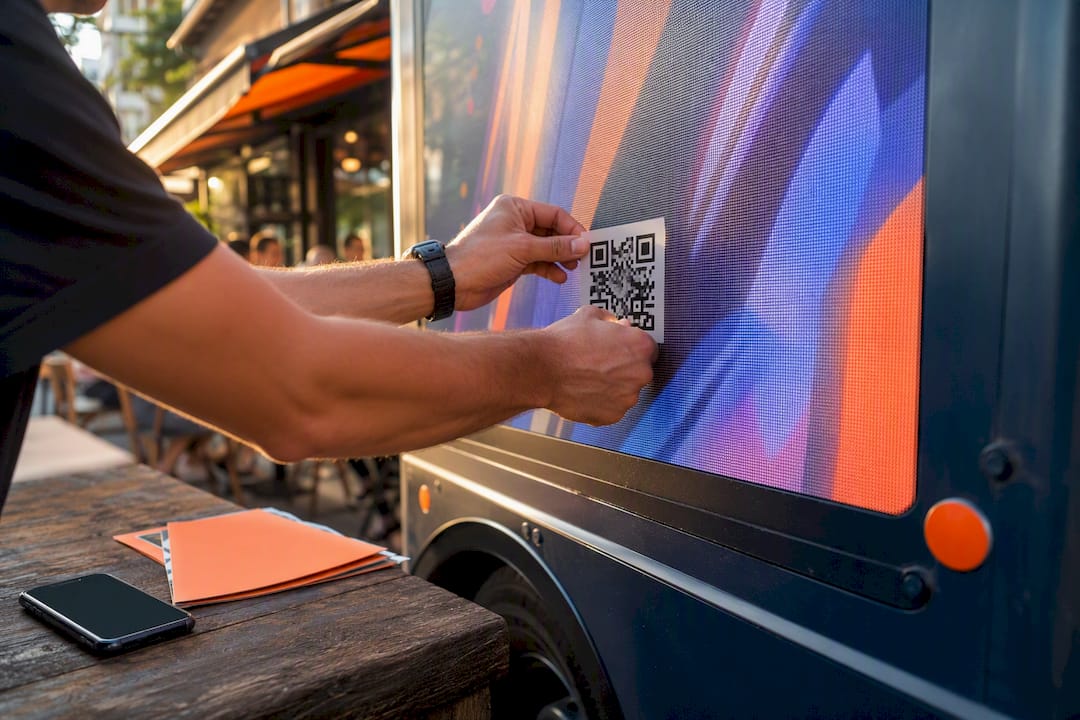
Interactive OOH formats turn passive impressions into active consumer responses. QR codes are the most accessible entry point. When placed on a mobile billboard or transit wrap, a QR code converts a physical exposure into a trackable digital action, capturing lead data and connecting the outdoor impression directly to conversion metrics.
Augmented reality takes engagement further. Snapchat’s AR campaign at Times Square produced a 91% lift in theatrical ticket sales and an 84% lift in show tune-ins across studied campaigns. Those numbers reflect what happens when an OOH placement becomes an experience rather than a display. The format stops being background and becomes the destination.
Dynamic digital OOH content updates in real time based on triggers like weather, sports scores, or time of day. Travel Texas ran a 3D DOOH storytelling campaign that drove 7X more in-state arrivals compared to prior efforts and increased visitation likelihood by 20.3% over control groups. The campaign worked because the creative was built for the digital format, not repurposed from a static design.
The practical stack for interactive OOH looks like this:
- QR codes for direct response and data capture at point of exposure
- AR overlays for immersive brand experiences at high-traffic locations
- Dynamic content feeds that update creative based on real-time data inputs
- Retargeting pixels that follow up with audiences who engaged physically
Beacon-ads integrates smart QR codes directly into mobile billboard campaigns, capturing scan data that feeds back into audience targeting and attribution reporting.
5. Multi-format and location targeting: maximizing reach and relevance
The strongest OOH campaigns do not rely on a single format. They combine static, digital, transit, and mobile placements to surround an audience across multiple touchpoints in their daily movement patterns. Each format serves a different role in the media mix.
| Format | Primary strength | Best use case |
|---|---|---|
| Static billboard | Long-term brand presence | Highway corridors, major intersections |
| Digital OOH screen | Dynamic, time-sensitive content | Retail zones, transit hubs |
| Transit wrap | High-frequency urban exposure | Commuter routes, city centers |
| Mobile billboard | Targeted, route-specific reach | Events, neighborhoods, conferences |
CBS’s NFL campaign used nearly 100 contextual OOH units across multiple cities, tying creative to local team content and driving a 15% year-over-year increase in opening weekend ratings. The campaign succeeded because placement decisions were driven by audience behavior data, not just available inventory.
Geo-targeting and audience mobility data allow brand managers to identify where their specific audience segments move throughout the day and place media along those paths. First-party CRM data adds another layer, letting you activate OOH near locations your existing customers frequent.
Pro Tip: Map your audience’s daily movement before buying OOH inventory. Morning commute routes, lunch zones, and evening retail corridors often require different formats and creative treatments to be effective.
Key takeaways
The most effective OOH campaigns in 2026 combine programmatic buying, clear product-focused creative, and interactive formats to produce measurable brand and sales outcomes.
| Point | Details |
|---|---|
| Programmatic guaranteed buying | Activates premium OOH inventory faster and within unified digital buying platforms. |
| Creative clarity wins | Product-hero ads with simple visuals consistently outperform cluttered, multi-message designs. |
| Contextual triggers matter | Matching creative to weather, events, and location increases audience receptivity significantly. |
| Interactive formats drive data | QR codes and AR convert physical impressions into trackable digital actions and leads. |
| Multi-format targeting amplifies reach | Combining static, digital, transit, and mobile OOH surrounds audiences across their daily paths. |
What I’ve learned about OOH after watching brands get it wrong
Most brand managers I’ve worked with underestimate how much creative simplicity matters in OOH. They bring a digital mindset to a physical medium and load their billboards with the same information density they’d put in a display ad. The result is a placement that nobody reads.
The shift I’ve seen work is treating OOH as a memory-building medium, not a message-delivery system. You are not trying to explain your product. You are trying to make your brand feel familiar and trusted at the moment a purchase decision happens nearby. That requires a completely different creative brief.
Programmatic tools have made targeting genuinely good. The gap now is almost always creative. I’ve seen campaigns with excellent geo-targeting and behavioral data fail because the visual was too busy to register in two seconds. The data gets you in front of the right person. The creative determines whether they remember you.
The trend I’m watching closely is AI-generated creative variants for OOH. The ability to produce dozens of contextually adapted versions of a single campaign, each tuned to a specific location or time trigger, is going to change how briefs are written. But the underlying principle stays the same: one clear message, one dominant visual, one brand.
— Scott
How Beacon-ads supports your OOH campaigns with real targeting data
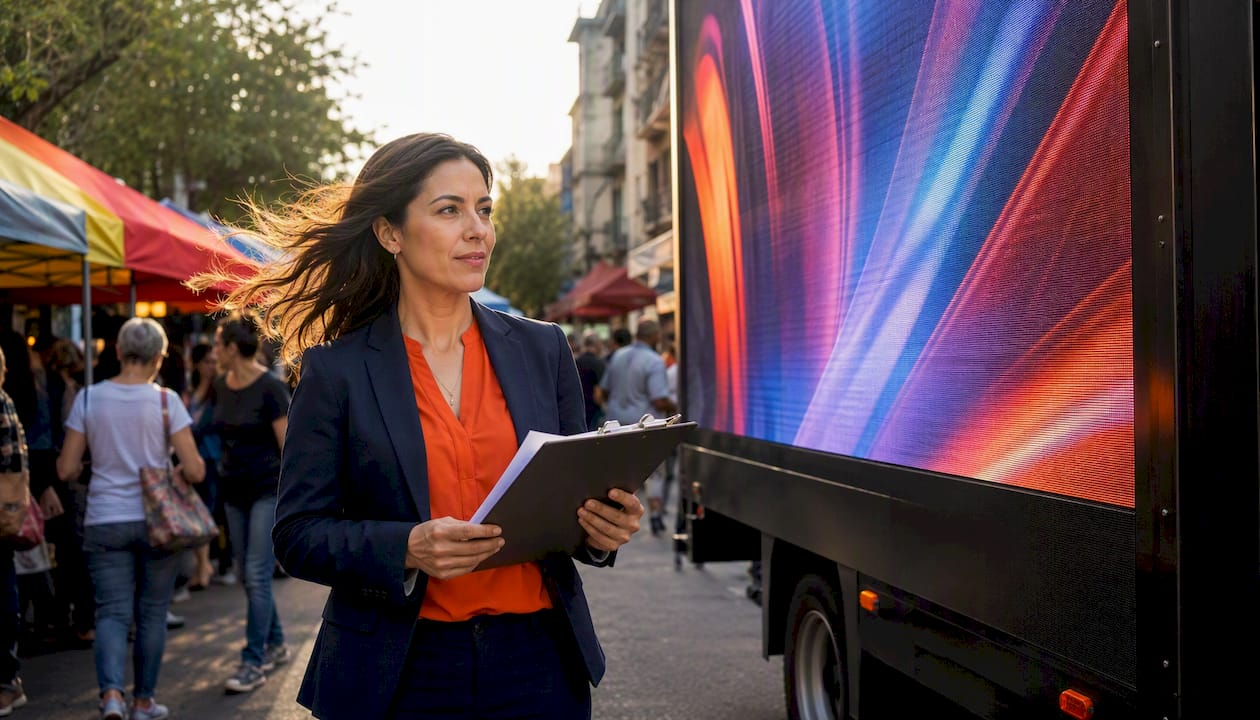
Beacon-ads runs LED mobile billboards and wrapped rideshare vehicles across all 50 states, combining physical reach with digital targeting precision. Every campaign includes geofencing, real-time retargeting, and attribution analytics so you can connect outdoor impressions to actual outcomes.

If you are building a multi-format OOH strategy, the 2026 OOH format guide covers every major placement type with practical guidance on when to use each. For campaigns that need to reach specific audiences at specific locations, Beacon-ads builds route-customized plans using affinity targeting and first-party data integration. You can also pair OOH exposure with paid digital campaigns to retarget audiences who saw your mobile billboard. Contact Beacon-ads to build a campaign with full proof-of-posting documentation and funnel metrics from day one.
FAQ
What is the most effective OOH advertising format in 2026?
Digital OOH and mobile billboards consistently outperform static placements because they support dynamic creative, real-time triggers, and audience-specific targeting. The best format depends on your audience’s movement patterns and campaign objectives.
How do you measure OOH campaign performance?
OOH performance is measured through foot traffic attribution, QR code scan data, brand lift studies, and cross-channel retargeting metrics. Programmatic DOOH platforms now integrate these measurements within the same dashboard as digital display and CTV.
What is programmatic guaranteed buying in OOH?
Programmatic guaranteed buying reserves specific OOH inventory in advance through an automated platform, combining the certainty of a direct deal with the speed and flexibility of programmatic workflows. It sits within unified buying interfaces alongside CTV and digital display.
How does creative simplicity affect OOH results?
Campaigns with simple, product-focused visuals achieve significantly higher brand fluency scores than cluttered designs. McDonald’s France scored 95% fast fluency in 2026 versus an industry average of 62%, directly linked to a clean product-hero creative approach.
Can OOH advertising integrate with digital marketing channels?
OOH integrates with digital channels through QR codes, geofencing retargeting, and programmatic platforms that manage OOH alongside CTV and display. This integration allows brands to track the full consumer journey from outdoor exposure to online conversion.