The most effective way to use audience targeting outdoors follows six steps: map behavioral cohorts from location data, select screens and formats that match those cohorts, apply the right targeting technology (geofencing, programmatic DOOH, GPS), build context-specific creative with day-parting, set up a measurement and retargeting sequence, then enforce privacy and compliance guardrails.
Use this checklist to validate any campaign plan before launch:
- Audience mapping complete? Commuter, dweller, event attendee, and in-market shopper cohorts defined from mobile visitation data
- Screen selection tied to cohort? Screens chosen based on audience vectors, not just geography
- Targeting tech matched to objective? Geofencing for screen eligibility, programmatic DOOH for segment buys, beacons for venue-level precision
- Creative versioned by context? Roadside copy at 5–7 words, captive-environment creative with QR or short URL
- Retargeting window set? 30–60 day harvest window confirmed with DSP
- Proof-of-posting confirmed? GPS and photo verification scheduled; attribution funnel mapped from DOOH exposure through to conversion
Table of Contents
- How do you map and segment outdoor audience behavior?
- Which outdoor targeting technologies should you use and when?
- What creative rules and timing work for outdoor-targeted audiences?
- How do you measure impact and run A/B tests for outdoor targeting?
- What U.S. privacy rules apply to outdoor audience targeting?
- When is advanced targeting worth the extra cost?
- End-to-end example: a Beacon-ads campaign combining route-based LED trucks with DOOH retargeting
- Key Takeaways
- What most planners get wrong about outdoor targeting
- Beacon-ads brings this playbook to life across all 50 states
- Selected sources and further reading
How do you map and segment outdoor audience behavior?
Outdoor audiences are not monolithic. The four cohorts that matter most for OOH planning are commuters (high-speed, short exposure windows), dwellers (transit hubs, retail environments with longer dwell times), event attendees (concentrated, time-bound), and in-market shoppers (near point-of-purchase, high intent).
Build these segments from anonymized mobile-location visitation patterns. A device that appears at a gym three mornings a week signals a fitness affinity. A cluster of devices at a transit hub between 7–9 AM is a commuter cohort. Route overlap data tells you which screens those devices pass repeatedly, which is the foundation of frequency planning. For data-driven OOH campaigns, request screen-level audience vectors from your DSP or location-data provider, and require a minimum of 30 days of observation data before trusting a screen-level profile.
The metric you use changes by cohort. Commuters: frequency of passes per week. Dwellers: average dwell time in minutes. Event attendees: temporal concentration (how many devices appear within a 4-hour window). Each metric directly shapes your CTA. A commuter cohort gets a single brand message; a dweller cohort can handle a QR code or a short URL.

Pro Tip: Map the dwell context before you pick a single screen. A five-second commuter exposure calls for brand recognition. A 90-second transit-shelter dwell opens the door to an interactive CTA. Getting this wrong means your creative strategy is built on the wrong assumption from the start.
Which outdoor targeting technologies should you use and when?
The right targeting technology depends on your campaign objective, not your budget. Here is a practical breakdown:
- Geofencing for screen selection: Draw a virtual boundary around a location to restrict which screens are eligible for your buy. Separate use: add devices that entered the fence to a retargeting pool. Geofencing for OOH serves two distinct functions, and conflating them is a common planning mistake.
- Programmatic DOOH audience segments: Buy audiences, not just locations. Anonymized device visitation patterns build audience segments; your ad serves on screens those segments frequent. Retargeted DOOH-exposed devices convert at significantly higher rates than cold mobile audiences.
- Beacons and venue-level sensors: Best for indoor captive environments (airports, malls, transit stations) where precise proximity data improves creative relevance.
- GPS-based route analytics: Validates that your mobile LED truck or wrapped vehicle actually traveled the planned route. Pairs with proof-of-posting for campaign verification.
| Technique | Best for | Key cost driver | Retargeting window |
|---|---|---|---|
| Geofencing | Screen eligibility + audience harvest | Data licensing fees | 30–60 days |
| Programmatic DOOH | Audience segment buys, awareness | DSP setup + CPM uplift | 30–60 days |
| Beacons | Indoor captive, venue-level precision | Hardware + integration | Session-based |
| GPS route analytics | Mobile OOH verification | Platform fee | N/A |
| Mobile retargeting | Conversion activation post-exposure | Creative production + CPM | 30–60 days |
DOOH day-part targeting lets you schedule specific creatives by time of day and real-world triggers like weather or live events, which makes it far more precise than a static placement locked into a four-week contract.
What creative rules and timing work for outdoor-targeted audiences?
Keep roadside creative to one message and 5–7 words. That is not a guideline; it is a hard constraint imposed by average vehicle speed and glance duration. For captive environments — transit shelters, airport corridors, wrapped rideshare interiors — you have more time, so a QR code, short URL, or interactive prompt is appropriate. Visual-first design with high contrast is non-negotiable in both contexts.

Day-parting aligns creative to the behavioral window. Commute hours (7–9 AM, 5–7 PM) favor brand awareness messages. Lunch windows work for food and retail offers. Evening shopping windows support direct-response CTAs. Smart QR codes on captive-environment placements capture device data at the point of exposure, feeding directly into your retargeting pool.
Creative checklist: dominant image, single CTA, high contrast, time-of-day versioning, and a dedicated harvest creative for mobile retargeting.
Pro Tip: Build a separate “harvest” creative that explicitly references the OOH exposure — something like “You saw us on the road.” That callback lifts retarget engagement because it creates a recognition moment instead of a cold impression.
How do you measure impact and run A/B tests for outdoor targeting?
Use a two-path measurement approach: proof-of-posting plus an attribution funnel that runs DOOH exposure → mobile retarget → website or store visit → conversion.
KPIs to track by stage:
- Exposure: Impressions by screen, verified by GPS and photo proof-of-posting
- Reach: Device-level retarget pool size from DSP reporting
- Awareness: Uplift in branded search queries during and after the flight
- Consideration: Site visits attributed via unique URLs or dedicated phone numbers
- Conversion: In-store footfall lift or tracked conversions
For A/B testing, run a geo-control test: Market A receives the targeted campaign, Market B runs without targeting. Measure the delta in branded search, site visits, and footfall. For creative testing, swap day-part versions and measure click-through on QR or URL elements. A multi-week pilot is the recommended minimum before committing to a longer flight.
| Metric | Measurement method | Required data source |
|---|---|---|
| Verified impressions | GPS + photo proof-of-posting | Route tracking platform |
| Retarget reach | Device match rate | DSP reporting |
| Branded search uplift | Search query volume delta | Google Search Console |
| Site visit attribution | Unique URL / UTM tracking | Web analytics |
| Footfall lift | Location visit data | Mobile location provider |
The retargeting window of 30–60 days creates a sequential attribution path: a device exposed to your OOH placement enters the harvest pool and receives follow-up mobile ads, building a multi-touch conversion record.
A field experiment using an ontology-enhanced multimodal DOOH system that fused anonymized GPS with real-time contextual inputs (time, weather, traffic) delivered a 220% relative uplift in relevant advertisement impressions versus a traditional location-only baseline. That is the measurable gap between placing ads by geography alone and placing them by contextual audience inference.
What U.S. privacy rules apply to outdoor audience targeting?
Prioritize anonymized, consented location data. Never work with device-level personally identifiable information. Every vendor contract should require CCPA/CPRA compliance, documented opt-out mechanisms, and defined data retention windows.
Operational compliance checklist:
- Vendor-provided compliance documentation (CCPA/CPRA attestation)
- Data retention policy capped at campaign duration plus 90 days maximum
- Anonymization proof for all GPS and device-match data
- Suppression list signals integrated before retargeting activates
- Audience segments described as behavioral cohorts (e.g., “transit commuters, 25–44”) not personal profiles
Pro Tip: Document the lawful basis for each data source in writing and schedule annual vendor audits. If a location-data provider cannot produce a clear consent chain for their panel, replace them before the campaign launches, not after.
When is advanced targeting worth the extra cost?
Advanced targeting pays off when three conditions align: a tight geographic or temporal objective (store opening, event, time-limited offer), a measurable short-term conversion goal, and a retargeting sequence ready to activate within 48 hours of the first OOH exposure.
Main cost drivers to budget for:
- Data licensing fees for location and audience segment providers
- DSP setup and integration costs
- Creative production for harvest ads (separate from primary OOH creative)
- A CPM uplift for retargeting over standard display rates
- Attribution and reporting tool costs
Pairing DOOH with geofencing and mobile retargeting can substantially increase lead generation effectiveness over OOH alone. Programmatic overlays of geographic proximity, custom geofences, mobile data, and demographic and psychographic signals reduce waste and improve on-target delivery. Run a 2–4 week pilot first, measure the geo-control delta, then scale the winning combination.
End-to-end example: a Beacon-ads campaign combining route-based LED trucks with DOOH retargeting
A regional retail brand needed to drive store visits for a new location opening in a competitive urban market. Beacon-ads mapped the surrounding commuter and in-market shopper cohorts using mobile visitation data, then built a route plan for LED billboard trucks covering the three highest-frequency commuter corridors during morning and evening drive times. Audience filters excluded devices outside the target demographic. Harvest creatives went live in the DSP shortly after the first truck deployment, retargeting exposed devices with a direct-response mobile ad referencing the OOH exposure. Proof-of-posting with GPS and photo verification confirmed route compliance daily.
Campaign steps:
- Audience mapping: commuter and shopper cohorts defined from 30 days of location data
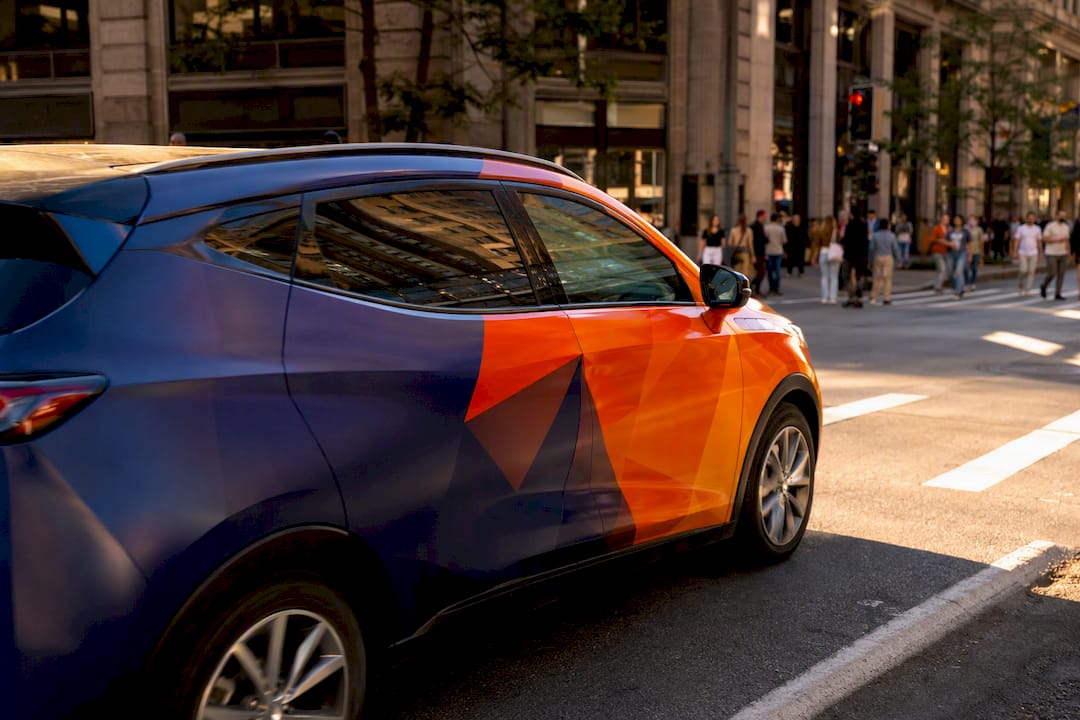
- Route plan: three corridors, morning and evening day-parts, LED trucks + wrapped rideshare vehicles
- Proof-of-posting: GPS tracking and photo documentation delivered to client daily
- Harvest creative: mobile retarget ads activated promptly, with a defined retargeting window
- Measurement: geo-control test against a non-targeted market; branded search and footfall tracked weekly
Pro Tip: Expect branded search uplift to appear in week two and footfall lift to peak in weeks three and four. Do not pull the plug on a pilot before week three — the retargeting sequence needs time to build frequency before conversion signals become statistically meaningful.
Key Takeaways
Effective outdoor audience targeting requires behavioral mapping, matched targeting technology, context-specific creative, a proof-of-posting measurement loop, and CCPA-compliant data practices working together from day one.
| Point | Details |
|---|---|
| Start with behavioral cohorts | Map commuter, dweller, event, and shopper segments before selecting a single screen or format. |
| Match tech to objective | Use geofencing for screen eligibility and audience harvest; programmatic DOOH for segment buys; GPS for route verification. |
| Creative must fit the context | Roadside placements need 5–7 words; captive environments support QR codes and interactive CTAs. |
| Run a geo-control pilot first | A 2–4 week test with a control market validates audience segments before you scale spend. |
| Beacon-ads for execution | Beacon-ads combines LED truck route customization, geofencing, real-time retargeting, and proof-of-posting in one campaign package. |
What most planners get wrong about outdoor targeting
The conventional wisdom says OOH is a reach medium and digital is a precision medium. That framing is outdated, and it leads planners to treat mobile retargeting as an add-on rather than a core component of the campaign architecture.
The campaigns that underperform are almost always the ones where the harvest creative was an afterthought. Someone repurposed a banner ad, slapped it into the DSP, and called it retargeting. The result is a cold impression that has no relationship to the physical exposure. The campaigns that work build the harvest creative at the same time as the OOH creative, with an explicit callback to the outdoor exposure. That sequencing is what turns a reach medium into a full-funnel channel.
The other mistake is skipping the geo-control test because the budget feels tight. A pilot without a control market produces numbers you cannot trust. You will not know whether the lift came from the targeting or from seasonal demand. That ambiguity makes it impossible to justify scaling the budget, which is the whole point of running a pilot in the first place.
Integrating OOH exposure data into your CRM and cross-channel sequences is where the real measurement payoff lives. When a device that was exposed to your billboard also opens your email and visits your site, you have a multi-touch attribution record that justifies the OOH spend to every stakeholder in the room.
Beacon-ads brings this playbook to life across all 50 states
If you want to run this exact workflow without assembling five vendors, Beacon-ads does it in one contract. Their LED billboard trucks and wrapped Uber and Lyft vehicles cover all 50 states, with route customization built around your audience cohorts. Geofencing and real-time retargeting are integrated into every campaign, not sold as add-ons. Proof-of-posting with GPS and photo documentation is standard, and attribution reporting maps the full funnel from OOH exposure through to conversion.

For event launches, store openings, or time-limited campaigns where the geo-control test needs to move fast, Beacon-ads can stand up a pilot in days. Explore OOH advertising formats and data-driven campaign options or request a campaign plan directly from the team.
Selected sources and further reading
These are the most actionable sources behind this article, organized by follow-up task:
- For advanced targeting research and the 220% uplift study: Ontology-Enhanced Multimodal DOOH Targeting — the peer-reviewed field experiment validating contextual fusion over location-only targeting
- For DOOH measurement benchmarks and pilot sizing: Outdoor & Billboard Advertising for Lead Generation — LeadsuiteNow’s 2026 guide covering DOOH growth rates, geofencing lift data, and pilot recommendations
- For programmatic DOOH audience-segment strategy: Programmatic DOOH Strategy for Local Businesses — DataLatte’s breakdown of audience-segment buys and retargeting conversion rates
- For geofencing mechanics and trade-offs: Geofencing for OOH Advertising — Brenton Way’s primer on the two distinct uses of geofencing in OOH campaigns
- For hyper-local OOH strategy and behavioral mapping: Hyper-Local OOH: Targeting Micro-Audiences — Billboard Trends’ 2026 analysis of neighborhood-level targeting and footfall lift data
- For Beacon-ads campaign setup and retargeting workflows: Outdoor Advertising Targeting Process and How Retargeting Works in OOH — operational guides covering proof-of-posting, harvest windows, and attribution reporting
- For targeted advertising fundamentals: What Is Targeted Advertising — Hala Creative Agency’s SMB primer on audience targeting methods across channels