Prioritize AI-driven real-time personalization, enterprise orchestration, experience-first loyalty, and a privacy-first data foundation to close the 2026 Engagement Divide. Those four moves, executed together, separate brands that grow from brands that churn.
The 2026 Global Engagement Index from SAP documents the gap plainly: brands consistently overestimate how seamless and personalized their cross-channel experience actually feels to customers. That gap has a name. The Engagement Divide is not a perception problem. It is an operational one, and it compounds every year you treat engagement as a marketing function rather than an enterprise discipline.
Here is where to start this week:
- Audit your cross-channel seams. Map every handoff between marketing, commerce, service, and sales. Find where customer context drops.
- Identify your highest-volume AI touchpoint. If it is underperforming, set a human fallback before you scale it.
- Pull your loyalty redemption rate. If members are not redeeming within 30 days of earning, your program has a visibility problem.
- Check consent architecture. Confirm you have explicit, adjustable consent records for every personalization use case.
- Run one modular experiential activation. A micro-event, a mobile OOH route, or a creator partnership. Measure dwell and scan rates.
- Define your engagement KPIs. Engagement depth, retention velocity, and time-to-value for loyalty members should be on your dashboard before Q3.
- Schedule a data quality sprint. Duplicate profiles and stale identity records are the single biggest blocker to real-time orchestration.
- Map your discovery channels. Use Statista’s brand discovery data to confirm you are present where your audience actually finds new brands.
Key Takeaways
The single most important move for brand engagement in 2026 is treating engagement as an enterprise discipline, not a marketing function, and building the data infrastructure that makes real-time personalization and attribution possible.
| Point | Details |
|---|---|
| Close the Engagement Divide | Audit cross-channel handoffs first; brands consistently overestimate seamlessness versus what customers actually experience. |
| AI requires human fallback design | Deploy AI on high-volume, low-emotion interactions first; route high-emotion moments to humans by default. |
| Loyalty needs speed-to-value | Members who do not redeem quickly have a visibility problem; proactive alerts and friction removal fix it faster than more points. |
| Data foundation before activation | Identity resolution and real-time CDP ingestion are prerequisites for every personalization and orchestration strategy in this playbook. |
| Beacon-ads supplies physical-to-digital signals | LED mobile billboard campaigns with smart QR codes and GPS proof-of-posting generate first-party data that feeds retargeting and attribution. |
Table of Contents
- Why 2026 is the year the Engagement Divide becomes a business risk
- 1. Build a human-centered brand and storytelling framework
- 2. Move from systems of record to systems of action
- 3. Apply AI for real-time personalization and agentic orchestration
- 4. Rethink loyalty: membership-style programs, immediate value visibility, and friction removal
- 5. Invest in experiential and community-first engagement
- 6. How mobile OOH campaigns deliver measurable engagement signals
- 7. Build the data foundation: CDP, identity, real-time activation, and privacy-first governance
- Measurement and attribution: the KPIs that actually matter in 2026
- How to prioritize and roll out these strategies this year
- Platform categories and evaluation criteria for 2026
- Personalization ethics and balancing automation with authentic human interaction
- Cross-generational engagement strategies tailored for Gen Z and Gen Alpha
- Sustainability and social responsibility as drivers of engagement in 2026
- Emerging technologies and their real impact on brand engagement
- What leaders who actually close the Engagement Divide do differently
- Beacon-ads brings measurable OOH into your 2026 engagement program
- Sources
Why 2026 is the year the Engagement Divide becomes a business risk
The forces reshaping brand engagement this year are not incremental. Three of them are structural.
The Engagement Divide is measurable and widening. The SAP 2026 Global Engagement Index shows that decision-makers inside brands rate their cross-channel coordination significantly higher than the customers experiencing it. That is not a messaging gap. It is a data and process gap. Brands that have not unified their customer data across commerce, service, and marketing are delivering fragmented experiences while believing they are not.
Consumer patience for bad AI is nearly gone. The Genesys State of Customer Experience 2026 report finds that consumers give virtual agents only a few attempts to resolve an issue before they switch brands entirely. That is a short runway. Deploying AI without adequate fallback design and quality controls is now a churn accelerator, not a cost-saver.
Attention is fragmenting faster than most media plans account for. Consumers move across social, search, physical, and streaming environments in a single purchase journey. A brand that shows up consistently in one channel and disappears in another loses the thread. Branding Strategy Insider’s analysis of the new rules of brand engagement argues that experience-first design is the only architecture that holds message clarity across fragmented touchpoints.
| Trend | Signal | Source |
|---|---|---|
| Engagement Divide | Brands overestimate cross-channel seamlessness vs. consumer experience | SAP 2026 Global Engagement Index |
| AI patience threshold | Consumers switch brands after only a few failed virtual-agent interactions | Genesys CX 2026 |
| Loyalty perception gap | Programs remain useful but face a performance-perception gap on speed-to-value | EY Loyalty Market Study 2026 |
| Discovery channel fragmentation | Multiple channels drive new brand discovery; no single channel dominates | Statista 2026 |
1. Build a human-centered brand and storytelling framework
The brands winning on engagement in 2026 are not the ones with the biggest media budgets. They are the ones whose story is specific enough to be believed and consistent enough to be remembered across every channel.
Human-centered storytelling starts with a documented narrative architecture, not a tagline. Here is how to build one that actually moves metrics:
- Define the audience’s real problem in their language. Not your product category. The specific friction they feel before they find you. Use verbatim language from customer interviews, reviews, and support tickets.
- Identify the emotional job-to-be-done. Functional benefits explain what you do. Emotional benefits explain why someone stays. Map both.
- Build a message hierarchy. One primary claim. Two or three supporting proof points. One call to action. Every channel expression draws from this hierarchy, not from a separate brief.
- Assign narrative ownership. Someone on your team is accountable for message consistency across channels. Without a named owner, the story drifts.
- Tie storytelling to participation mechanics. The most effective brand narratives in 2026 invite the audience to contribute. User-generated content, community challenges, and co-creation campaigns extend reach and deepen emotional investment.
- Measure emotional resonance, not just reach. Track repeat participation rates, activation-to-conversion ratios, and sentiment shift over time. Reach tells you how many people saw the story. Repeat participation tells you how many believed it.
What to track once the framework is live:
- Repeat participation rate (events, content series, community forums)
- Activation-to-conversion ratio by channel
- Net Promoter Score segmented by engagement depth
- Brand recall in aided and unaided surveys (quarterly)
- Share of voice in community-generated content
Pro Tip: Link your storytelling framework directly to your loyalty program mechanics. When the brand narrative and the loyalty reward structure reinforce the same emotional theme, member engagement rates tend to climb faster than when they operate as separate programs.
2. Move from systems of record to systems of action
Most enterprise marketing stacks are built to store and report. The 2026 requirement is a stack that acts: one that reads a customer signal and triggers a coordinated response across marketing, commerce, service, and sales within seconds, not days.
That shift is what CX Today’s 2026 engagement trends coverage calls the convergence of journey analytics and orchestration. The two disciplines are merging into a single operational layer.
The architecture has four components:
| Layer | Function | What it must do in 2026 |
|---|---|---|
| Unified Customer Profile (CDP) | Consolidate identity and behavioral data | Resolve identity in real time across anonymous and known states |
| Event Stream | Capture behavioral signals as they happen | Feed decisioning layer with sub-second latency |
| Decisioning Layer | Select next-best action or content | Apply AI models with consent and explainability controls |
| Activation Channels | Deliver the experience | Trigger email, push, paid media, service agent, or OOH retargeting simultaneously |
The Engagement Divide persists precisely because most organizations have the first layer (a CDP or data warehouse) but lack the event stream and decisioning layer that turn stored data into real-time action. Closing that gap is the operational priority for 2026.
A quick-win checklist for getting orchestration moving this quarter:
- Confirm your CDP can ingest real-time event data, not just batch uploads.
- Identify the three highest-volume customer journeys and map every data handoff point.
- Assign data ownership: who is accountable for profile completeness and freshness?
- Test one real-time trigger. A browse-abandonment sequence or a post-purchase upsell is a low-risk starting point.
- Establish a latency SLA. If your decisioning layer takes more than a few seconds to respond to a behavioral signal, you are not operating in real time.
Real-time data is not a technical nicety at this point. It is the operational prerequisite for every other strategy in this playbook.
3. Apply AI for real-time personalization and agentic orchestration
AI personalization in 2026 is not about recommendation widgets. It is about autonomous agents that orchestrate multi-step customer outcomes across channels, with human oversight preserved for high-emotion moments. The Genesys 2026 CX report makes the stakes clear: consumers who encounter a poorly designed AI interaction do not give it many chances before they leave.
Here is how to move from AI experimentation to safe, measurable orchestration:
- Start with next-best-action on a single journey. Pick the journey with the highest drop-off rate. Apply a next-best-action model to that one path before expanding.
- Build consent into the model inputs. Every personalization signal must be tied to an explicit consent record. No consent, no personalization. This is not optional.
- Define explainability standards. Your team should be able to explain in plain language why the AI made a given recommendation. If they cannot, the model is not ready for customer-facing deployment.
- Set human fallback triggers. Identify the interaction types where an AI failure causes the most damage (complaints, high-value renewals, sensitive service moments) and route those to humans automatically.
- Instrument every AI touchpoint. Track resolution rate, escalation rate, and customer satisfaction score separately for AI-handled and human-handled interactions. The delta tells you where the AI is earning trust and where it is eroding it.
- Expand to agentic orchestration in phases. Agentic AI, where autonomous agents handle multi-step outcomes like a return, a rebooking, or a loyalty redemption, should follow proven single-step success, not precede it.
Risk-mitigation checklist before any AI deployment goes live:
- Consent clarity: is the customer’s data use permission documented and current?
- Opt-out controls: can a customer exit AI-driven personalization in one step?
- Bias audit: has the model been tested for demographic performance disparities?
- Human fallback: is there a named escalation path for every AI touchpoint?
- Monitoring cadence: who reviews AI performance metrics and on what schedule?
Pro Tip: Sequence AI capabilities by visibility of value. Start with use cases where the customer immediately notices the improvement (faster resolution, a relevant offer at the right moment). Invisible AI improvements, like backend routing optimization, build no trust with the customer even when they work perfectly. Visible wins first.
For practical guidance on AI-driven customer segmentation, the sequencing logic applies there too: segment by behavior before you segment by predicted intent.
4. Rethink loyalty: membership-style programs, immediate value visibility, and friction removal
The EY 2026 loyalty market study identifies a performance-perception gap that most loyalty teams are not measuring. Members know they belong to the program. They do not feel the value. The fix is not more points. It is faster, more visible, more emotionally resonant value delivery.
Design criteria for a 2026-ready loyalty program:
- Membership vs. open architecture. Membership programs (tiered, with explicit enrollment) outperform open earn-and-burn structures on member LTV because they create identity and belonging, not just transactions.
- Behavior-gated rewards. Reward reviews, referrals, community participation, and event attendance, not just purchases. This selects for higher-intent members and reduces reward liability from passive accumulators.
- Experiential perks over discounts. Early access, exclusive events, and behind-the-scenes content create emotional connection that a 10% discount cannot replicate.
- Proactive value alerts. Push a notification when a member is close to a reward threshold. Most members who do not redeem simply do not know they are close. Proactive alerts change that perception immediately.
- Friction removal at redemption. Every extra step between earning and redeeming is a drop-off point. Measure redemption completion rate by step and eliminate the ones that serve internal process rather than the member.
Metrics to track program health:
| Metric | What it tells you |
|---|---|
| Redemption speed (days to first redemption) | Whether members perceive immediate value |
| Redemption completion rate | Where friction is killing follow-through |
| Member LTV vs. non-member LTV | Whether the program drives incremental revenue |
| Reward visibility score (survey) | Whether members know what they have earned |
| Tier advancement rate | Whether the program motivates behavior change |
The EY study is direct: AI improves loyalty only when it surfaces value quickly and transparently. An AI-powered loyalty engine that buries rewards in a complex points matrix is worse than a simple program with clear, fast payoffs.
5. Invest in experiential and community-first engagement
Physical and hybrid experiences are not nostalgia. They are the highest-trust format available to brands in 2026, precisely because they are harder to fake and more memorable than digital-only touchpoints. Branding Strategy Insider’s framework for experience-first design makes the case that modular experiential formats are the only way to preserve message clarity when you scale reach.
Formats worth investing in this year:
- Micro-events. Smaller, more frequent activations in specific communities outperform large annual events on repeat participation and word-of-mouth. A 50-person dinner with a curated guest list generates more earned media per dollar than a 5,000-person conference booth.
- Hybrid activations. Physical presence with a digital layer. A live event with a simultaneous social stream, a QR-triggered content experience at a retail location, or a mobile OOH route paired with a geofenced digital campaign.
- Creator partnerships. Creators who already have the trust of your target audience are faster and cheaper than building that trust from scratch. The key is creative alignment, not just reach metrics.
- Mobile OOH integrations. LED billboard trucks and wrapped rideshare vehicles moving through high-traffic areas generate physical impressions that feed digital retargeting. Statista’s brand discovery data confirms that no single channel dominates discovery, which makes blended physical-digital formats particularly effective for top-of-funnel reach.
- Community platforms. Owned communities (forums, Discord servers, brand apps) give you a direct relationship with your most engaged customers that no algorithm can interrupt.
Scaling tips that preserve experience quality:
- Build modular assets. A core experience kit that can be deployed in any city without rebuilding from scratch.
- Embed measurement at every touchpoint. Scan rates, dwell time, post-event survey completion, and social mention volume are all trackable.
- Protect the core experience. When you scale, the temptation is to reduce the quality of the experience to reduce cost. That is the wrong trade. Reduce the frequency before you reduce the quality.
KPIs for experience quality: repeat participation rate, average dwell time, message retention score (post-event survey), and social amplification rate per attendee.
6. How mobile OOH campaigns deliver measurable engagement signals
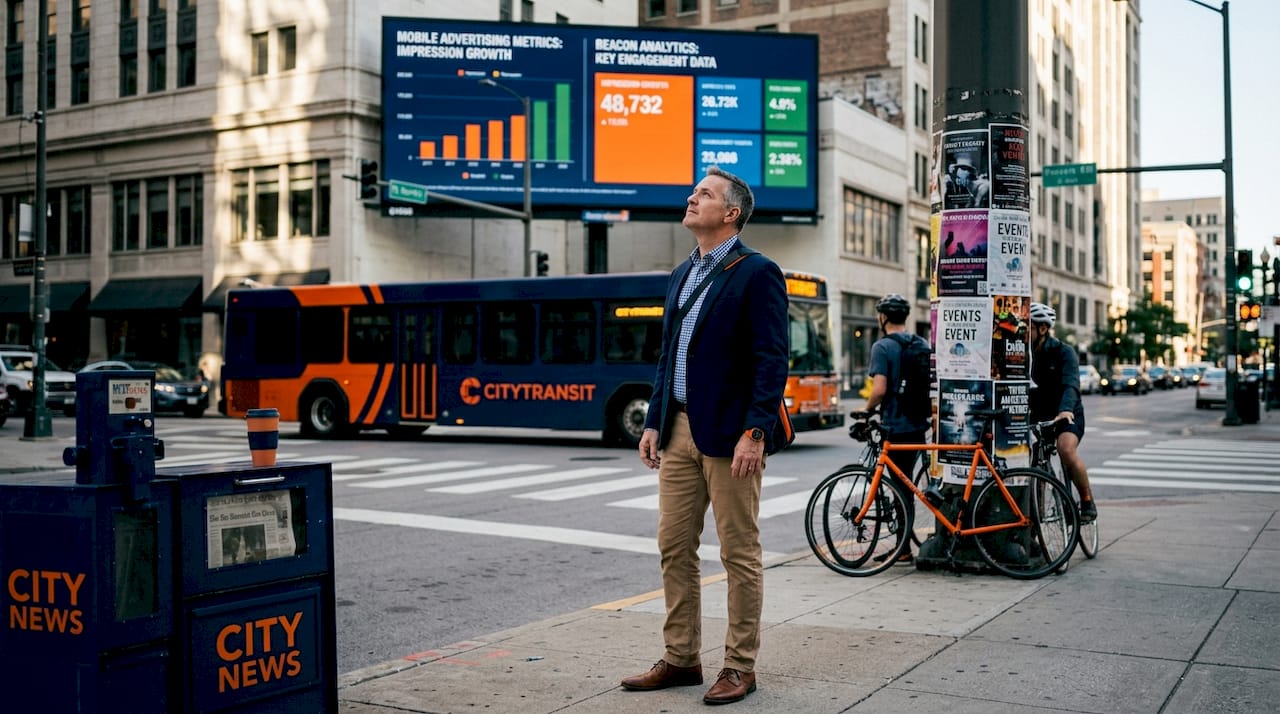
The case for mobile out-of-home as a 2026 engagement channel is not aesthetic. It is attributional. When a LED mobile billboard runs a defined route through a high-traffic area, it generates deterministic local reach signals: route, proximity, time of day, and impression count. Those signals become first-party data when combined with smart QR codes and retargeting pixels.

Here is how a measurement-first mobile OOH activation works:
Objective: Drive awareness and first-party data capture for a product launch in a target metro, then retarget engaged audiences with a conversion offer.
Tactics:
- LED billboard trucks running customized routes through high-foot-traffic corridors during peak hours
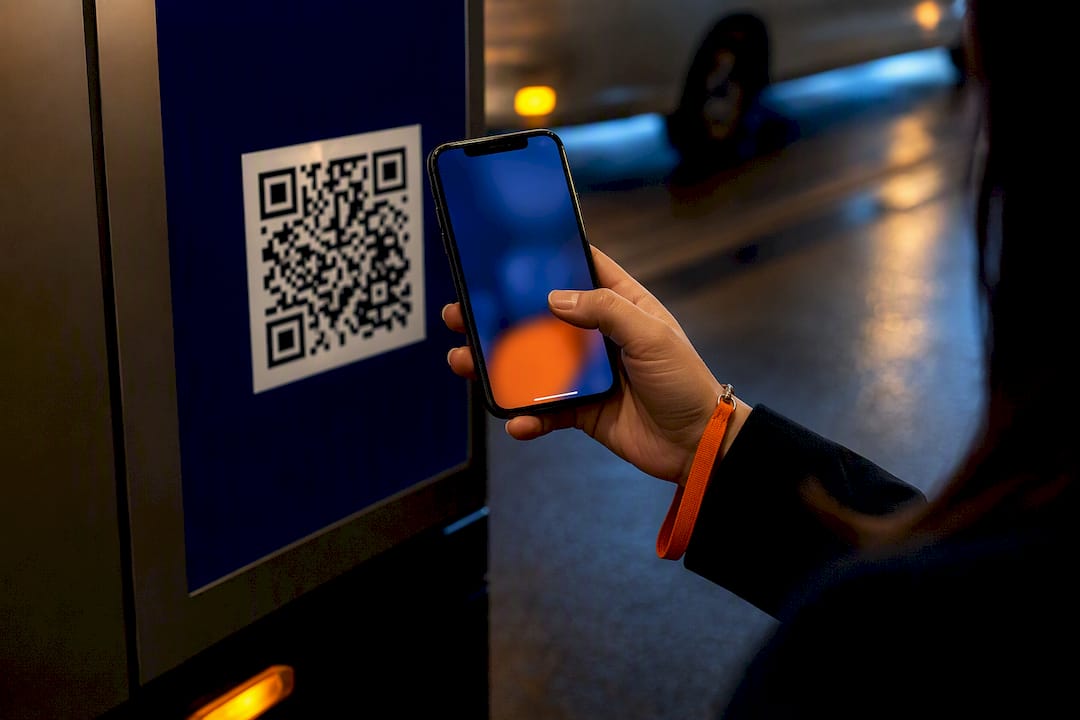
- Smart QR codes on the creative, tied to a landing page with UTM parameters and a lead capture form
- Geofencing around the route to serve digital ads to devices in proximity
- Post-impression retargeting to QR scanners and geofence entrants across social and display
Measurement framework:
| Signal | What it measures | How it feeds the funnel |
|---|---|---|
| QR scan rate | Physical-to-digital conversion | First-party lead capture |
| Geofence entry events | Proximity impressions | Retargeting audience pool |
| Post-impression conversion rate | Retargeting effectiveness | Revenue attribution |
| Route-level attribution | Which routes drove the most scans | Route optimization for future campaigns |
GPS proof-of-posting and photo documentation confirm that the campaign ran as contracted, on the routes specified, at the times specified. That is a level of accountability that static OOH formats cannot match.
Smart QR codes are the connective tissue between physical impressions and digital attribution. Every scan is a declared interest signal, which is more valuable than a passive impression.
7. Build the data foundation: CDP, identity, real-time activation, and privacy-first governance
Real-time personalization fails without a clean data foundation. Most brands have data. Few have data that is unified, current, and governed well enough to power real-time decisioning without privacy risk.
The technical build, in priority order:
- Resolve identity first. A customer who browses on mobile, purchases on desktop, and contacts support by phone is three different records in most systems. Identity resolution collapses those into one profile. Without it, personalization is guesswork.
- Implement a CDP with real-time ingestion. Batch-updated customer profiles cannot power real-time orchestration. The CDP must ingest behavioral events as they happen.
- Build an event streaming layer. Tools like Apache Kafka or cloud-native equivalents capture behavioral signals at scale and feed the decisioning layer with sub-second latency.
- Define activation endpoints. Which channels can receive a real-time trigger? Email, push, paid media, service desk, and OOH retargeting are all viable endpoints if the integration is built.
- Implement consent management at the profile level. Every personalization use case must be tied to a documented consent record. NIST SP 800-63B provides the authoritative framework for digital identity and authentication practices that should underpin your identity resolution and consent architecture.
Privacy governance checklist:
- Consent is explicit, adjustable, and stored at the profile level
- Data retention policies are documented and enforced
- Personalization use cases are disclosed in plain language in your privacy notice
- Opt-out requests are honored within the legally required window
- Third-party data sharing is audited and minimized
Implementation phases:
- Months 1–3: Data quality audit, duplicate profile cleanup, consent architecture review
- Months 3–6: Identity resolution deployment, CDP real-time ingestion configuration
- Months 6–12: Event streaming, decisioning layer integration, activation endpoint testing
Audience targeting built on a clean identity foundation performs measurably better than targeting built on fragmented, stale data. The data sprint is not glamorous, but it is the work that makes everything else in this playbook possible.
Measurement and attribution: the KPIs that actually matter in 2026
Most engagement dashboards measure activity. The ones that drive decisions measure outcomes. There is a significant difference, and Gartner’s research on CSO priorities underlines it: the majority of commercial leaders are prioritizing growth from existing customers, which means retention and engagement depth metrics need to sit alongside acquisition metrics on every executive dashboard.
The KPIs that matter:
| KPI | Definition | Business outcome it maps to |
|---|---|---|
| Engagement depth score | Weighted index of interaction frequency, channel breadth, and content completion | Predicts retention and LTV |
| Retention velocity | Rate at which churned customers return after a re-engagement trigger | Measures orchestration effectiveness |
| Time-to-value (loyalty) | Days from enrollment to first reward redemption | Predicts loyalty program ROI |
| Orchestration success rate | Percentage of triggered journeys completed without human escalation | Measures AI and automation quality |
| Net engagement score | NPS segmented by engagement depth tier | Links engagement investment to advocacy |
Attribution flow for a blended campaign:
- Event capture. A behavioral signal (scan, click, visit, purchase) is recorded with a timestamp and channel tag.
- Identity resolution. The signal is matched to a unified profile.
- Conversion signal. A downstream conversion (purchase, sign-up, renewal) is recorded and matched to the same profile.
- Incrementality check. A holdout group confirms that the conversion was driven by the campaign, not by organic behavior.
Dashboard components worth building now: engagement depth by segment, retention velocity by cohort, loyalty time-to-value by tier, AI orchestration success rate by journey, and OOH-to-digital conversion rate for any mobile billboard campaigns running.
How to prioritize and roll out these strategies this year
The brands that close the Engagement Divide in 2026 are not the ones with the biggest budgets. They are the ones with the clearest sequencing. Trying to implement AI orchestration, a loyalty redesign, a CDP migration, and an experiential program simultaneously is how engagement initiatives stall.
Phased rollout:
| Phase | Timeline | Key outcomes |
|---|---|---|
| Quick wins | Months 1–3 | Consent audit complete, loyalty redemption friction removed, one AI touchpoint with human fallback live, one experiential activation measured |
| Build | Months 3– | CDP real-time ingestion live, identity resolution deployed, loyalty redesign launched, orchestration on two journeys |
| Scale | Months 9– | Agentic orchestration on five-plus journeys, modular experiential program running in multiple markets, full attribution dashboard live |
Budget reallocation guidance: shift spend from broad awareness toward data infrastructure, orchestration tooling, and experiential activation.
Organizational roles you need:
- Head of Customer Data. Owns CDP, identity, and data governance. This is not a marketing role. It sits at the intersection of marketing, IT, and legal.
- Orchestration lead. Manages the decisioning layer and journey design. Requires both technical and customer experience fluency.
- Experiential program manager. Owns the modular event and OOH activation calendar.
- Measurement and attribution analyst. Builds and maintains the engagement dashboard and incrementality testing framework.
RFP checklist for vendor or agency selection:
- Real-time API capability (not batch-only)
- Identity resolution methodology and match rate benchmarks
- Consent management integration
- Attribution methodology and incrementality testing support
- Proof of cross-channel orchestration in a comparable use case
- Data residency and security certifications
Platform categories and evaluation criteria for 2026
No single platform covers every capability in this playbook. The 2026 stack is a set of best-fit components connected by APIs and governed by a unified data layer.
| Platform category | What it must deliver | 2026 evaluation priority |
|---|---|---|
| CDP | Real-time identity resolution, event ingestion, consent management | Real-time ingestion speed and identity match rate |
| Orchestration and decisioning | Next-best-action models, journey automation, agentic AI readiness | Explainability controls and human fallback design |
| Loyalty engine | Behavior-gated rewards, experiential perks, proactive alerts | Redemption speed and member LTV reporting |
| Analytics and attribution | Incrementality testing, engagement depth scoring, dashboard flexibility | Holdout group support and cross-channel attribution |
| OOH activation | Route customization, geofencing, QR data capture, GPS proof-of-posting | Attribution integration with digital retargeting stack |
Vendor-selection checklist:
- Does the platform offer real-time APIs or only batch data transfer?
- Can it ingest and act on behavioral events within seconds?
- Does it support identity resolution across anonymous and known states?
- Are privacy controls (consent, opt-out, data retention) built in or bolted on?
- Can it connect to your existing activation channels without a full rebuild?
The OOH activation category deserves specific attention. Mobile OOH platforms that combine physical route data with digital retargeting and QR-based first-party capture are a distinct category from static OOH buying. The data-driven OOH campaign strategies that perform best in 2026 treat the physical impression as the top of a digital funnel, not as a standalone awareness play.
For AI-driven performance marketing, the same principle applies: the platform is only as good as the data feeding it. Evaluation should start with data integration capability, not feature lists.
Personalization ethics and balancing automation with authentic human interaction
Personalization at scale creates a specific tension that most marketing teams underestimate: the line between “this brand knows me” and “this brand is watching me” is thin, and consumers draw it differently depending on context, generation, and trust level.
The ethical framework for 2026 personalization has three principles. First, use data to serve the customer’s stated goal, not to steer them toward your preferred outcome. A recommendation engine that surfaces the product the customer actually needs builds more long-term trust than one optimized purely for average order value. Second, make the personalization visible. When a customer sees a relevant offer, a brief explanation (“based on your last purchase”) increases acceptance rates and reduces the feeling of surveillance. Third, make opting out easy and consequence-free. A customer who opts out of personalization should not receive a degraded experience. They should receive a generic one.
The automation-versus-human balance is not a philosophical question. It is a design decision. High-emotion interactions (complaints, cancellations, health-related queries, financial decisions) should route to humans by default, with AI in a supporting role. Low-emotion, high-volume interactions (order status, FAQ, routine recommendations) are where automation earns its keep. The mistake most brands make is applying the same automation logic to both categories.
SAP’s Engagement Cloud is one enterprise platform that addresses this balance by providing configurable escalation paths and sentiment detection to route interactions appropriately. The principle, though, applies regardless of platform: design the escalation path before you design the automation.
Cross-generational engagement strategies tailored for Gen Z and Gen Alpha
Gen Z and Gen Alpha are not just younger versions of millennial customers. They have different trust architectures, different content expectations, and a fundamentally different relationship with brand authority.
Gen Z (born roughly 1997–2012) trusts peer validation over brand claims. Creator partnerships, community-generated content, and transparent brand behavior matter more than polished advertising. They are also the generation most likely to research a brand’s values before purchasing. Sustainability, labor practices, and corporate accountability are not peripheral concerns. They are purchase criteria.
Gen Alpha (born 2013 onward) is the first generation that has never known a world without AI-generated content. Their skepticism about authenticity is calibrated differently. They respond to brands that are genuinely interactive, that invite participation rather than broadcast, and that show up in the physical and digital spaces they actually occupy. Gamified loyalty mechanics, AR-enabled experiences, and community-first brand building are more effective with this cohort than traditional advertising formats.
Practical implications for your 2026 engagement program:
- Segment your loyalty program by generational cohort and test different reward structures. Experiential perks outperform discounts for Gen Z. Interactive and gamified rewards show stronger early signals with Gen Alpha.
- Invest in creator partnerships with micro-creators (10,000–100,000 followers) who have genuine community trust rather than macro-influencers with passive audiences.
- Build participation mechanics into every campaign. A brand that asks for input, co-creation, or community contribution gets more engagement from younger cohorts than one that simply broadcasts.
- Show your values in your operations, not just your messaging. Gen Z in particular notices the gap between what a brand says and what it does.
Sustainability and social responsibility as drivers of engagement in 2026
Sustainability is no longer a brand differentiator. For a growing segment of consumers, it is a baseline expectation. Brands that treat sustainability as a marketing campaign rather than an operational commitment are increasingly visible as such, and the reputational cost of greenwashing has risen sharply.
The engagement opportunity in sustainability is not in the messaging. It is in the mechanics. Loyalty programs that reward sustainable behavior (choosing lower-carbon shipping, returning packaging, participating in community initiatives) create a direct link between brand values and customer action. That link is more durable than a sustainability report.

Community-building around shared values is the other lever. Brands that organize their communities around a cause, not just a product category, generate higher participation rates and stronger emotional connection. The cause has to be credible, which means it has to be backed by operational evidence: supply chain transparency, measurable emissions targets, third-party verification.
For brand managers building 2026 engagement programs, the practical question is not “should we have a sustainability message?” It is “where does our sustainability commitment show up in the customer experience?” If the answer is only in the annual report, that is a gap worth closing before your competitors do.
Emerging technologies and their real impact on brand engagement
AR, VR, and spatial computing are moving from novelty to utility in specific brand engagement contexts. The key word is specific. Brands that deploy AR because it is new generate curiosity. Brands that deploy it because it solves a real customer problem generate engagement.
The use cases that are actually working in 2026:
AR product visualization reduces purchase hesitation for high-consideration categories (furniture, apparel, cosmetics). When a customer can see how a product looks in their space or on their face before buying, return rates drop and conversion rates climb.
Immersive brand experiences at events and retail locations create the kind of shareable moments that extend reach beyond the physical audience. A well-designed AR activation at a product launch generates social content that the brand could not buy.
Spatial computing for loyalty. Early-stage but worth watching: loyalty programs that use spatial triggers (entering a store, approaching a display) to surface personalized offers in real time. This requires the data foundation described earlier, but the experience it enables is genuinely differentiated.
The metaverse, as a broad category, has matured into something more specific: persistent digital spaces where communities gather, brands host events, and commerce happens. The brands seeing real engagement in these spaces are the ones with existing communities that chose to extend into digital environments, not the ones that built a metaverse presence hoping a community would follow.
The practical guidance for 2026: evaluate emerging tech against a simple test. Does this solve a real problem for my customer, or does it solve a visibility problem for my brand? The first category builds engagement. The second builds press releases.
What leaders who actually close the Engagement Divide do differently
The brands that will look back on 2026 as the year they pulled ahead share one characteristic that has nothing to do with budget or technology: they stopped treating engagement as a marketing department metric and started treating it as an enterprise outcome with cross-functional ownership.
That shift is harder than it sounds. It means the CMO and the CTO are aligned on data architecture. It means the loyalty team and the service team share a customer profile. It means the CFO understands why investment in measurement infrastructure is not overhead but the prerequisite for every other return. The brands that have not made that shift are running sophisticated campaigns on top of fragmented data, and the Engagement Divide is the result.
The other thing leaders do differently: they measure before they optimize. They know their baseline engagement depth, their loyalty redemption rate, and their AI escalation rate before they change anything. Without a baseline, every campaign is an opinion. With one, it is a test.
Beacon-ads’s approach to mobile OOH is a useful model for this mindset. GPS proof-of-posting, route-level attribution, and QR scan tracking are not features. They are the evidence layer that makes every subsequent campaign decision defensible. That same discipline, applied to your full engagement program, is what separates brands that grow from brands that guess.
Beacon-ads brings measurable OOH into your 2026 engagement program
If your 2026 engagement program needs a physical channel that generates first-party data rather than consuming it, mobile out-of-home is the format to evaluate. Beacon-ads runs LED mobile billboard trucks and wrapped rideshare vehicles across all 50 states, combining physical reach with the attribution infrastructure that makes OOH a genuine funnel input rather than a brand awareness line item.

What a Beacon-ads campaign adds to your engagement stack:
- GPS proof-of-posting. Every route is documented with location data and photo verification. You know exactly where and when your creative ran.
- Route customization. Target specific neighborhoods, event perimeters, or competitor locations. The route is a targeting decision, not a logistics one.
- Smart QR codes. Every impression is a potential first-party data capture. Scan rates feed directly into your attribution model.
- Real-time retargeting. Geofencing around the route builds a digital audience from physical impressions. That audience receives follow-up ads across social and display.
- Affinity and demographic targeting. Route selection is informed by audience data, so the physical impression reaches the right demographic, not just the nearest one.
Beacon-ads campaigns connect directly to the orchestration and measurement frameworks in this playbook. The physical impression generates the signal; the digital layer converts it. To see OOH formats and how they fit your campaign objectives, or to get a campaign quote for your next activation, contact Beacon-ads directly at Beacon-ads.
Sources
The findings in this article draw from the following primary sources. Each is worth reading in full if you are building or auditing an engagement program this year.
- 2026 Global Engagement Index — SAP
- State of Customer Experience 2026 — Genesys
- The New Rules Of Brand Engagement — Branding Strategy Insider
- NIST SP 800-63B — Digital Identity Guidelines