A lookback window in out-of-home advertising is the fixed period after someone is exposed to a billboard, truck wrap, or digital screen during which any resulting action, a store visit, a search, a purchase gets credited to that exposure. For most OOH campaigns, start with a 30-day default, tighten to 7 to 14 days for impulse categories like quick-service food, and extend to 60 or 90 days for considered purchases like automotive or home services. Whatever window you pick, device-level attribution and GPS synchronization for moving inventory determine whether the number you report is trustworthy.
TL;DR:
- Use 7 to 14 days for impulse categories, 30 days as the default, and 60 to 90 days for considered purchases.
- Set and document the window before launch, then compare lift at 7, 30, and 90 days instead of selecting whichever result looks strongest afterward.
- Valid lift tests require device level attribution and exposed and control groups with comparable demographics and identical observation periods covering the full measurement window.
- For moving ads, GPS timestamps must match each ad play’s start and end; exclude plays with unclear routes instead of estimating exposure.
- Label any extension from a short field test as a forecast, and disclose the modeling and evidence supporting effects over a longer period.
Table of Contents
- What a lookback window means for OOH measurement
- Typical lookback windows and category benchmarks for OOH
- How to choose, test and document the right lookback window for your OOH campaign
- Data, attribution and measurement pitfalls that change lookback results
- DMOOH and GPS/ad-play synchronization: special considerations
- Putting lookback windows into campaign workflows and reports
- Our recommended default and when to deviate
- How Beacon Mobile Media supports lookback-ready OOH measurement
- FAQ
- Sources
What a lookback window means for OOH measurement
A lookback window (sometimes called an attribution window) sets the boundary on how long an advertising exposure is allowed to “count” toward a later action. For example, see a mobile billboard on Monday, visit the store on Thursday: whether that visit counts as attributable depends entirely on whether your window reaches back four days or only one.
This differs from a few adjacent concepts marketers often conflate:
- Observation period: the total span over which you collect exposure and outcome data, which must be long enough to contain your chosen lookback window for every exposed person.
- Attribution window: the specific rule applied within that observation period to decide which actions get credited to which exposures.
- Time decay: the idea that an exposure’s influence weakens the further out you measure it, which is why a flat lookback window is a simplification, not a perfect model of memory or behavior.
Lookback windows show up in three distinct measurement contexts: last-touch or multi-touch attribution reporting, controlled uplift or geo-lift testing, and marketing mix modeling (MMM), which typically looks at much longer horizons than a single-campaign lift test. According to OAAA’s attribution modeling guidance, a campaign’s lingering effect is exactly what the lookback window is designed to capture, and getting that window wrong either throws away real credit or manufactures credit that was never earned.
Typical lookback windows and category benchmarks for OOH
Defaults exist because most purchase cycles cluster into a handful of predictable lengths, but the right choice still depends on what you are trying to prove.
- 3 to 7 days: fits flash promotions, app installs, and time-boxed event activations where the call to action is immediate.
- 7 to 14 days: fits most retail, quick-service, and grocery campaigns where the path from seeing an ad to acting on it is short.
- 30 days: the typical default across digital and OOH attribution, balancing enough runway to capture delayed action without diluting results with unrelated behavior.
- 60 to 90 days: fits considered purchases such as automotive, financial services, or home renovation, where OAAA’s guidance notes windows up to 90 days are common.
30 days is the standard default lookback window across both digital and OOH attribution, according to OAAA’s attribution modeling best practices, with automotive and other long-consideration categories commonly extending to 90 days. When you write this into an RFP or vendor contract, state the window explicitly and tie it to the purchase cycle you are measuring, for example: “Attribution for this campaign uses a 30-day lookback window from first exposure, consistent with OAAA guidance for considered-purchase categories.” That single sentence closes off a common dispute at reporting time, when a vendor’s default window doesn’t match what the client expected.
Impulse categories reward short windows because waiting 90 days to credit a coffee shop visit buries real lift under noise from unrelated visits. Considered categories do the opposite: a 7-day window on a car campaign will systematically undercount, because almost nobody test-drives and buys within a week of seeing a billboard.

How to choose, test and document the right lookback window for your OOH campaign
Picking a window after the campaign runs, based on whichever number looks best, is the single most common way measurement gets discredited internally. The fix is sequencing: decide the window before launch, test it rigorously, and write it down.
- Map the window to the purchase cycle. Pull your average sales cycle length, or your category’s known norm, and let that number drive the window rather than a vendor’s default setting.
- Document the rationale before launch. A one-paragraph note in the media plan, stating the chosen window and why, turns a post-hoc argument into a pre-agreed standard.
- Design matched exposed and control groups. Both groups need identical observation periods and demographic comparability, or any lift you measure could be an artifact of group differences rather than the campaign.
- Measure at the device level, not the campaign level. Aggregate counting hides the variance between people who saw the ad once and people who saw it ten times.
- Run sensitivity tests across multiple windows. Report lift at 7, 30, and 90 days side by side so stakeholders see how sensitive the result is to the assumption, rather than seeing one number presented as fact.
- Disclose forecasting methods when extrapolating. If you only ran a 14-day test but want to claim a 90-day effect, say explicitly that the longer number is modeled, not measured.
Our guide to geo lift testing walks through how to set up exposed and control geographies so the matched-group requirement in step 3 holds up to scrutiny.
Pro Tip: Run your sensitivity table before the campaign ends, using historical data from a comparable past campaign, so you already know roughly how much the lift estimate will swing across window lengths.
On the forecasting question, IAB’s retail media measurement guidelines recommend that measurement providers disclose empirically supported limits for lookback periods and explain any modeling used to reconcile a short test window with claimed longer-term effects. A 14-day field test extrapolated into a 90-day brand-impact claim without disclosure is not a measurement, it’s a guess wearing a measurement’s clothes.
Data, attribution and measurement pitfalls that change lookback results
Most lookback disputes aren’t really about window length, they’re about data quality hiding underneath the window.
- Per-device versus campaign-level counting. Counting impressions at the campaign level can double-count the same person multiple times across different media touchpoints, while per-device attribution ties each exposure to a specific identifier and avoids that inflation.
- Bid-stream data versus SDK-based location. Low-fidelity bid-stream signals generate false positives at a meaningful rate, and persistent SDK or location-permissioned data produces far more reliable exposure counts.
- Control group parity. An exposed group measured over 30 days compared against a control group measured over a different 14-day span is not a valid comparison, no matter how clean the underlying data is.
- Time-decay confounds. An exposure’s influence fades the further out you look, so a flat window treats day 1 and day 29 identically when behaviorally they are not.
- Cross-channel double-counting. When OOH, digital, and retail media each claim credit using different windows, the same conversion can get attributed to three channels at once, inflating total reported ROI well past 100%.
Practitioners that avoid low-fidelity bid-stream exposure data in favor of persistent SDK-based location reduce false-positive attribution, according to OAAA’s DMOOH exposure guidance, which is a meaningful distinction when a single bad data feed can swing a reported lift number by double digits.
Per-device windows and matched observation periods aren’t a nice-to-have, they’re the baseline requirement for a lift number to mean anything, a point attribution practitioners writing on marketing mix modeling for OOH emphasize repeatedly. Our guide to real-time advertising attribution covers how per-device approaches work in practice, including the retargeting workflows that depend on them.

DMOOH and GPS/ad-play synchronization: special considerations
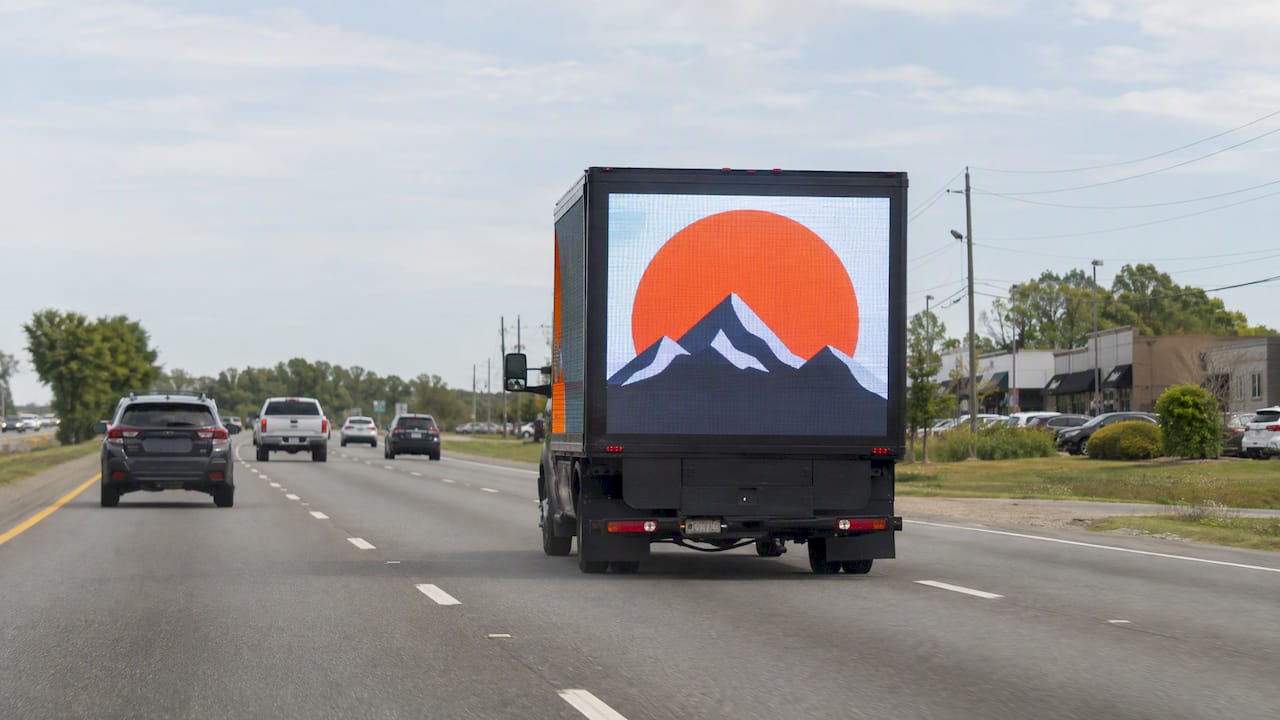
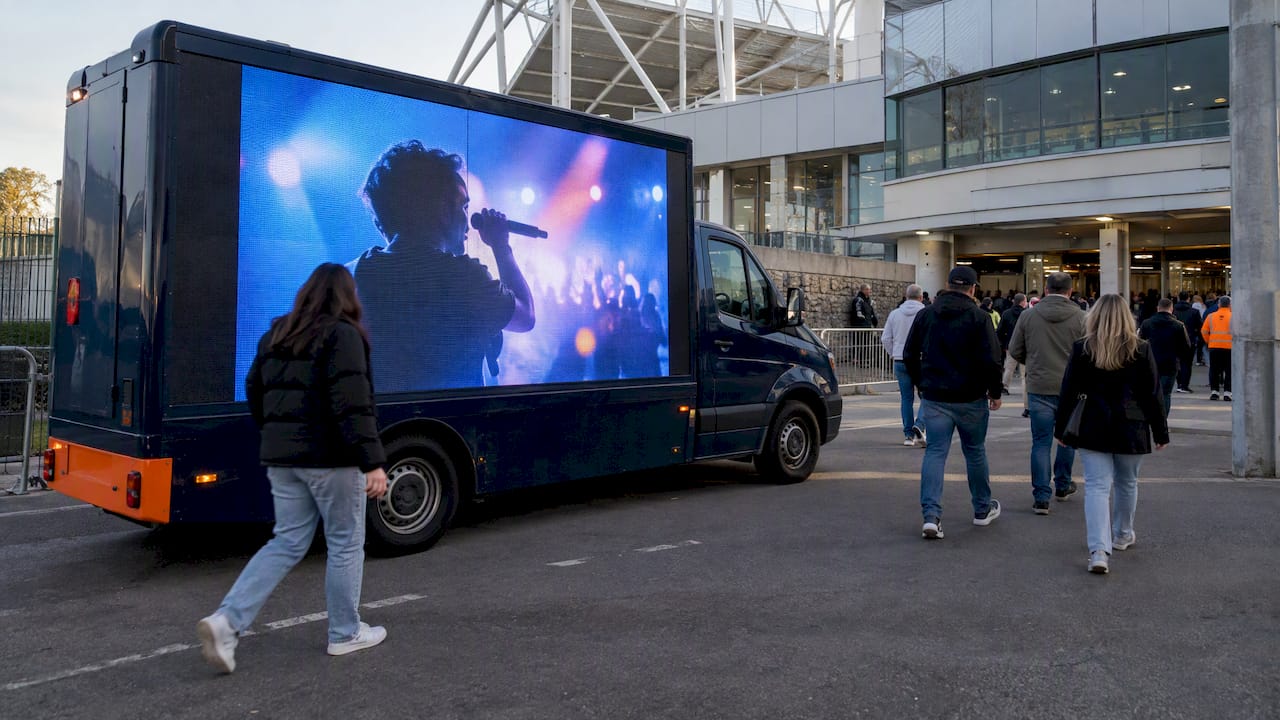
Moving inventory, LED trucks, wrapped rideshare vehicles, adds a layer of complexity that static billboards never had to solve: you need to know not just that an ad played, but exactly where the vehicle was when it played.
- Ad-play-level GPS is required, not optional. OAAA’s digital moving OOH exposure guidelines call for GPS capture synchronized to the start and end of each individual ad play, not just a general route log.
- Sparse or unsynchronized traces undermine exposure counts. When GPS data drops out mid-route or isn’t tied to the actual ad-play timestamp, you’re left guessing whether the vehicle was anywhere near the audience you’re trying to credit.
- Ambiguous plays should be excluded, not estimated. The same guidance recommends dropping plays with inconclusive routing rather than papering over the gap with an assumption that inflates exposure counts.
- GTFS and routing data can fill genuine gaps. When GPS traces are thin, transit and routing datasets can reconstruct likely vehicle paths without resorting to guesswork.
- Timestamps need normalization before anything else. Merging ad-play logs with device identifiers only works if timestamps are timezone-normalized and deduplicated first, otherwise the lookback window gets applied against the wrong clock entirely.
This matters directly for lookback-window integrity: a 7-day window is meaningless if you can’t say with confidence when, or where, the exposure actually happened. A moving billboard that logs GPS only once a minute, with no tie to ad-play start and stop times, can’t support the same confidence level as a static panel with a fixed, known location. Any vendor reporting DMOOH exposure should be able to explain their GPS capture frequency and what they do with inconclusive data, because that answer determines whether their lookback-based lift numbers are measurements or estimates dressed up as measurements.
Putting lookback windows into campaign workflows and reports
None of the rigor above matters if it lives only in a measurement team’s head. It needs to show up in contracts, dashboards, and the reports executives actually read.
- Write the window into vendor SLAs. Require disclosure of the exact lookback window used and the empirical or industry basis for it, not just a number with no citation attached.
- Harmonize windows across channels before the campaign, not after. If OOH uses 30 days and digital uses 7, reconcile that mismatch in the measurement plan so nobody is comparing incompatible numbers at the readout meeting.
- Use modeling to extend short tests, and label it as modeling. A 14-day field test can inform a longer-term forecast, but the forecast needs its own line in the report, separate from the measured result.
- Build sensitivity into the dashboard itself. Report windowed lift alongside a confidence interval and the alternate-window comparison, rather than a single headline number that hides how fragile it is.
Pro Tip: Ask every vendor the same single question before signing: “What lookback window did you use, and what’s your source for it?” A vendor without a confident answer is a vendor you cannot audit later.
Our breakdown of why comprehensive attribution analytics drive real ROI goes deeper into what disclosure-first reporting looks like in practice, and aligning tracking setups across channels, including paid search, is covered well in this partner guide to UTM tracking for local ads.
Our recommended default and when to deviate
We default to a 30-day lookback window for most OOH campaigns, add a 7-day read for optimization decisions, and layer a 90-day sensitivity report for categories with long consideration cycles. Per-device measurement and disclosed assumptions matter more than the specific day count, and a provider capturing synchronized GPS and ad-play data removes the single biggest source of uncertainty in that chain.
— Scott
How Beacon Mobile Media supports lookback-ready OOH measurement

Our mobile OOH reporting follows a disclosure-first standard: ad-play-level GPS tracking, proof-of-posting documentation, and attribution analytics that show their inputs rather than hiding behind a single black-box number.
- Ad-play GPS and proof-of-posting, to help make exposure timing and location auditable.
- Geofencing and real-time retargeting capabilities to help connect exposure to downstream actions within a chosen lookback window.
- Smart QR code capture for first-party data points.
- Comprehensive attribution reporting that supports sensitivity comparisons across windows rather than relying on a single fixed number.
A practical starting point: a 14-day exposure read paired with 30-day and 90-day sensitivity reporting, scoped against your own category’s purchase cycle. Get in touch about a campaign and we’ll map the measurement plan to what you’re actually trying to prove.
FAQ
What is a lookback window in OOH advertising?
A lookback window is the fixed period after an ad exposure during which a later action, like a store visit or purchase, is credited to that exposure. OAAA’s attribution guidance treats 30 days as a typical default, extending to 90 days for considered-purchase categories.
How long should an OOH attribution window be?
It depends on the purchase cycle: impulse categories like quick-service food often use 7 to 14 days, while considered categories like automotive commonly extend to 90 days, per OAAA guidance. Thirty days remains the standard middle-ground default across both digital and OOH measurement.
Why does device-level attribution matter for lookback windows?
Per-device attribution ties each exposure to a specific identifier, avoiding the double-counting that happens when impressions are tallied at the campaign level instead. Matched, per-device windows for exposed and control groups are considered essential for valid lift testing in OOH measurement.
What makes DMOOH (moving screens) attribution different?
Moving inventory requires GPS capture synchronized to the exact start and end of each ad play, not just a general vehicle route log, according to OAAA’s digital moving OOH guidance. Plays with sparse or inconclusive GPS data should be excluded rather than estimated, to avoid inflating exposure counts.
Should I extend a short measurement test into a longer-term claim?
Only if you disclose the modeling used to make that extrapolation, since a short test measures what it measures and anything beyond that is a forecast. IAB’s retail measurement guidelines recommend disclosing empirically supported limits whenever a short window is used to support a longer-term effect claim.