Conference attendee retargeting means reaching the people who registered for, visited or physically attended an event, then continuing the conversation after they leave. The strongest programs combine three layers: site retargeting for people who showed interest online, geofencing for people who were physically at the venue, and out-of-home media such as LED mobile billboards to own the streets around it. Done well, you connect all three to one report that ties exposure to leads and meetings.
This guide walks through how the pieces fit, what signals you can use, which privacy rules apply in the US, and how to plan and measure a campaign.
TL;DR
- Retargeting an event audience works in three windows: before the event (site visitors and registrants), during it (geofence and street-level media), and after it (a time-limited follow-up tied to your sales cycle).
- Physical presence is a useful signal, but it is stronger when you layer it with behavior, such as a booth visit, a landing page view or a scanned QR code.
- Use de-identified location data, document consent where it is required, and keep data only as long as you need it. The FTC has taken action over precise location data sold without proper consent.
- Measure against a plan set before launch: impressions, site visits, leads, demo requests and meetings, connected to your CRM.
- Mobile billboards and wrapped rideshare vehicles add a visible, route-controlled layer that feeds the digital retargeting pool.
Table of Contents
- What conference attendee retargeting actually is
- The three windows: before, during and after
- Signals you can use to find attendees
- How OOH, geofencing and digital work together
- Privacy and consent rules for US marketers
- Perspective: why the physical layer matters
- Plan the campaign step by step
- Measuring results without fooling yourself
- Common mistakes to avoid
- Promo: put your brand on the attendees’ route
- FAQ
- Sources
What conference attendee retargeting actually is
General event marketing tries to fill a room. Retargeting works with a smaller, warmer group: people who already interacted with you or with the event. That might be a visitor who viewed an agenda page and left, a registrant who never showed up, or a person whose phone was inside the convention center on day two.
It differs from broad promotion in one way that matters for budgets. You are not paying to introduce yourself to everyone in a metro area. You are paying to reach a defined audience that has already raised a hand, even if only by showing up. If you sell to businesses that attend trade shows, that audience is concentrated and expensive to reach any other way once the doors close.
There are two different jobs people mean by the phrase:
- Exhibitor and sponsor retargeting. You are a company at someone else’s show. You want to be remembered by the attendees who walked the floor, and to convert the ones who did not stop at your booth.
- Organizer retargeting. You run the conference. You want to bring attendees back, sell next year’s early registrations and pull in colleagues who could not come.
The tactics overlap, but the audiences, creative and success metrics differ. Decide which job you have before you buy anything.
The three windows: before, during and after
Before the event
The pre-show window is mostly digital. Pixel your event landing page and your registration confirmation page so you can build separate pools: visitors who did not register, and registrants who did. Registrants get reminders and meeting-booking prompts. Non-registrants get the reasons to come.
Exhibitors can run the same idea from the other side: put your own pixel on a “meet us at the show” page and retarget everyone who visits it, so booth invitations follow them for the weeks before the show.
During the event
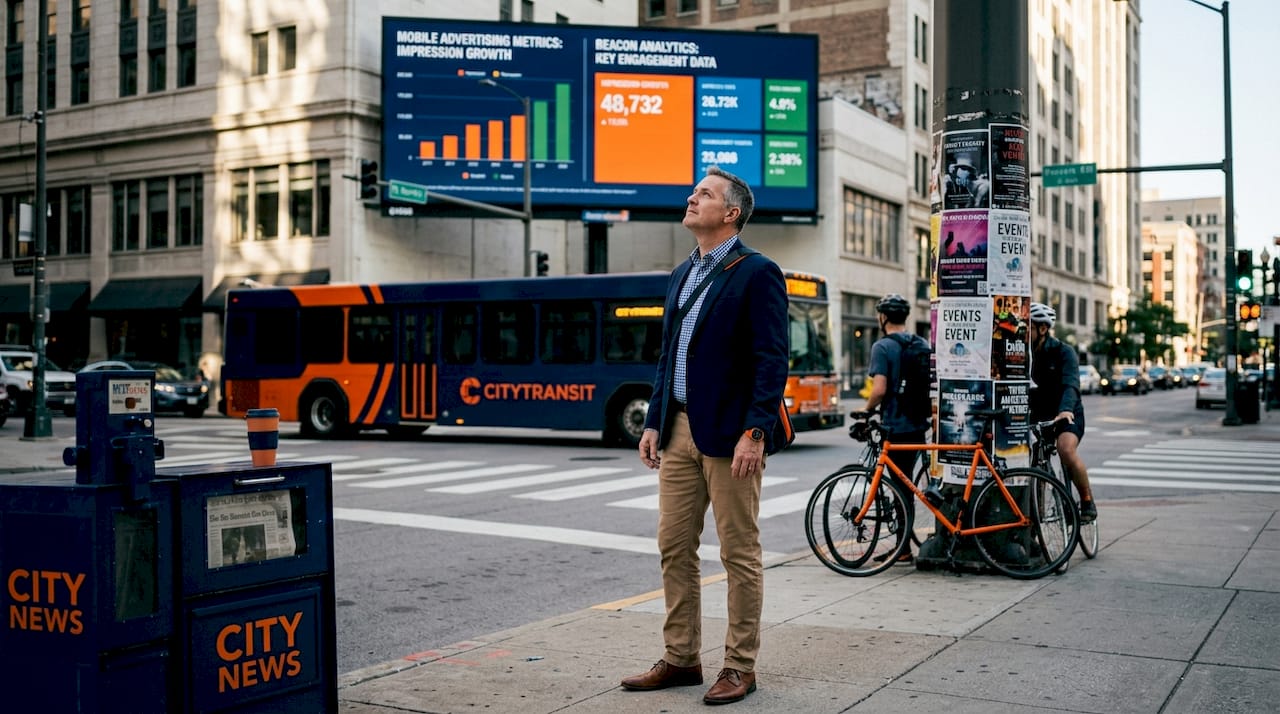
This is where physical media earns its place. A geofence draws a virtual boundary around a venue, and ads are delivered to mobile devices that enter it. You can also draw a tighter boundary around a specific booth or session room to capture who was actually near your stand.
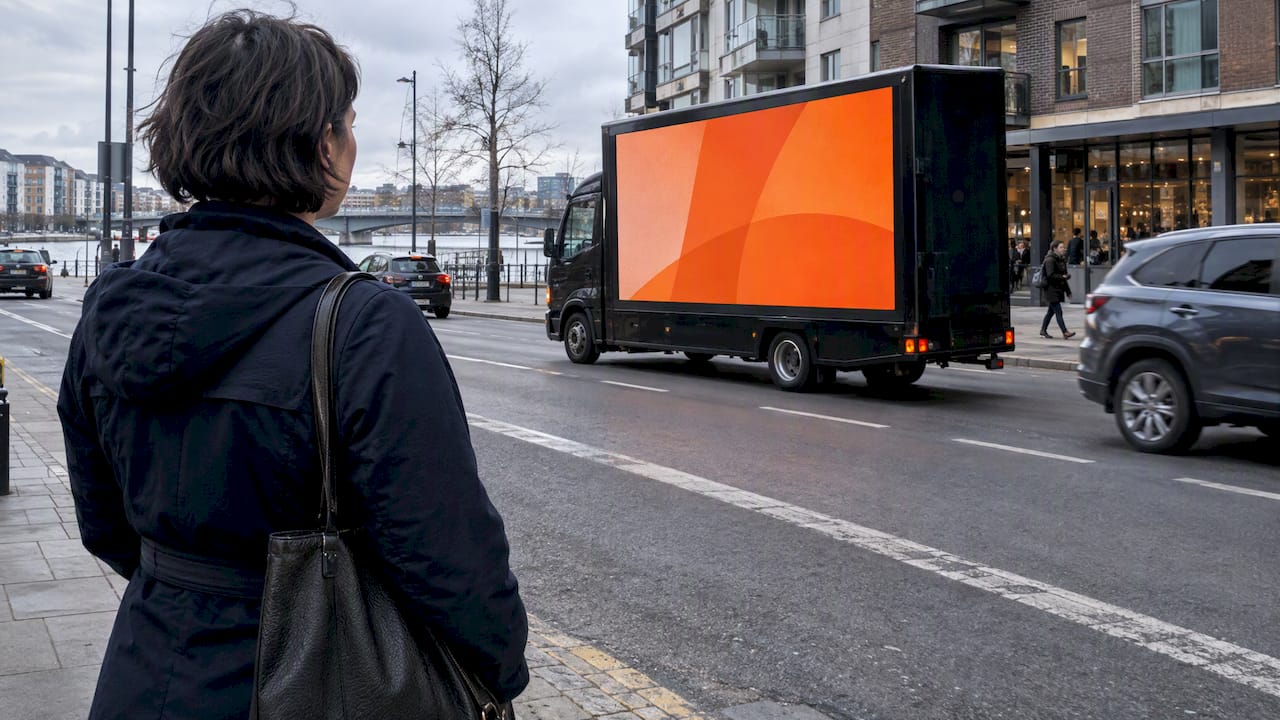
On the street, an LED mobile billboard can run a route around the convention center, hotel blocks and transit corridors attendees use, with creative that changes by time of day or session. We cover the tactical side in our guide to targeting conferences and trade shows with LED mobile billboards. The point is repetition: someone who sees your truck on the way in, gets a mobile ad at lunch and sees a follow-up on their laptop the next week has had three touches from one coordinated plan.
After the event
The post-event window is where most of the measurable return sits, and where most campaigns stop too early. Retarget the devices you captured at the venue and your site visitors, and match the length of the window to how you sell. A local service business may need only a couple of weeks. A complex B2B sale with a long buying committee needs a longer tail, with creative that changes as the lead matures instead of repeating the same banner.
For a deeper look at the sequencing, see our OOH and digital retargeting playbook for events and the trade show retargeting guide.
Signals you can use to find attendees
Not every signal carries the same weight. Ranked roughly from strongest to weakest for most B2B teams:
| Signal | What it tells you | Best use |
|---|---|---|
| Scanned QR code or form fill | Explicit interest, often with contact data | Direct follow-up, CRM entry, sales alerts |
| Booth or session geofence | Physical proximity to your stand or a topic | Tailored post-event ads |
| Venue geofence | Attended the event | Broad reminder and nurture pool |
| Site activity | Viewed agenda, registration or pricing pages | Pre-show conversion and post-show re-engagement |
| Uploaded lists | Past attendees, customers, target accounts | Match against ad platforms for known contacts |
The lesson most experienced event marketers share is that attendance alone is a blunt instrument. Thousands of people walk a trade show floor for reasons unrelated to your product. Layer presence with intent: a QR scan on a billboard, a visit to your pricing page, or a match to your target account list. That keeps spend on the people most likely to buy. If you are building the audience side of a campaign from scratch, this overview of reaching digital marketing audiences is a useful companion to the signal list above.
Smart QR codes deserve special mention. A scan is a consented, self-selected action, so it is the cleanest bridge from a physical impression to a known lead. Put one on a truck screen near the venue, a rideshare wrap or a booth banner, and each scan can feed your retargeting list and your CRM at the same time.

How OOH, geofencing and digital work together
Think of the campaign as one loop rather than three channels.
- Street-level exposure. LED mobile billboards and wrapped rideshare vehicles reach attendees in transit, between the airport, hotels and the venue. Routes can be customized around the places your audience actually moves.
- Digital capture. Geofences around the venue and your booth identify devices present at the event. A QR code or short URL on the creative lets people self-identify.
- Retargeting. Those devices and visitors enter a pool that sees follow-up ads on mobile, tablet and desktop.
- Attribution. Visits to your site, form fills and booked meetings are matched back to exposure.
The IAB’s 2025 DOOH measurement guide describes how digital out-of-home has moved from static roadside media to a data-driven channel, and why the industry needs shared measurement standards so advertisers can trust the numbers. You can read the background in the IAB’s piece on cracking the code of DOOH. If the format is new to you, our explainer on what DOOH advertising is covers the basics, and our look at event proximity targeting goes into visit lift and privacy.
Privacy and consent rules for US marketers
Location data is the part of this tactic that can hurt you if handled carelessly, so it gets its own section rather than a footnote.
Regulators are watching precise location data. In January 2024 the FTC announced a proposed order that would ban the data broker InMarket from selling or licensing precise location data, after alleging the company did not fully inform consumers or obtain their consent. The agency also said the company’s five-year retention of geolocation data was unnecessary and raised the risk of disclosure and misuse. Read the FTC announcement on the InMarket order before you vet any data supplier.
Industry guidance points the same direction. The IAB’s July 2025 DOOH measurement guide advises campaigns to assess notice and consent requirements, obtain opt-in consent for sensitive personal information where required, use fully de-identified mobile location data, and keep data only as long as necessary, typically 30 to 90 days. It also says third-party providers should offer documented audit trails and certifications such as ISO 27001 or SOC 2. The IAB DOOH Measurement Guide is worth sharing with your legal team.
A practical checklist:
- Ask every data partner how location signals were collected and whether consent was captured at the source.
- Work with de-identified data, and ask how identifiers are handled after matching.
- Set a retention period before launch and write it into the contract.
- Request audit trails and security certifications from vendors.
- Avoid targeting around sensitive locations such as clinics or places of worship, and ask your counsel about state privacy laws that apply to your audience.
This is general information, not legal advice. For your specific campaign, your company’s privacy counsel should sign off on the data flow.
Perspective: why the physical layer matters
Most retargeting advice assumes the conversation happens on a screen. Conferences break that assumption. Your audience spends two or three days in a small geographic area, they are in a buying mindset, and their phones are busy with the event app. The most reliable way to get noticed is still to be physically unavoidable, then make that attention measurable.
That is why we built our service around a combination of LED mobile billboards and wrapped rideshare vehicles with geofencing, audience filtering, real-time retargeting and smart QR codes. A truck on the right route does what a banner cannot: it puts your brand in front of attendees where they actually are, and a QR code turns that glance into a known lead. Our reporting then ties the physical exposure to what happened next, with proof-of-posting documentation and attribution analytics, so you are not asked to take a campaign on faith.
If you take one idea from this article, make it this: plan the physical and the digital layers together, with one audience definition and one report. Campaigns that treat the street and the screen as separate budgets tend to produce two partial stories instead of one clear answer.
— Scott
Plan the campaign step by step
- Pick the use case. Exhibitor follow-up, sponsor visibility, or organizer re-registration. Each needs different creative and a different success metric.
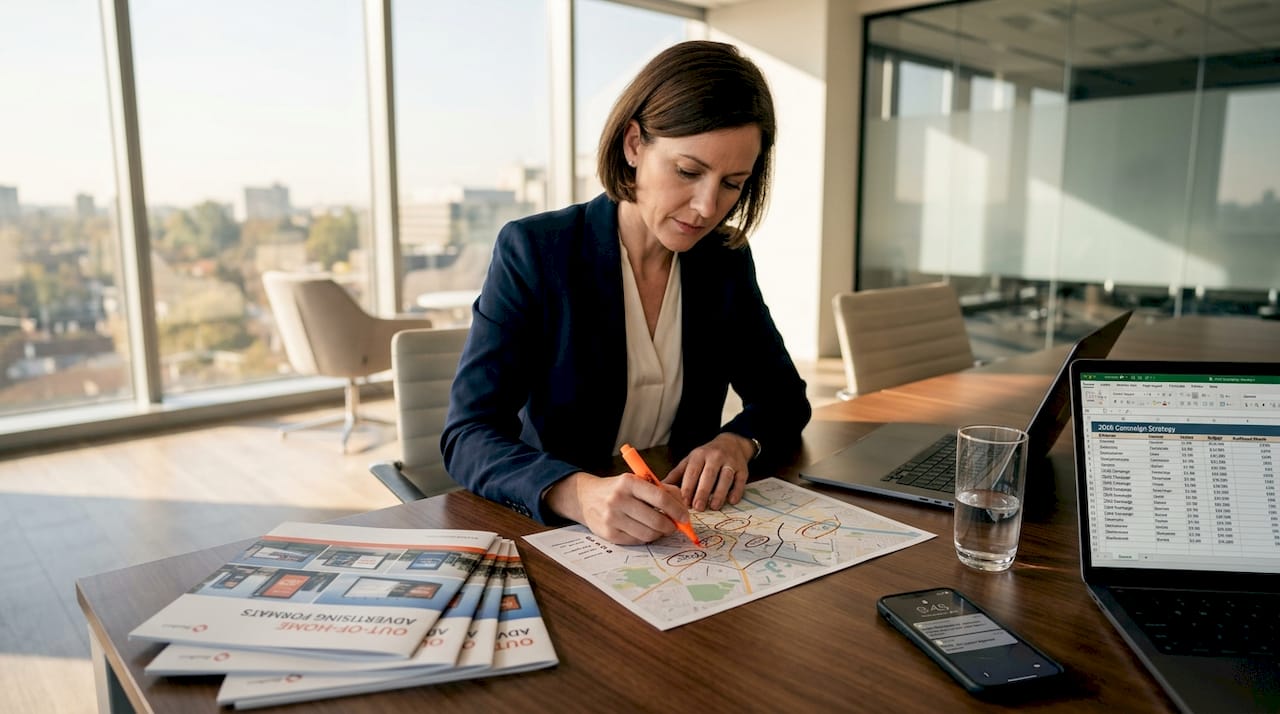
- Define the geography. Map the venue, the host hotels, the transit routes and the evening hotspots. Decide which areas get a geofence and which get a mobile billboard route.
- Set the audience rules. Combine presence with intent: booth proximity, QR scans, site behavior and your target account list.
- Build creative for each window. Before: reasons to visit you. During: a clear offer and a scannable code. After: a specific next step, such as a demo, a recap or a meeting link.
- Choose the lookback window. Match it to your sales cycle, and change the message as time passes, because interest fades quickly after an event.
- Wire up measurement. Connect impressions, clicks, site visits and lead captures to your CRM before the first ad runs.
- Review mid-event. Real-time reporting lets you shift routes or creative while the show is still on.
For the planning side of local campaigns, our localized marketing strategy workflow lays out the steps in more detail.
Measuring results without fooling yourself
Track a short list of metrics from first impression to revenue:
- Impressions and reach by route or geofence
- QR scans and click-throughs
- Website visits from exposed devices
- Leads captured, demo requests and meetings booked
- Pipeline and closed revenue from event-sourced accounts
The IAB’s guide describes standardized DOOH measurement as a way to support consistency, trust, cross-channel comparability and attribution, and it points to mobile-location matching for tracking behavior after exposure, along with attribution models and multi-touch tracking. In plain terms: you can see whether exposed people later visited your site or your store, and you can compare channels on the same basis.
Be honest about what the numbers do and do not show. A device seen at a venue is not necessarily a decision-maker. A visit after exposure is evidence of influence, not proof of cause, so a holdout comparison or a pre-defined baseline makes your claims stronger. Our guides to foot traffic attribution and precise reporting for ad campaigns explain how to set that up.
If your creative includes video on screens or in follow-up ads, build the KPIs around the first seconds of attention. This piece on funnel-first video ad KPIs is a handy reference for choosing what to measure at each stage.
Common mistakes to avoid
- Treating the venue geofence as the whole audience. It captures presence, not interest. Add intent signals.
- Stopping when the show ends. The follow-up window is where leads convert.
- Running the same creative for every phase. An attendee on day three needs a different message than a prospect three weeks later.
- Skipping the data-handling questions. A cheap audience from an unclear source can become an expensive problem.
- Reporting impressions as results. Tie the campaign to meetings and pipeline, or the budget is hard to defend next year.
Promo: put your brand on the attendees’ route
We run LED mobile billboards and wrapped rideshare vehicles across all 50 states, combined with geofencing, audience filtering, real-time retargeting and smart QR codes for lead capture. Every campaign comes with proof-of-posting documentation and attribution reporting. If you have a conference or trade show on the calendar, tell us the venue and dates and we will map routes and a retargeting plan around it.

Plan a conference campaign with Beacon or read how we target conferences and trade shows with LED mobile billboards.
FAQ
How long should I retarget conference attendees after the event?
Match the window to your sales cycle. Shorter cycles may only need a couple of weeks, while complex B2B sales usually justify a longer tail. Refresh the creative as time passes, because interest fades quickly, and review results at the end of each stage to decide whether to extend.
Can I retarget people who attended a conference I did not sponsor?
Yes, geofencing can capture devices at a public venue, but the data must be collected and used responsibly. Use de-identified location data from vendors who can document consent, set a retention limit and have your privacy counsel review the plan. Exhibitors and sponsors have a stronger case because they can pair presence with booth-level engagement.
How big should the geofence be?
It depends on the venue. A compact convention center needs a tight boundary, while a campus or multi-hotel event needs several zones. Draw smaller fences around booths or session rooms to separate real engagement from passing foot traffic, and test the boundaries before the show opens.
Do mobile billboards help with retargeting, or only awareness?
They do both when they are set up for it. A route-based LED billboard builds recognition around the venue, and a smart QR code captures scans from interested attendees. Those scans and the geofenced devices feed the retargeting pool, and reporting connects exposure to later site visits and leads.
Sources
- FTC order will ban InMarket from selling precise consumer location data
- IAB DOOH Measurement Guide, July 2025
- IAB: Cracking the Code of DOOH