The strongest admobiletv.com alternatives for mobile and LED billboard advertising in the US are AdMob, InMobi, Liftoff, PropellerAds, and Beacon-ads, each serving distinct campaign goals from programmatic app installs to physical out-of-home reach. The field splits cleanly into two categories: software-based mobile ad networks (SDK integrations, programmatic buying, in-app formats) and physical LED billboard providers that layer digital targeting on top of real-world presence. Knowing which category fits your campaign is the first decision, not the last.
The platforms covered here range from Google’s AdMob and Meta’s Facebook Audience Network at the scale end to niche retargeting specialists like Remerge and Jampp, and to physical mobile billboard operators like Beacon-ads. Pricing models vary from CPM and CPC to flat-fee routes and performance-based CPA structures. Geographic reach spans global programmatic networks down to US-only physical routes.
Key targeting and reporting capabilities across these platforms include:
- Geofencing and real-time retargeting (Beacon-ads, InMobi, Smadex)
- AI-driven bidding algorithms (Smadex, Jampp, Clickadu, Liftoff)
- First-party data and audience analytics (TalkingData, SocialPeta, Facebook Audience Network)
- SDK-based mediation and monetization (AdMob, Admost, Smaato, Publift)
- Performance-based CPA tracking (Perform[cb], OGAds, Liftoff)
- Proof-of-posting and attribution reporting (Beacon-ads)
| Platform | Best For | Pricing Model | Ad Formats | Geographic Reach | Targeting Tech |
|---|---|---|---|---|---|
| AdMob | App developers on Google ecosystem | CPM, CPC, CPA | Banner, interstitial, rewarded video | Global | AI-based, mediation |
| InMobi | Broad programmatic buying | CPM, CPC | Native, video, interstitial | Global | Contextual, behavioral |
| Liftoff | Performance-driven installs | CPA, CPM | Video, native, playable | Global | Predictive analytics |
| Facebook Audience Network | Meta ecosystem targeting | CPM, CPC, CPA | Native, banner, interstitial, video | Global | Facebook user data |
| PropellerAds | Multi-format digital reach | CPM, CPC, CPA | Push, pop-under, on-click, interstitial | Global | Geo-targeting, behavioral |
| Adsterra | Diverse ad format publishers | CPM, CPA | Pop, native, video, banner | Global | Smart targeting |
| Smadex | Programmatic mobile installs | CPM, CPA | Video, native, banner | Global | AI bidding |
| Remerge | Retargeting and re-engagement | CPM, CPA | Native, video, interstitial | Global | Deep re-engagement analytics |
| Jampp | Performance retargeting | CPA, CPM | Native, video | Global | ML personalization |
| Smaato | Real-time bidding for publishers | CPM, RTB | Banner, video, native | Global | SDK, API integrations |
| Unity Ads | Game developers | CPM, CPA | Rewarded video, interstitial | Global | Unity engine integration |
| Apple Ads | iOS user acquisition | CPA, CPM | Search, display | iOS/Global | Apple device data |
| Admost | App monetization mediation | CPM, CPC | Banner, interstitial, rewarded | Global | SDK mediation |
| Publift | Publisher yield optimization | CPM, programmatic | Display, video, native | Global | Yield optimization |
| Moburst | Full-service mobile campaigns | Custom/agency | Multi-format | Global | Strategic campaign design |
| Perform[cb] | CPA-focused user acquisition | CPA | Multi-format | US-focused | Performance tracking |
| EVADAV | High-volume global traffic | CPM, CPC | Push, native, video | Global | Geo, behavioral |
| Hopemobi | Fast SDK integration | CPM, CPC | Banner, interstitial, native | Global | All-in-one data tracking |
| TalkingData | Data-driven mobile targeting | CPM, CPC | Multi-format | China, US | First-party data analytics |
| Kadam | Diversified mobile ad formats | CPM, CPC, CPA | Push, native, banner, video | Global | Broad platform support |
| Clickadu | Diverse formats with AI | CPM, CPC, CPA | Native, push, interstitial | Global | AI optimization |
| OGAds | Incentivized installs | CPA | Incentivized, native | Global | Incentivization targeting |
| Hitapps | Tailored app ad campaigns | CPM, CPA | Multi-format | Global | Dedicated management |
| Certis Media | Data-driven optimization | CPM, CPA | Multi-channel | Global | Integrated analytics |
| Zoomd | Organic app discovery | CPI, CPM | Search, display | Global | Search and discovery tech |
| mFilterIt | Programmatic APAC and US | CPM, RTB | Multi-format | APAC, US | Cross-region programmatic |
| SocialPeta | Ad intelligence research | Subscription | Analytics/insights | Global | Creative and spend analytics |
| Z2A Digital | Bespoke mobile marketing | Custom/agency | Multi-format | Global | Agency-level strategy |
| Mobfox | RTB exchange access | CPM, RTB | Banner, video, native | Global | Hybrid network/exchange |
| Yahoo App Publishing | Premium mobile inventory | CPM, CPC | Native, video, display | US-focused | Yahoo ecosystem targeting |
| Beacon-ads | Physical + digital OOH in US | Flat fee, route-based | LED billboard, rideshare wrap | All 50 US states | Geofencing, retargeting, QR |
What are the best AdmobileTV alternatives for mobile and LED billboard advertising?

The platforms above split into three functional tiers, and where you land depends on what you actually need from a campaign.
Programmatic mobile ad networks are the largest tier. AdMob sits at the top for app developers already in Google’s ecosystem, offering mediation across hundreds of demand sources and real-time analytics through Firebase. InMobi competes directly on global reach and contextual targeting, with a particular strength in emerging markets. Liftoff differentiates itself through predictive analytics that score users by lifetime value before the install, not after, which shifts the CPA math significantly for subscription apps. Facebook Audience Network extends Meta’s targeting data outside Facebook itself, giving advertisers access to behavioral signals built from billions of users across banner, native, and video placements.
Smadex and Jampp both lean heavily on machine learning, but for different goals. Smadex focuses on efficient first-install acquisition using AI bidding that adjusts in real time. Jampp specializes in retargeting users who have already installed but gone dormant, using real-time behavioral signals to time re-engagement pushes. Remerge operates in the same retargeting space with deep analytics on re-engagement effectiveness, making it a strong choice when retention is the metric that matters.
Performance and niche networks serve more specific use cases. Perform[cb] runs on a payment-on-performance model where advertisers pay only for completed actions, not impressions. That structure suits direct-response campaigns with clear conversion events. OGAds targets incentivized installs and content-locking offers, which works for certain app categories but requires careful audience matching. Zoomd takes a different angle entirely, focusing on app store search and organic discovery rather than paid display, which can lower blended CPI for apps with strong organic potential.
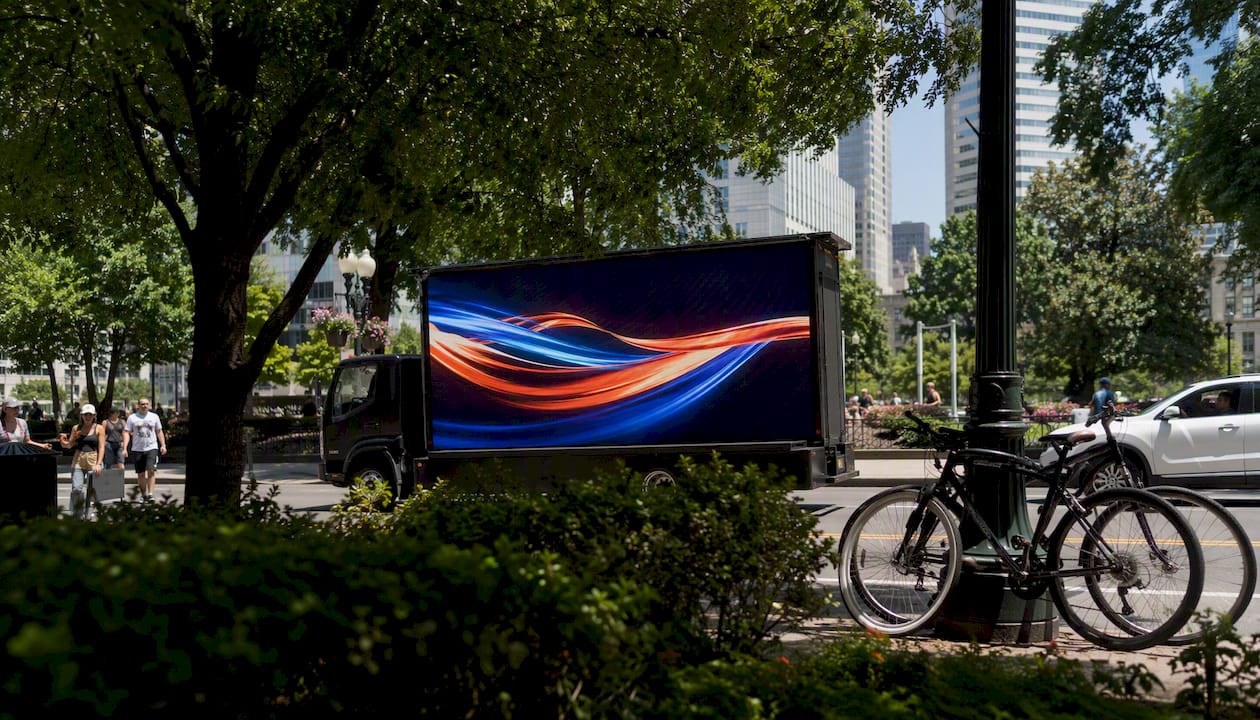
Physical and hybrid OOH providers represent the category where AdmobileTV originally operated. Beacon-ads runs LED mobile billboards and wrapped rideshare vehicles across all 50 states, combining physical visibility with geofencing, real-time retargeting, and smart QR code data capture. This is a fundamentally different channel from programmatic mobile, and the comparison is less about CPM rates and more about whether physical presence in a specific geography matters to your campaign.

Pricing, contracts, and what to watch for
Pricing transparency varies sharply across this list. AdMob, PropellerAds, and Adsterra publish self-serve rate structures with no minimum spend requirements, making them accessible for smaller budgets. Agency-model providers like Moburst and Z2A Digital work on custom scopes, which means pricing is negotiated and contract terms depend on campaign complexity. Perform[cb] and OGAds operate on CPA models where the advertiser sets the payout per action, though minimum traffic volumes may apply.
Contract flexibility is a real differentiator. PropellerAds and Clickadu allow campaign-level commitments with no long-term lock-in. Platforms like Smaato and Mobfox, which operate as programmatic exchanges, are inherently flexible since you buy inventory in real time. Physical billboard providers typically work on route-based flat fees with defined campaign durations, which requires more upfront planning but delivers predictable cost-per-day exposure.
Reporting and analytics depth
Reporting quality separates the platforms that are easy to buy from the ones that are easy to optimize. AdMob integrates directly with Google Analytics and Firebase, giving app developers a single attribution view from ad impression to in-app purchase. Liftoff’s reporting includes post-install event tracking with cohort analysis, which is the level of depth subscription and gaming apps need to evaluate true ROI. SocialPeta sits outside the buying stack entirely, functioning as a competitive intelligence tool that shows what creatives competitors are running and how much they are spending.
For physical OOH, proof-of-posting documentation is the reporting equivalent of an impression log. Beacon-ads provides this alongside attribution analytics, which closes the loop between a billboard exposure and a downstream digital action via QR scan data.
Pro Tip: Before committing to any platform, request a sample report from a live campaign. The format and depth of that report tells you more about the platform’s actual analytics capability than any sales deck will.
How to choose the right AdmobileTV alternative for mobile advertising campaigns
The right platform is the one that matches your specific campaign constraint, not the one with the most features.
Start with your primary KPI. If you are buying installs, CPA-based platforms like Liftoff, Perform[cb], and Jampp let you set a target cost per acquisition and let the algorithm optimize toward it. If you are building brand awareness in a specific geography, CPM-based networks or physical OOH routes make more sense. Mixing the two without a clear attribution model creates reporting confusion that is hard to untangle mid-campaign.
Key evaluation criteria:
- Targeting precision: Does the platform offer the audience segments your campaign needs? Behavioral, contextual, geofenced, or device-level targeting each suit different goals.
- Geographic reach: Global networks like InMobi and EVADAV cover emerging markets well. US-focused campaigns may get better inventory quality from Apple Ads, Yahoo App Publishing, or physical providers like Beacon-ads.
- Ad format flexibility: Gaming apps need rewarded video (Unity Ads). E-commerce brands often perform better with native formats (InMobi, Adsterra). Physical presence campaigns need LED or wrap formats.
- Pricing transparency: Self-serve platforms with published rate cards are easier to budget. Agency and custom-scope providers require RFP processes that add lead time.
- SDK and platform integration: Admost, Smaato, and AdMob all offer mediation SDKs that consolidate multiple demand sources. If you are already running a mediation stack, adding a new network should not require a separate SDK.
Contract terms and minimum commitments
Minimum spend requirements are rarely published upfront. Programmatic self-serve platforms generally have low or no minimums. Performance networks like Perform[cb] may require minimum monthly volumes to access premium traffic. Physical billboard campaigns typically require a minimum campaign duration to justify route setup costs.
Red flags to watch for: platforms that cannot provide third-party verification of impressions, networks that bundle your spend across undisclosed publisher sites, and providers that offer no post-campaign attribution data. Any platform that resists sharing a sample report before you sign is telling you something about what the reporting actually looks like.
Pro Tip: Run a two-week pilot on any new platform before scaling budget. Set a fixed test spend, define one primary conversion event, and compare the cost-per-event against your existing channels. That single comparison tells you whether the platform belongs in your mix.
Customer support and integration quality
Support quality matters most at launch and during campaign issues. Self-serve platforms like PropellerAds and Clickadu offer ticket-based support, which works for straightforward campaigns. Managed service providers like Moburst, Z2A Digital, and Certis Media assign dedicated account managers, which is worth the premium when campaign complexity is high. Hitapps also offers dedicated campaign management, making it a reasonable choice for app developers who want hands-on optimization without building an in-house team.
Integration with your existing marketing stack is a practical constraint that often gets overlooked. If you are running attribution through AppsFlyer or Adjust, confirm that the platform you are evaluating has a certified integration before committing. Most major networks do, but niche platforms sometimes require custom postback setups that add technical overhead.
How does LED mobile billboard advertising work with digital targeting?
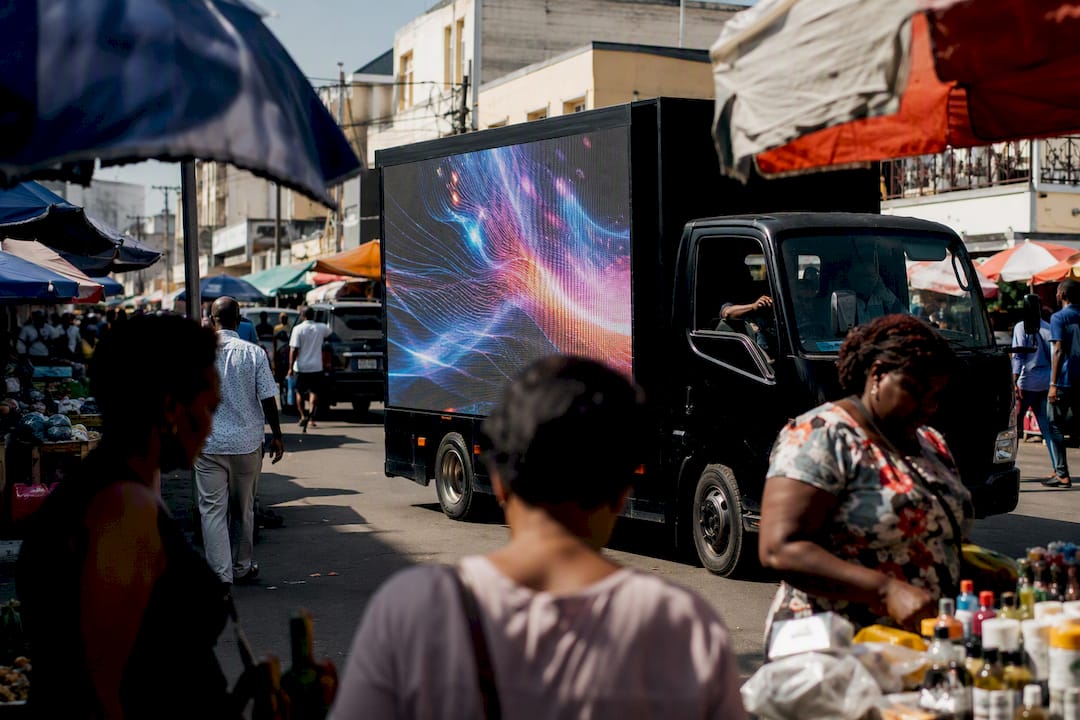
LED mobile billboard advertising puts a physical display on a truck or vehicle and drives it through specific locations, but the modern version of this channel is far more than a moving sign. The combination of physical presence with digital targeting technology is what separates current LED billboard campaigns from traditional static outdoor advertising.
Physical billboards solve a problem that purely digital ads cannot: they exist in the real world, in specific places, at specific times, in front of people who are not looking at a screen. LED billboards remain effective precisely because physical visibility and credibility address challenges that digital-only media consistently struggles with, including ad blocking, banner blindness, and viewability fraud.
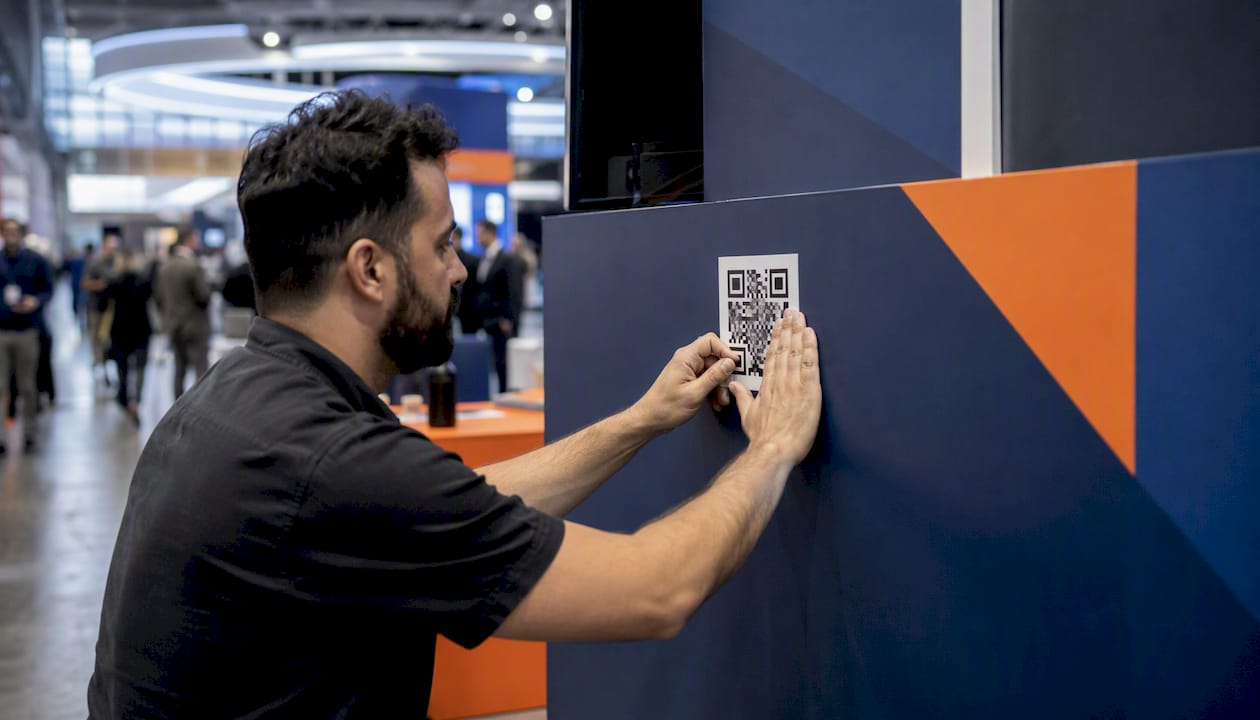
The digital layer adds precision that traditional outdoor never had. Geofencing defines a geographic boundary around a venue, neighborhood, or competitor location. When the billboard truck enters that zone, retargeting pixels can be triggered to serve follow-up digital ads to mobile devices detected in the same area. Smart QR codes on the display capture scan data, giving advertisers a direct signal of engagement tied to a specific location and time.
How the technology stack works in practice:
- Route customization targets high-traffic corridors, event venues, or competitor storefronts based on audience density data
- Geofencing creates digital perimeters that trigger retargeting sequences for devices in the exposure zone
- Real-time retargeting serves follow-up mobile ads to people who were physically near the billboard
- Smart QR codes capture first-party engagement data directly from the display
- Attribution analytics connect physical exposure to downstream digital actions, closing the measurement gap
A current market trend worth noting is the convergence of data-driven OOH campaigns with programmatic buying. Advertisers are no longer treating physical and digital as separate line items. The most effective campaigns use physical presence to build awareness and credibility, then use digital retargeting to convert that awareness into action.
A common misconception is that LED mobile billboards are only for large brands with large budgets. Route-based pricing with defined campaign durations makes the channel accessible for local and regional advertisers who need concentrated geographic impact rather than broad reach.
What do real campaign results look like for these platforms?
Performance outcomes across mobile and OOH advertising platforms vary by category, and the most instructive examples come from campaigns that combined channels rather than running them in isolation.
Retargeting platforms like Remerge and Jampp consistently show their strongest results in re-engagement campaigns for apps with existing user bases. A dormant user who installed an app three months ago and stopped using it is far cheaper to reactivate than acquiring a new user from scratch. The machine learning models these platforms use identify the behavioral signals that predict reactivation, then time the ad delivery accordingly. The result is a lower effective CPA for re-engagement versus new acquisition, which matters significantly for apps with high organic install rates.
Performance networks like Perform[cb] and OGAds show their value in direct-response campaigns where the conversion event is clearly defined and measurable. When the advertiser pays only on a completed action, the platform’s incentive aligns with the advertiser’s goal. The risk is traffic quality: incentivized networks can deliver installs that do not convert to active users, which is why post-install event tracking is non-negotiable when using CPA models.
For physical OOH, the most compelling results come from campaigns that use the billboard as the top-of-funnel awareness driver and digital retargeting as the conversion layer. A brand running LED billboard trucks near a competitor’s retail locations, then serving retargeted mobile ads to devices detected in that zone, creates a two-touch sequence that neither channel could achieve alone. The QR code scan data from the physical display provides a direct engagement signal that traditional outdoor measurement never offered. Beacon-ads documents this with proof-of-posting records and attribution analytics that connect physical route data to digital conversion events, giving advertisers a measurable return on the physical spend.
Competitive intelligence platforms like SocialPeta serve a different function entirely. Rather than running campaigns, they show you what your competitors are spending on and which creatives are performing in your category. For app publishers entering a new market or launching a new category, that intelligence can cut weeks off the creative testing process.
Beacon-ads brings physical and digital advertising together
Most of the platforms on this list operate entirely in the digital stack. Beacon-ads takes a different approach, and for certain campaign goals, that difference is the point.

Beacon-ads operates LED mobile billboards and wrapped rideshare vehicles across all 50 US states, combining the physical credibility of outdoor advertising with the targeting precision of digital campaigns. Geofencing, real-time retargeting, and smart QR code integration mean that a Beacon-ads campaign does not stop at the impression. It captures engagement data, triggers follow-up digital sequences, and delivers attribution analytics that show exactly what the physical exposure produced. For brands that need concentrated geographic impact in specific US markets, with proof of delivery and measurable downstream results, Beacon-ads offers a channel that programmatic networks simply cannot replicate. Learn more about data-driven OOH strategies to see how physical and digital advertising work together.
Key Takeaways
The most effective AdmobileTV alternative is the one that matches your primary KPI, whether that is programmatic installs, retargeting, or physical geographic presence with digital attribution.
| Point | Details |
|---|---|
| Category fit matters first | Choose between programmatic mobile networks and physical OOH providers before comparing features within a category. |
| Pricing models vary widely | CPM, CPA, flat-fee routes, and agency scopes each suit different budget sizes and campaign types. |
| Reporting depth drives optimization | Platforms with post-install event tracking and cohort analysis deliver more actionable data than impression-only reporting. |
| Physical plus digital outperforms either alone | Combining LED billboard presence with geofencing and retargeting creates a two-touch sequence neither channel achieves independently. |
| Beacon-ads for US physical OOH | Beacon-ads covers all 50 states with LED billboards, rideshare wraps, geofencing, and attribution analytics for measurable physical campaigns. |