Combining digital and out-of-home (OOH) advertising consistently outperforms either channel alone. OOH builds awareness in the physical world, while digital converts and measures that awareness downstream. Together, they cover the full customer journey in a way no single channel can. Here is why the pairing works:
- OOH creates early brand familiarity at high-traffic physical touchpoints
- Digital reinforces that exposure through retargeting, search, and social ads
- Combined campaigns drive measurable lifts in both in-store visits and online conversions
- Interactive formats like QR codes connect the physical ad to a digital action instantly
- Unified data from both channels enables attribution that neither can achieve alone
How combining digital and OOH extends reach and brand visibility

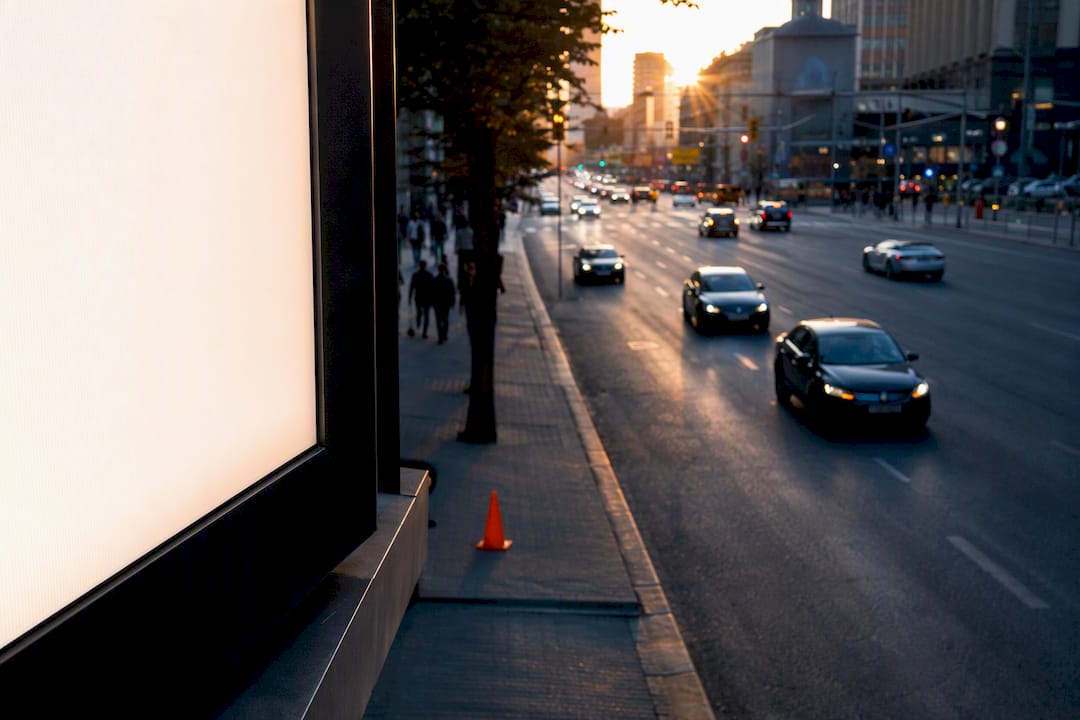
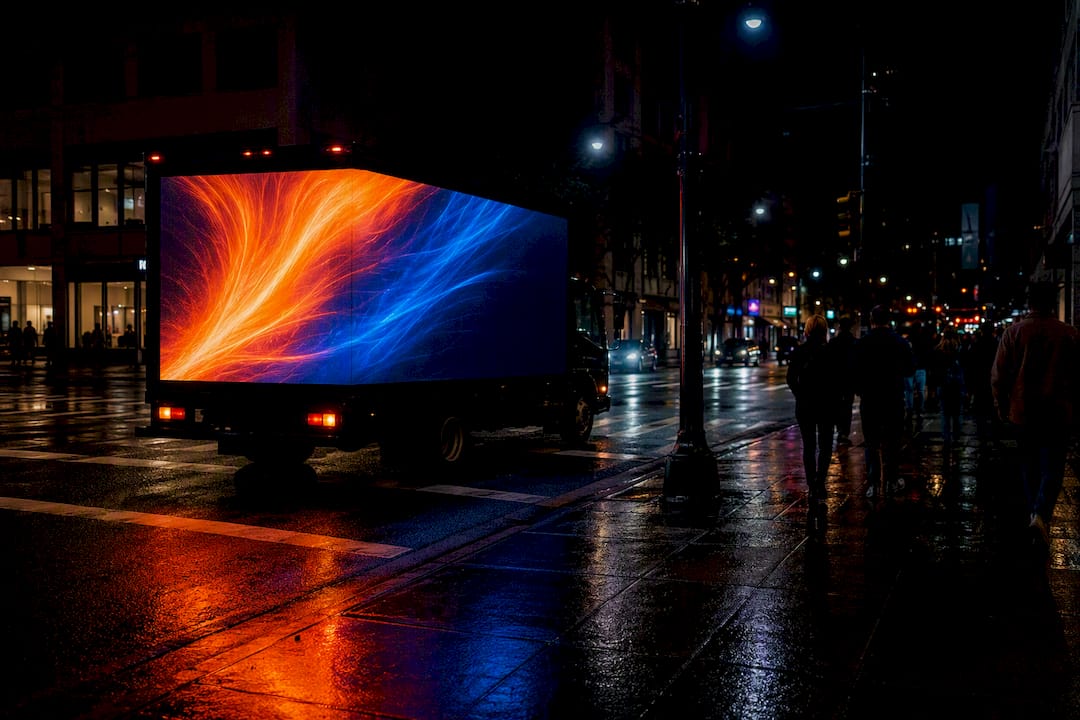
OOH plants the flag in the physical environment. A billboard on a commuter route or a wrapped rideshare vehicle in a busy neighborhood reaches people who are not scrolling a feed or watching a pre-roll ad. That passive, ambient exposure builds recognition before a consumer ever opens their phone.
Digital then picks up where OOH leaves off. Geofencing and mobile retargeting let you serve a follow-up ad to someone who passed your billboard an hour ago. The result is a coordinated sequence: awareness in the real world, reinforcement online. Digital and outdoor advertising synergy like this compounds brand recall in a way that neither channel achieves independently.
Pro Tip: Run geofenced mobile ads within a one-mile radius of your OOH placements during the same flight window. Consumers who see both touchpoints are far more likely to convert than those who see only one.
Key reach advantages when you merge the two channels:
- OOH covers audiences who are light TV viewers or heavy ad-blockers online
- Programmatic digital OOH (DOOH) enables real-time audience targeting by location, time of day, and context
- Wrapped rideshare vehicles and mobile billboards extend geographic coverage into neighborhoods static boards miss
- Digital retargeting captures intent signals from consumers already primed by OOH exposure
Ways combining digital and OOH increases engagement through interactivity
Static awareness is only the beginning. The real lift comes when OOH prompts a direct consumer action, and digital closes the loop. Smart QR codes on a mobile billboard or DOOH screen turn a passive viewer into an active lead in seconds. Scan rates climb when the offer is time-sensitive or location-specific, exactly the kind of contextual relevance that DOOH enables.
DOOH’s creative formats drive favorable consumer actions that prime digital engagement, from QR scanning to social sharing. The Harris Poll found that 76% of recent DOOH viewers report taking action because of a DOOH ad. That is not passive reach. That is a primed audience ready for the next digital touchpoint.

Pro Tip: Sync your DOOH creative with live triggers, such as weather conditions, sports scores, or local events, to make the ad feel personally relevant. Contextual relevance is the fastest path from impression to interaction.
Tactics that drive cross-channel engagement:
- QR codes linking to landing pages, offers, or app downloads
- Live countdown timers or real-time inventory updates on DOOH screens
- Social hashtag prompts that extend the campaign’s life on user feeds
- Retargeted display ads served to mobile users within hours of OOH exposure
- Augmented reality activations triggered by scanning a physical ad
How integrated campaigns unlock measurable insights
OOH’s biggest historical weakness was measurement. You could count impressions by traffic volume, but attributing a store visit or an online conversion to a specific billboard was guesswork. Digital integration fixes that.
Multi-touch attribution models credit OOH’s early influence rather than handing all the credit to the last digital click. An OAAA and Kochava study found that OOH precedes Search 96% of the time and Social 94% of the time in large quick-service restaurant studies. Last-click attribution misses that entirely. When you align your measurement model to how OOH actually behaves in the funnel, the channel’s contribution becomes visible and defensible.
Key stat: OOH campaigns deliver a median lift of 20% for in-person outcomes and 14% for digital outcomes, outperforming both connected TV and broadcast TV.
Measurement tools that work when channels are integrated:
- Incrementality testing to isolate OOH’s contribution to store visits and online conversions
- Mobile device ID matching to connect OOH exposure to downstream digital behavior
- QR scan analytics that tie a specific creative and placement to a lead or sale
- Unified dashboards that aggregate OOH impression data alongside digital click and conversion data
Future trends shaping digital and OOH integration
Programmatic DOOH buying and dynamic content are moving from novelty to standard practice. Real-time campaign automation now lets marketers swap creative on a DOOH screen based on weather, audience composition, or time of day without reprinting a single poster. That flexibility narrows the gap between digital’s precision and OOH’s physical presence.
98% of marketers now view OOH as foundational to connected commerce strategies, with digital billboards (65%) and in-store digital screens (63%) leading activation. Data privacy shifts are also reshaping how marketers target. As third-party cookies phase out, location-based OOH data paired with first-party digital signals becomes a more durable targeting foundation.
Opportunities marketers should prepare for now:
- Build unified measurement frameworks that treat OOH and digital as one system, not two separate buys
- Invest in first-party data collection at OOH touchpoints via QR codes and SMS prompts
- Explore contextual DOOH triggers tied to real-time data feeds
- Test programmatic DOOH buys alongside paid social to compare incremental lift
Research-backed insights on OOH and digital effectiveness
The data on combined digital and OOH performance is consistent across multiple US studies. DOOH favorability sits at 73% among consumers, well above TV/video (50%), social media (48%), and online ads (37%). And 76% of recent DOOH viewers report taking action because of a DOOH ad.
Performance highlight: OOH digital outcomes show a 5.3x conversion rate increase from 1 to 10 ad exposures, the steepest frequency curve of any media type measured in the OAAA/Kochava study.
| Metric | OOH Performance | Comparison |
|---|---|---|
| Consumer favorability | 73% view DOOH favorably | vs. 50% for TV/video |
| Action rate | 76% took action after DOOH exposure | Highest of all media tested |
| In-person outcome lift | 20% median lift | 2x connected TV and broadcast TV |
| Digital outcome lift | 14% median lift | Outperforms CTV and broadcast TV |
| Conversion frequency curve | 5.3x increase from 1 to 10 exposures | Steepest of any media type measured |
How to allocate budget across digital and OOH channels
Budget allocation between OOH and digital should follow the funnel, not a fixed percentage split. OOH earns its spend at the top: building awareness, creating familiarity, and generating the demand that digital then converts. Treating OOH as a pure branding cost and digital as the only performance channel leaves money on the table.
A practical starting point is to weight OOH toward high-traffic periods and locations where your audience is physically present, then layer digital retargeting spend on top of those same windows. Data-driven OOH campaigns let you tie placement decisions to audience density data, so you are not guessing which routes or neighborhoods justify the spend. Review incrementality results after each flight and shift budget toward the channel mix that drove the highest lift, not the one that captured the last click.
Case studies: digital and OOH campaigns that delivered
Home Depot’s location-targeted mobile campaign is one of the clearest examples of digital and physical integration working at scale. The brand used location-based mobile display ads to reach do-it-yourselfers within 15 miles of their stores. By the end of a four-week test, Home Depot saw 8x in-store ROI from those mobile display ads, with 93% of the resulting sales completed in-store. The campaign then expanded to 2,200 stores nationwide with the same results.
DOOH directional advertising offers another well-documented pattern. The Harris Poll study found that 76% of recent DOOH viewers report taking action because of a DOOH ad, the highest rate of any media tested. The physical ad drove the foot traffic; the in-store experience closed the sale.

Both cases share the same structure: a physical or location-based touchpoint creates intent, and a digital or in-store experience converts it.
Challenges and best practices for integrating digital with OOH
The most common failure point is creative inconsistency. When the OOH execution looks nothing like the digital ad, consumers do not connect them as the same campaign. Unified creative messaging across both channels is not a design preference; it is what makes attribution work and prevents OOH’s contribution from being invisible in your reporting.
Attribution model mismatch is the second major challenge. Last-click models systematically undervalue OOH because the channel operates early in the funnel. Switching to incrementality testing or multi-touch attribution reveals OOH’s actual role in generating the search and social conversions that get credited elsewhere.
Best practices that prevent these failures:
- Lock visual identity and headline copy across OOH and digital before either goes live
- Use mobile device ID matching to connect OOH exposure to downstream digital actions
- Set attribution windows that reflect OOH’s extended engagement cycle, often seven days or longer
- Brief your media and creative teams together, not in separate silos
How combined digital and OOH shapes the customer journey
OOH and digital touch different moments in the customer journey, and that is precisely why they work together. OOH reaches consumers when they are moving through the world, not actively searching. It creates the initial familiarity that makes a brand feel known before a consumer ever visits a website. Digital then catches that same consumer at the moment of intent, whether that is a search query, a social scroll, or a retargeted display ad.
The journey looks like this in practice: a consumer sees a mobile billboard for a product during their commute. Later that day, a retargeted ad for the same brand appears on their phone. By the time they reach the product page, the brand already feels familiar. That familiarity shortens the consideration phase and lifts conversion rates. OOH advertising effectiveness research consistently shows that multi-touchpoint campaigns outperform single-channel exposure across every stage of the funnel.
Tools and platforms that coordinate digital and OOH campaigns
Effective integration requires technology that lets both channels share data and creative in real time. Programmatic DOOH platforms connect to demand-side platforms (DSPs) already used for digital buying, so a single campaign can trigger OOH placements and digital retargeting from the same interface. Mobile measurement partners (MMPs) like Kochava track device-level data across both environments, linking OOH exposure to app installs, store visits, and online conversions.
For QR-based engagement, platforms that generate dynamic QR codes let you track scan rates by placement, creative, and time of day. That granularity turns every OOH unit into a measurable digital touchpoint. Advanced targeting technology built into mobile billboard platforms, including geofencing, affinity targeting, and route customization, adds another layer of precision that static OOH formats cannot match.
Key Takeaways
Combining digital and OOH advertising drives stronger results than either channel alone because OOH builds early-funnel awareness that digital then converts, measures, and amplifies.
| Point | Details |
|---|---|
| OOH leads the funnel | OOH precedes Search 96% of the time and Social 94% of the time in large QSR studies. |
| DOOH drives action | 76% of recent DOOH viewers report taking action because of a DOOH ad, the highest rate of any media tested. |
| Frequency compounds results | OOH digital outcomes show a 5.3x conversion rate increase from 1 to 10 ad exposures. |
| Attribution requires the right model | Last-click models undervalue OOH; incrementality or multi-touch attribution reveals its true contribution. |
| Creative consistency is non-optional | Unified visuals and messaging across OOH and digital are what make integrated attribution work. |