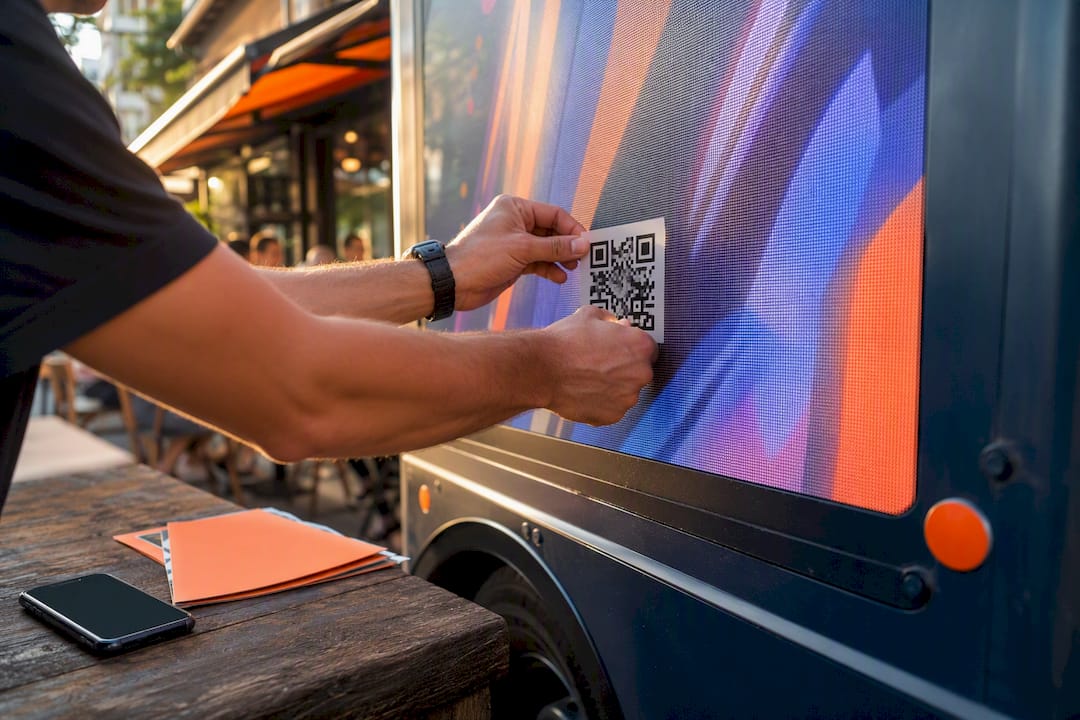
Data-driven out-of-home strategies are defined as campaign planning and measurement approaches that use location intelligence, audience analytics, and real-time data to guide every OOH decision. The industry term for this practice is programmatic DOOH (digital out-of-home), though data-centric methods apply equally to static and mobile formats. Marketers who apply these approaches replace gut-feel placement decisions with evidence. Tools like Prescient AI for Marketing Mix Modeling, BlueZoo for foot traffic sensing, and programmatic DOOH platforms for dynamic buying now give brand managers the ability to target precisely, adjust mid-flight, and prove revenue impact. This guide covers the full workflow, from data sourcing through post-campaign attribution.
What tools and data sources power data-driven out-of-home strategies?
The foundation of any data-focused outdoor marketing campaign is the right data stack. Without it, location selection and audience targeting default to estimates. The core inputs are foot traffic sensors, mobile device tracking, location intelligence platforms, and branded search trend data.
The key data types you need
- Foot traffic sensors track unique visitors in 15-minute intervals, giving you granular reach and recurrence data rather than broad daily estimates. BlueZoo’s sensor technology, for example, tracks foot traffic at this level, enabling precise budget and pricing calculations.
- Mobile device tracking uses anonymized location signals to map audience movement patterns across a market, revealing when and where your target segments appear.
- Branded search trends from Google Trends or Google Search Console establish your pre-campaign baseline. A spike in branded queries during a campaign is a direct signal of OOH impact.
- Programmatic DOOH buying platforms connect inventory, audience data, and creative delivery in one workflow, enabling real-time budget allocation across screens.
Traditional Opportunity-to-See (OTS) models often underestimate actual exposure. Advanced sensor models distinguish unique visitors from repeat passers-by, which produces more accurate reach figures and better informs budget decisions.
Comparing common OOH data tools
| Tool type | Primary data output | Best use case |
|---|---|---|
| Foot traffic sensors (e.g., BlueZoo) | Unique visitor counts, recurrence rates | Location scoring, reach verification |
| Mobile location intelligence | Audience movement, segment mapping | Site selection, daypart planning |
| Programmatic DOOH platforms | Impression delivery, creative performance | In-flight optimization, budget pacing |
| Marketing Mix Modeling (e.g., Prescient AI) | Incremental revenue attribution | Post-campaign ROI quantification |
| Branded search monitoring | Search volume shifts | Near-real-time campaign impact signals |

Pro Tip: Set your branded search baseline at least two weeks before launch. Without a clean pre-campaign benchmark, you cannot reliably attribute a search spike to your OOH activity.
How do you select and optimize OOH locations using data?
Location selection is where most campaigns win or lose before a single impression runs. Picking a site with high traffic counts but poor visibility wastes budget. Visibility quality scoring, such as Nord Scoring, weighs factors like viewing distance, approach angle, and competing ad density rather than raw traffic estimates alone.
Steps for data-led location and creative optimization
- Score locations on visibility, not just volume. Pull traffic data, then layer in viewing distance, dwell time, and sight-line obstructions. A billboard seen clearly at 500 feet by 10,000 daily commuters outperforms one seen at 50 feet by 30,000.
- Segment your audience before scheduling. Use mobile location data to identify when your target demographic is present at each site. A lunch crowd at a downtown intersection differs sharply from a morning commuter audience on the same block.
- Apply dayparting to creative rotation. Show a breakfast offer in the morning and a dinner promotion in the evening on the same digital screen. Dynamic creative optimization (DCO) automates this based on time, weather, or local event triggers.
- Use weather and event data as creative triggers. A rain forecast should automatically swap in a relevant creative. A nearby sports event should trigger a localized message. These contextual signals lift relevance without adding manual work.
- Review performance data weekly and reallocate. Pull impression delivery, foot traffic lift, and search trend data every seven days. Shift budget from underperforming sites to those showing early attribution signals.
Neglecting visibility metrics is one of the most common causes of failed OOH campaigns. Traffic counts feel objective, but a site hidden by a tree or angled away from traffic delivers far fewer real impressions than its numbers suggest.
Pro Tip: Never evaluate a location from a map view alone. Visit the site at the same time of day your target audience passes through. What looks like a prime spot on paper often has a sight-line problem you will only catch in person.

What measurement methods verify OOH campaign ROI?
Measuring out-of-home success requires a layered approach. No single metric captures the full picture. Best measurement practices combine exposure data, brand lift studies, social signals, foot traffic changes, and revenue modeling to quantify both brand equity and real-world behavior.
The measurement methods compared
| Method | What it measures | Limitation |
|---|---|---|
| Brand lift studies | Recall, consideration, favorability | Requires panel recruitment, takes time |
| Geo-lift testing with control groups | Incremental store visits or sales | Needs geographic separation of test/control |
| QR code scan tracking | Direct engagement, lead capture | Only captures audience that scans |
| Branded search spike monitoring | Awareness and intent signals | Correlation, not direct causation |
| Marketing Mix Modeling (MMM) | Revenue contribution across channels | Requires 7–14 days post-campaign to finalize |
Branded search queries jump up to 30% in target markets while OOH campaigns run. That spike is one of the fastest signals available to brand managers who need early evidence of impact before attribution studies close.
Marketing Mix Modeling integrates OOH spend with other channels to quantify incremental sales over time. MMM captures delayed brand effects that immediate metrics miss entirely, making it the most complete picture of revenue contribution.
Geo-lift testing compares sales or visit behavior in markets exposed to OOH against matched control markets that were not. This method treats OOH as a brand halo effect driver rather than a direct click channel, which is the correct mental model for outdoor media.
Pro Tip: Run brand lift studies and geo-lift tests simultaneously on the same campaign. The lift study tells you what people think; the geo-lift test tells you what they did. Together, they give you a defensible ROI story for any budget conversation.
How does AI improve data-driven OOH campaign performance?
AI shifts OOH planning from historical averages to forward-looking forecasts. AI models simulate outcomes based on creative rotation, daypart, and weather conditions before you purchase a single impression. That means you can test scenarios on paper and allocate budget to the configurations most likely to perform.
The practical benefits of AI in OOH campaigns include:
- Pre-buy audience simulation. AI predicts which audience segments will be present at each location during each daypart, so you buy impressions with confidence rather than assumption.
- In-flight budget reallocation. Programmatic DOOH platforms use live performance data to shift spend toward screens and times that are delivering results, mid-campaign.
- Weather and event modeling. AI models forecast how a cold front or a major local event will affect audience movement and adjust creative delivery automatically.
- Creative fatigue detection. Algorithms track exposure frequency per unique viewer and rotate creatives before repetition reduces impact.
AI-driven OOH planning transforms campaigns from static awareness plays to dynamic, performance-focused channels. The shift is significant. A campaign that previously locked in placements for 30 days can now adjust weekly or even daily based on real data.
Pro Tip: Integrate your AI forecasting tool with your campaign management platform before launch, not after. Mid-campaign data is only useful if your team can act on it within 24–48 hours. Build the workflow first.
Key Takeaways
Effective data-driven OOH advertising requires layered measurement, visibility-based location scoring, and AI-assisted optimization to produce verifiable revenue impact.
| Point | Details |
|---|---|
| Layer your measurement | Combine brand lift studies, geo-lift tests, and MMM to capture both awareness and revenue outcomes. |
| Score locations on visibility | Use viewing distance and sight-line data, not just traffic counts, to select high-impact placements. |
| Monitor branded search spikes | Branded queries can rise up to 30% during campaigns, giving you a fast early signal of impact. |
| Use AI for in-flight adjustments | AI models let you reallocate budget and rotate creatives mid-campaign based on live performance data. |
| Allow time for attribution | Full attribution reports require 7–14 days post-campaign to finalize with control group comparisons. |
Why I think most OOH campaigns fail at measurement, not execution
The creative is usually fine. The locations are usually decent. What breaks most OOH campaigns is the measurement plan, or the absence of one. Marketers treat outdoor advertising like a broadcast channel and then wonder why they cannot prove its value in a budget review.
The mindset shift that actually works is treating OOH as a revenue driver with delayed effects. Double-digit lifts in brand recall and consideration, validated by control groups, tell a far more compelling story than raw impression counts. But you have to set up the control groups before the campaign runs, not after.
The next three to five years will belong to marketers who integrate programmatic DOOH with MMM and AI forecasting into a single workflow. The technology exists now. The gap is organizational. Most brand teams still treat OOH as a separate silo from their digital analytics stack. That separation is where ROI gets lost.
My honest advice: start with one campaign, build the full measurement stack around it, and document every result. That single data-rich case study will do more for your OOH budget than any industry benchmark. You need your own numbers, not averages.
— Scott
How Beacon-ads helps you execute data-focused outdoor campaigns
Beacon-ads combines LED mobile billboards and wrapped rideshare vehicles across all 50 states with the analytics infrastructure that makes data-driven OOH campaigns measurable and repeatable. The platform includes geofencing, real-time retargeting, affinity targeting, and smart QR code integration for direct lead capture. Every campaign comes with proof-of-posting documentation and attribution reporting so you can connect outdoor impressions to real business outcomes.

If you are building a case for OOH investment or scaling an existing program, Beacon-ads’ OOH advertising guide walks through how data enhances impact at every stage. For teams ready to act, the data-driven campaign strategies resource covers practical targeting and optimization steps you can apply immediately.
FAQ
What are data-driven out-of-home strategies?
Data-driven out-of-home strategies use location intelligence, audience analytics, and real-time performance data to plan, execute, and measure OOH campaigns. They replace estimate-based decisions with evidence at every stage, from site selection through post-campaign attribution.
How do you measure OOH advertising effectiveness?
The most complete approach combines brand lift studies, geo-lift testing with control groups, Marketing Mix Modeling, and branded search monitoring. Attribution reports typically require 7–14 days post-campaign to finalize.
What is geo-lift testing in OOH?
Geo-lift testing compares sales or visit behavior in markets exposed to OOH against matched control markets that received no exposure. It measures the incremental impact of outdoor advertising rather than correlating impressions to outcomes.
How does AI improve OOH campaign planning?
AI models simulate audience movement, creative rotation performance, and weather impact before impressions are purchased. During a campaign, programmatic DOOH platforms use live data to reallocate budgets and adjust creatives automatically.
Why do branded search spikes matter for OOH campaigns?
Branded search queries can rise up to 30% in target markets while an OOH campaign runs. That spike is one of the fastest available signals of awareness impact, giving marketers early evidence before full attribution studies close.