Most marketers assume digital advertising lives entirely on screens people carry in their pockets or prop on their desks. That assumption leaves serious performance on the table. DOOH achieves 47% higher brand awareness compared to standard digital ads, which makes it one of the most underutilized channels in a sophisticated media planner’s toolkit. Digital out-of-home advertising, or DOOH, merges the physical presence of outdoor media with the precision, flexibility, and measurement capabilities of digital marketing. This article breaks down exactly what DOOH is, what the data says about its performance, how to apply it strategically, and what frameworks actually produce measurable returns for localized campaigns.
Table of Contents
- Defining digital out-of-home advertising: What sets it apart?
- Why DOOH delivers: Proven impact and performance
- Strategic nuances: When, where, and how DOOH works best
- Actionable frameworks: Executing data-driven, localized DOOH campaigns
- Why creative quality and data discipline are the real DOOH game-changers
- Ready to get started? Data-driven DOOH solutions for your next campaign
- Frequently asked questions
Key Takeaways
| Point | Details |
|---|---|
| DOOH drives measurable impact | Digital out-of-home delivers higher brand awareness, recall, and store visits compared to traditional media. |
| Understanding context is vital | Knowing when, where, and how DOOH works best enables marketers to maximize ROI and campaign relevance. |
| Creative and targeting multiply results | High-impact creative and precise audience targeting can multiply return on investment several times over. |
| Disciplined measurement boosts credibility | Using geo-experimentation and proper attribution methods ensures credible, actionable performance insights. |
| Mobile integration enhances campaigns | Combining DOOH with mobile retargeting and contextual digital tactics further extends brand engagement. |
Defining digital out-of-home advertising: What sets it apart?
DOOH is advertising displayed on digital screens in public spaces, driven by data and technology rather than static print materials. The screens themselves range from large-format roadside LED billboards and transit shelter panels to in-store retail screens, airport displays, stadium boards, and wrapped rideshare vehicles fitted with digital integrations. What separates DOOH from traditional out-of-home advertising is the ability to change creative in real time, serve different messages based on audience context, and measure exposure with far greater granularity.

Traditional OOH relies on a physical posting that remains static for days or weeks. Once the vinyl goes up, that’s it. DOOH, by contrast, lets you swap creative based on time of day, weather, local events, or even real-time foot traffic data. You can schedule a coffee brand’s ad to run every morning during commute hours and replace it with a restaurant promotion at noon, all on the same screen with zero additional production costs.
The contrast with online digital advertising is equally important. Online ads follow users across devices, collecting behavioral data at the individual level. DOOH operates in shared public environments, reaching groups rather than individuals, which requires a different targeting philosophy based on location intelligence, contextual relevance, and audience segment modeling.
Here’s how the three formats compare at a glance:
| Feature | Traditional OOH | DOOH | Online Digital |
|---|---|---|---|
| Creative flexibility | Static, fixed duration | Real-time updates | Instant changes |
| Targeting method | Geography only | Location, time, context, audience | Individual behavior |
| Measurement | Estimated impressions | Verified plays, attribution data | Click-level tracking |
| Production cost | High per change | Low after initial setup | Very low |
| Audience scale | Mass reach | Mass reach with context | Individual targeting |
Core DOOH formats you should know:
- Large-format roadside billboards: High-visibility screens along highways and major urban corridors, ideal for brand priming at scale
- Transit and street-level displays: Bus shelters, subway stations, and transit hubs where dwell time is longer and audiences are captive
- Retail and venue screens: In-store displays and point-of-sale environments that influence purchase decisions in the moment
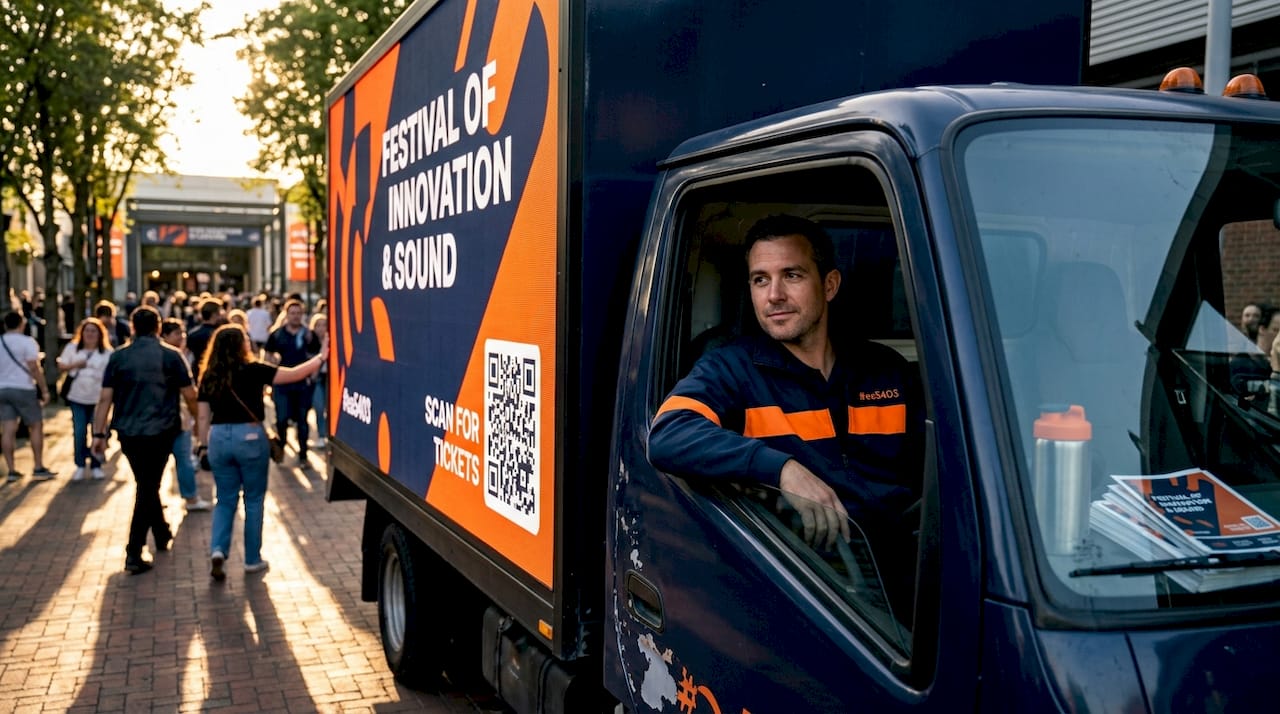
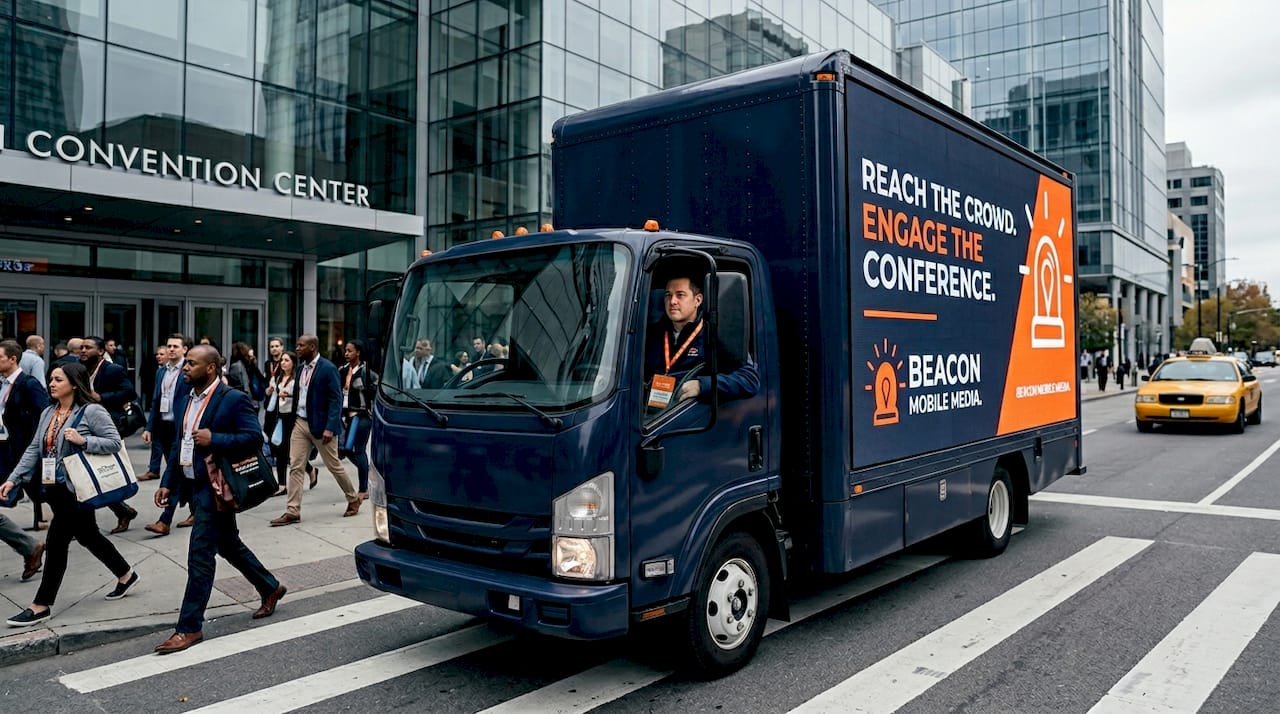
- Mobile and wrapped vehicle formats: LED boards mounted on trucks or wrapped rideshare vehicles that move through target neighborhoods and high-traffic zones
- Event and stadium screens: Premium placements during live events, where audiences are highly engaged
DOOH’s 47% higher brand awareness over standard digital, combined with recall rates three times higher than TV ads and an average engagement duration of 9.5 seconds, signals that the format earns genuine attention rather than passive exposure. For marketers building localized campaigns, understanding these distinctions is the foundation of smarter media planning. A solid set of OOH advertising tips can help you apply these distinctions immediately to your planning process.

Why DOOH delivers: Proven impact and performance
The numbers behind DOOH aren’t just impressive on their own. They make a compelling case when stacked against the fragmented attention economy most digital advertisers are fighting in. Global DOOH spend reached $26 billion in 2023, representing 18% year-over-year growth, and projections point to $47.25 billion by 2030. That trajectory reflects a market responding to evidence, not hype.
Here’s a performance summary worth bookmarking:
| Metric | DOOH Result | Comparison |
|---|---|---|
| Brand awareness lift | 47% higher | vs. standard digital |
| Ad recall | 3x | vs. TV advertising |
| Average engagement duration | 9.5 seconds | Across formats |
| Store visit increase | 28% | Post-exposure lift |
| Purchase intent lift | 32% | Programmatic DOOH specifically |
“Programmatic DOOH buying delivers a 32% lift in purchase intent, which shifts it from a pure brand play into a channel with genuine mid-funnel impact.”
The store visit data deserves particular attention. A 28% increase in visits post-exposure tells you something important: DOOH doesn’t just create awareness in a vacuum. It moves people. For brands with physical retail locations, event venues, restaurants, or showrooms, this is a direct line between media spend and foot traffic.
Programmatic DOOH amplifies these outcomes by adding automation, precision, and optimization to the equation. Instead of buying a fixed screen for a fixed period, programmatic allows you to bid on specific screen placements, time slots, and audience contexts in real time. Campaigns adapt based on performance signals, which means your spend concentrates where it works best.
Integrating smart data capture into your DOOH placements extends this further. When audiences interact with QR codes on digital displays or mobile billboards, you move from passive exposure metrics into active engagement and lead generation data. That data feeds back into campaign optimization, creating a loop between physical world exposure and digital marketing response.
The combination of scale, recall, and purchase intent data makes a strong case for DOOH as a core channel rather than a supplementary one. Marketers who treat it as a tactical add-on are leaving a significant portion of its value unrealized.
Strategic nuances: When, where, and how DOOH works best
Knowing that DOOH performs well is useful. Understanding why it performs well in specific contexts makes you a significantly more effective buyer and planner. There are several important strategic nuances that separate sophisticated DOOH execution from generic screen buying.
1. DOOH primes, it doesn’t close
DOOH’s strengths align with the upper and mid funnel. DOOH excels at priming reach and brand awareness but is less effective at driving direct conversion compared to performance channels. Campaigns that treat a mobile billboard like a direct-response ad are setting themselves up for disappointment. The right mental model is to use DOOH to condition your audience and increase brand salience so your digital ads, email campaigns, and in-store touchpoints convert more efficiently.
2. Frequency management works differently
One of the challenges unique to DOOH is that frequency capping at the individual level is nearly impossible. Unlike digital display ads where you can set a rule to show an ad no more than three times per user per week, DOOH exposure depends on physical proximity. Someone who commutes past the same billboard every day sees your ad every day. This is actually useful for awareness building, but it means the creative needs to hold up to repeated exposure.
3. Place-based versus roadside placements produce different results
Place-based DOOH, meaning screens inside gyms, restaurants, transit stations, or office lobbies, benefits from longer dwell times and a more focused audience mindset. Roadside formats capture broader reach at higher speeds, which demands simpler, bolder creative and a single-minded message. Matching the format to the funnel stage and the audience context is a non-negotiable part of strategic planning.
4. Privacy considerations favor contextual approaches
As data privacy regulations tighten, DOOH’s contextual targeting model becomes more valuable, not less. Rather than relying on personal identifiers, contextual DOOH uses location signals, time-of-day data, and audience segment modeling derived from anonymized movement patterns. This approach stays on the right side of regulations while still delivering meaningful targeting precision.
5. Mobile retargeting turns DOOH into a full-funnel channel
The most powerful DOOH strategies connect physical exposure to digital follow-up. When someone passes a DOOH placement and then browses on their phone, DOOH and mobile retargeting creates a persistent brand presence across environments. The physical ad primes the audience, and the digital retargeting closes the loop.
Pro Tip: Pair every major DOOH placement with a mobile retargeting audience built from foot traffic data near the screen location. This combination consistently outperforms either channel running independently.
Incorporating QR codes for DOOH engagement is another way to bridge the physical and digital experience. A well-placed QR code on a mobile billboard or transit display gives engaged viewers a direct action to take, capturing intent data that’s otherwise difficult to measure in outdoor media.
Actionable frameworks: Executing data-driven, localized DOOH campaigns
Moving from strategy to execution requires a disciplined process. Localized DOOH campaigns have distinct requirements compared to national buys, and the measurement approach is especially important to get right upfront.
Building your campaign framework:
- Define geography at the right scale: Localized campaigns work best when you define your market boundaries precisely, whether that’s a neighborhood, a zip code cluster, or a commuter corridor. Vague geographic targeting dilutes your message and complicates measurement.
- Use geo-experimentation to prove causality: Standard attribution methods often overclaim DOOH’s contribution. Geo-experiments and matched market studies allow you to compare exposed markets to control markets and draw genuine causal conclusions. This is the most reliable way to understand what your campaign actually drove.
- Invest in creative quality: The research is unambiguous. Creative quality multiplies ROI by a factor of 2 to 3 times. A mediocre creative running on premium screens will consistently underperform a strong creative running on average placements.
- Localize the message, not just the placement: Putting a national brand ad on a local screen is not a localized campaign. True localization means adapting the message, imagery, offer, or call to action to reflect the specific audience, neighborhood, or cultural context of the placement location.
- Build attribution before you launch: Decide how you will measure success before the campaign goes live. Setting up measurement infrastructure after the fact is one of the most common and costly mistakes in DOOH planning.
- Verify proof of posting: In outdoor advertising, accountability matters. Confirmed delivery reporting protects your investment and gives you the data to optimize future placements.
Pro Tip: When running localized DOOH across multiple markets, use matched market pairs so one market serves as the test and another as the control. This removes the noise of external variables and gives you a defensible read on campaign impact that you can present to stakeholders with confidence.
Effective campaign route planning integrates these measurement principles from the start, which is why platforms that provide route customization alongside attribution tools deliver better outcomes than those that treat media delivery and measurement as separate processes.
Why creative quality and data discipline are the real DOOH game-changers
Here’s the uncomfortable truth most DOOH vendors won’t tell you: the technology is table stakes now. Programmatic buying, geofencing, real-time updates, and audience targeting are available from dozens of platforms. What actually separates campaigns that generate real business impact from those that look impressive on dashboards but fail to move the needle is creative quality combined with honest measurement.
Creative quality multiplies ROI by 2 to 3 times, yet most DOOH budgets allocate a tiny fraction of spend to creative development compared to media buying. Marketers obsess over screen placements and targeting parameters while treating creative as an afterthought. This is backwards. A brilliant creative running on a well-targeted mobile billboard is an exponentially better investment than a mediocre one running on perfectly optimized inventory.
Data discipline is equally undervalued. The instinct to use last-touch attribution or to attribute all lift to DOOH exposure overstates results and misleads future planning. Honest geo-experimentation tells you what actually happened versus what you wish had happened. It’s a harder conversation to have internally, but it produces smarter campaigns and better long-term results.
We’ve seen brands walk away from DOOH because “it didn’t work,” when the real problem was weak creative and flawed measurement methodology. The channel wasn’t the problem. The execution was. Our DOOH creative quality advice addresses both dimensions directly, because fixing one without the other only gets you halfway there.
Ready to get started? Data-driven DOOH solutions for your next campaign
If this article has clarified how DOOH fits into your media mix and where the real performance levers are, the next step is putting those insights into practice. Beacon Mobile Media’s resources are built for marketers who want to move beyond general awareness and into campaigns that produce measurable, localized results.

Explore our OOH strategy tips to sharpen your planning process, dig into our guidance on data capture for OOH to understand how physical advertising generates actionable audience insights, and review our approach to QR code engagement to see how mobile integration elevates outdoor campaigns. Whether you’re running your first DOOH campaign or optimizing an existing program, our platform gives you the targeting tools, route customization, proof-of-posting documentation, and attribution analytics you need to demonstrate real business impact to your stakeholders.
Frequently asked questions
How does digital out-of-home advertising differ from traditional out-of-home?
DOOH uses digital screens and data-driven targeting, offering greater creative flexibility, real-time updates, and audience segmentation capabilities that static OOH formats simply cannot match.
What are the benefits of programmatic DOOH?
Programmatic DOOH enables automated buying, optimization, and reporting in real time, with campaigns showing up to a 32% lift in purchase intent compared to non-programmatic placements.
Can digital out-of-home campaigns be localized for specific audiences?
Yes. DOOH platforms support tailored messaging and precise targeting by geography, time of day, audience context, and local audience segments drawn from anonymized movement data.
Is DOOH suitable for direct conversion campaigns?
DOOH excels at priming reach and brand salience but is most effective when paired with performance channels for conversion, rather than used as a standalone direct-response tactic.
How should DOOH campaign performance be measured?
The most reliable approach combines geo-experiments and matched markets to isolate true causal impact, avoiding the attribution overclaiming that distorts results when simpler measurement methods are applied.