Retargeting in out-of-home advertising is the process of connecting physical ad exposures to digital follow-up targeting, extending campaign reach beyond a single billboard impression. Understanding how retargeting works in OOH requires knowing two core methods: action-based retargeting, triggered by user interactions like QR code scans, and geo-based retargeting, built from mobile-ad-IDs logged inside geofenced zones around OOH assets. Both methods create privacy-safe audience segments that feed into mobile, social, and programmatic platforms. For brand managers running location-driven campaigns, this hybrid approach turns a static physical impression into the first step of a measurable digital funnel.
How action-based retargeting works in OOH campaigns
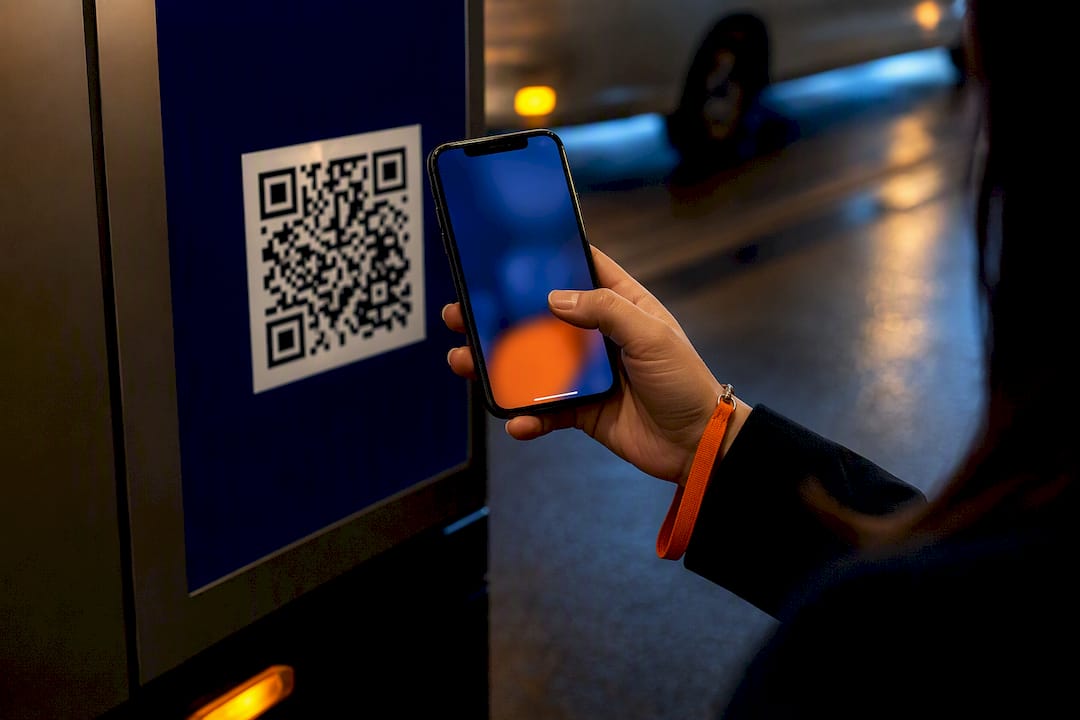
Action-based retargeting is the most deterministic method available in outdoor advertising. A viewer sees a billboard, scans a QR code or types a vanity URL, and that interaction fires a tracking pixel. The pixel drops a cookie or records a mobile-ad-ID, placing the user into a retargeting audience for follow-up digital ads.

The strength of this method is intent. Someone who scans a QR code on a wrapped rideshare vehicle has already shown active interest. That signal is far stronger than a passive impression, which means your retargeting ads reach people already partway through the decision process. Beacon-ads integrates smart QR codes directly into its mobile billboard campaigns, capturing scan data in real time for immediate audience building.
The limitation is volume. Action-based audiences are small because most OOH viewers never interact with a physical ad. This method works best when the creative makes the action obvious and the incentive is clear.
- Place the QR code in the top third of the creative, not the bottom corner.
- Use a single, specific call to action: “Scan for 20% off today” outperforms “Learn more.”
- Match the landing page experience to the OOH message so the transition feels natural.
- Test vanity URLs alongside QR codes for audiences less likely to scan.
- Feed scan data into your CRM within 24 hours to keep retargeting audiences fresh.
Pro Tip: Design your OOH creative so the QR code or vanity URL is the visual endpoint of the ad. The eye should land there last. If the code competes with the headline for attention, scan rates drop significantly. Review the full QR code engagement guide for layout best practices.
What is geo-based retargeting in OOH, and how does it work?
Geo-based retargeting is a probabilistic method. It works by drawing a virtual boundary around an OOH asset and logging the mobile-ad-IDs of devices detected inside that zone during the campaign window. Those IDs then become a retargetable audience on mobile and social platforms.
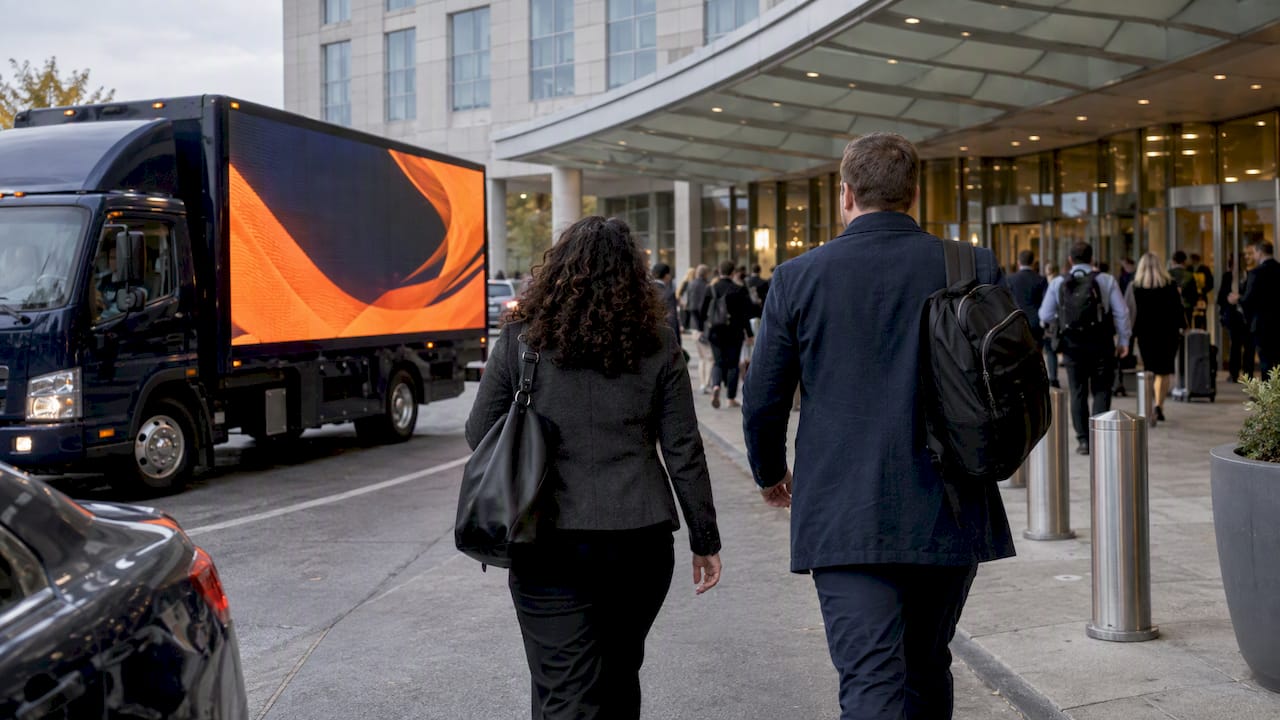
Geofence sizes typically range from 50 to 200 meters around a billboard or screen. The radius depends on the environment. A highway billboard needs a wider buffer because vehicles pass quickly. A wrapped rideshare vehicle in a pedestrian zone can use a tighter radius because dwell time is longer.
The technical constraints are real and worth planning around. GPS accuracy in urban environments ranges from 7 to 20 meters due to multipath signal interference from buildings. Some networks intentionally inflate geofence radii to obscure exact screen coordinates, which dilutes targeting precision. Bid-stream latency compounds the problem: every one-second delay in the bid stream reduces mobile impression volume by approximately 1.1%.

Match rates add another layer of attrition. Mobile-ad-ID match rates for geo-based retargeting run between 60% and 80%. That means up to 40% of detected devices cannot be retargeted at all. Budget and audience size projections must account for this gap.
| Accuracy factor | Typical range | Impact on campaign |
|---|---|---|
| GPS precision (urban) | 7–20 meters | Requires larger geofence buffer |
| Geofence radius | 50–200 meters | Wider radius increases volume, reduces precision |
| Mobile-ad-ID match rate | 60%–80% | Significant device attrition in retargetable pool |
| Bid-stream latency penalty | ~1.1% per second | Reduces impression volume at scale |
Pro Tip: Set a minimum dwell time threshold of 30 seconds before logging a device ID. This filters out cars passing at speed and keeps your audience focused on people who actually had time to see the ad. Tighter audience quality beats raw volume every time.
Best practices for integrating retargeting strategies with OOH media plans
The biggest mistake brand managers make is running OOH and digital retargeting as separate campaigns. The retargeting ad should not repeat the billboard creative. It should advance the conversation. If the OOH ad builds awareness of a new store opening, the retargeting ad delivers a time-sensitive offer or a short video walkthrough of the location. This sequential messaging approach is what separates effective OOH retargeting from wasted spend.
CRM integration multiplies the value of both action-based and geo-based audiences. When scan data or geofence audiences feed into your CRM, you can build lookalike models that extend reach beyond the original OOH footprint. Brands focused on long-term brand lift consistently find OOH among their highest-performing channels when measurement accounts for the full purchase cycle.
Campaign objectives matter when deciding whether retargeting is worth the added cost. Geographically relevant campaigns with clear calls to action, such as new store openings, local events, or limited-time promotions, deliver the strongest return on the added data and infrastructure investment. Broad awareness campaigns without a geographic hook rarely justify the complexity.
- Sequence your messaging: OOH for awareness, retargeting for conversion.
- Use video in retargeting ads to extend the story the billboard started.
- Set retargeting windows of 7 to 14 days post-exposure for time-sensitive campaigns.
- Integrate geofence audiences with your CRM to build lookalike segments.
- Run holdout groups to measure incremental lift rather than relying on click-through rates.
- Align OOH flight dates with retargeting campaign start dates to avoid audience decay.
For data-driven campaign planning, the OOH media strategies guide covers attribution frameworks in detail.
Common misconceptions about OOH retargeting measurement
The most persistent misconception is that geo-based OOH retargeting delivers 1:1 deterministic matching between billboard viewers and retargeted devices. It does not. Probabilistic audience segments based on location and time windows are the industry standard, not individual identity matching. Attempting to force direct identity linkage creates both poor strategy and potential compliance issues under current privacy regulations.
Standard digital attribution metrics make the problem worse. Applying click-through rate analysis to OOH retargeting systematically undervalues the channel. OOH drives awareness and recall, not immediate clicks. A viewer who sees a mobile billboard on a Tuesday and converts in-store on Saturday will never appear in a last-click attribution model.
“Brands applying holdout studies and longer-lag sales cycle analyses consistently find OOH outperforms its apparent digital metrics. The channel’s true contribution only becomes visible when you measure it on its own terms, not by borrowing digital benchmarks that were never designed for physical media.”
Holdout studies and incremental lift analysis are the correct measurement tools for OOH retargeting. A holdout group receives no retargeting ads after OOH exposure. Comparing conversion rates between the exposed and holdout groups reveals the true lift attributable to the retargeting layer. This approach takes more time to set up, but it produces numbers you can actually trust.
Adding mobile retargeting to an OOH campaign involves real data fees and infrastructure costs. Campaigns without geographic specificity or a clear conversion event rarely recover those costs. Realistic expectations and the right measurement framework are not optional extras. They are the foundation of any OOH retargeting program that survives budget review.
Key Takeaways
OOH retargeting works through two distinct methods, action-based and geo-based, and each requires a different measurement framework, audience size expectation, and creative strategy to deliver real campaign lift.
| Point | Details |
|---|---|
| Two core methods | Action-based (QR/URL) delivers high intent; geo-based (geofencing) delivers scale with attrition. |
| Match rate reality | Mobile-ad-ID match rates of 60%–80% mean up to 40% of detected devices are not retargetable. |
| Sequential messaging | Retargeting ads should advance the OOH story, not repeat it, to drive conversion. |
| Measurement standard | Use holdout groups and incremental lift analysis, not CTR, to evaluate OOH retargeting impact. |
| Best use cases | Geographically specific campaigns like store openings and local events justify the added cost and complexity. |
Why I think most OOH retargeting programs fail before they start
The OOH retargeting conversation has matured significantly over the past few years. Brands now understand that a billboard can feed a digital funnel. What they still get wrong is the expectation layer.
I have seen brand managers build retargeting programs expecting 1:1 audience precision from geofencing. When the match rates come back at 65% and the CTRs look flat, they conclude OOH retargeting does not work. The channel did not fail. The measurement framework did.
The brands that get real value from OOH retargeting treat it as a multi-touch signal, not a direct-response trigger. They define success by brand recall lifts, in-store visit increases, and longer sales cycle conversions. They run holdout groups from day one. They also pick the right campaign type: a new restaurant opening in a specific neighborhood is a perfect use case. A national brand awareness push is not.
Privacy is the other factor that will separate winners from losers in 2026 and beyond. Probabilistic, aggregated audience segments are not a compromise. They are the correct approach. Campaigns built on privacy-safe methods scale better, face fewer compliance risks, and produce more stable audience pools than anything relying on deterministic identity matching.
My honest recommendation: start with action-based retargeting using QR codes on your OOH assets. The audience is smaller, but the intent signal is clean and the measurement is straightforward. Once you understand what your OOH-to-digital conversion rate looks like, layer in geo-based audiences to scale. Build the measurement framework before you build the campaign.
— Scott
Beacon-ads and OOH retargeting built for real campaigns
Beacon-ads combines LED mobile billboards and wrapped rideshare vehicles with built-in digital targeting tools, including geofencing, real-time retargeting, and smart QR code integration. The platform captures scan data directly from physical ad interactions and feeds it into retargetable audiences across mobile and social channels.

For brand managers who need geographic precision and measurable attribution, Beacon-ads provides proof-of-posting documentation, route customization, and affinity targeting across all 50 states. The OOH advertising data guide covers how to structure campaigns for maximum retargeting impact. For a full overview of available formats and how each supports retargeting, the 2026 OOH advertising guide is the right starting point.
FAQ
What is retargeting in OOH advertising?
Retargeting in OOH advertising is the process of building a digital audience from people exposed to a physical ad, then serving them follow-up ads on mobile or social platforms. The two primary methods are action-based (QR code or vanity URL interactions) and geo-based (mobile-ad-IDs logged inside a geofenced zone).
How accurate is geofencing for OOH retargeting?
Geofencing accuracy in urban environments is limited by GPS precision of 7 to 20 meters and mobile-ad-ID match rates of 60%–80%. Campaigns should plan for significant device attrition and use dwell time thresholds to improve audience quality.
What is the best way to measure OOH retargeting effectiveness?
Holdout studies and incremental lift analysis are the most reliable measurement methods. Standard digital CTR metrics undervalue OOH impact because the channel drives awareness and recall rather than immediate clicks.
When does OOH retargeting deliver the strongest ROI?
Geographically specific campaigns with clear calls to action, such as new store openings, local events, or limited-time promotions, deliver the strongest return. Broad national awareness campaigns rarely justify the added data and infrastructure costs.
Can OOH retargeting match individual viewers to specific devices?
No. Geo-based OOH retargeting builds probabilistic audience segments, not 1:1 deterministic matches. Privacy-safe, aggregated segments based on location and time windows are the industry standard and the compliant approach under current data regulations.