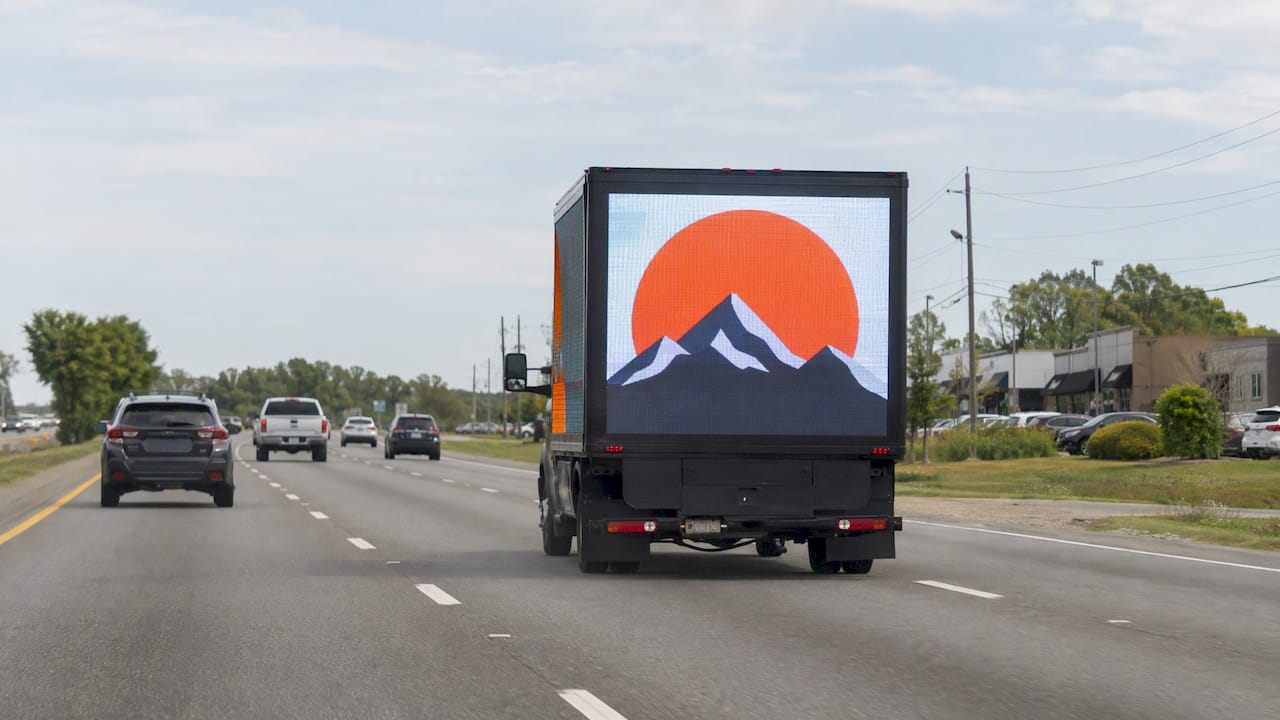
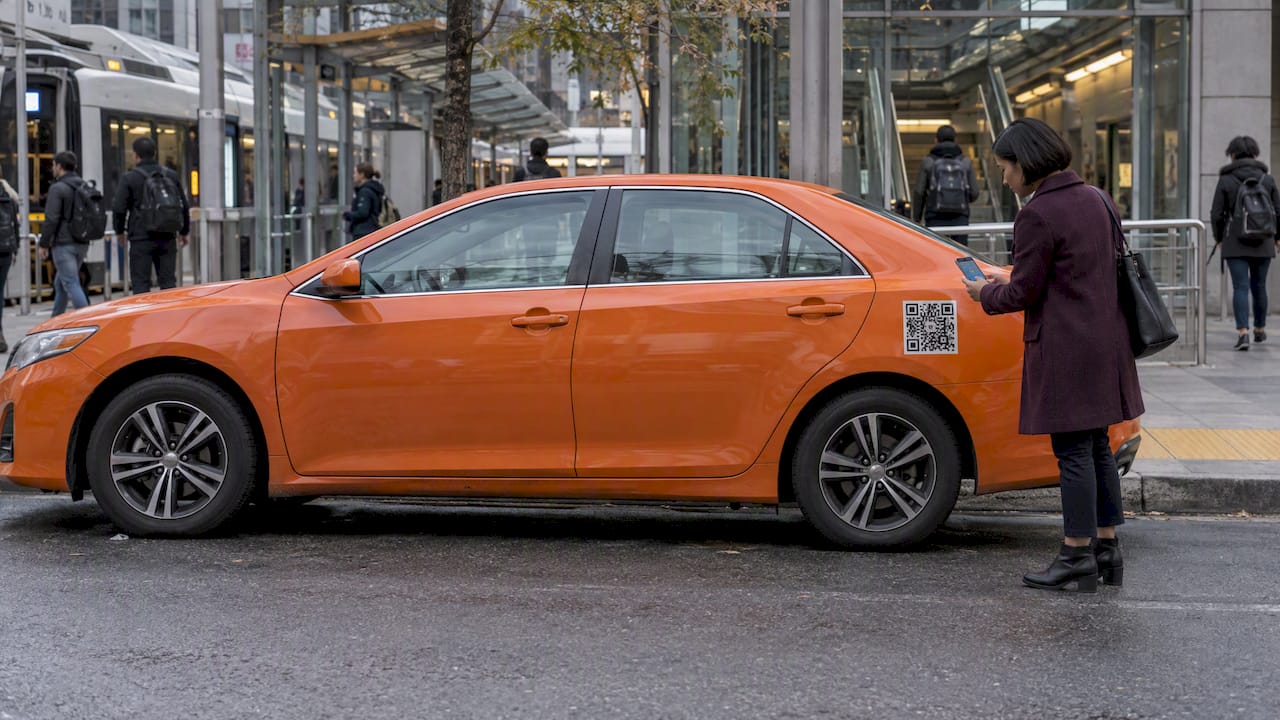
Houston does not offer a single “mobile billboard permit” you can buy and then drive anywhere. The city’s rules work the other way round: its parking ordinance restricts operating or parking a vehicle on a street mainly to advertise, its sign code regulates lighting and signs, and Texas law controls commercial signs near highways. A legal Houston campaign is built around those rules: moving routes, no street parking as a display, compliant lighting and written permission for any private-property stop.
This guide is for marketers and agencies planning an ad truck, trailer or wrapped rideshare campaign in Houston. It covers what the sources show, where the gray areas sit and what to put in an RFP. It is general information, not legal advice. Confirm your specific route and display with the City of Houston and a Texas attorney before you book.
TL;DR
- Houston’s parking ordinance bars operating or parking a vehicle on a street for the primary purpose of advertising, unless another provision of the code allows it. Plan for moving routes and never for “parked billboard” stops on public streets.
- Trailers and large vehicles face a 2-hour maximum on public streets, residential districts are off limits for parking, and commercial vehicles cannot park on a public street from 2:00 a.m. to 6:00 a.m.
- Lit displays raise extra questions: glare rules, attention-getting device fines of $300 to $500 per day and, for regulated high-technology signs, brightness limits.
- On state highways, Texas regulates commercial signs under Transportation Code Chapter 391, and penalties for unauthorized right-of-way ads rose on September 1, 2025.
- Ask any vendor for its Houston compliance plan, route logic and proof-of-posting reporting before you sign.
Table of Contents
- Is there a mobile billboard permit in Houston?
- Parking and stopping rules that shape a Houston route
- Lighting and display rules for LED trucks
- Texas and TxDOT rules on highways
- Private property, events and venues
- Vehicle markings, insurance and paperwork
- A practical Houston compliance checklist
- Our perspective
- Plan a compliant Houston campaign with us
- FAQ
- Sources
Is there a mobile billboard permit in Houston?
Not in the sense most buyers expect. The Houston Permitting Center’s sign administration page says no new off-premise sign permits can be issued, with limited relocation permits for certain existing signs. That page is about fixed signs such as roadside billboards, and it shows how restrictive the city is toward new off-premise advertising: no new off-premise sign permits are issued and only a relocation permit is available for certain existing signs, for one three-year period, when the provisions are met.
For a vehicle, the more direct rule sits in Chapter 26 of the Houston Code of Ordinances, the Parking Ordinance. It says that no person may operate or park on any street a vehicle for the primary purpose of advertising, except where the code or another ordinance specifically permits it, as the municipal code text shows. Read that sentence carefully, because it drives the whole planning approach.
In practice, that means:
- A truck whose main purpose is to circle streets showing an ad sits in the zone the ordinance targets. Whether and how a given route is treated is a question for the city, so ask before the campaign, not after a ticket.
- There is no permit we can point to that clears “advertising on a public street” in general. If a vendor tells you a permit covers all of Houston, ask for the permit number and the issuing office in writing.
- Texas law adds a second layer near highways, covered below.
Other large cities handle this differently. If your campaign spans markets, our national mobile billboard compliance playbook compares the approaches, and the Austin rules are the closest Texas comparison.
Parking and stopping rules that shape a Houston route
Most real-world trouble for ad vehicles comes from parking, not from signage. The city’s parking ordinance, as summarized in the Houston Code of Ordinances, sets limits that matter to anyone running a trailer or truck:
| Rule | What it means for a campaign |
|---|---|
| General ban on operating or parking a vehicle on a street mainly to advertise | Routes must keep moving, and a parked ad vehicle is the highest-risk setup |
| 2-hour maximum for trailers and large vehicles on public streets | Trailer-style units cannot sit at a hot spot all afternoon |
| No parking in residential districts | Keep layovers and staging out of neighborhoods |
| No parking or standing of commercial vehicles on public streets from 2:00 a.m. to 6:00 a.m. (loading and unloading excepted) | Overnight storage belongs in a lot or yard, never at the curb |
The 2:00 a.m. to 6:00 a.m. restriction is also described in the same parking chapter. Treat these as planning constraints rather than a complete list. Ordinances get amended, so ask the vendor to confirm the current text for your dates.
Why moving formats fit Houston
Because the code targets parked advertising, a driving format is easier to plan than a static one. A rideshare wrap travels with normal traffic during a driver’s regular trips, and an LED truck on a scheduled route keeps moving through target zones. Our LED ad truck guide explains how routes are built around dwell points like red lights and congested corridors, and the rideshare wrap pricing overview shows what to expect in a quote.
Lighting and display rules for LED trucks
A lit digital display adds a separate set of questions. Three sources matter in Houston.
Glare and driver vision. The Houston Sign Code prohibits signs with lights that are not shielded if they create glare or impair the vision of drivers on the traveled way. An LED panel on a truck should be dimmed and positioned so it does not do either.
Attention-getting devices. The city’s permitting guidance says placing devices such as streamers, flashing lights or searchlights on private or public property to attract attention to a business is prohibited, with fines of $300 to $500 per day. Whether a moving LED screen counts is a judgment for the city, so avoid flashing content and strobe effects as a precaution. Static or slow-transition creative is the safer design.

High-technology sign limits. A Houston Public Works permitting record lists that regulated high-technology signs may not use blinking, rotating, moving, chasing, flashing, glaring or strobe effects, with brightness limits of 6,500 nits from sunrise to sunset and 1,250 nits from sunset to sunrise. That record concerns regulated high-technology signs, so whether Houston applies those provisions to a vehicle display is something to confirm with the city. Even if they do not apply, a vendor that can show its panels and dimming settings sit within those figures has a sound defense.
Creative choices that keep you out of trouble
- Hold each frame for several seconds and avoid animation that reads as flashing.
- Use automatic brightness control for night routes.
- Keep copy short, with one message and one smart QR code, so drivers behind you read it at a glance.
The mobile billboard effectiveness guide shows how creative and measurement fit together in a two-week test.
Texas and TxDOT rules on highways
Houston campaigns often touch freeways such as I-45, I-10 and the 610 Loop, so state law matters too. TxDOT runs the Commercial Signs Regulatory Program under Transportation Code Chapter 391 for highways and Chapter 394 for outdoor advertising along minor roads outside city limits. Amended commercial-sign regulations took effect September 1, 2024.
The statute defines a commercial sign broadly: a display, device, message, billboard, logo or symbol designed, intended or used to advertise or inform, and intended to be leased or paid for, with an exception for a business on its own property, as Transportation Code Chapter 391 sets out. For interstate and primary highways, the same chapter generally prohibits erecting or maintaining a commercial sign within 660 feet of the right-of-way edge when it is visible from the main-traveled way.
Those provisions speak of erecting or maintaining a sign, which is language aimed at fixed structures. A vehicle in motion is a different thing, but a vehicle left standing near a highway is the scenario to avoid. Do not stage an ad unit on a shoulder, on right-of-way land or on a lot with a view of the freeway without confirming the rules for that spot.
A municipality can seek TxDOT certification to regulate commercial signs itself. When TxDOT and the Federal Highway Administration certify it, TxDOT waives the state permit requirement within incorporated limits, and municipal zoning and local rules control sign locations. Inside city limits, then, the local rules become the main concern.

Higher penalties since 2025
Texas also raised penalties for unauthorized ads on public road right-of-way. Effective September 1, 2025, HB 3611 allows penalties of up to $1,000 for a first violation, $2,500 for a second and $5,000 for a third or later, and a first penalty requires notice and failure to remove the ad by the deadline. That bill targets ads placed on the right-of-way, not moving vehicles, but it shows the direction of enforcement.
Private property, events and venues
The research behind this guide found no Houston source that clearly addresses a mobile billboard staged on private property or at an event, so treat this as a checklist and not as settled law.
Before any stop off the public street:
- Get written permission from the property owner or the venue operator, naming the dates, hours and exact spot.
- Ask the venue or event organizer about its own advertising and vehicle-access rules. Convention centers, stadiums and festival grounds often control which vehicles may enter.
- Ask the Houston Permitting Center whether a stationary display on that parcel counts as a sign needing review. The city’s sign administration office is the right place to ask.
- Check the approach route as well, because the stretch of public street leading to the venue is still governed by the parking ordinance.
If you are targeting trade shows and conferences, our guide to reaching conference attendees with LED billboards explains how routes are built around venues, hotels and transit points without relying on a standing display.
Vehicle markings, insurance and paperwork
Permits are only one part of the paperwork. Houston’s sign code requires that vehicles used by licensed sign contractors to install or maintain signs carry the company name and license number on each side in letters at least 2 inches high, per the Houston Sign Code. That rule applies to sign contractors working on signs. It is a useful reminder that Houston expects identifiable vehicles and licensed operators, so ask your vendor what applies to its fleet.
A solid compliance package from a vendor includes:
- A written route plan showing roads, time windows and any layover locations.
- Proof of insurance. Our mobile billboard insurance checklist lists what to verify.
- A driver plan covering hours, breaks and overnight storage that respects the 2:00 a.m. to 6:00 a.m. rule.
- Proof-of-posting with GPS and photos, so you can confirm what ran and where.
- The vendor’s written position on local rules, which our ad truck compliance RFP guide helps you request.
For rideshare formats, the platforms have their own rules on top of city law. See the rideshare advertising policies marketers should confirm before launch.
A practical Houston compliance checklist
Use this before you approve a plan:
- Define the format. Moving LED truck, trailer or rideshare wrap? Each faces different parking limits.
- Map the route. Keep it moving through your target zones, with no curbside display stops.
- Plan layovers. Use private lots with permission, outside residential districts, and never overnight on a public street.
- Check the display. Static or slow-change creative, shielded and dimmed lighting, nothing that flashes.
- Mind the highways. Avoid standing near freeway right-of-way.
- Get it in writing. Ask for the vendor’s Houston compliance notes and the dates of the rules they relied on.
- Require reporting. GPS and photo proof-of-posting after each run.
Costs are a separate question. Published industry figures run broadly from $700 to $2,000 per day for mobile billboards, though that varies by format, as one industry cost overview notes, so request a quote for your specific route rather than relying on averages.
Our perspective
Buyers often ask us for “the Houston permit,” and the honest answer is that the question is slightly off. Houston’s rules mostly regulate how a vehicle behaves on the street: whether it is parked, for how long, where it sleeps overnight and how bright its display is. So we build campaigns around those facts.
That is why we favor moving formats with route customization and geofencing. A truck that keeps rolling through the zones your audience actually passes through is easier to keep within the parking rules than one that sits in place. A rideshare wrap goes where real trips go, and we layer real-time retargeting and smart QR codes on top so the reach shows up as measurable leads.
Compliance should never be a surprise on the invoice. Our approach is national coverage with local route planning, short lead times and proof-of-posting with GPS and photo tracking, so you can see what ran and when.
Scott
Plan a compliant Houston campaign with us
If you want LED mobile billboards, wrapped rideshare cars or a localized mixed media campaign in Houston, we plan routes, targeting and reporting with the local rules in mind. We can add geofencing, audience filtering, smart QR codes for lead capture and attribution analytics, so you see what the campaign produced. See our mobile billboard and rideshare campaign options and send us your target areas and dates.

For a wider view of how local campaigns fit together, our localized marketing strategy workflow walks through the steps.
FAQ
Do I need a permit to drive a mobile billboard in Houston?
The sources we reviewed do not point to a single mobile billboard permit. Houston’s parking ordinance restricts operating or parking a vehicle on a street for the primary purpose of advertising unless the code allows it. Ask the City of Houston about your specific route and format before launch.
Can a mobile billboard park on a Houston street?
It is a high-risk plan. The city bars parking a vehicle on a street mainly to advertise, caps trailers and large vehicles at 2 hours on public streets, and prohibits parking in residential districts. Commercial vehicles also cannot park on public streets from 2:00 a.m. to 6:00 a.m.
Are LED mobile billboards allowed in Houston?
The sources reviewed do not ban them outright, but lighting rules apply. The sign code prohibits unshielded lights that create glare or impair drivers’ vision, and high-technology signs face limits on flashing effects and brightness. Use steady creative and dimming, and confirm with the city how it treats vehicle displays.
Does TxDOT regulate mobile billboards on Houston freeways?
TxDOT regulates commercial signs along highways under Transportation Code Chapter 391, but those provisions concern erecting or maintaining signs. Inside city limits, TxDOT may waive the state permit where the city is certified, and local rules control locations. Avoid staging any display on or near freeway right-of-way.
Can I stage a billboard truck at an event or on a private lot?
Get written permission from the owner or venue first, and ask the Houston Permitting Center whether a stationary display needs review. The approach streets still fall under the parking rules.
Sources
- Sign Administration, Houston Permitting Center
- Chapter 26, Parking, Houston Code of Ordinances (Municode)
- Houston Code of Ordinances, Parking, Article II
- Houston Sign Code
- Houston Permitting Center, General Information
- Houston Public Works permitting record, high-technology signs
- TxDOT Commercial Signs Regulatory Program
- Texas Transportation Code Chapter 391
- TxDOT, Commercial and Campaign Signs
- Texas HB 3611, 89th Legislature