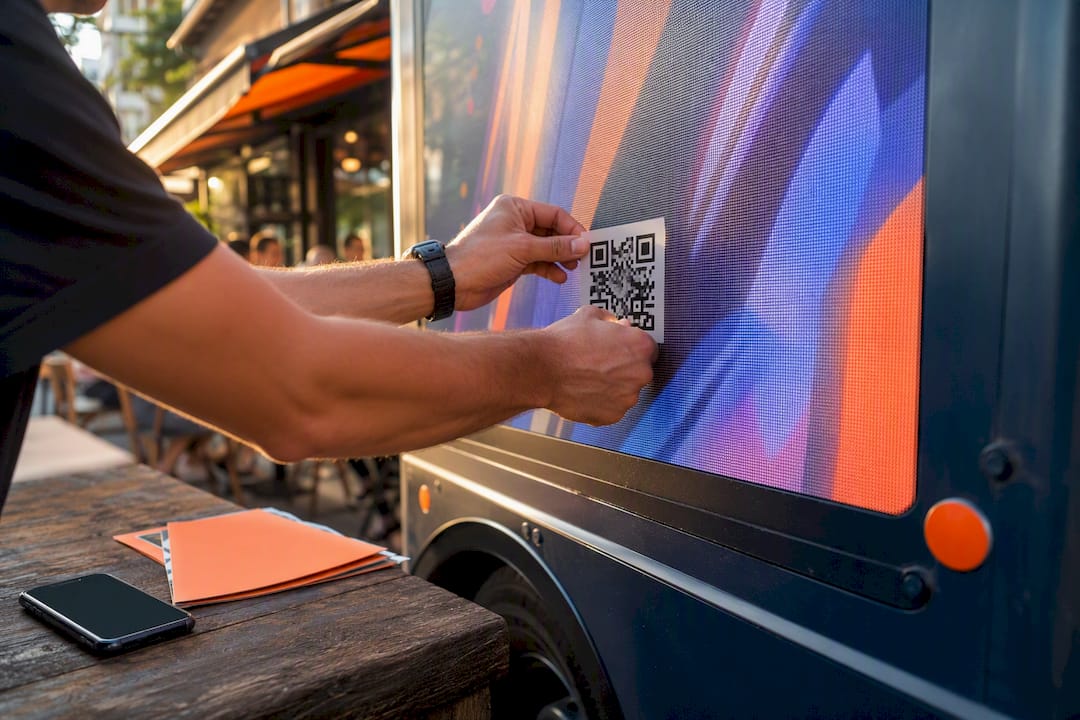
Out-of-home advertising is far more than a billboard on a highway. The channel has quietly become one of the most measurable, targetable, and dynamic formats available to marketers, yet most brands still plan OOH campaigns the same way they did a decade ago. The gap between what OOH can deliver and what most advertisers actually extract from it is enormous. This article breaks down how the format works across static and digital placements, where assumptions about visibility and reach can cost you real budget, and how data-driven OOH strategies separate high-performing campaigns from average ones.
Table of Contents
- What is OOH advertising? From static to digital
- Static vs digital OOH: Visibility and frequency explained
- Targeting and measurement: How tech transforms OOH
- Best practices for high-impact data-driven OOH campaigns
- The practical reality: What most marketers miss about OOH
- How Beacon Mobile Media helps you master OOH advertising
- Frequently asked questions
Key Takeaways
| Point | Details |
|---|---|
| Static vs digital OOH | Static OOH offers exclusive visibility while digital OOH shares screen time, impacting exposure. |
| Data-driven targeting | Modern DOOH platforms enable precise audience targeting and real-time campaign measurement. |
| Model frequency accurately | Screen rotation and delivery rate must be considered for realistic campaign planning and analysis. |
| Optimize for impact | Setting clear goals and capturing robust campaign data lead to higher ROI and more effective OOH campaigns. |
| Test and evolve campaigns | Continuous analysis and optimization are essential for leveraging OOH advertising’s full potential. |
What is OOH advertising? From static to digital
Out-of-home advertising refers to any ad format consumers encounter outside their homes. The category is broad, and that breadth is exactly where many marketers go wrong by treating it as a monolithic channel. In reality, OOH covers a wide spectrum of formats, audiences, and delivery mechanics.
Classic OOH formats include:
- Static billboards along highways and city streets
- Transit ads on buses, subway cars, and commuter rail
- Bus shelter and street furniture placements
- Airport corridor displays and gate boards
- Wrapped vehicles, including rideshare cars and delivery fleets
- LED mobile billboards driven through high-traffic areas
Digital out-of-home (DOOH) overlays a technology layer on top of these physical placements. Instead of printed vinyl, DOOH uses screens that display multiple rotating creatives from different advertisers across a single cycle. This distinction matters enormously and shapes nearly every campaign decision that follows.
A critical nuance many marketers overlook: DOOH screen rotation means your ad cycles in a loop with other advertisers’ creatives, directly reducing effective exposure compared to a static site with exclusive visibility. A static billboard guarantees 100% share of voice for the duration of your campaign. A digital screen typically gives you a fraction of that, depending on the number of advertisers in the rotation.
For brands serious about data-driven OOH media, understanding this structural difference is step one. Choosing the wrong format without accounting for exposure mechanics can mean paying for reach you are not actually getting.
Statistic callout: Global DOOH ad spending is projected to exceed $15 billion by 2026, reflecting rapid adoption but also an urgent need for marketers to understand what they are actually buying.
Static vs digital OOH: Visibility and frequency explained
Once you understand the formats, the next question is practical: which one performs better for your specific goals? The honest answer is that it depends entirely on what you are optimizing for, and most marketers do not ask this question precisely enough before committing budget.

Here is a direct comparison of the two primary OOH delivery models:
| Factor | Static OOH | Digital OOH (DOOH) |
|---|---|---|
| Share of voice | 100% exclusive | Shared (typically 1 of 4 to 8 ads) |
| Creative flexibility | Fixed for campaign duration | Can update or rotate creatives dynamically |
| Cost structure | Often higher upfront per site | Variable, often CPM-based |
| Visibility per impression | Continuous, uninterrupted | Fractional per loop cycle |
| Targeting options | Location and demographics | Location, time, weather, audience data |
| Campaign duration | Fixed lease period | Flexible, often by time block |
| Best for | Brand awareness, long-term presence | Time-sensitive, dynamic, or targeted campaigns |
The phrase “opportunity-to-see” is central to how both formats are measured, and this is where many campaign plans fall apart. DOOH screen rotation and opportunity-to-see modeling represent a real edge case: the actual delivery rate on a given screen can differ significantly from the assumption that your ad is continuously visible for the full campaign duration.
A campaign that projects 200,000 impressions based on traffic counts at a DOOH screen needs to account for the fact that each individual passing the screen may only see your ad if they happen to be present during your rotation slot. Static OOH eliminates that variable entirely. Your message is always there.
“Smart marketers treat share of voice as a planning input, not a footnote in the media brief.”
When evaluating DOOH strategies, be explicit about rotation depth during the vendor negotiation. Ask how many advertisers share the loop, what the average slot length is, and how impressions are modeled. These details are not always volunteered upfront, and they directly affect your real-world frequency.
Pro Tip: When buying DOOH, request the loop rotation schedule and calculate your effective exposure rate before signing. Divide your slot length by total loop duration to understand what percentage of passing traffic will actually see your ad.
You should also pair your format decision with a clear frequency model. OOH tips consistently point to frequency as one of the strongest predictors of OOH-driven recall. A campaign running at one-sixth share of voice needs a longer flight or more locations to match the frequency impact of an exclusive static placement.
Targeting and measurement: How tech transforms OOH
Here is where OOH moves from a passive awareness channel to an active, measurable performance driver. Modern DOOH platforms have built data capabilities directly into the buying and delivery infrastructure, and the implications for campaign strategy are significant.
The core targeting levers available in DOOH today include:
- Geographic targeting by specific zones, zip codes, or custom-drawn geofence boundaries
- Time-of-day triggers to serve ads during commute hours, lunch breaks, or weekend shopping windows
- Audience segment filtering using mobile device ID data to reach specific demographics and interest groups
- Weather-based triggers that swap creative based on real-time conditions
- Contextual targeting tied to the content environment around a screen, such as a sports venue or transit hub
These levers make DOOH far more surgical than static OOH. The trade-off, as noted earlier, is that fractional screen share means you need to model delivery more carefully. Digital targeting strategies rely on pairing strong targeting parameters with realistic frequency expectations.
| Measurement method | What it tracks | Best use case |
|---|---|---|
| Impression modeling | Estimated exposures based on foot traffic | Baseline reach reporting |
| Geo-fenced mobile triggers | Device IDs exposed near OOH screens | Retargeting and attribution |
| QR code scan data | Direct engagement from OOH creative | Lead generation and conversion tracking |
| Sales lift studies | Revenue change in exposed vs. unexposed zones | ROI and business impact |
| Website traffic correlation | Lift in branded search or direct traffic | Awareness and recall measurement |

Measurement is where smart data capture changes the game. QR codes embedded in OOH creative connect a physical impression to a digital action, giving you first-party data you can actually act on. A consumer who scans your billboard QR code becomes a traceable, retargetable audience member rather than an anonymous passerby.
Geotargeting and ROI work in both directions. You can use geofencing to trigger mobile ads to consumers who were exposed to your OOH creative, creating a sequential funnel that reinforces the outdoor message with a digital follow-up. This omnichannel loop is one of the highest-performing structures in modern OOH strategy.
It is worth reiterating that DOOH screen rotation directly affects how you interpret measurement outputs. If your impression model assumes full rotation exposure but your actual slot represents one-eighth of the loop cycle, your real audience delivery could be substantially lower than projected. Always reconcile impression estimates with actual rotation data before reporting results.
Pro Tip: Build a measurement matrix before your campaign launches. Define which metrics map to which objectives, such as reach for awareness and scan rates for conversion, so you are not scrambling to justify results post-campaign with metrics that were never aligned to goals.
Best practices for high-impact data-driven OOH campaigns
Knowing the mechanics is one thing. Executing a campaign that actually delivers is another. These are the practices that consistently separate strong OOH performers from brands that spend without getting results.
-
Start with a clear objective. Is this campaign about brand awareness, lead generation, event promotion, or competitive conquest? The objective determines format, targeting, and measurement, so nail it down before you touch a media plan.
-
Define your audience precisely. Generic demographic targeting like “adults 25 to 54” is too broad for a data-driven OOH buy. Use behavioral, location-based, or affinity data to get sharper. The more precisely you define the audience, the more efficiently you can allocate budget to formats and locations that index well against that group.
-
Choose format based on share-of-voice needs. If brand recall and consistent presence are the goals, static OOH with exclusive visibility often wins. If you need real-time creative flexibility or location-based timing, DOOH delivers capabilities static placements simply cannot match.
-
Model rotation and frequency before buying. Treating screen share and rotation as a real planning variable rather than an afterthought protects your campaign from the most common DOOH pitfall: overestimating actual audience exposure.
-
Use creative variations to test performance. DOOH’s ability to rotate multiple creatives within a single campaign window is a testing advantage. Run two or three creative variants, compare engagement signals, and optimize toward the version driving better results.
-
Capture engagement data at the asset level. Unique QR codes per location or format allow you to isolate what is performing, not just at the campaign level but at the placement level. This granularity is what localized targeting strategies depend on for meaningful optimization.
-
Plan for retargeting from day one. OOH exposure sets the top of the funnel. Retargeting that exposure with digital ads closes the loop. Build your mobile retargeting audience concurrently with your OOH buy so the follow-up is ready when the outdoor campaign goes live.
The benefits of localized ad campaigns are most apparent when every one of these elements operates as a system. Individual tactics in isolation rarely move the needle. Coordinated execution across format selection, targeting, creative testing, and measurement is what produces measurable ROI.
Pro Tip: Set a minimum threshold for frequency before finalizing your OOH buy. If you cannot achieve at least three to five exposures per target audience member over the campaign flight, you may need to add locations, extend the duration, or reconsider the format mix.
The practical reality: What most marketers miss about OOH
The best practices section above is solid and necessary. But there is a harder conversation that industry guides rarely have, and it is the one that actually determines whether your OOH budget produces real business results.
Most marketers significantly underestimate how much DOOH screen rotation dilutes campaign frequency. They buy a digital placement, see impressive traffic numbers attached to a location, and assume those numbers translate directly into their brand’s impressions. They do not. When your ad occupies one slot in an eight-advertiser loop, you are capturing roughly 12% of potential exposures at that location. That is not a small rounding error. That is a structural difference that should reshape how you model campaigns entirely.
For expert OOH advice, the first thing we emphasize with clients is recalibrating their baseline assumptions about what they are actually buying. Simple reach metrics look impressive in a post-campaign report. They tell you very little about real impact. Impact comes from frequency and relevance, and both require intentional planning against actual delivery mechanics, not theoretical ones.
There is also a measurement gap that persists even among sophisticated advertisers. Many brands still treat OOH as an unmeasurable awareness spend, which is both outdated and self-defeating. The tools to measure OOH attribution now exist and work well. The problem is that brands do not build measurement into the campaign design from the start. They think about it after the fact, when the opportunity to collect meaningful data has already passed.
The most underutilized capability in OOH right now is the feedback loop: using campaign data from one flight to improve the next one. Testing creative, isolating high-performing locations, and correlating OOH exposure with downstream digital behavior are all achievable at reasonable cost. Yet most brands run OOH in isolation, never connecting it to the rest of their marketing data. That isolation is where OOH ROI goes to die.
True performance in OOH comes from treating it as an integrated channel rather than a standalone buy. The format’s physical presence, mass reach, and growing data capabilities make it uniquely powerful. But only when it is planned, measured, and optimized with the same rigor you would apply to any performance channel.
How Beacon Mobile Media helps you master OOH advertising
Taking OOH from theory to measurable performance requires the right platform, the right data infrastructure, and a partner who understands the full complexity of the channel.

Beacon Mobile Media builds campaigns that account for every variable discussed in this article, from rotation modeling and geofencing to QR-based data capture and attribution reporting. Our data-driven OOH media services cover LED mobile billboards, wrapped rideshare vehicles, and advanced targeting across all 50 states. Whether you are launching a localized conquest campaign or scaling national awareness with measurable frequency, our DOOH campaign optimization approach ensures your investment connects to real outcomes. Explore our digital targeting platforms to see how precision and mobility combine for high-impact results.
Frequently asked questions
What is the difference between static and digital OOH advertising?
Static OOH gives a single advertiser exclusive, continuous visibility for the campaign duration, while DOOH rotates multiple ads in a loop, which means each advertiser captures only a fraction of the total exposure at that location.
How can I measure the impact of a DOOH campaign?
Effective DOOH measurement combines impression modeling, geo-fenced mobile triggers, QR scan tracking, and sales lift studies. Because DOOH screen rotation affects actual delivery rates, reconciling modeled impressions with real rotation data is essential for accurate reporting.
Why is share-of-voice important in OOH placements?
Share-of-voice directly controls how much of the available audience actually sees your ad. Static billboards offer 100% share of voice, while DOOH advertisers share a rotating loop where your ad may appear for only a fraction of every minute, making share-of-voice a critical planning metric rather than a secondary consideration.
How does geotargeting enhance OOH advertising results?
Geotargeting allows you to serve OOH and digital retargeting messages to specific audiences based on real-world location data, increasing relevance and driving measurably higher engagement and conversion rates compared to untargeted placements.