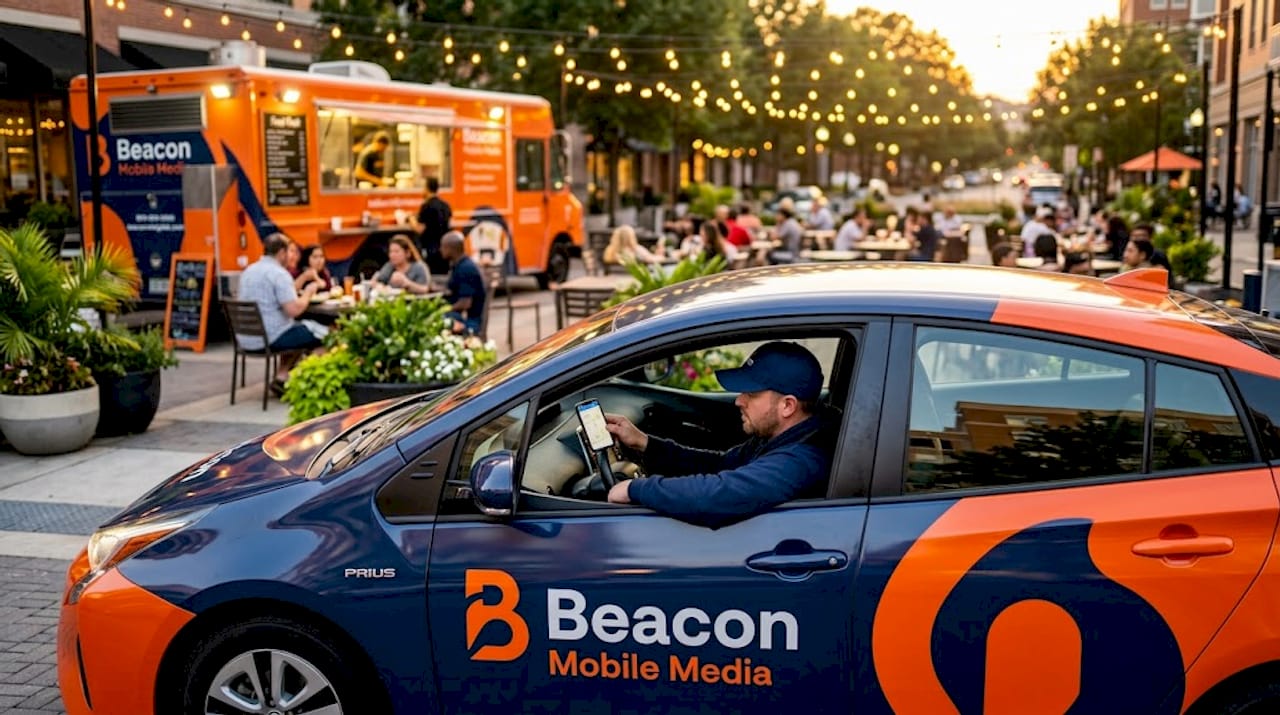
Imagine spending weeks building a mobile billboard campaign, only to watch it roll through neighborhoods your target audience never visits. The trucks log miles, the impressions stack up on paper, and the leads never come. This scenario plays out constantly in out-of-home (OOH) advertising when route planning is treated as an afterthought rather than a strategic discipline. Precise route planning, backed by real audience data and location intelligence, is what separates campaigns that generate measurable returns from those that simply generate activity. This guide walks you through exactly how to build that precision into every campaign you run.
Table of Contents
- Understanding targeted advertising and route planning basics
- Key requirements and tools for route-based campaigns
- Step-by-step route planning for maximum campaign impact
- Common mistakes and troubleshooting tips
- Verifying campaign results and optimizing future routes
- The overlooked power of dynamic routes in a data-driven world
- Take your targeted advertising campaign further with Beacon Mobile Media
- Frequently asked questions
Key Takeaways
| Point | Details |
|---|---|
| Route planning maximizes impact | Mapping your campaign routes to audience patterns reduces wasted impressions and improves engagement. |
| Data-driven tools are essential | Successful targeted advertising relies on analytics, GPS mapping, and demographic overlays for precision. |
| Regular optimization boosts ROI | Review and recalibrate routes frequently using campaign data to drive higher returns. |
| Avoid common pitfalls | Steer clear of rigid route planning and neglecting real-time data to keep your campaigns on course. |
Understanding targeted advertising and route planning basics
To establish a solid foundation, let’s clarify what targeted advertising route planning actually means.
Targeted advertising in the OOH context means placing your message in front of specific audience segments, not just in high-traffic areas generally. It requires knowing who your audience is, where they move throughout the day, and when they are most receptive to your message. For brand managers running localized campaigns, this distinction is critical. A generic route through downtown might generate raw impressions, but a route calibrated to intercept your target demographic during their commute, lunch break, or weekend errands generates qualified impressions.
Route planning, in this context, means mapping your mobile billboard or wrapped rideshare vehicle paths to maximize exposure to those specific demographics. It is not just drawing lines on a map. It involves layering audience movement data, traffic patterns, event calendars, and competitor positioning to identify where your message will land hardest.
Geographic targeting strategies have evolved significantly as location data has become richer and more accessible. Today’s route planners work with foot traffic analytics, mobile device movement data, and census overlays to build routes that reflect how real people actually move through a city.
“Out-of-home advertising success relies on matching routes to audience movement patterns.” This principle shapes every decision in a well-built campaign, from vehicle selection to time-of-day scheduling.
Core benefits of advanced route planning include:
- Higher relevance per impression, meaning fewer wasted exposures
- Better alignment between creative messaging and audience context
- Improved attribution because you know exactly where your ads appeared
- More efficient budget allocation across high-value route segments
- Stronger post-campaign data for future optimization
These benefits compound over time. Each campaign generates data that sharpens the next one, creating a flywheel of improving performance.
Key requirements and tools for route-based campaigns
Now that you understand the basics, you will need to collect the right tools and resources for effective campaign execution.
Effective route planning is not a solo effort, and it is not improvised. It requires a specific stack of tools and a cross-functional team that can translate data into decisions. Campaign analytics tools are the backbone of this process, giving you the visibility to plan intelligently and measure accurately.
Essential tools and their purposes:
| Tool | Purpose |
|---|---|
| Audience movement analytics | Identifies where target demographics travel and at what times |
| GPS route mapping software | Plots and optimizes vehicle paths for maximum coverage |
| Demographic overlay platforms | Layers census and behavioral data onto geographic maps |
| Geofencing technology | Sets virtual boundaries to trigger digital retargeting after OOH exposure |
| Campaign budgeting tools | Allocates spend across routes based on projected impression value |
| Proof-of-posting documentation | Verifies ad placement with timestamped GPS and photo evidence |
Utilizing location data and traffic patterns alongside audience analytics is what separates efficient campaigns from expensive guesses. Each tool in this stack serves a specific function, and gaps in the stack create gaps in performance.
People and teams involved in successful route planning:
- Data analysts who interpret movement and demographic data
- Campaign strategists who translate data into route decisions
- Creative teams who ensure messaging fits the geographic and demographic context
- Operations coordinators who manage vehicle scheduling and driver logistics
- Reporting specialists who track and communicate campaign performance
Pro Tip: When selecting tools, prioritize platforms that integrate directly with your existing ad management systems. Disconnected tools create data silos that slow down decision-making and introduce errors. A unified dashboard that pulls GPS data, impression counts, and audience analytics into one view will save your team hours every week and produce cleaner insights.
Step-by-step route planning for maximum campaign impact
With tools in hand, you are ready to devise your route plan. Let’s break it down into actionable steps.
1. Define your campaign goals with precision. Before touching a map, establish what success looks like. Are you driving foot traffic to a specific location? Building brand awareness in a new market? Retargeting a specific audience segment? Your goal shapes every route decision that follows.
2. Analyze audience movement data. Pull foot traffic reports and mobile device movement data for your target demographic in your target geography. Look for patterns: where do they commute, shop, eat, and spend leisure time? Identify the corridors and intersections where your audience concentrates during key time windows.

3. Map optimal routes against those patterns. Overlay your audience movement data onto a city map and identify the highest-value route segments. Prioritize routes that intersect multiple audience touchpoints, such as a path that passes a gym in the morning, a business district at lunch, and a retail corridor in the evening.
4. Schedule routes by time of day and day of week. Static route maps miss the temporal dimension. Your audience is not in the same place at 8 a.m. and 6 p.m. Build time-based route variations that track your audience through their daily patterns. Strategic route mapping that accounts for timing has been shown to increase ad recall and engagement significantly compared to fixed-path approaches.
5. Test a pilot route before full deployment. Run a smaller version of your campaign on a subset of routes. Measure impression counts, QR code scans, and any digital retargeting signals. Use this data to validate your assumptions before committing full budget.
6. Adjust based on pilot results. Identify underperforming segments and replace them with higher-value alternatives. This iterative approach prevents budget waste at scale.

Manual vs. automated route planning: a direct comparison
| Factor | Manual planning | Automated/data-driven planning |
|---|---|---|
| Time to plan | Several days | Hours |
| Data inputs | Limited, often anecdotal | Real-time, multi-source |
| Route accuracy | Moderate | High |
| Adaptability | Slow to change | Near real-time adjustments |
| Cost efficiency | Lower upfront, higher waste | Higher upfront, lower waste |
| Reporting quality | Basic | Detailed and attributable |
Pro Tip: Avoid over-segmentation. It is tempting to create dozens of hyper-specific micro-routes targeting narrow audience slices, but this can dilute your campaign’s geographic impact and make logistics unmanageable. Focus on three to five well-defined audience segments and build routes that serve each one clearly. Depth beats breadth in route-based OOH campaigns.
Common mistakes and troubleshooting tips
Even the best strategies can go off-course. Here is how to avoid and fix the most common issues.
Many campaigns underperform because of inaccurate audience targeting and rigid route schedules that cannot respond to real-world changes. Recognizing these failure patterns early saves budget and preserves campaign momentum.
Top four errors in route-based ad planning:
- Neglecting real-time data: Routes planned weeks in advance often become obsolete. Road closures, local events, and seasonal shifts in audience movement can render a carefully planned route ineffective overnight.
- Failing to account for local events: A major concert, sports event, or festival can either create a massive opportunity or block your planned route entirely. Teams that monitor local event calendars consistently outperform those that do not.
- Skipping post-campaign analysis: Many teams treat campaign end as the finish line. In reality, the data collected during a campaign is one of its most valuable outputs. Skipping analysis means repeating the same mistakes in the next campaign.
- Treating all impressions as equal: An impression delivered in front of a distracted driver stuck in traffic is not equivalent to one delivered to a pedestrian walking past a wrapped vehicle at eye level. Context matters, and route planning should account for it.
Troubleshooting low-performance scenarios:
If impression counts are high but engagement is low, your creative may not be resonating with the audience in that specific context. Test a message variation on a subset of routes.
If QR code scan rates are below benchmark, the vehicle may be moving too fast through key zones. Slow dwell-time routes near pedestrian areas often outperform highway-speed routes for engagement.
If attribution data shows poor geographic alignment with your target audience, revisit your movement data sources. Outdated or low-resolution location data is a common culprit.
Missing even a single major route segment during a peak audience window can cost a campaign 20 to 30 percent of its potential impressions. Route gaps are not minor inefficiencies. They are structural failures that compound across a campaign’s full run.
Verifying campaign results and optimizing future routes
Once your campaign runs, measurement becomes key to ongoing success and smarter route planning.
Measurement is where most OOH campaigns historically fell short. Mobile billboard advertising with integrated digital tools changes that entirely. You now have access to granular data that was simply unavailable in traditional static billboard campaigns.
Key performance metrics to track:
- Impression counts by route segment: Which paths delivered the most verified exposures?
- Engagement rates: QR code scans, digital retargeting response rates, and social mentions tied to campaign geography
- Route coverage efficiency: What percentage of your target audience’s movement patterns did your routes actually intercept?
- Attribution data: Which route segments correlate with downstream conversions, whether store visits, website traffic, or direct inquiries?
- Cost per qualified impression: Total spend divided by impressions delivered to your verified target demographic
Ways to act on gathered insights:
- Recalibrate underperforming route segments by replacing them with higher-traffic alternatives
- Refine demographic targeting based on which audience clusters responded most strongly
- Adjust timing to concentrate vehicle hours in the windows that produced the highest engagement
- Archive successful route maps as templates for future campaigns in the same market
- Share performance data across teams so creative, strategy, and operations stay aligned on what is working
Continuous optimization based on campaign analytics consistently leads to improved ROI across successive campaigns. The brands that treat each campaign as a learning event, rather than a standalone execution, build compounding advantages over competitors who reset to zero each time.
A useful benchmark: campaigns that actively optimize routes mid-flight based on real-time data typically see 15 to 25 percent higher engagement rates compared to campaigns that run fixed routes from start to finish. That gap widens with each subsequent campaign as your team’s data library grows.
The overlooked power of dynamic routes in a data-driven world
Beyond the technical steps, let’s reframe what it actually means to be data-driven in your ad routes.
Most marketing teams claim to be data-driven. Few actually are when it comes to OOH route planning. The typical process still looks like this: a strategist pulls last quarter’s traffic data, draws a route through the busiest corridors, and locks it in for the campaign run. That is not data-driven. That is data-informed guessing with extra steps.
Real data-driven route planning means your routes are living documents. They change when audience patterns shift. They respond to unexpected events. They get smarter with every campaign cycle. The brands that understand this are quietly building significant advantages in local OOH market share, while their competitors wonder why their impression numbers look good but their results do not.
Here is the uncomfortable reality: static routes are a form of complacency. They feel safe because they are predictable, but predictability in advertising is not a virtue. Your audience is not static. Their commute patterns shift with remote work trends, new retail openings, and seasonal changes. Your routes need to shift with them.
Modern OOH campaign insights increasingly point to behavioral data as the most reliable input for route decisions, outperforming demographic overlays and historical traffic counts when used in real time. The teams that figure this out early will not just run better campaigns. They will redefine what OOH advertising can deliver for their brands.
The willingness to adapt is not a soft skill. It is a competitive advantage. Treat your route plan as a hypothesis, not a blueprint.
Take your targeted advertising campaign further with Beacon Mobile Media
With a practical strategy in place, turning to the right partner can help you scale and succeed.
Executing precise, data-driven route planning at scale requires more than good intentions. It requires infrastructure, technology, and operational expertise that most in-house teams are still building.

Beacon Mobile Media solutions bring together LED mobile billboards, wrapped rideshare vehicles, real-time geofencing, and advanced audience analytics into a single, managed platform. Whether you are running a localized awareness campaign or a multi-market retargeting push, our team handles route optimization, proof-of-posting documentation, and attribution reporting so you can focus on strategy. Explore our campaign solutions shop to see available formats and markets, or review a recent OOH campaign case study to see how route-based targeting performs in practice. Let’s build a campaign that actually reaches your audience.
Frequently asked questions
What are the most important tools for route planning in targeted advertising?
The most important tools include audience movement analytics, GPS mapping software, and demographic overlay platforms. Location data and audience analytics used together give planners the clearest picture of where and when to deploy ad vehicles.
How often should advertising routes be adjusted?
Routes should be reviewed at least weekly during an active campaign and adjusted whenever audience patterns or local conditions shift. Continuous optimization based on live analytics keeps campaigns performing at their highest potential throughout the full run.
What is the biggest mistake in route-based advertising campaigns?
The biggest mistake is neglecting real-time data, which causes campaigns to miss audience shifts and waste spend on irrelevant route segments. Inaccurate targeting and rigid schedules are the most common reasons OOH campaigns underperform against their projections.
Can route planning improve campaign ROI?
Yes, campaigns that use informed route planning and active mid-campaign optimization consistently report higher ROI than those running fixed, unmonitored routes. Optimization based on analytics is the single most reliable lever for improving returns in mobile OOH advertising.
How does targeted route planning differ from standard OOH advertising?
Targeted route planning uses real audience movement data to align ad exposure with specific demographic patterns, while standard OOH relies on selecting generally busy locations without audience verification. Matching routes to audience patterns is the foundational difference between precision OOH and traditional placement-based advertising.