Out-of-home media is no longer a passive channel where you slap a poster on a wall and hope someone notices. OOH revenue surpassed $9.1 billion in 2024, up 4.5% year over year, making it one of the fastest-growing traditional media categories in the U.S. Yet many marketing managers still think of OOH as a brand-awareness afterthought rather than a precision targeting tool. This guide breaks down what out-of-home media actually covers, how the categories work, where digital transformation is taking the industry, and how your team can use these insights to build campaigns that perform and prove it.
Table of Contents
- What is out-of-home media?
- OOH media categories and formats
- Digital transformation: How data and tech are reshaping OOH
- Applying OOH: Localized and data-driven campaign strategies
- What most marketers miss about out-of-home media
- Upgrade your OOH campaigns with specialized tools and insights
- Frequently asked questions
Key Takeaways
| Point | Details |
|---|---|
| OOH’s evolving definition | Out-of-home media encompasses more than billboards, covering street furniture, transit, and place-based advertising. |
| Digital and programmatic impact | DOOH and data integration make OOH more dynamic, responsive, and effective for marketers. |
| Standardization boosts efficiency | OAAA’s taxonomy streamlines buying and venue selection, supporting robust programmatic strategies. |
| Local targeting amplifies results | Geotargeting and smart route planning elevate campaign impact for regional audiences. |
| Actionable next steps available | Brands can leverage expert tips and tools to innovate and maximize OOH campaign performance. |
What is out-of-home media?
Out-of-home media refers to any advertising that reaches consumers while they are outside their homes. That scope is broader than most people assume. It covers everything from the highway billboard you pass on your morning commute to the digital screen above the coffee station at a co-working space.
The Out of Home Advertising Association of America (OAAA) sets the industry standard for how these formats are classified. Standard OOH categories per OAAA include four main groups: billboards, street furniture, transit, and place-based media. Understanding these categories matters because your buying strategy, audience reach, and measurement approach differ significantly across each one.
Here is a quick breakdown of what falls under each category:
- Billboards: Traditional roadside panels, digital billboards, wallscapes, and bulletin boards along highways and arterial roads
- Street furniture: Bus shelters, benches, kiosks, newsstands, and urban panels in pedestrian-heavy environments
- Transit: Ads placed on or inside buses, trains, subways, taxis, rideshare vehicles, airports, and transit stations
- Place-based media: Screens and displays inside gyms, offices, retail stores, arenas, gas stations, and entertainment venues
| OOH category | Common formats | Primary audience context |
|---|---|---|
| Billboards | Static panels, digital bulletins, wallscapes | Commuters, drivers, passengers |
| Street furniture | Shelters, benches, kiosks | Pedestrians, urban transit riders |
| Transit | Bus wraps, subway cards, airport screens | Travelers, daily commuters |
| Place-based | Retail screens, venue displays, office lobbies | Shoppers, event attendees, workers |
For brand managers running localized campaigns with targeted OOH tips, knowing which category aligns with your target demographic is the foundation of every placement decision. A campaign targeting downtown professionals during lunch will perform very differently on a transit shelter than on a highway bulletin board six miles outside the city.
OOH media categories and formats
Now that you understand OOH’s foundational scope, it is important to see how these formats are evolving and what the distinction between traditional and digital OOH actually means for your media buy.
Traditional OOH relies on static or printed materials. Think vinyl wraps, painted walls, and printed posters. Placement is fixed, design changes require physical production, and measurement relies heavily on traffic count estimates and post-campaign surveys. There is still strong value here, especially for brand awareness at scale, but flexibility is limited.
Digital OOH (DOOH) flips that model. Screens replace static panels, and content can be updated in real time. You can run different creatives at different times of day, respond to weather or local events, and integrate your DOOH buy into a broader programmatic strategy alongside your digital and social media budgets.

The OAAA recently took a significant step toward making DOOH more actionable. OAAA updated the OpenOOH taxonomy for standardized DOOH venue classification, distinguishing between retail, entertainment, and other location types to make programmatic buying easier and more precise. Before this standardization, a media buyer purchasing DOOH in “retail environments” might end up with placements that ranged from luxury mall concourses to gas station pump toppers with little consistency. The updated taxonomy removes that ambiguity.
Here is how traditional and digital OOH compare on the metrics that matter most to campaign planners:
| Factor | Traditional OOH | Digital OOH (DOOH) |
|---|---|---|
| Creative flexibility | Low (requires reprinting) | High (real-time updates) |
| Targeting precision | Limited (area-based) | Strong (venue, time, audience) |
| Programmatic buying | Not available | Available and growing |
| Measurement | Traffic estimates | Impression data, attribution tools |
| Cost model | Fixed production + posting | CPM-based, dynamic pricing |

Pro Tip: When evaluating DOOH inventory, ask vendors whether their venue classifications follow the OpenOOH taxonomy. This single question will tell you whether their inventory plugs cleanly into programmatic platforms and whether your reporting will be consistent across multiple buys.
For brands that want precision in localized ad targeting, DOOH is far more than just “billboards with screens.” The venue taxonomy means you can specify, for example, that your fitness apparel campaign should only run in gym environments during morning and evening workout windows. That level of control was simply not possible three years ago.
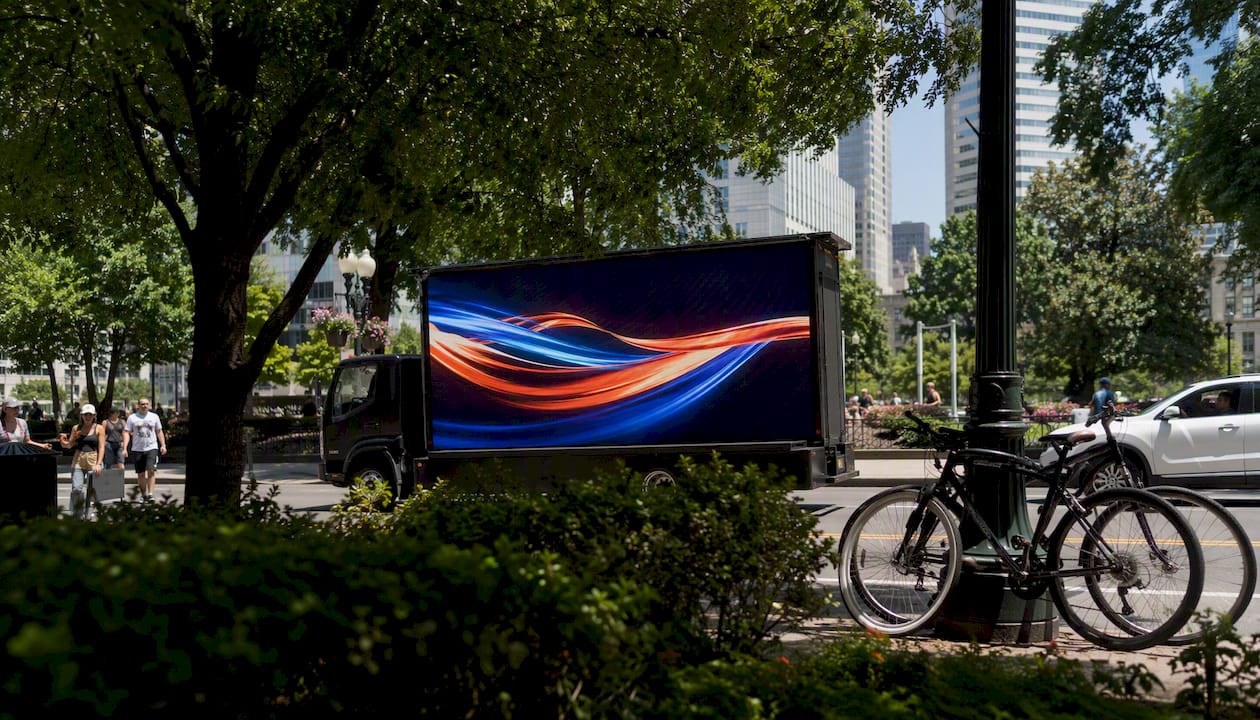
Transit formats deserve special mention here. Wrapped rideshare vehicles and mobile LED billboard trucks sit in a unique position because they combine the physical mobility of transit advertising with the audience data of digital targeting. A wrapped Uber or Lyft vehicle is not fixed to one location. It moves through neighborhoods, events, and commercial corridors in real time, reaching audiences that static formats simply cannot access. For brands using geotargeting strategies in their campaigns, mobile formats are one of the most underutilized tools available.
Digital transformation: How data and tech are reshaping OOH
Category clarity is step one. The more powerful shift is understanding how digital technology and data are changing what OOH can actually do for your campaign strategy. This is where many marketing teams leave significant ROI on the table.
Programmatic DOOH (pDOOH) works much like programmatic digital advertising. You set targeting parameters, define your budget, and an automated system matches your creative to screens based on real-time audience and location data. The OAAA’s standardized taxonomy directly reduces the friction in this process by ensuring that venue data is classified consistently, which means your DSP (demand-side platform) can make accurate decisions about which placements match your campaign goals.
The financial trajectory here is hard to ignore. The DOOH segment is projected to reach $57 billion globally by 2033, driven by expanding screen infrastructure, better measurement, and tighter integration with omnichannel strategies. Brands that build OOH competency now will be operating from a position of strength as competition for premium inventory increases.
Here is a practical breakdown of how pDOOH fits into an omnichannel campaign:
- Define your audience segment using first-party and third-party data, just as you would for a paid social campaign.
- Select venue categories using the OpenOOH taxonomy to match screen environments to audience context.
- Layer in geofencing to restrict placements to specific zip codes, neighborhoods, or radius zones around key retail or event locations.
- Set dayparting rules so your creative runs when your audience is most likely to be present, for example, a quick-service restaurant ad running during morning and lunch hours near office clusters.
- Connect retargeting pixels so mobile devices detected near DOOH placements can be served follow-up digital ads across social and display channels.
“The brands getting the most out of OOH today are not treating it as a standalone awareness channel. They are using it as an entry point into a connected data loop, where physical exposure triggers digital follow-up, and mobile data informs physical placement.”
Smart data capture is central to this loop. When OOH placements include smart QR codes, each scan generates a data point: location, time, device type, and in some configurations, downstream conversion behavior. Over a multi-week campaign, this builds a proprietary dataset that tells you exactly which placements and creative combinations drove the highest engagement.
Pro Tip: Do not treat QR codes on OOH placements as optional extras. When paired with a compelling call to action and a frictionless landing experience, QR code engagement on mobile billboards and wrapped vehicles can generate lead data that rivals paid search conversion rates, especially at local events and high-footfall venues.
North America currently holds approximately 35% of global OOH market share, driven by mature infrastructure, strong digital adoption, and a well-developed programmatic buying ecosystem. This is an advantage for U.S.-based brands. The tools, vendors, and standardized data infrastructure that make sophisticated OOH campaigns possible are more accessible here than almost anywhere else in the world.
Applying OOH: Localized and data-driven campaign strategies
Theory without execution is just noise. Here is how to actually put these innovations to work in campaigns that are built for measurable local impact.
The global OOH market is projected to reach $67.5 billion by 2033 at a 5.9% compound annual growth rate. That growth reflects advertiser confidence, and a significant portion of that investment is flowing into localized, data-informed placements rather than generic mass-market buys.
Follow these steps to build a localized OOH campaign with real accountability:
- Start with audience data, not just geography. Identify where your target demographic works, shops, eats, and commutes. Layer that behavioral data over a map to find the highest-density intersections of your audience and relevant OOH inventory.
- Select your format based on dwell time. High-dwell environments like gyms, transit stations, and airport lounges allow for more detailed messaging. Low-dwell environments like highway billboards need your core message delivered in under three seconds.
- Use route planning to maximize coverage. Mobile formats like LED trucks and wrapped rideshare vehicles let you cover multiple high-value corridors in a single campaign day, targeting competitors’ storefronts, event venues, or retail clusters.
- Embed data capture in every placement. Smart QR codes, short URLs, and geofenced mobile retargeting turn every impression into a potential data point rather than just a view.
- Optimize based on real performance, not just reach estimates. Review scan rates, retargeted conversion rates, and foot traffic lift data weekly, not just at campaign end.
Key advantages of a localized OOH approach include:
- Precision over scale: Reaching 50,000 highly relevant local consumers outperforms reaching 500,000 broadly unqualified ones.
- Context alignment: A message delivered near a competitor’s location, during a local sports event, or at a trade show has far more relevance than one served randomly.
- Reduced waste: Geofencing and route customization mean your budget is working in the right neighborhoods, not spread thin across an entire metro.
- Attribution clarity: With smart capture tools and retargeting pixels, you can trace a consumer’s journey from OOH exposure to website visit to conversion.
Pro Tip: For brands testing OOH for the first time, run a two-week pilot in a single metro using targeted route planning before scaling. Pilots let you calibrate messaging, measure QR engagement rates, and identify which venue types deliver the strongest downstream results, without committing your full budget upfront.
For campaigns built around events, LED billboards at conferences and trade shows offer a particularly strong use case. A mobile LED truck parked near a convention center during a major industry event places your message in front of a pre-qualified, highly concentrated audience. Combined with a QR-linked landing page and a retargeting pixel, that single placement becomes a full-funnel tool.
What most marketers miss about out-of-home media
Here is an honest perspective based on watching brands navigate OOH decisions: the biggest missed opportunity is not a tactical mistake. It is a category assumption. Most marketing teams file OOH under “brand awareness” and stop thinking about it. That mental category limits how they budget for it, how they measure it, and how they integrate it.
The brands extracting the most value from OOH today are treating it as a data-collection and retargeting engine, not just a visibility channel. A wrapped rideshare vehicle is not just a moving billboard. With the right QR strategy and retargeting setup, it is the first touchpoint in a digital funnel that converts at a lower cost per acquisition than many purely digital channels.
Another underestimated advantage is competitive displacement. Placing a mobile OOH unit near a competitor’s retail location, showroom, or event booth is one of the most cost-effective forms of competitive conquest available in local advertising. It is physical, unmissable, and targeted in a way that digital alone cannot replicate.
The ROI objection is also weaker than it looks on the surface. Static OOH has always had attribution challenges, which is where the “you can’t measure it” myth comes from. But modern OOH, with smart QR codes, geofenced retargeting, and proof-of-posting documentation, generates attribution data that is comparable to mid-funnel digital placements. The measurement gap has largely closed.
We also see brands consistently underestimate how well OOH and digital complement each other when integrated intentionally. Advanced OOH advertising strategies consistently show that consumers who see an OOH placement and then encounter a retargeted digital ad convert at significantly higher rates than those who see the digital ad alone. The physical impression creates memory encoding that the digital ad then activates.
The brands that figure this out early will have a structural advantage in local and regional markets as programmatic OOH inventory matures and competition for premium placements increases.
Upgrade your OOH campaigns with specialized tools and insights
Modern OOH campaigns require more than great creative. They need the right infrastructure: route planning tools, data capture systems, geotargeting logic, and reporting frameworks that connect physical placements to digital outcomes.

Beacon Mobile Media builds campaigns around exactly these capabilities, combining LED mobile billboards and wrapped rideshare vehicles with real-time retargeting, smart QR codes, and comprehensive attribution analytics across all 50 states. If you are ready to move beyond static placements and into data-driven, localized OOH, start with the resources below. Explore actionable OOH tips to sharpen your strategy, review data capture insights to understand how QR-driven data collection works in practice, and use our geotargeting resources to plan your next localized campaign with precision.
Frequently asked questions
What are the main categories of out-of-home media?
The four main OOH categories defined by the OAAA are billboards, street furniture, transit, and place-based media, each covering distinct formats and audience contexts.
How is digital out-of-home (DOOH) different from traditional OOH?
DOOH uses digital screens and programmatic technology to enable real-time targeting and dynamic creative updates, while traditional OOH relies on static printed displays with fixed placements. The OpenOOH taxonomy update standardizes how DOOH venues are classified to make programmatic buying more consistent.
Why is North America leading in OOH adoption?
North America holds roughly 35% of global OOH share due to strong physical infrastructure, early investment in programmatic DOOH platforms, and a mature data ecosystem that supports omnichannel campaign integration.
How can brands maximize OOH campaign ROI with data?
Brands can significantly boost ROI by combining geotargeting, smart QR data capture, and programmatic buying to tailor OOH placements based on real-time audience behavior, location signals, and downstream conversion tracking rather than relying on broad reach estimates alone.