Retargeting in trade show promotion is the digital marketing practice of reconnecting with event attendees and interested prospects who engaged with your brand but did not convert during or after the show. The role of retargeting in trade show promotion has grown from a nice-to-have tactic into a core revenue recovery tool. Pixel tracking and retargeting ads help 48% of event organizers reach users who engaged but did not convert, recovering up to 14% of lost revenue and achieving conversion rates up to 35%. That number alone reframes how event budgets should be allocated. For marketing professionals and event planners, retargeting is not a follow-up afterthought. It is the mechanism that turns booth traffic into closed deals.
How retargeting re-engages trade show audiences

Retargeting works by placing a tracking pixel on your event website or registration page, then serving ads to visitors who left without taking action. The pixel records the visit, and your ad platform uses that data to follow the user across social media, programmatic display networks, and search. The result is a second chance to convert someone who already showed interest.
Three audience segments deserve dedicated retargeting campaigns:
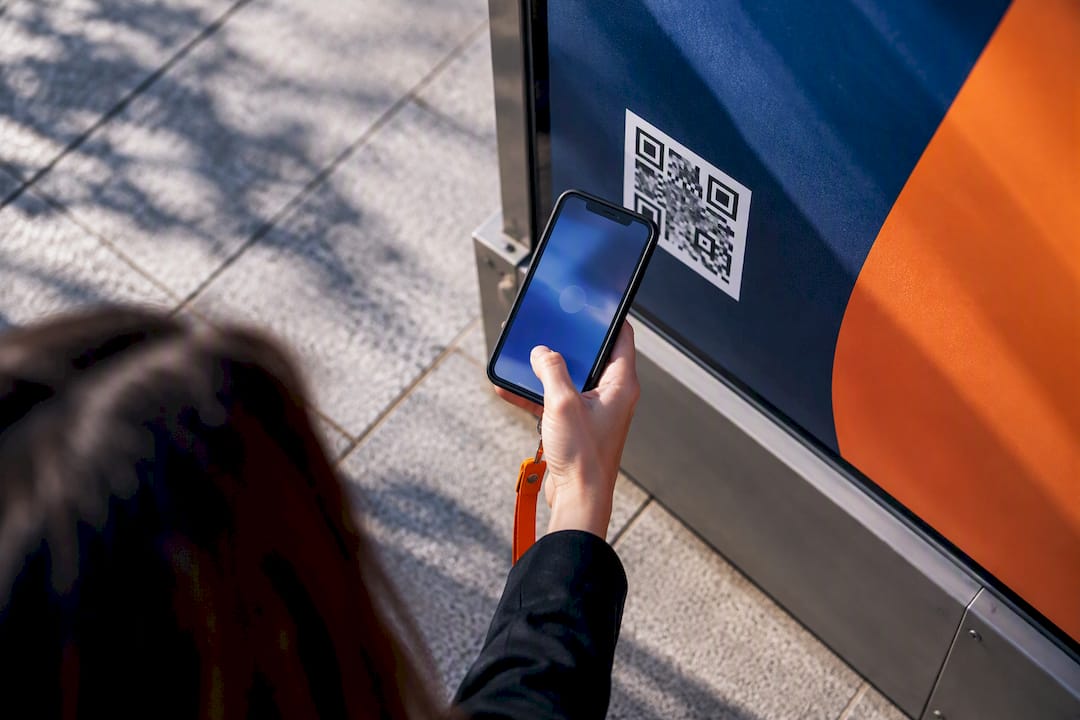
- Booth visitors who scanned a QR code or badge but did not book a follow-up meeting. These contacts showed the highest intent. They physically stopped at your booth.
- Website visitors who viewed your event landing page or product pages before the show. They researched you but never arrived or engaged further.
- Engaged non-converters. These are attendees who watched a product demo, downloaded a brochure, or clicked an ad but stopped short of a purchase or inquiry.
Each segment needs a different message. Sending the same ad to all three groups wastes budget and frustrates people who are at different stages of the buying process. Segmenting audiences by product interest and role is the key driver of higher conversion rates. Generic follow-ups reduce effectiveness across the board.
Pro Tip: Connect your CRM and ticket sales data to your ad platform before the show ends. This lets you suppress ads to contacts who already converted, which protects your brand reputation and keeps your spend focused on real opportunities.

The impact of retargeting on event marketing is measurable in ways that most traditional trade show tactics are not. Impressions at a booth are hard to track. Retargeting clicks, form fills, and downstream revenue are not.
When should you launch retargeting after a trade show?
Timing is the single most controllable variable in a retargeting campaign. Launch too late, and your audience has moved on. Launch too early with the wrong message, and you create friction before trust is built.
The research is clear on the optimal window. The strongest leads come from activation within 48 hours of the event’s conclusion, with the full retargeting window running 30–90 days post-event. Here is how to sequence that window effectively:
- Hours 0–48: Immediate activation. Run reminder ads that reference the show by name. Keep the message simple: “Great meeting you at [Show Name]. Here’s what we discussed.” This capitalizes on attendee recall while the experience is still fresh.
- Days 3–14: Educational content. Shift from reminders to value. Send case studies, product comparison guides, or short video demos. This moves prospects from awareness to consideration without pushing a sale.
- Days 15–45: Decision-stage offers. Introduce a limited-time consultation, a free trial, or a post-show discount. By now, the prospect has had time to evaluate options. A concrete offer gives them a reason to act.
- Days 46–90: Re-engagement sweep. For contacts who still have not converted, run a final sequence with social proof, testimonials, or a direct sales outreach prompt. After 90 days, lead quality drops sharply and budget is better reallocated.
Launching retargeting within 48–72 hours post-show ensures message freshness and maintains the momentum built during the event. Waiting a week is not a minor delay. It is a significant drop in conversion likelihood.
Statistic callout: 75% of online users notice retargeted ads, and 30% react positively while only 11% react negatively. That ratio means well-timed, relevant retargeting is welcomed by the majority of your audience.
How does personalization improve retargeting for trade shows?
Personalization in retargeting means matching the ad message to what the attendee actually did, not just who they are. A VP of Operations who spent 10 minutes at your booth asking about integration capabilities needs a different follow-up than a marketing coordinator who downloaded your one-pager and left.
Effective segmentation uses three data layers:
- Booth interaction data. Badge scans, QR code scans, and demo sign-up sheets tell you who engaged and at what depth. Prioritize these contacts in your highest-intent segment.
- Professional role and seniority. Decision-makers need ROI-focused messaging. Practitioners need feature-level detail. Mixing these up wastes both their time and your budget.
- Buyer intent signals. IP address data from the event venue can reveal attendees who visited your website during the show but never stopped by the booth. This expands your retargeting pool well beyond your badge scan list.
Website visitor intent data uncovers attendees who showed event interest online without physically visiting the booth, significantly expanding your retargeting audience. That is a pool most marketers leave untouched.
Message sequencing matters just as much as segmentation. Effective retargeting uses sequential messaging aligned with buyer journey stages, progressing from reminders to educational content rather than repeating sales pitches. Running the same “Buy Now” ad five times to the same person does not increase conversion. It increases opt-outs.
Pro Tip: Use intent data from event venue IP addresses to identify non-booth visitors who browsed your site during show hours. Add them to a separate “warm prospect” segment and run educational content before any direct offer.
Understanding how to identify your target audience before building segments saves significant budget and produces cleaner data for post-event analysis. Audience definition is not a one-time setup. It should be refined after every show based on which segments converted.
What privacy rules should guide your 2026 retargeting strategy?
Privacy expectations have shifted significantly. Attendees in 2026 are more aware of how their data is used, and they respond negatively to retargeting that feels intrusive or irrelevant. The good news is that privacy-first retargeting and high-performance retargeting are not opposites.
Three practices define a privacy-respecting retargeting program:
- Suppress converted attendees immediately. Once a contact books a meeting, signs a contract, or makes a purchase, remove them from all retargeting audiences. Integrating CRM and ticket sales data to suppress messaging to converted attendees builds brand trust and improves the overall customer experience.
- Honor opt-outs at the platform level. Do not rely on a single ad platform’s opt-out mechanism. Sync opt-out lists across every channel you run, including programmatic display, paid social, and email.
- Limit frequency to prevent fatigue. Ad frequency directly affects conversions, and overexposure drives negative sentiment faster than almost any other variable. Cap impressions per user per week and monitor frequency reports actively.
CRM integration is the backbone of privacy-first retargeting. When your ad platform pulls audience data directly from your CRM, you can build suppression lists dynamically. A contact who converts on a Tuesday gets removed from retargeting by Wednesday morning, not at the end of the month when someone manually updates a spreadsheet.
The trade show advertising checklist for 2026 includes privacy compliance as a pre-launch requirement, not an afterthought. Build your consent and suppression workflows before the show, not after.
Key Takeaways
Retargeting in trade show promotion converts event interest into measurable revenue by combining precise audience segmentation, timed messaging sequences, and privacy-first data practices.
| Point | Details |
|---|---|
| Launch within 48 hours | Activate retargeting immediately post-show to capture peak attendee recall and intent. |
| Segment by behavior and role | Separate booth visitors, website visitors, and non-converters into distinct campaigns with tailored messages. |
| Sequence messages by journey stage | Progress from reminders to education to offers. Repeating sales pitches drives opt-outs, not conversions. |
| Suppress converted contacts | Use CRM integration to remove buyers from retargeting audiences in real time, protecting brand trust. |
| Run the full 30–90 day window | The strongest leads activate early, but the full window captures slower-moving decision-makers. |
What I’ve learned running retargeting campaigns for trade shows
The biggest mistake I see event marketers make is treating retargeting as a post-show cleanup task. They collect badge scans, go home, and launch a campaign two weeks later when the inbox is less full. By then, the attendee has already chosen a vendor, forgotten the conversation, or both.
The campaigns that actually move the needle launch within 48–72 hours. Not because of some arbitrary rule, but because trade show memory is short. Attendees walk 40,000 steps across a convention floor and talk to hundreds of vendors. If you are not back in front of them within two days, you are competing with their fading recollection of who you even were.
Segment-specific messaging is where I have seen the most dramatic lift. A single campaign split into three audience buckets, each with a different creative and offer, consistently outperforms one unified campaign. The math is simple: relevant ads get clicked, irrelevant ads get ignored or hidden.
The metric that matters most is not impressions or even click-through rate. It is pipeline generated per dollar of retargeting spend. Track that number across every show, compare it quarter over quarter, and you will know exactly which events deserve a bigger retargeting budget next year. Everything else is noise.
— Scott
Beacon-ads and advanced trade show retargeting
Beacon-ads combines physical presence with digital follow-through in a way that most event marketing programs cannot replicate on their own.

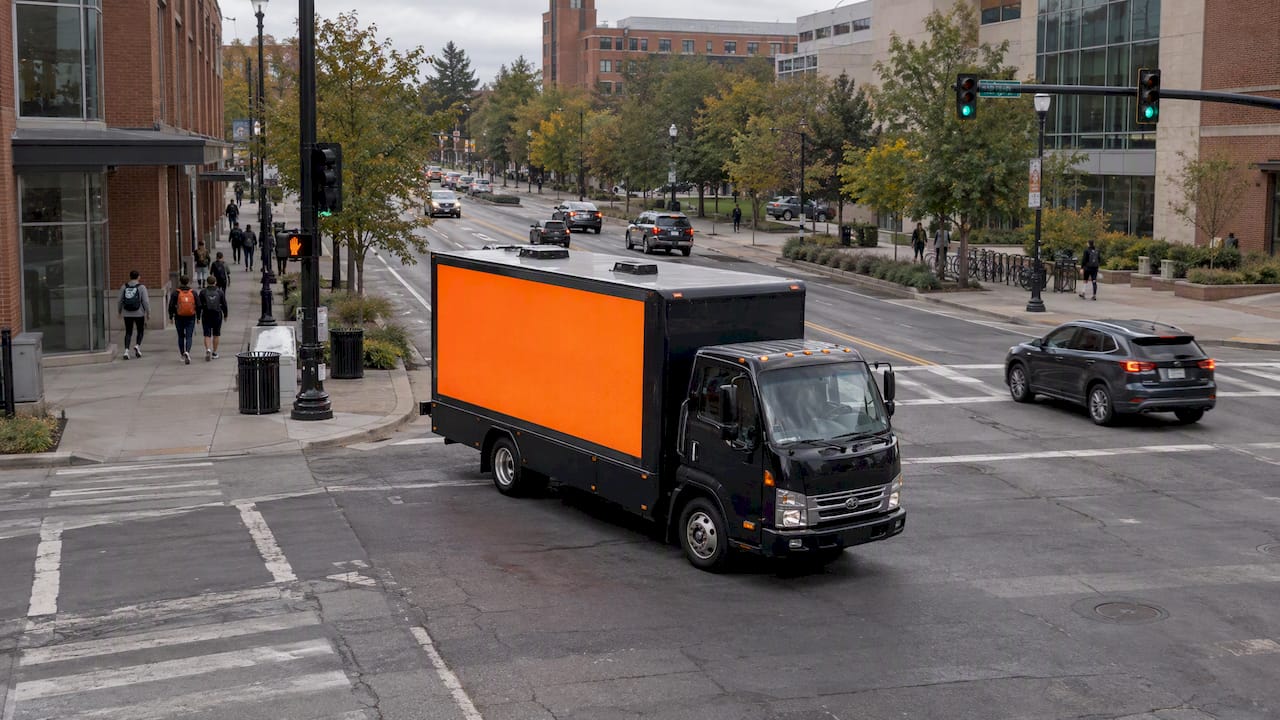
Beacon-ads deploys LED mobile billboards and wrapped rideshare vehicles directly around trade show venues, capturing attendee attention before and during the event. That physical impression feeds directly into digital retargeting through geofencing and pixel-based audience capture. The result is a full-funnel approach: attendees see your brand on the street, at the venue, and then again in their social feed after the show ends. Beacon-ads clients get real-time retargeting paired with attribution analytics, so every dollar spent is tied to a measurable outcome. For event planners ready to run campaigns that go beyond the booth, the 2026 marketer’s guide to digital targeting is a strong starting point.
FAQ
What is retargeting in trade show promotion?
Retargeting in trade show promotion is the practice of serving digital ads to attendees and prospects who engaged with your brand during or before an event but did not convert. It uses pixel tracking, CRM data, and programmatic ad platforms to reconnect with those contacts across social media and display networks.
How soon should retargeting start after a trade show?
Retargeting should launch within 48–72 hours of the event’s conclusion. Activation within that window captures attendees while their recall is strongest, producing the highest-quality leads in the 30–90 day post-event window.
How does audience segmentation improve retargeting results?
Segmenting by booth interaction, professional role, and buyer intent produces significantly higher conversion rates than generic follow-ups. Decision-makers need ROI messaging, while practitioners respond better to feature-level content.
What privacy practices apply to trade show retargeting in 2026?
Suppressing converted attendees immediately, honoring opt-outs across all platforms, and capping ad frequency are the three core privacy practices. CRM integration makes suppression dynamic rather than manual.
How does retargeting improve trade show ROI?
Retargeting recovers leads that would otherwise go cold after the event. With conversion rates reaching up to 35% for well-segmented campaigns, retargeting turns the cost of attending a show into a longer and more productive sales window.