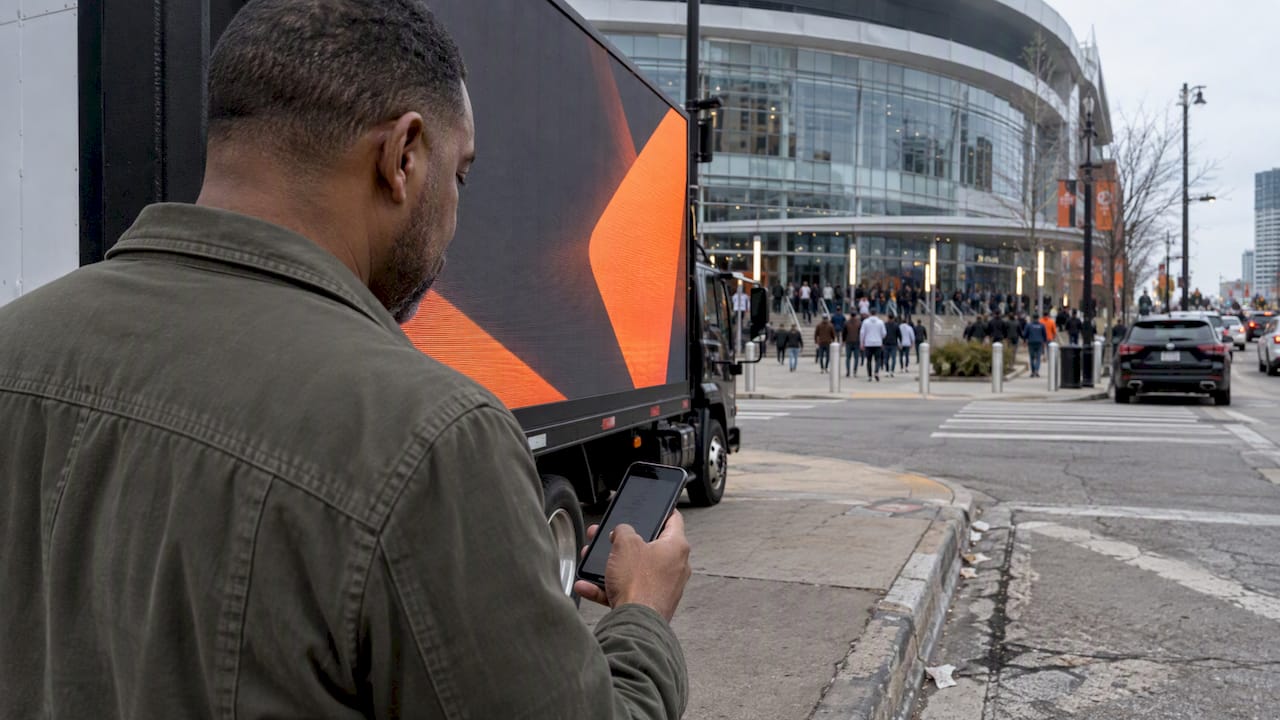
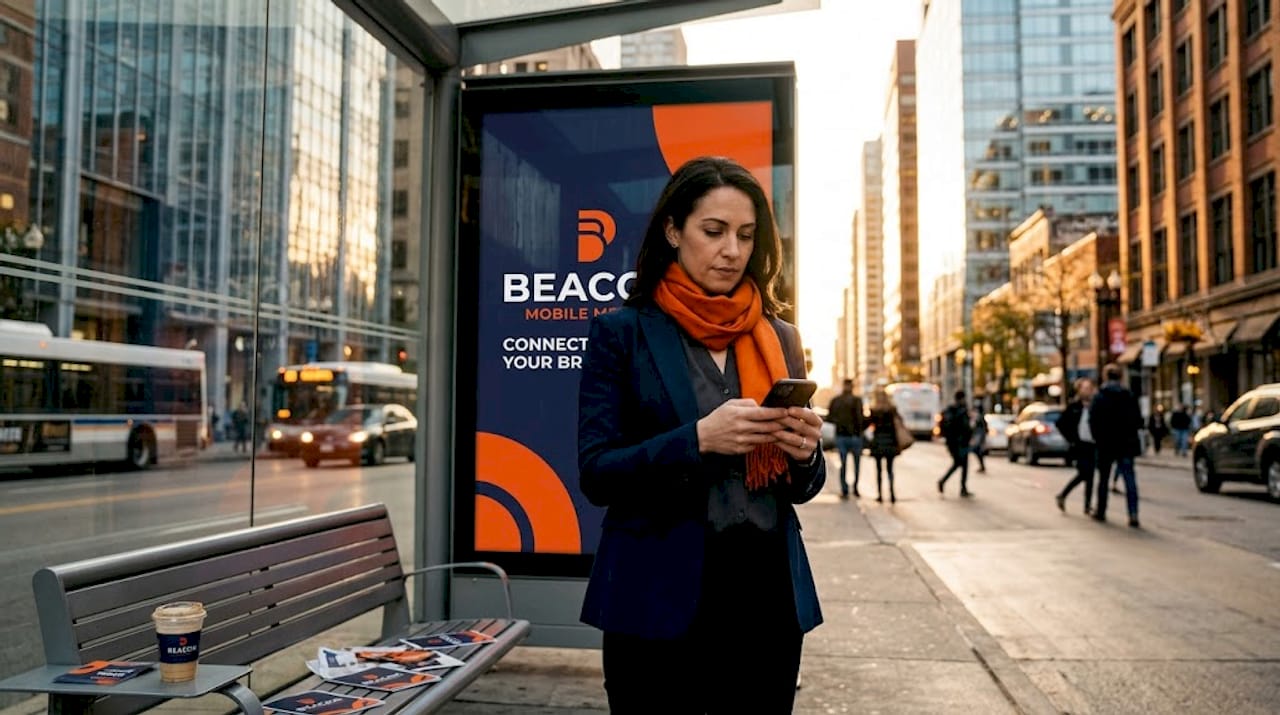
Most marketing teams still treat outdoor and digital advertising as two separate budgets with two separate teams. That’s a costly mistake. The case for why use physical and digital ad integration has never been stronger, and 2026 data backs it up with hard numbers. When you combine physical presence with digital targeting, you don’t just reach more people. You change how those people respond to every subsequent touchpoint in your campaign. This article breaks down the mechanics, the measurement, and the practical playbook for making integration work.
Table of Contents
- Key takeaways
- Why physical and digital ad integration outperforms either channel alone
- Measurement and ROI: what integration actually delivers
- Physical vs. digital vs. integrated: understanding the differences
- Steps for building a successful integrated campaign
- Future trends shaping integrated advertising
- My take on why most teams still get this wrong
- How Beacon-ads delivers integrated campaigns with measurable results
- FAQ
Key takeaways
| Point | Details |
|---|---|
| Integration multiplies ROI | Combining classic and digital OOH delivers up to 39% greater ROI than digital-only campaigns. |
| Physical ads fuel digital actions | OOH precedes search activity 96% of the time, making it a hidden driver of digital conversions. |
| Last-touch attribution misleads | Standard attribution models heavily undercount physical ads’ contribution to campaign performance. |
| Unified measurement is non-negotiable | MMM combined with attribution and financial planning gives a true picture of cross-channel impact. |
| Siloed teams kill integration | Campaigns that optimize channels separately without shared KPIs consistently underperform integrated ones. |
Why physical and digital ad integration outperforms either channel alone
The core reason to integrate is simple: physical ads create awareness at scale, and digital ads convert that awareness into action. Run them separately and you get two campaigns. Run them together and you get a single, reinforcing system.
Physical advertising, including billboards, transit wraps, and mobile LED displays, reaches consumers in the real world before they’ve decided to search. Digital ads, whether paid search, social, or programmatic display, intercept them when they’re already in a decision mode. The sequence matters more than most marketers realize.
Here’s what the data shows about that sequence:
- OOH precedes search 96% of the time and social media 94% of the time, meaning the billboard your audience saw almost always comes before the click your attribution model credits.
- OOH campaigns produce a median 20% lift for in-person outcomes and 14% lift for digital outcomes, outperforming connected TV and broadcast TV at roughly 10% lift.
- QR codes on physical placements create a direct, scannable bridge between the physical impression and a digital conversion event, capturing first-party data in the process.
- Geofencing around physical ad locations lets you serve follow-up digital ads only to people who were physically near your billboard or vehicle wrap.
- Sequential messaging works: a consumer who sees your physical ad and then your retargeted digital ad converts at a significantly higher rate than one who only sees the digital ad.
The directional influence runs both ways. Digital campaigns can drive foot traffic by serving location-specific messages to audiences near your physical placements. Physical ads, in turn, increase branded search volume, which lifts quality scores and reduces cost-per-click on paid search.
Pro Tip: Set up a geofenced retargeting audience around every physical ad location before the campaign launches. This lets you measure the lift in digital engagement from people who were exposed to the physical placement, giving you real attribution data instead of assumptions.
The synergy between channels is most visible in QR-enabled campaigns. A wrapped rideshare vehicle carrying a smart QR code isn’t just an awareness play. It’s a lead generation tool that logs every scan with time, location, and device data. That’s the benefits of ad integration made concrete.

Measurement and ROI: what integration actually delivers
If there’s one argument that converts skeptical CFOs, it’s the ROI data from integrated campaigns. Combining classic and digital OOH delivers 39% greater ROI than digital OOH alone, according to an Analytic Partners study. That’s not a marginal improvement. That’s a structural advantage.
“Integrated planning across classic and digital OOH unlocks a multiplier effect through complementary formats and environments, not just additive results.” — Analytic Partners
The reason most teams miss this is attribution. Standard last-touch attribution credits the final click and ignores everything that led to it. When a consumer sees a mobile billboard on Monday, searches your brand on Wednesday, and clicks a retargeted ad on Friday, last-touch credits the retargeted ad entirely. The billboard gets nothing. That’s why physical and digital integrations can unlock ROI improvements up to 64% when measured correctly.
The fix is Marketing Mix Modeling combined with lift measurement. Modernizing MMM by integrating it with attribution, experimentation, and financial planning systems gives you a unified view of what’s actually moving the needle across every channel. This approach also holds up under privacy constraints, since it relies on aggregate data rather than individual tracking.
| Metric | Digital-only campaigns | Integrated campaigns |
|---|---|---|
| ROI lift | Baseline | Up to 39% higher |
| In-person outcome lift | ~10% (CTV/broadcast) | 20% median (OOH-led) |
| Digital outcome lift | ~10% (CTV/broadcast) | 14% median (OOH-led) |
| Attribution accuracy | Low (last-touch bias) | High (MMM + incrementality) |
| First-party data capture | Moderate | High (QR, geofence, scan data) |
On the technology side, the Open Measurement SDK for connected TV provides unified viewability measurement across devices, reducing the fragmented signals that make cross-channel reporting so painful. Without harmonized measurement standards, your reporting overhead grows and your optimization confidence shrinks.
Physical vs. digital vs. integrated: understanding the differences
To position integration in your strategy, you first need to be clear-eyed about what each channel does well on its own and where it falls short.

Physical advertising strengths and limits
Physical ads, particularly out-of-home formats, deliver mass reach with no opt-out. You can’t install an ad blocker on a city street. They build brand memory through repeated exposure in high-traffic environments, and they carry a credibility that display advertising rarely achieves. The limitation is measurability. Traditional OOH without technology layers gives you estimates, not facts.
Digital advertising strengths and limits
Digital ads offer precise targeting, real-time optimization, and clear click-through data. You can serve ads to a specific zip code, a specific income bracket, or a specific behavioral segment. The problem is saturation and trust. Banner blindness is real. Digital targeting strategies work best when the audience already has some brand familiarity, which physical ads can create at scale.
Why integration changes the math
When you combine both channels, the result is not simply additive. It’s multiplicative. Here’s why:
- Physical ads prime audiences so that digital ads convert better. A consumer who has seen your brand in the physical world clicks your digital ad with higher intent.
- Digital data improves physical ad placement. Geospatial and behavioral data tells you exactly where to route your mobile billboard for maximum exposure to your target segment.
- Cross-channel frequency builds recall without the fatigue that comes from seeing the same digital ad five times in one afternoon.
- Contextual relevance increases when a physical ad appears in a location tied to the message. A food brand advertising near a stadium at game time performs differently than the same ad in a suburban office park.
WPP demonstrated this with a Google Earth AI integration that blended physical-world factors with consumer behavior data, achieving 77% higher performance and 15% lower cost to conversion. Physical reality, when layered into digital planning, becomes a performance variable rather than an afterthought.
Steps for building a successful integrated campaign
Getting integration right requires more than placing ads in two places at once. Here’s a practical framework that experienced marketing teams actually use:
- Align KPIs before you allocate budget. If your OOH team measures impressions and your digital team measures CPA, you’ll never agree on what’s working. Set shared conversion metrics that span both channels before the campaign launches.
- Use geospatial data to choose physical placements. Affinity targeting and mobility data tell you where your audience physically travels. Route your mobile billboard campaigns through those corridors rather than defaulting to high-traffic roads that may miss your segment entirely.
- Build retargeting audiences tied to physical locations. Geofence every physical placement and feed those audiences directly into your programmatic or social campaigns. This creates a closed loop between the physical impression and the digital follow-up.
- Implement MMM alongside attribution. Unified MMM practices recommend frequent retraining and disciplined data governance to keep budget planning accurate across channels.
- Use incrementality testing to validate physical ad contribution. Run holdout markets where physical ads are absent and compare digital performance. The lift difference is the true contribution of your physical placements.
Pro Tip: Creative consistency across physical and digital formats is not just about branding aesthetics. When the visual language of your billboard matches your retargeted display ad, recall scores improve significantly because the brain processes the second exposure as confirmation rather than a new message.
Avoiding siloed optimization is the most common and most costly pitfall. Teams that optimize channels separately without unified KPIs consistently underperform integrated ones. The org chart problem often kills campaigns that the strategy would have made successful.
Future trends shaping integrated advertising
The trajectory of physical and digital ad integration points toward tighter feedback loops and more granular personalization. Several developments are worth watching now.
AI-driven consumer behavior prediction is incorporating physical-world factors at a scale that wasn’t possible two years ago. WPP’s use of Google Earth AI data to inform DMA targeting is an early signal of where this goes. Data-driven OOH strategies will increasingly rely on real-time physical context, weather, events, and foot traffic patterns, to determine when and where to serve both physical and digital impressions.
Measurement standardization is accelerating. The OM SDK for connected TV reflects a broader industry push toward consistent signal collection across devices and environments. As these standards spread to OOH, the gap between physical and digital measurement quality will narrow considerably.
Interactive and shoppable video formats are creating new integration opportunities. A consumer who sees a product on a transit shelter display and immediately scans to purchase is not a future use case. It’s happening now. The physical ad becomes a transaction point, not just an awareness play.
Privacy-first data collaboration, through clean rooms and aggregate modeling, will become the backbone of integrated measurement as third-party cookies continue to disappear. Brands that invest in first-party data capture at the physical level, think QR codes and scan-triggered forms, will have a significant data advantage for digital targeting.
My take on why most teams still get this wrong
I’ve watched marketing teams run physically and digitally separate campaigns for years, convinced they’re being rigorous because each channel has its own dashboard. The dashboards look clean. The problem is they’re measuring the wrong thing.
What I’ve found is that the real barrier to integration isn’t technology. It’s organizational. OOH and digital teams have different vendors, different success metrics, and often different agency relationships. When the campaign ends, each side claims credit for conversions and nobody measures what actually caused them.
The insight that changed how I think about this: OOH’s true business value is routinely obscured by last-touch attribution models, which ignore the awareness and intent that physical ads build upstream. The billboard doesn’t get credit for the Google search it caused three days later. The retargeted ad does.
My advice: stop treating measurement as a post-campaign activity. Build your measurement framework before the first ad runs, align it to shared business outcomes, and treat physical and digital as inputs to the same model. The brands doing this are seeing results that make the siloed approach look embarrassing by comparison.
— Scott
How Beacon-ads delivers integrated campaigns with measurable results
Physical presence combined with digital precision is exactly what Beacon-ads was built to deliver. The platform uses LED mobile billboards and wrapped rideshare vehicles to create high-visibility physical impressions across all 50 states, while simultaneously enabling real-time retargeting, geofencing, and smart QR code data capture.

Every campaign includes proof-of-posting documentation and attribution analytics, so you’re not left guessing about physical ad performance. For teams ready to stop running parallel campaigns and start running integrated ones, explore data-driven campaign strategies or dive deeper into the impact of digital OOH to see what integrated results actually look like in practice.
FAQ
Why use physical and digital ad integration?
Integration creates a multiplier effect where physical ads prime awareness and digital ads convert that awareness into measurable actions. Research shows integrated campaigns deliver up to 39% greater ROI than digital-only approaches.
How does combining physical and digital ads improve ROI?
Physical ads like OOH placements drive branded search activity and improve the conversion rates of subsequent digital touchpoints. When measured with incrementality testing rather than last-touch attribution, the combined ROI is substantially higher than either channel alone.
What is the best way to measure integrated campaigns?
Marketing Mix Modeling combined with lift testing and incrementality analysis gives the most accurate view of cross-channel performance. Last-touch attribution systematically undercredits physical ads, so it should not be the primary measurement method.
How do QR codes support physical and digital ad integration?
QR codes on physical placements capture first-party data at the point of physical exposure, including time, location, and device information. This scan data feeds directly into digital retargeting audiences, creating a measurable link between physical impressions and digital conversions.
What is the biggest mistake in integrated advertising?
Optimizing physical and digital channels separately with different KPIs and different teams is the most common failure point. Without unified measurement and shared goals, each team optimizes for its own metrics and the combined campaign underperforms its potential.