Physical mobile advertising has quietly been outperforming digital channels in ways most marketing teams never track. Mobile billboard campaigns show a 30% foot traffic increase, 15% event attendance boost, 61% higher website visits, and a 24% ad recall lift — numbers that many purely digital campaigns never reach. Yet most brand and agency teams keep pouring budget into digital formats while leaving mobile out-of-home engagement seriously underutilized and under-measured. This guide breaks down what mobile ad engagement actually means, how to benchmark it, and how to build campaigns that prove real-world results.
Table of Contents
- What is mobile ad engagement and why does it matter?
- Key benchmarks: Mobile ad formats vs. OOH performance
- How mobile billboards drive real-world action
- Integrating mobile billboards with digital engagement
- Challenges and best practices for measuring mobile ad engagement
- Why mobile ad engagement is more than just clicks: Our perspective
- Level up your mobile ad engagement with Beacon Mobile Media
- Frequently asked questions
Key Takeaways
| Point | Details |
|---|---|
| Real impact is measurable | Mobile billboards drive foot traffic, boost events, and lift web visits in tracked campaigns. |
| OOH multiplies digital results | Pairing mobile and digital ads can raise mobile response rates 2.4 times. |
| Engagement means more than clicks | Consider ad recall, real-world behavior, and multi-touch responses for a full engagement picture. |
| Smart integration wins | Use QR codes, geotargeting, and data capture to improve tracking and maximize results. |
What is mobile ad engagement and why does it matter?
Mobile ad engagement is not a single metric. It is a range of measurable responses that show how an audience is connecting with your advertising, from clicks and opens to physical actions like walking into a store or scanning a QR code.
For digital channels, engagement typically means clicks, impressions, video completions, or push notification responses. For out-of-home (OOH) and mobile billboard campaigns, engagement shows up differently. It shows in foot traffic lifts near the campaign route, in ad recall surveys, in QR code scan rates, and in the spike in branded search queries after a truck runs its route through a target neighborhood.
Here are the key engagement metrics every marketing team should track across both digital and physical mobile formats:
- Click-through rate (CTR): Measures the percentage of viewers who click a digital ad or scan a code from a physical one
- Ad recall: The percentage of the audience that remembers seeing the ad after exposure
- Foot traffic lift: The measurable increase in visits to a location correlated with campaign activity
- Website visit spikes: Surges in branded or direct traffic tied to mobile billboard routes
- SMS and push interaction: Response rates from text and in-app notifications triggered by location proximity
- Event attendance lift: Increased turnout at brand events following mobile billboard exposure
“Measuring engagement in OOH is not about counting clicks — it is about capturing the real-world behaviors that clicks were always supposed to predict.”
The Mobile Marketing Statistics data set reinforces why this matters: SMS achieves a 19% CTR, push notifications hit 7.8%, and OOH exposure boosts mobile response rates by 2.4 times compared to digital-only campaigns. These numbers confirm that localized ad targeting is far more powerful when it combines physical and digital touchpoints rather than relying on one or the other.
Brands and agencies that measure only online behaviors are reading half the story. The other half lives in what your audience does after they see your mobile billboard on their morning commute.

Key benchmarks: Mobile ad formats vs. OOH performance
Having covered what engagement is and why it matters, let’s see how different ad formats stack up against each other for measurable results.
The table below pulls from current performance data across the most commonly used mobile and OOH formats:
| Ad format | Average CTR | Ad recall lift | Foot traffic lift | Website visit lift |
|---|---|---|---|---|
| Mobile video ads | 25% above static | Moderate | Minimal | Moderate |
| SMS campaigns | 19% CTR | Low | Low | Moderate |
| Push notifications | 7.8% CTR | Low | Low | Low |
| Mobile billboards (OOH) | Indirect via QR | 24% lift | 30% lift | 61% lift |
The contrast is striking. Digital formats win on direct click measurement. Mobile billboards win on almost every real-world impact metric. What this data reveals is not that one format beats another, but that they serve different parts of the engagement funnel.
Statistic to remember: OOH exposure boosts mobile response by 2.4 times. That means every digital ad you run in a market where your mobile billboard is also active is getting a significant performance multiplier — at no extra cost per impression.
For agencies, this is a compelling argument to clients who ask why OOH should sit alongside their paid social spend. It is not an alternative. It amplifies what digital is already doing.
Pro Tip: Never evaluate your mobile billboard campaign in isolation. Pull your branded search volume, website direct traffic, and any SMS or push response rates from the same market window. The combined lift tells the real engagement story. Check out OOH advertising tips for more data-driven ways to structure your measurement approach.
How mobile billboards drive real-world action
Now that the measured outcomes are clear, let’s break down exactly how mobile billboards translate exposure into quantifiable engagement.

The mechanism is not accidental. Mobile billboards work because they intercept audiences in real space at moments when attention is actually available. Unlike a social feed that competes with 50 other posts, a large LED truck moving through a target neighborhood commands the environment around it.
Here is how a well-executed mobile billboard campaign activates audiences step by step:
- Route targeting: The truck is deployed along routes where your audience is most present — near venues, event spaces, retail districts, or commuter corridors
- Creative impact in 3 to 5 seconds: According to the Mobile Ad Creative Strategy Guide, you have roughly 0.8 seconds to stop someone’s attention before they mentally move on. The 3C Principle (Context, Clarity, Curiosity) and a four-layer hook using visual design, short text, verbal messaging, and motion or audio work together to land impact before attention breaks
- Scannable moment trigger: A QR code on the creative gives viewers an immediate digital action to take. This is where physical engagement converts into measurable data
- Retargeting activation: Devices in proximity to the truck are identified through geofencing, allowing digital retargeting to begin immediately after exposure
- Attribution reporting: Foot traffic, QR scans, and web visit spikes from the campaign window are compiled into a clear performance picture
“The mobile billboard is not a passive format. It is an active interception that places your brand message directly inside your audience’s physical reality, not just their screen.”
The results of well-built campaigns confirm this. Billboard campaign data shows a 15% event attendance boost when mobile billboard routes are concentrated near event venues ahead of brand events. For agencies running product launches or local market activations, that kind of attendance lift is directly attributable to the billboard presence.
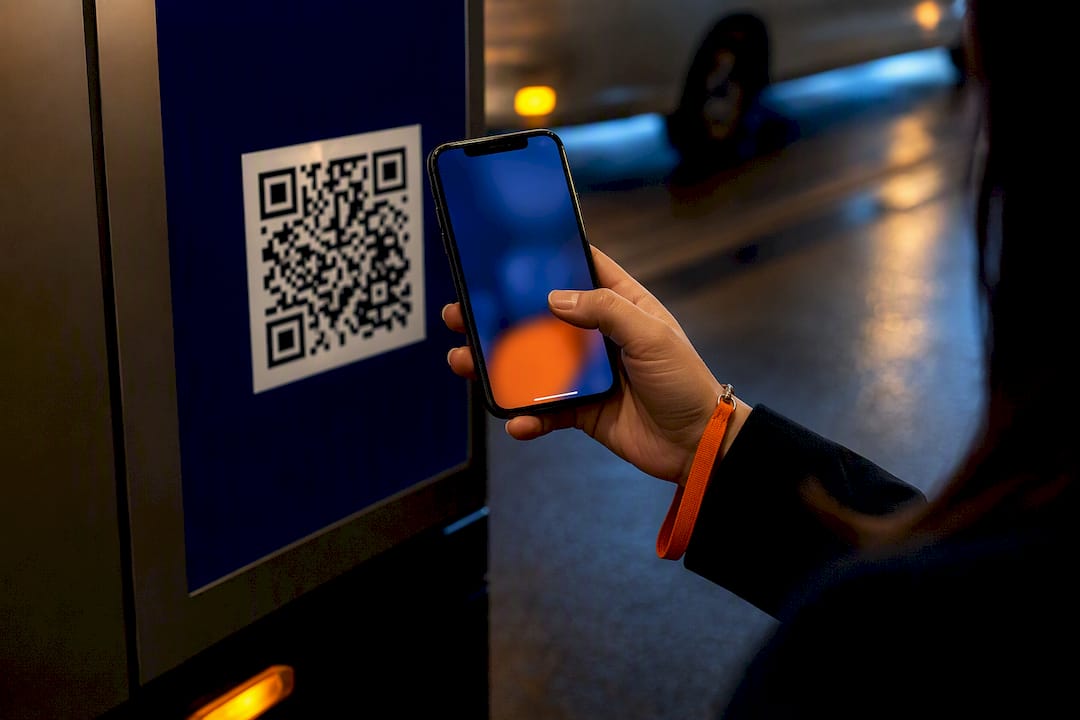
Using QR codes for engagement on mobile billboard creatives bridges the gap between the physical impression and a trackable digital action. When a passerby scans the code, you capture a real-time signal of engagement, link that device to your retargeting pool, and begin the next stage of the funnel immediately.
Pro Tip: Place your QR code at eye level on the creative and keep the CTA around it to four words or fewer. The goal is a frictionless scan at a moment of peak attention.
Integrating mobile billboards with digital engagement
Knowing the mechanics of mobile billboards, let’s move to the next level: blending physical and digital for even stronger impact.
The most effective campaigns treat OOH and digital not as separate line items but as synchronized systems. OOH exposure boosts mobile response by 2.4 times, which means the brands getting the most from their digital spend are the ones also running mobile billboard coverage in the same markets.
Here is a practical look at what an integrated campaign delivers:
| Campaign setup | Engagement lift |
|---|---|
| Digital only (paid social + display) | Baseline |
| Mobile billboard only | +30% foot traffic, +61% web visits |
| Mobile billboard + digital retargeting | 2.4x overall mobile response lift |
| Mobile billboard + QR + SMS follow-up | Highest combined CTR and recall |
Common mistakes that undercut integrated campaigns include:
- Failing to sync tracking systems: If your OOH vendor and your digital team are operating separate analytics stacks, you will never see the combined lift
- Neglecting location-based triggers: The power of a mobile billboard route is its geography. If your digital retargeting is not geofenced to match the physical routes, you are leaving attribution gaps
- Running creative that does not match: When the billboard visual and the retargeted digital ad look different, you break the recognition loop that drives recall and action
Smart data capture tools that connect QR scan data to your CRM or ad platform close these attribution gaps in real time. And by layering in geotargeting strategies, you can ensure that every digital impression served after a billboard exposure is going to someone who was actually in that physical environment.
The result is a campaign that is measurably larger than the sum of its parts.
Challenges and best practices for measuring mobile ad engagement
With a blended approach in play, let’s solve for the hardest part: measuring and proving your campaign’s true engagement.
Digital campaigns have a built-in measurement advantage. App CTR, viewability scores, and conversion pixels give instant feedback. But digital ad fraud and privacy changes now compromise the accuracy of those very metrics. Fraud inflates CTR artificially. Privacy regulations restrict pixel tracking. The precise numbers digital marketers rely on are increasingly imprecise.
Mobile billboards face a different challenge. They deliver unavoidable visibility and strong recall, but the path from exposure to purchase runs through more steps than a click. Attribution requires correlation, lift analysis, and multi-touch modeling rather than direct conversion tracking.
Best practices for measuring mobile billboard engagement accurately:
- Establish a baseline first: Pull foot traffic data, branded search volume, and web direct traffic for the two to four weeks before your campaign launches. That baseline is what you measure lift against
- Use control markets: If you are running a campaign in one city, use a comparable city where no campaign runs as a control. The difference in outcome metrics across the two markets isolates your campaign’s real effect
- Activate scannable moments on the creative: QR codes on mobile billboards give you a direct, fraud-free engagement signal that is tied to a real human in a real location
- Run post-campaign recall surveys: Brief surveys served to audiences in the target market after the campaign measures aided and unaided ad recall, giving you a quality-of-engagement layer that CTR cannot capture
- Combine digital, survey, and offline analytics: No single data source tells the full story. The clearest engagement picture comes from layering web analytics, scan data, foot traffic reports, and recall surveys together
For agencies, this approach also strengthens client reporting. Instead of a single CTR number, you are presenting a blended engagement dashboard that covers awareness, interest, and action, which is the full funnel that a targeted advertising plan should address.
Pro Tip: Mix digital analytics, brief post-exposure surveys, and offline foot traffic data in every campaign report. Clients who see all three layers rarely question the value of OOH again.
Why mobile ad engagement is more than just clicks: Our perspective
Most marketing teams we talk to are optimizing for the metric their dashboard shows most clearly. That metric is almost always CTR. It is visible, fast, and easy to report in a weekly status call. But chasing CTR alone is a form of measurement tunnel vision that actually costs brands real engagement.
Here is what we see consistently: a mobile billboard campaign that generates zero direct clicks still drives a measurable 61% lift in website visits, a 24% lift in ad recall, and a 30% lift in foot traffic. None of those results show up in a click report. All of them represent genuine consumer engagement with your brand. They are just happening in physical reality instead of on a screen.
The uncomfortable truth is that digital precision is partly an illusion. Fraud, privacy restrictions, and attribution modeling all introduce error into what looks like exact data. Meanwhile, a wrapped LED truck driving through your target neighborhood at peak hours is delivering unavoidable, unduplicated impressions to real human beings who live and work there.
Our perspective is that the future of mobile ad engagement measurement belongs to teams willing to track the blended effect rather than chase the cleanest single metric. The brands that do this well are the ones who stop treating OOH as an awareness-only channel and start reading the downstream signals it creates in their digital data.
A good example of this is event and conference targeting. When we run mobile billboard routes around trade show and conference venues, the results show up in multiple ways simultaneously: recall among attendees rises, social brand mentions increase, and branded search in that market spikes in the days after. None of that is captured in a click. All of it is real engagement with measurable business value.
The best measurement strategy is the one that is honest about what each channel actually does, and then builds a picture from all of them together.
Level up your mobile ad engagement with Beacon Mobile Media
Ready to move from strategy to measurable results? Beacon Mobile Media builds campaigns that combine the physical impact of LED mobile billboards and wrapped rideshare vehicles with advanced digital tools designed to capture, track, and prove engagement at every stage of the funnel.

Our platform brings together smart QR codes for direct data capture, localized targeting solutions that reach the right audience in the right geography, and comprehensive attribution reporting so you always know what your campaign is delivering. Whether you are launching a new product, driving event attendance, or building brand presence in a competitive local market, Beacon Mobile Media has the tools and expertise to make every impression count and every result provable.
Frequently asked questions
How do you measure engagement from a mobile billboard campaign?
Engagement is measured using foot traffic analysis, ad recall surveys, website and QR code tracking, and lift in event attendance. Campaign data consistently shows a 30% foot traffic increase, 61% higher website visits, and a 24% ad recall lift tied directly to mobile billboard exposure.
What ad format delivers the best click-through rate for mobile?
Mobile video ads deliver 25% higher CTR than static formats, while SMS campaigns achieve a 19% CTR, making them the strongest direct-response formats for pure click measurement.
Why do mobile billboards drive higher ad recall?
Mobile billboards are physically present and impossible to scroll past in key locations, which creates stronger memory encoding than digital formats. This results in a 24% lift in ad recall compared to unexposed audiences.
What is the biggest challenge in measuring mobile ad engagement?
Accurately attributing offline-to-online actions remains the core challenge for OOH campaigns. Unlike digital ads, mobile billboards rely on indirect tracking like foot traffic lift, recall surveys, and correlated web data rather than direct conversion pixels.