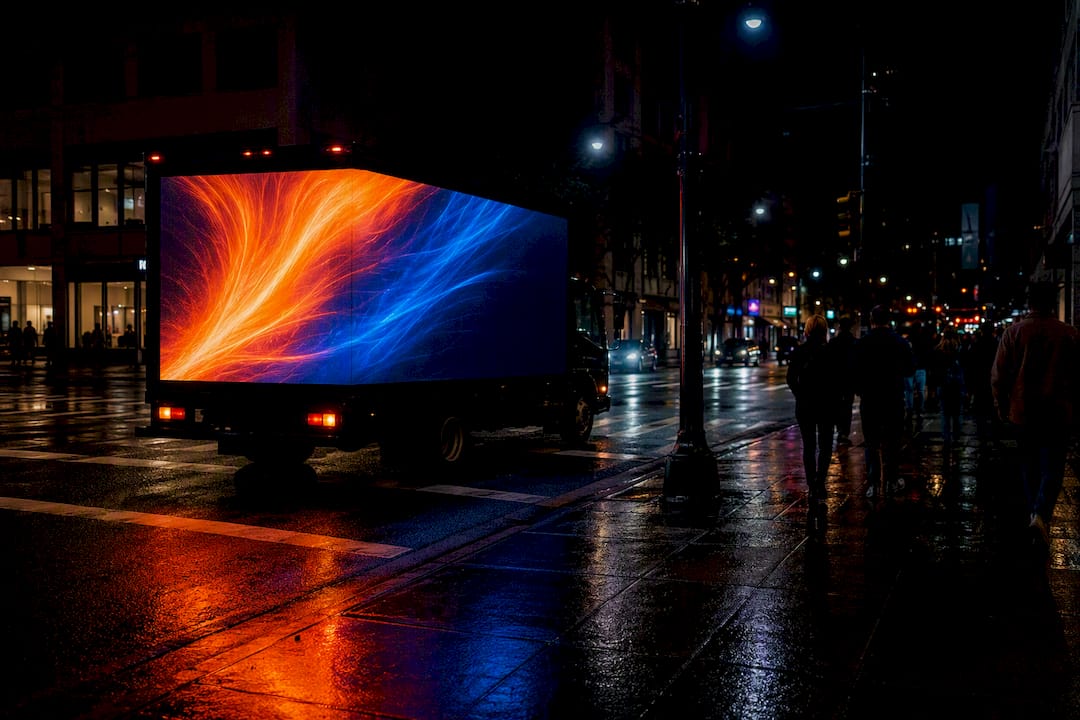
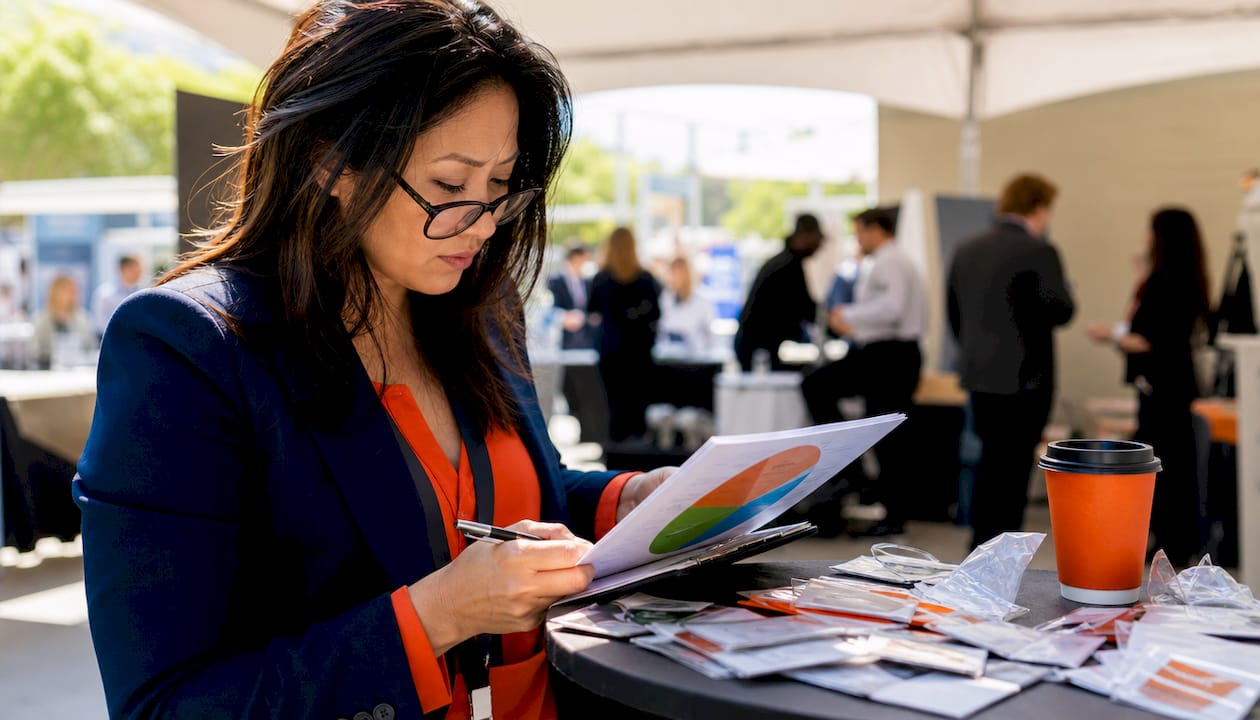
Digital out-of-home advertising (DOOH) is defined as the use of dynamic digital displays to deliver targeted, context-aware messages in physical public and event spaces. At trade shows, where average B2B buyers receive 120+ emails daily, DOOH cuts through digital noise by reaching attendees in the physical environment they cannot ignore. Marketing professionals and event organizers who understand why choose digital OOH for trade shows gain a measurable edge over exhibitors still relying on static banners and printed materials. The format combines the reach of outdoor advertising with the precision of digital targeting, making it the most effective channel for high-intent trade show audiences.
Why choose digital OOH for trade shows: the core case
DOOH delivers what no other trade show channel can. It reaches attendees physically present in a venue, with messaging tailored to that exact moment, location, and audience profile. Digital signage has transitioned from a luxury to a necessity for exhibitors who want to engage attendees beyond a handshake at the booth.
The fundamental advantage is unblockability. A trade show attendee cannot install an ad blocker on a large-format LED screen in a convention center corridor. DOOH provides superior visibility by being unblockable, with measurable effects on website visits and foot traffic. That combination of guaranteed exposure and trackable outcomes is what separates DOOH from both traditional signage and purely digital media.

Trade shows also create a concentrated audience of high-intent buyers. These are decision-makers who traveled to be there, cleared their calendars, and came ready to evaluate vendors. Reaching them with the right message at the right moment is a different proposition than reaching a passive online audience. DOOH is built for exactly this context.
How does DOOH targeting work at trade shows?
The targeting capability of DOOH is what separates it from a traditional banner. Layering audience intelligence and daypart targeting allows marketers to display ads exactly when and where key decision-makers are most likely to be present. That means showing a product demo message during morning keynote breaks and a meeting-booking call to action during afternoon networking hours.
Programmatic buying takes this further. Marketers can upload account lists of 300–500 target companies and serve ads specifically timed to when those attendees are moving through the venue. Comprehensive pre-show outreach combining DOOH and digital campaigns can increase qualified meetings by 3–5 times compared to relying on on-site foot traffic alone. That is not a marginal improvement. It is the difference between a booth that fills its calendar and one that waits for walk-ins.
Context-aware messaging adds another layer. DOOH systems can trigger different creative based on weather conditions, time of day, or proximity to specific event zones. A display near the registration hall can show a brand awareness message. The same network near the exhibitor floor can show a product-specific offer. This kind of environmental responsiveness is impossible with static signage.
- Programmatic audience targeting: Upload account lists and serve ads to attendees from specific companies or job functions.
- Daypart scheduling: Align messaging to attendee agendas, showing the right content during keynotes, breaks, and networking sessions.
- Geofencing: Trigger ads based on attendee proximity to specific zones within the venue or surrounding area.
- Cross-channel integration: Sync DOOH with mobile retargeting and connected TV (CTV) to reinforce messages across every screen an attendee sees.
Pro Tip: Build your pre-show DOOH campaign around your target account list, not a broad audience. Targeting 300–500 named accounts with coordinated digital and out-of-home outreach consistently outperforms general awareness plays at trade shows.
How does DOOH compare to traditional signage and digital ads?

The differences between DOOH and its alternatives are not subtle. They affect campaign flexibility, audience reach, and measurement depth.
Traditional static signage locks you into one message for the duration of the show. If your offer changes, your keynote speaker drops out, or a competitor announces something that shifts the conversation, your banner cannot adapt. DOOH updates in real time. You can swap creative, adjust copy, or change the call to action without reprinting anything.
Digital display ads online offer flexibility, but they face a different problem: ad blockers, banner blindness, and shrinking attention spans. DOOH enables precise location, time, and context targeting that traditional OOH cannot achieve, with attribution models linking screen exposure to real-world actions like website visits and booth foot traffic. That closes the measurement gap that has historically made outdoor advertising hard to justify in a performance marketing budget.
| Feature | Static trade show signage | Online display ads | DOOH at trade shows |
|---|---|---|---|
| Message flexibility | Fixed for event duration | Real-time updates | Real-time updates |
| Ad blocking | Not applicable | Blocked by 40%+ of users | Unblockable |
| Audience targeting | Broad, location-only | Behavioral and demographic | Location, behavior, and daypart |
| Attribution | Difficult to measure | Click-based only | Foot traffic, visits, and conversions |
| Creative formats | Static print | Static and animated | Motion graphics, video, and dynamic data |
The table makes the case clearly. DOOH does not ask you to choose between reach and precision. It delivers both, in a physical environment where attention is already concentrated.
Creative best practices for trade show DOOH displays
The most common mistake in trade show DOOH is repurposing creative built for other channels. A social media graphic, a web banner, or a slide deck visual will not perform on a large-format display in a convention center hallway. Purpose-built creative tailored to the environment is critical. Messages for trade show displays should differ in copy length, visuals, and color from other digital media.
Dwell time drives every creative decision. An attendee walking past a display in a corridor has roughly 3–5 seconds of engagement. An attendee waiting in a registration line may have 2–3 minutes. These two placements require completely different creative approaches. Short-dwell placements need a single bold claim and a visual that reads instantly. Long-dwell placements can carry a product story, a testimonial, or a live data feed.
Marketing success with DOOH depends on treating audience data as the foundation and creative as the differentiator. Data tells you where to place the ad and when to show it. Creative determines whether the attendee stops, reads, and acts. Both matter equally, and neither works without the other.
- Keep copy short: Five words or fewer for high-traffic corridors. Save longer messages for waiting areas and lounges.
- Use high-contrast visuals: Convention center lighting varies. Design for readability in bright and dim conditions.
- Lead with the benefit, not the brand: Attendees respond to what you can do for them before they care who you are.
- Include a clear next step: A booth number, a QR code, or a meeting link. Smart QR codes on DOOH displays capture lead data directly from the physical environment.
- Test motion against static: Motion graphics attract attention in peripheral vision. Use animation purposefully, not decoratively.
Pro Tip: Design your DOOH creative at the actual display resolution and aspect ratio before finalizing. What looks sharp on a laptop screen often loses impact on a 10-foot LED panel. Always review at scale.
Digital signage serves as a networking tool, not just a display medium. The best trade show DOOH creative creates a reason for attendees to engage, share, or seek out your booth. Think of each screen as a conversation starter, not a billboard.
How to implement DOOH effectively at your next trade show
Effective DOOH at trade shows follows three phases: pre-show, on-site, and post-show. Skipping any phase reduces the overall return on the campaign.
-
Build your target account list before the show opens. Identify the 300–500 companies you most want to meet. Use this list to configure programmatic DOOH targeting and coordinate with your email and mobile outreach. Pre-show DOOH exposure primes attendees to recognize your brand when they arrive.
-
Map your on-site display strategy to attendee movement patterns. Work with the venue or your DOOH partner to place screens where your target audience actually walks. Registration areas, keynote entrances, and food and beverage zones consistently outperform random placement.
-
Coordinate DOOH with CTV and mobile retargeting. Programmatic DOOH combined with cross-channel measurement significantly improves campaign ROI. An attendee who sees your DOOH display and then receives a mobile retargeting ad that evening is far more likely to book a meeting than one who saw only a single touchpoint. Beacon-ads specializes in exactly this kind of integrated OOH retargeting across physical and digital channels.
-
Verify inventory quality and manage frequency. Effective DOOH campaigns coordinate targeting and creative triggers, verify inventory quality, and track frequency across dense screen networks. Overexposure in a small venue creates fatigue. Underexposure wastes budget. Work with a partner who monitors frequency in real time.
-
Track post-show attribution. The campaign does not end when the show floor closes. Attribution models can link DOOH exposure to post-show website visits, demo requests, and closed deals. Set up these measurement frameworks before the show starts, not after. For outdoor advertising for events, attribution is what separates a justified budget from a gut-feel spend.
Metrics worth tracking include booth visit lift, website traffic spikes during show hours, QR code scan rates, meeting volume versus prior shows, and pipeline generated from attendees exposed to DOOH versus those who were not.
Key Takeaways
Digital OOH is the most effective trade show advertising format because it combines unblockable physical presence with the precision targeting and real-time measurement that performance marketers require.
| Point | Details |
|---|---|
| DOOH outperforms static signage | Real-time updates, motion graphics, and dynamic targeting replace fixed print messages. |
| Pre-show targeting multiplies meetings | Targeting 300–500 accounts with integrated DOOH and digital outreach increases qualified meetings by 3–5 times. |
| Creative must match the environment | Trade show DOOH requires purpose-built creative based on dwell time, placement, and audience behavior. |
| Cross-channel integration amplifies ROI | Pairing DOOH with CTV and mobile retargeting reinforces messages and drives measurable post-show outcomes. |
| Attribution closes the measurement gap | Foot traffic lift, QR scan rates, and pipeline data connect DOOH exposure to real business results. |
What I’ve learned from watching DOOH campaigns win and lose at trade shows
I’ve watched exhibitors spend six figures on booth space and then try to drive traffic with a static vinyl banner and a bowl of candy. The booth looks fine. The results are predictable.
The marketers who consistently outperform at trade shows treat DOOH as the connective tissue between their digital pre-show campaign and their on-site sales team. They are not buying screens. They are buying moments of attention from specific people at a specific time. That framing changes every decision, from which screens they choose to how they write the copy.
The most common mistake I see is treating DOOH as a brand awareness play and nothing else. Awareness matters, but trade shows are a conversion environment. Every DOOH touchpoint should move an attendee one step closer to a booth visit, a meeting, or a scan. The data-driven OOH strategies that work best are the ones built around a specific outcome, not a general impression goal.
The second mistake is going dark after the show ends. Post-show retargeting of attendees who were exposed to your DOOH creative is one of the highest-ROI activities in the entire trade show marketing mix. Most exhibitors skip it entirely because they did not set up the measurement infrastructure before the show started. Set it up first.
DOOH at trade shows is not a display purchase. It is a strategic partnership between data, creative, and physical space. The exhibitors who understand that distinction are the ones filling their pipelines while everyone else is counting badge scans.
— Scott
Beacon-ads and digital OOH for trade shows
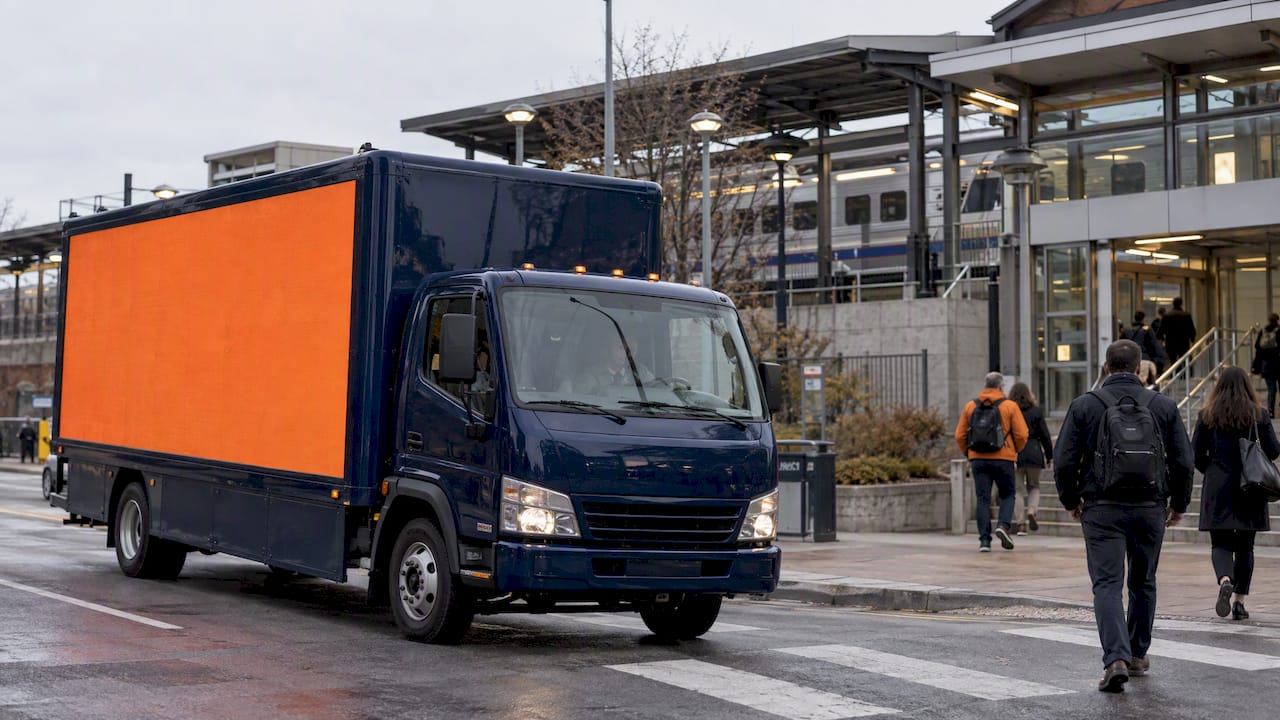
Beacon-ads brings together LED mobile billboards, geofencing, and real-time retargeting to give trade show marketers a physical and digital presence that static displays cannot match.

The Beacon-ads platform targets specific attendee profiles by location, time, and audience segment, then extends that reach through mobile retargeting after the show ends. Campaigns include proof-of-posting documentation and attribution analytics so you can connect DOOH exposure to pipeline outcomes. For marketers ready to move beyond booth-only tactics, Beacon-ads offers a full suite of digital out-of-home advertising strategies built for high-stakes event environments. You can also explore how to target trade shows with LED mobile billboards to see how mobile formats extend your reach beyond the convention center walls.
FAQ
What is DOOH advertising at trade shows?
DOOH advertising at trade shows uses dynamic digital displays, including LED screens and mobile billboards, to deliver targeted messages to attendees in physical event spaces. Unlike static signage, DOOH updates in real time and supports audience-specific targeting by location, time, and attendee profile.
How much can DOOH increase qualified meetings at a trade show?
Comprehensive pre-show outreach combining DOOH with digital campaigns can increase qualified meetings by 3–5 times compared to relying on on-site foot traffic alone. The key is targeting a defined account list before the show opens.
Can DOOH be measured like digital advertising?
DOOH supports attribution models that link screen exposure to real-world outcomes including booth foot traffic, website visits, and post-show pipeline. Programmatic DOOH combined with cross-channel measurement significantly improves the ability to calculate campaign ROI.
What makes DOOH creative different from other ad formats?
Trade show DOOH creative must account for dwell time, venue lighting, and attendee movement patterns. Creative content must be customized to the trade show environment, with shorter copy, high-contrast visuals, and a single clear call to action for high-traffic placements.
How does DOOH work with other trade show marketing channels?
DOOH works best when paired with mobile retargeting and CTV to reinforce brand messages across every screen an attendee encounters. Layering DOOH with CTV and mobile retargeting maximizes brand presence by reinforcing messages in the physical spaces attendees frequent before, during, and after the event.