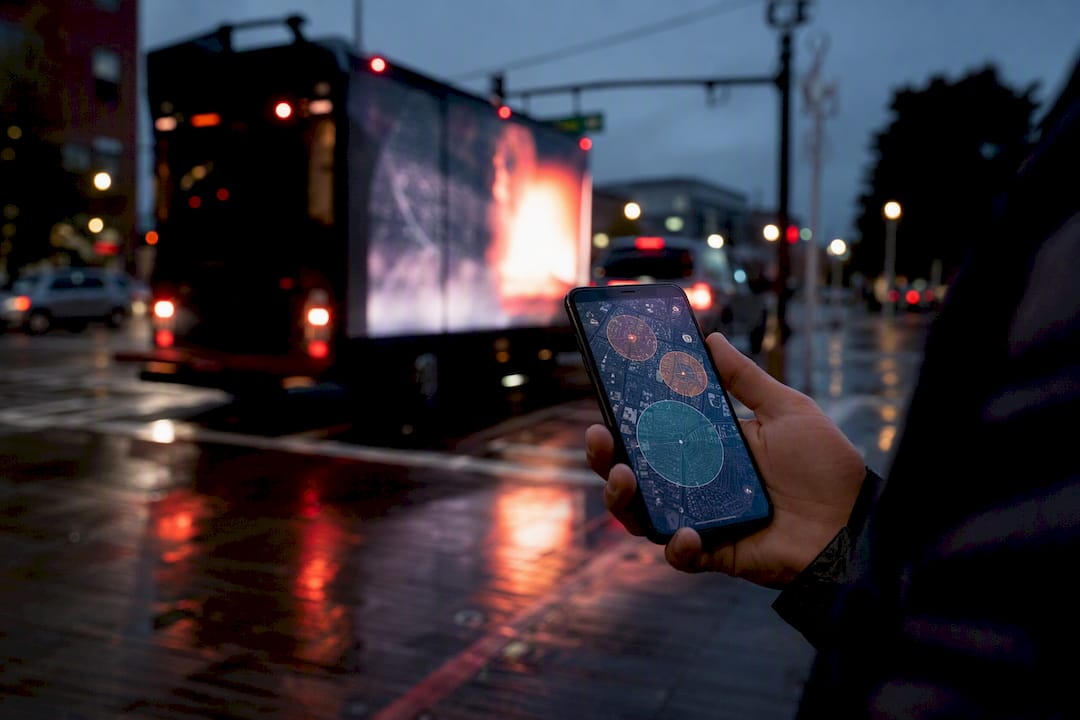
Most outdoor advertising campaigns still work like a firehose: blast a message at every passerby and hope the right person notices. That approach wastes a significant portion of your budget on irrelevant impressions, leaving campaign managers with vague metrics and no clear path to improvement. The good news is that digital targeting has fundamentally changed what OOH can deliver. This guide walks you through a step-by-step framework for building targeted, measurable out-of-home campaigns that produce real, attributable results instead of guesswork.
Table of Contents
- Why digital targeting transforms OOH advertising
- Prepping your targeted OOH campaign: Data, tools, and setup
- Step-by-step: Launching a measurable, localized OOH campaign
- Measurement standards and troubleshooting: Making sense of results
- Our take: The real key to measurable OOH ROI
- Take your next step with advanced OOH solutions
- Frequently asked questions
Key Takeaways
| Point | Details |
|---|---|
| Target context, not just reach | Campaigns perform better by focusing on local relevance rather than broad exposure. |
| Use measurement tools for ROI | Tech-enabled metrics like footfall lift and verified impressions lead to more actionable insights. |
| Incrementality is essential | Lift studies and exposed/control group comparisons reveal the true impact of OOH efforts. |
| Avoid common targeting mistakes | Don’t rely solely on reach; combine data points and context for effective targeting. |
| Optimize campaigns dynamically | Real-time digital targeting allows fast adjustments and improved results. |
Why digital targeting transforms OOH advertising
Traditional billboards are powerful, but they operate on a broad-strokes logic: buy a high-traffic location, display your message, and estimate how many people probably saw it. That model gives you reach, but it gives you almost nothing else. No demographic filtering, no time-based triggers, no way to tell if the people who saw your ad were even remotely close to your target customer.
Digital targeting flips that model. Instead of buying location and hoping for the best, you layer audience data, behavioral signals, and geo-location intelligence on top of physical placement. The result is a campaign that reaches the right person at the right place and time, not just anyone who happens to walk by.
| Factor | Traditional OOH | Digital targeted OOH |
|---|---|---|
| Audience filtering | Broad demographic estimation | Precise audience segments |
| Timing control | Static, always-on display | Trigger-based, time-specific |
| Measurement | Traffic count estimates | Verified impressions, footfall lift |
| Optimization | After campaign ends | Real-time adjustments |
| Attribution | Difficult to isolate | Exposed vs. control group tracking |
The core shift is from contextual guessing to data-driven precision. Brands using strategies for digital OOH can filter by affinity categories, purchase behavior, and location history. A quick-service restaurant chain, for instance, can target commuters near its locations during morning and lunch hours, rather than running a generic campaign all day long.
Key measurement metrics now include verified impressions (viewability-adjusted counts), reach and frequency, footfall lift via geofencing, brand lift studies, sales lift, and attribution using exposed versus control groups. These are not vanity metrics. They are the building blocks of a results-focused media strategy.
Brands that apply data-driven OOH advertising tips consistently see better cost efficiency and stronger ROI because they are spending money where it actually converts, not broadcasting to an undefined crowd.
“The most significant shift in OOH is not the screens themselves. It is the data layer that makes those screens accountable.”
Prepping your targeted OOH campaign: Data, tools, and setup
Now that the power of digital targeting is clear, here is what you will need to get started. Preparation is where most campaigns succeed or fail. If you skip the setup work, you end up with well-placed ads that still miss the mark because they are talking to the wrong people or firing at the wrong moments.
Step 1: Define your audience using POI and behavioral data
Points of interest (POI) are physical locations tied to audience behavior. A sporting goods retailer might target areas near gyms, athletic clubs, and sports stadiums because those locations concentrate the right audience. Combine POI data with demographic filters like age, income, and household type to narrow your targeting further.

Behavioral data adds a third layer. If you have first-party customer data from previous campaigns, use it to build lookalike segments for localized ad targeting. If you do not have first-party data yet, third-party audience segments from your OOH platform or data provider are a strong starting point.
Step 2: Choose your geofencing and campaign tools
Geofencing draws a virtual boundary around a geographic area. When a mobile device enters or exits that boundary, it triggers an action, such as serving a follow-up digital ad or logging a footfall event. This is one of the most powerful tools in geotargeting for local reach.
| Tool type | Primary use | Example application |
|---|---|---|
| Geofencing platform | Boundary-based audience capture | Retarget store visitors |
| POI data provider | Location-specific audience mapping | Target competitor customers |
| Attribution dashboard | Exposed vs. control comparison | Measure true sales lift |
| QR code analytics | In-ad engagement tracking | Capture leads from mobile billboard |
| Route optimization software | Mobile OOH path planning | High-frequency route design |
Step 3: Set up real-time campaign triggers
Triggers are conditions that control when your ad runs or what message it displays. Weather triggers can swap in a hot coffee ad on cold mornings. Time-of-day triggers can show a lunch special between 11 a.m. and 1 p.m. Event-based triggers can activate your message when a nearby sporting event ends and foot traffic spikes.
Pro Tip: Prioritize context over reach in hyper-local targeting. Combining multiple data points, including POI, audience segments, and real-time triggers, creates relevance that blanket reach simply cannot replicate. A well-timed, contextually relevant ad outperforms a high-frequency but generic one every time.
Good local campaign route planning accounts for traffic patterns, pedestrian density, and the specific times your audience is most active in each micro-zone. This kind of granular setup takes more work upfront but pays off significantly in performance.
Step-by-step: Launching a measurable, localized OOH campaign
With your preparation complete, let’s go through the steps for running a digital OOH campaign from launch to optimization.

1. Define campaign goals and attach measurable KPIs to each one
Every campaign goal should map to a specific metric. Brand awareness maps to verified impressions and brand lift. Store visits map to footfall lift. Lead generation maps to QR code scans and form submissions. Sales goals map to attribution studies comparing exposed and control groups.
Without this mapping in place before launch, you will not know what data to collect or how to judge performance after the campaign ends.
2. Build your creative with targeting in mind
Your creative should not be generic. If you are targeting downtown commuters near a coffee competitor, your creative should speak directly to that moment: early morning, on the go, looking for a better option. Dynamic creative, where the message changes based on triggers or location, consistently outperforms static creative in digitally targeted campaigns.
3. Launch with geo-targeted placements and activate your triggers
Work with your OOH partner to confirm that geofencing boundaries are correctly set and that trigger conditions are tested before launch. A small setup error, like a boundary that is too wide or a trigger that fires at the wrong time, can skew your measurement data significantly.
Digital targeting strategies should include both the physical placement layer (where your mobile billboard or wrapped vehicle travels) and the digital retargeting layer (which serves follow-up ads to people who were exposed to your physical OOH ad).
4. Activate smart QR codes for direct engagement tracking
Smart QR codes in campaigns are one of the most underused tools in OOH. When scanned, they capture first-party data including device type, location, time, and user-initiated actions. This data bridges the gap between a physical ad exposure and a digital conversion event, giving you concrete attribution data rather than estimates.
5. Monitor performance in real time and optimize early
Do not wait until the campaign ends to look at data. Most modern OOH platforms provide dashboards with daily or even hourly performance updates. If footfall lift is lower than expected in one zone, shift route density or adjust your trigger timing.
Pro Tip: Set a mid-campaign review checkpoint at the 30 percent mark of your flight. This gives you enough data to make meaningful adjustments without waiting so long that the majority of your budget is already spent.
Statistic to know: Key measurement metrics including verified impressions, reach and frequency, footfall lift, brand lift studies, sales lift, and attribution using exposed versus control groups are now considered the standard framework for professional OOH measurement. Campaigns that use all of these metrics consistently make better optimization decisions than those that track impressions alone.
Measurement standards and troubleshooting: Making sense of results
After your campaign finishes, interpreting the results accurately is critical for optimization. This is where many teams lose the thread. They look at impression numbers, see a big figure, and declare victory without checking whether those impressions actually drove behavior change.
Verified impressions versus actual engagement
Verified impressions are not the same as engagement. A verified impression tells you the ad was displayed in a location where your target audience was present, adjusted for visibility factors. Engagement tells you that someone interacted with the ad, either by scanning a QR code, visiting a landing page, or walking into a store afterward.
Both metrics matter, but for different reasons. Verified impressions tell you about reach efficiency. Engagement and footfall lift tell you about conversion effectiveness. Tracking only one without the other gives you an incomplete picture.
Footfall lift tracking and control group methodology
Footfall lift (the increase in store visits attributable to ad exposure) is measured by comparing two groups: people who were exposed to your OOH ad and a matched control group that was not. The difference in visit rates between those groups is your incremental lift.
This methodology matters because it isolates the effect of your campaign from other factors like seasonal traffic spikes or promotions running in parallel. Without a control group, you risk attributing lift to your OOH campaign that was actually driven by something else entirely.
- Use mobile device IDs to build exposure and control cohorts before launch
- Match cohorts on key variables: demographics, location history, purchase behavior
- Track footfall using location data from opted-in mobile users
- Report lift as a percentage increase over the control group baseline, not as raw visit counts
Pro Tip: Use lift studies for true incrementality. IAB’s ongoing measurement standardization efforts mean that more platforms now support consistent lift study methodology, making it easier to compare performance across campaigns and vendors.
Common troubleshooting scenarios
Attribution errors happen when your exposed and control groups overlap, or when the geofence boundary is too large and captures people who never realistically saw your ad. Tighten boundaries and audit cohort composition before finalizing results.
Underreporting is common when QR code data is not connected to your CRM or analytics platform. Make sure your smart data capture for OOH integrations are tested and firing correctly before launch, not after.
Context misalignment occurs when your creative or placement does not match the audience’s mindset in that location. A luxury brand running ads near a discount retail cluster will see poor engagement not because of bad targeting mechanics, but because the context is wrong.
Our take: The real key to measurable OOH ROI
Here is a perspective you will not find in most OOH media guides.
The industry has spent years celebrating reach as the primary success metric for out-of-home advertising. Big impression numbers look good in post-campaign reports and justify renewals. But reach without context is just noise. A million impressions from the wrong audience in the wrong moment contribute almost nothing to your actual business goals.
The brands seeing real, compounding returns from OOH are the ones who have shifted their internal success definition away from reach and toward incremental lift. They ask different questions. Not “how many people saw our ad?” but “how many people who saw our ad changed their behavior because of it?”
That shift sounds subtle, but it changes everything about how you plan, execute, and optimize a campaign. It pushes you toward tighter audience segments, smarter context selection, and more rigorous measurement methodology. It also tends to produce smaller initial impression numbers, which can feel uncomfortable if your stakeholders are used to seeing reach-first metrics.
The truth is that a campaign delivering 200,000 verified impressions with a 15 percent footfall lift is far more valuable than one delivering two million raw impressions with no measurable behavior change. Footfall and brand lift metrics are more valuable than impressions alone, and the brands winning in OOH right now know this instinctively.
Incrementality is the future of OOH measurement. The peak impact OOH tips that drive lasting performance all point back to the same principle: precision beats volume, and context beats coverage. Build your campaigns around that logic and your measurement will finally start telling you something worth acting on.
Take your next step with advanced OOH solutions
Applying these strategies requires the right platform, the right data infrastructure, and a partner who understands how to connect physical placement with digital measurement. That is exactly where Beacon Mobile Media comes in.

Beacon Mobile Media operates LED mobile billboards and wrapped rideshare vehicles across all 50 states, pairing physical OOH reach with geofencing, real-time retargeting, smart QR code integration, and full attribution analytics. Whether you need route-optimized local campaigns or end-to-end measurement dashboards, Beacon’s platform gives you the tools to plan, launch, and prove results. Visit beacon-ads.com to explore campaign options and connect with a targeting specialist who can help you build a measurable, high-impact OOH strategy from the ground up.
Frequently asked questions
What are verified impressions in OOH advertising?
Verified impressions are viewability-adjusted counts that measure real ad views based on digital sensors and traffic data, rather than simple estimates of passerby volume. They provide a more accurate foundation for calculating reach efficiency and cost per meaningful exposure.
How does geofencing help OOH campaign measurement?
Geofencing uses mobile device data to track footfall lift by recording when devices that were present during ad exposure later visit a target location. This allows advertisers to attribute store visits directly to OOH ad exposure with measurable confidence.
What’s the best way to measure incremental lift in OOH?
Incremental lift is most accurately measured by building matched exposed and control groups and comparing visit or purchase rates between them, a method supported by IAB as the standard for true incrementality analysis. This approach removes the influence of external factors from your results.
What mistakes should I avoid in digital OOH targeting?
The biggest mistake is targeting purely on reach without factoring in context, audience relevance, and measurement setup. Combining POI data, behavioral segments, and real-time triggers produces far better results than optimizing for impression volume alone.
How quickly can you optimize a localized OOH campaign?
Most digitally targeted OOH campaigns can be optimized within days of launch using real-time analytics dashboards and trigger-based delivery adjustments. The key is establishing baseline performance benchmarks before launch so early data has a clear reference point for comparison.