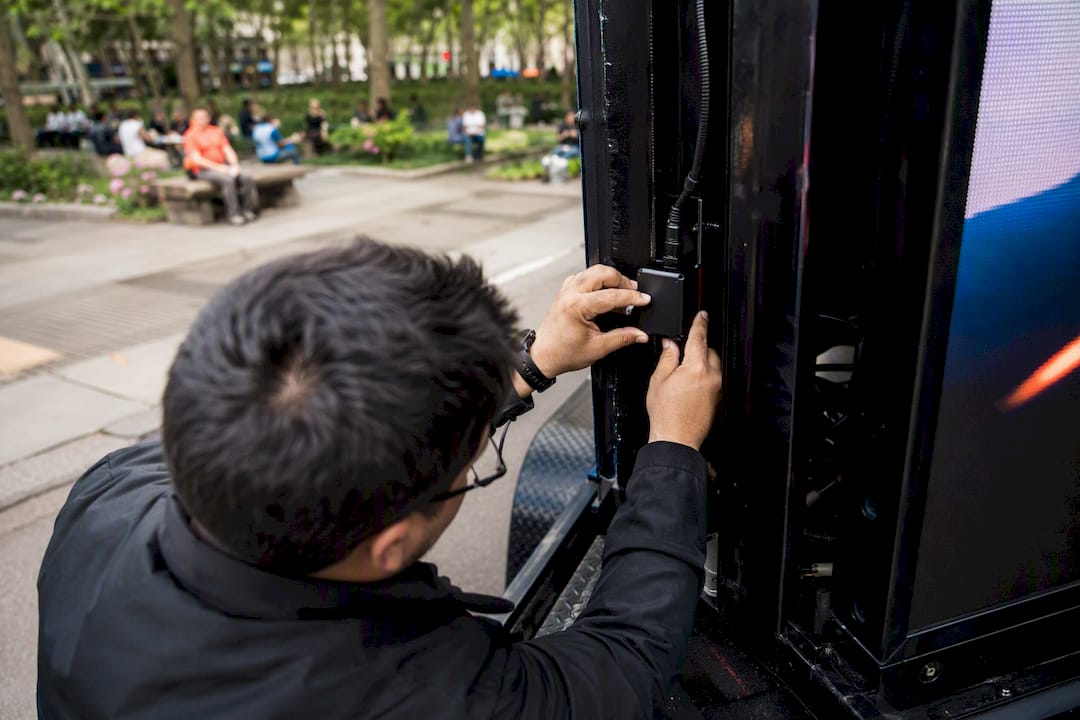
The fastest, most reliable pattern is simple: capture an identifying value the moment someone scans (an email, phone number, or unique reference ID), then post that payload through a webhook or API so it creates or updates a CRM contact, logs a timeline event, and fires an automation. Native connectors get you running in an afternoon; direct API work takes longer but scales further. Either way, the payoff is immediate, real-time leads with automated routing instead of a spreadsheet nobody checks until Friday.
TL;DR:
- Using native connectors is ideal for quick, low-volume campaigns with limited customization needs, while direct API integration suits high-volume and full attribution accuracy.
- Capturing essential metadata such as campaign ID, timestamp, device type, and source is critical; missing any can lead to anonymous scans and Attribution reporting failures.
- Proper CRM configuration, including custom properties and deduplication rules, prevents duplicate records and maintains context for effective follow-up.
- For immediate ROI, focus on trade shows, digital business cards, and point-of-sale campaigns, where rapid follow-up significantly influences conversion rates.
- Implement rigorous privacy controls by limiting data collection, verifying payloads, rate-limiting endpoints, and aligning retention policies with stated data use.
Table of Contents
- How Does QR-to-CRM Data Flow Actually Work?
- Native Connectors, Middleware, or Direct API: Which Should You Use?
- How Should You Configure Your CRM to Handle Scan Data?
- What Are the Best QR-to-CRM Use Cases for Fast ROI?
- What Privacy and Security Controls Does This Need?
- What Should Your Testing Checklist Cover Before You Scale?
- What Does This Look Like in a Real Mobile OOH Campaign?
- What Actually Moves the Needle First
- Turn Scans Into Pipeline With Beacon-ads
- Where to Go for Implementation Details
- Sources
- FAQ
How Does QR-to-CRM Data Flow Actually Work?
A scan is worthless to your sales team until it becomes a record they can act on. The mechanics behind that transformation follow a consistent sequence, whether you’re running a trade show booth or a wrapped rideshare campaign.
Here’s the path a scan takes from phone camera to pipeline:
- Someone scans the code, landing on a form, a deep link, or a pre-filled capture page.
- The platform captures metadata: timestamp, device type, and often a location if the code is geo-tagged.
- That payload gets sent via webhook or API call to your CRM.
- The CRM creates a new contact or updates an existing one and logs a scan event on the timeline.
- An automation trigger fires, whether that’s a task, an email, or a lead score bump.
Some QR platforms push this data to CRMs like HubSpot in real time, mapping fields automatically so a scan shows up on a contact’s timeline within seconds. The essential fields to capture at every step: a contact identifier, a campaign ID or UTM parameter, a timestamp, device type, and a source code ID tied to specific placement. Skip any of these and you’ll end up with the three most common failures: anonymous scans with no way to follow up, missing campaign attribution that makes ROI reporting impossible, and syncs that lag long enough to miss the moment a prospect was actually paying attention.
Native Connectors, Middleware, or Direct API: Which Should You Use?
The right integration method depends on how fast you need to move and how much control you need over the data. There’s no single best answer here, just trade-offs that match different stages of a campaign.
Native CRM connectors get you live in minutes. Most require no code, and some work on free CRM tiers without a paid upgrade, though advanced workflow features often sit behind a paywall. The tradeoff is limited field-mapping depth, which is fine for a pilot but restrictive once you need custom attribution fields.
Middleware tools like Zapier, Make, or n8n sit in the middle. They’re low-code, flexible across a stack of disconnected tools, and quick to reconfigure. Watch for latency during high-volume bursts (a packed trade show floor, for instance) and be aware of rate limits on both the QR platform and CRM side.
Direct API or webhook integration is the heavyweight option: real-time, full metadata support, and the best foundation for attribution reporting at scale. It requires engineering time upfront, but it’s the only route that holds up under high scan volume without dropped payloads.
- Low volume, quick pilot, no dev resources: native connector.
- Multi-tool workflow, moderate volume, need flexibility fast: middleware.
- High volume, strict SLA, full attribution requirements: direct API/webhook.
Pro Tip: Start with middleware for your first campaign, then migrate the highest-volume use case to a direct webhook once you know which fields actually matter. Rebuilding one workflow is far cheaper than rebuilding five.
How Should You Configure Your CRM to Handle Scan Data?
Getting scans into the CRM is only half the job. Without the right fields and rules, incoming data turns into duplicate contacts and lost context instead of usable pipeline. A phased setup that defines data requirements before configuring automations catches most quality problems before they multiply.
- Build custom properties first. At minimum:
first_scan_date,scan_count,qr_campaign_id, andsource_placement. These give reps context on where and when a lead entered the funnel. - Set deduplication priority. Match on email first, phone second, and a unique reference ID third. Decide your merge rule (usually: newest scan wins on activity fields, oldest wins on creation date) before your first real campaign, not after duplicates pile up.
- Route by event and territory. Tag incoming leads automatically, then auto-assign to the right rep so nobody’s waiting on a manual triage step.
- Trigger same-day tasks. A scan from a high-intent placement should generate an outreach task automatically, not sit in a queue.
- Layer in automation. Add contacts to a nurture sequence, send an automated welcome message, and bump lead scores when someone scans a high-intent code like a demo request or pricing page link using an AI-assisted follow-up email generation tool for personalized outreach.
What Are the Best QR-to-CRM Use Cases for Fast ROI?
Some campaign types pay back the integration effort almost immediately because the follow-up window is short and the stakes are high.
- Trade shows and events. Tag scans by booth number and auto-assign to the rep working that territory, so follow-up happens within hours instead of after everyone’s flown home.
- Digital business cards. One QR code opens a form, creates a contact, and spins up a follow-up task automatically. No manual data entry, no forgotten cards buried in a jacket pocket.
- Receipts and point-of-sale. Square’s system lets a scanned reference ID identify a customer at checkout and auto-apply group discounts, pulling purchase history into the same record a sales rep sees later.
- Out-of-home and vehicle campaigns. Campaign IDs embedded in vehicle-mounted or billboard QR codes feed straight into attribution reports, letting you calculate scan-to-conversion rates by placement rather than guessing which route drove results.
What Privacy and Security Controls Does This Need?
Every scan that touches your CRM is a data-handling decision, and cutting corners here creates liability fast.
Collect only what you need. A landing page asking for name, email, and consent converts better than one demanding a full profile, and it keeps you closer to data minimization principles regulators expect. Include clear opt-in language on the very first screen, not buried in a footer.
On the technical side, verify webhook signatures and validate every payload server-side before it touches CRM records. Rate-limit your endpoints so a bot can’t spam your CRM with fake submissions or scrape your QR landing pages. Set retention rules that match your campaign’s actual promises: if the landing page says data is used for follow-up only, your CRM’s retention policy should reflect that, not quietly extend it.
- Minimize fields and disclose usage clearly at first scan.
- Verify signatures and validate payloads server-side.
- Rate-limit endpoints against spam and scraping.
- Align retention windows with stated campaign policy.
Pro Tip: Log the scan’s code ID, timestamp, and rough location even when the person doesn’t fill out a form. That provenance data is what lets you defend an attribution claim later, without collecting anything personally identifying.
What Should Your Testing Checklist Cover Before You Scale?
Skipping QA on a QR-to-CRM pipeline is how you find out about a broken webhook three weeks into a campaign, after the leads are already gone.
Pre-launch steps:
- Create every custom field in the CRM before the first code goes live.
- Secure the capture endpoint with signature verification.
- Generate test QR codes with distinct campaign IDs, separate from production codes.
Testing matrix to run before go-live:
- Known-contact scan creates a timeline event, not a duplicate.
- Anonymous submission (no email) is handled without breaking the workflow.
- Deduplication resolves correctly across email, phone, and reference ID.
- Burst volume test simulates a crowd scanning within the same minute.
- Failed-payload handling logs the error instead of silently dropping the lead.
Set up alerts for webhook failures, run a daily QA sample of live scans, and check campaign-level attribution weekly, especially in the first month.
What Does This Look Like in a Real Mobile OOH Campaign?
Mobile LED billboard and wrapped rideshare campaigns can include smart QR codes, tagging scans with campaign IDs and placement metadata tied to specific vehicles or routes. Because each vehicle’s location and posting schedule is documented with GPS and photo evidence, that proof-of-posting data reinforces the attribution story: you’re not guessing which placement drove a scan, you can point to the exact route and time.
The metrics worth pulling into your CRM for reporting: scan-to-contact conversion rate, time-to-first-response after a scan, and downstream conversion into a closed deal. Track those at the campaign level and you get a defensible answer to the question every media buyer eventually asks: which placement actually worked?

What Actually Moves the Needle First
Pick one high-value use case, a trade show or a single OOH placement, and prove the full data flow end to end before touching anything else. Middleware gets you moving fast, but plan to migrate high-volume campaigns to direct webhooks once patterns stabilize. And put your privacy language on the first screen a scanner sees, not the third.
— Scott
Turn Scans Into Pipeline With Beacon-ads
Some providers offer scan-to-CRM data flow services with mobile LED billboards and wrapped rideshare vehicles carrying smart QR codes tied to route customization, geofencing, and affinity targeting, so every scan arrives with placement context already attached.

Building this in-house means engineering time, testing cycles, and ongoing maintenance on top of the media buy itself. A managed partner makes sense when your team needs measurement fast without adding a development backlog. A managed partner can pair physical campaigns (proof-of-posting with GPS and photo documentation) with attribution layers needed for reporting, from scan-to-contact rates to full funnel metrics. If you’re weighing formats, the types of out-of-home advertising available today will show you where QR-enabled mobile placements fit. Ready to see what a campaign with built-in attribution looks like for your team? Request a campaign proposal and get your QR-to-CRM pipeline mapped out before your next launch.
Where to Go for Implementation Details
For hands-on setup, the QRolling integration guide walks through field mapping and phased rollout. Square’s customer identification docs cover POS-specific QR workflows, and Vtiger’s QR feature page details native CRM automation examples.
Sources
- QR Code for HubSpot | Push Scans & Leads Into Your CRM
- Scan QR and barcodes to identify customers | Square Support Center – United States
- Integrating QR Codes with Your CRM System | QRolling
- QR Code | Vtiger CRM
FAQ
What Is the FBI Warning About QR Codes?
The FBI has warned that criminals sometimes replace legitimate QR codes with malicious ones that redirect scanners to phishing sites or prompt malware downloads, so always verify a code’s source before scanning unfamiliar codes in public places.
What Are CRM Integrations?
A CRM integration connects your customer relationship management platform to another tool or data source, such as a QR platform, so information flows automatically between systems instead of requiring manual entry.
Is There a Free QR Code API Available?
Some QR platforms offer free tiers that work with CRMs like HubSpot for basic scan logging, though advanced features such as complex workflow automation typically require a paid plan.
What Are the Two Types of QR Codes?
QR codes are generally categorized as static (fixed data that can’t be changed after creation) and dynamic (editable content and destination URLs, along with scan tracking), and dynamic codes are the standard choice for CRM integration since they support ongoing attribution.
How Do I Use QR Codes for Lead Generation in a CRM?
Link each QR code to a short form or landing page that captures an email or phone number, then route that submission through a webhook or native connector so it creates a CRM contact and triggers an automated follow-up task immediately.