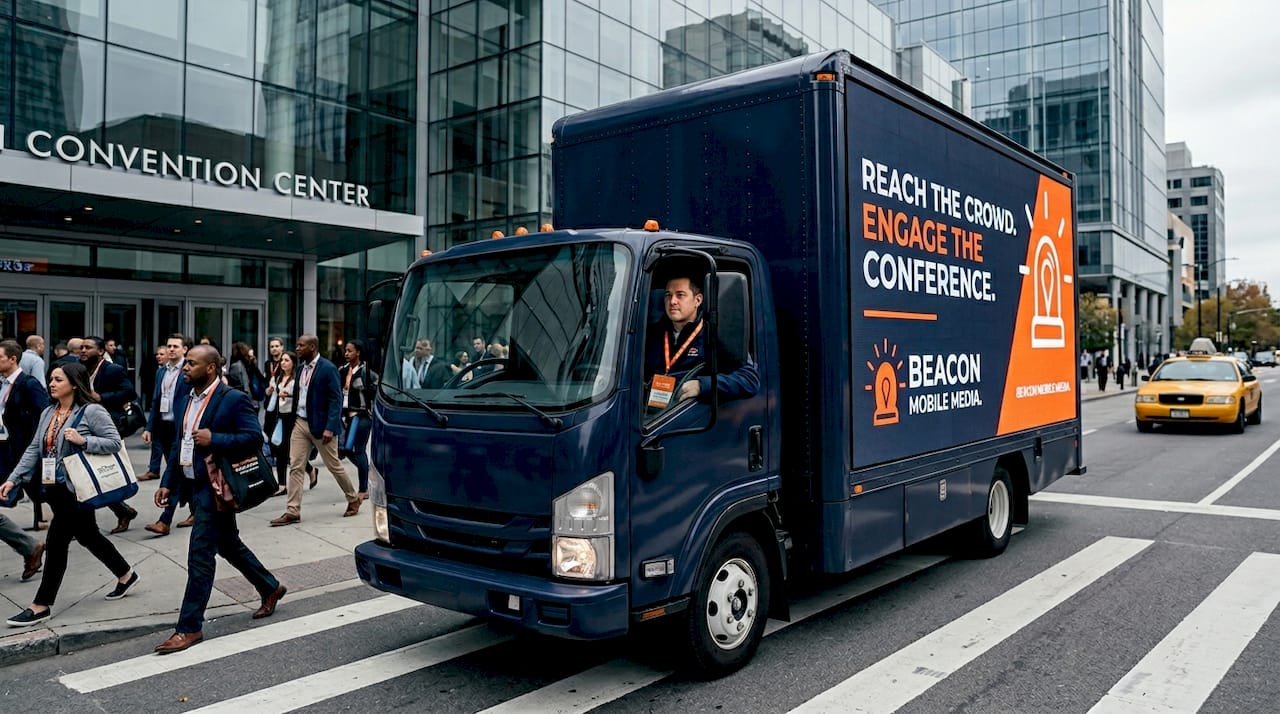
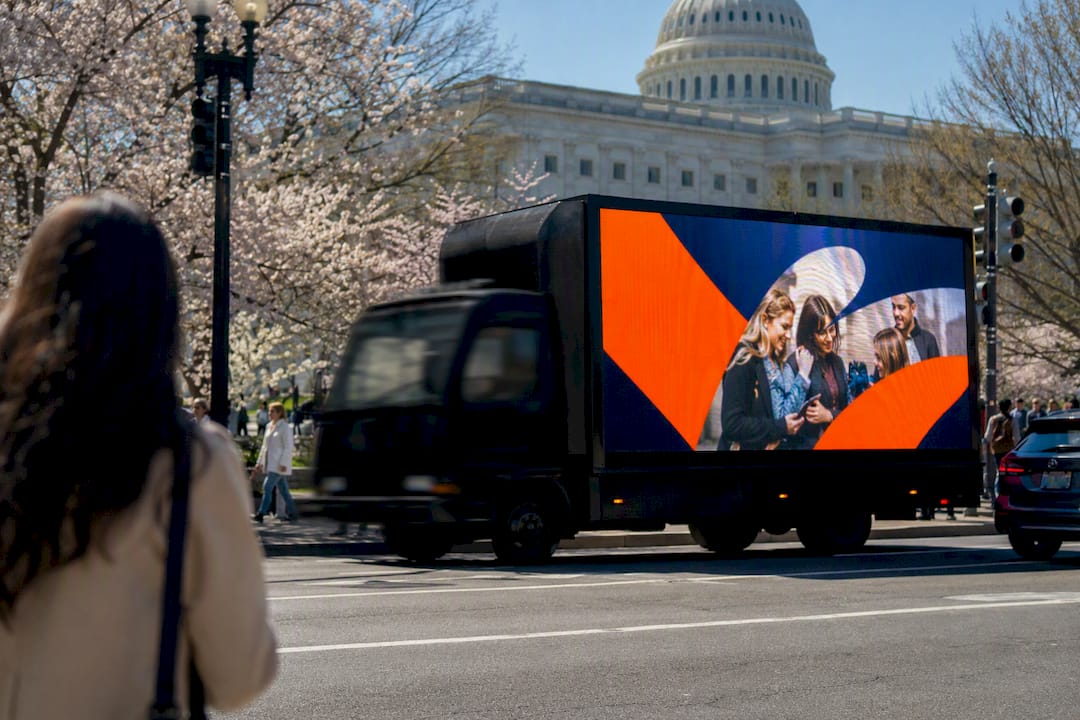
Parking a mobile billboard advertising display on any public street or public land in Los Angeles is banned outright under LAMC Section 87.53. Advertising painted or permanently affixed to a vehicle stays legal under LAMC Section 87.54, as long as it doesn’t stick out past the vehicle’s body. Ignore the distinction and you’re looking at a warning, then impoundment under California Vehicle Code Section 22651, and a misdemeanor if it happens again.
TL;DR:
- Parking a mobile billboard on public streets or land in Los Angeles is strictly prohibited unless it is permanently affixed to a vehicle within its dimensions.
- Vehicle wraps or decals that do not extend beyond the vehicle’s size remain legal and are not considered mobile billboards under LA law.
- Enforcement is split between LADBS for permits and LADOT for parking violations, with warnings given first and impoundment possible on repeat violations.
- Proper documentation, route planning, and pre-approval are essential to avoid fines, and moving vehicles through high-traffic routes helps ensure compliance.
- Legal mobile billboard campaigns rely on documented routes, GPS logs, and timely permits to prevent impoundment and maximize campaign duration.
Table of Contents
- What Does Los Angeles Law Actually Say About Mobile Billboards?
- Who Enforces These Rules and What Happens If You Get Caught?
- Is Your Vehicle Advertising Legal or a Prohibited Mobile Billboard?
- How Do You Get Permits and Confirm Compliance Before Launch?
- Running a Campaign Without Getting Towed
- Compliance Isn’t the Enemy of a Good Campaign
- How Beacon-ads Keeps Your LA Campaign On the Road, Not in Impound
- Primary Sources for LA Mobile Billboard Law
- Sources
- FAQ
What Does Los Angeles Law Actually Say About Mobile Billboards?
The city’s core rule is short and blunt. LAMC Section 87.53 makes it unlawful to park a “mobile billboard advertising display” on any public street or public land within Los Angeles city limits. That’s the entire ballgame for most trailer-mounted or towed advertising units: park one on a curb overnight to catch traffic, and the city has grounds to act.
The companion rule, LAMC Section 87.54, carves out the exception advertisers actually rely on. Signage painted or permanently affixed to a motor vehicle, such as a wrapped car or a decal on a delivery van, stays legal as long as it doesn’t extend beyond the vehicle’s length, width, or height. The City Clerk’s ordinance amending both sections spells out the penalty structure and folds in state vehicle code removal authority.
State law backstops all of it. California Vehicle Code Section 395.5 supplies the legal definition of a mobile billboard, and AB-2756 gave California cities the explicit authority to write ordinances like LA’s. A few things to keep straight before you plan a campaign:
- LAMC 87.53 bans parking mobile billboard displays on public streets or land.
- LAMC 87.54 permits vehicle-affixed advertising within the vehicle’s dimensions.
- CVC 395.5 defines what counts as a “mobile billboard” for enforcement purposes.
- AB-2756 is the state law that lets Los Angeles regulate the category at all.
Who Enforces These Rules and What Happens If You Get Caught?
Enforcement in Los Angeles splits across two departments, and knowing which one you’re dealing with saves you a lot of confused phone calls. The Los Angeles Department of Building and Safety handles sign permits and structural plan checks. The Los Angeles Department of Transportation handles curb space, parking enforcement, and physical removal of illegally parked displays.
Here’s roughly how a violation plays out:
- A city employee or peace officer spots a mobile billboard display parked on a public street or public land.
- First-time devices typically get a warning, often with a set window (commonly 24 hours) to move.
- If the operator already received a prior warning, removal and impoundment can happen immediately under California Vehicle Code Sections 22651(v) and (w).
- Owners get limited post-storage hearing rights to contest the impound, similar to a standard vehicle tow dispute.
- Repeat violations can escalate to a misdemeanor charge under the municipal code, on top of towing and storage fees.
The appeals path runs through the same post-storage hearing process LA uses for any impounded vehicle. If you get a notice, request the hearing quickly. Waiting past the posted deadline usually forfeits your right to contest the impound.
Is Your Vehicle Advertising Legal or a Prohibited Mobile Billboard?
The line between “wrapped car” and “illegal mobile billboard” comes down to two questions: is the signage permanently attached, and does the vehicle serve a real transportation purpose beyond carrying the ad?
Permanently affixed means paint, vinyl decals, or manufacturer-designed ad placements that don’t extend past the vehicle’s own dimensions. A branded delivery truck or a rideshare wrap fits this category cleanly under LAMC 87.54. A trailer with a billboard bolted on top, a non-motorized cart, or a bicycle towing an ad frame reads very differently to an enforcement officer, and courts have generally sided with cities that regulate these as content-neutral parking restrictions.
Enforcement officers watch for a few tells:
- The unit sits parked in the same high-visibility spot for hours or days.
- There’s no realistic delivery, service, or passenger purpose tied to the vehicle’s movement.
- Trailers get detached from a tow vehicle specifically to park longer.
- The advertising structure physically exceeds the vehicle’s outline.
Pro Tip: If your display gets unhooked from its tow vehicle at any point during a campaign, assume an officer will treat it as a parked mobile billboard, not a moving vehicle.
How Do You Get Permits and Confirm Compliance Before Launch?
Before a single truck rolls out, run through a checklist that covers both departments and both layers of law.
- Confirm your vehicle’s classification: is the ad permanently affixed within body dimensions, or does it qualify as a “mobile billboard advertising display” under CVC 395.5?
- Check whether LADBS requires a sign permit or plan check for your specific vehicle setup.
- Call or check LADOT’s curb rules for every planned stop, including timed parking and event-day restrictions.
- Gather your paperwork: dimension drawings, vehicle registration, insurance proof, and a written route itinerary showing legitimate movement.
- If you’re staging near a special event or a restricted zone, request written authorization from LADOT or City Planning ahead of time.
Insurance matters just as much as paperwork. Most legitimate mobile billboard operators in Los Angeles carry commercial auto liability coverage, and clients or venue partners will often ask to see proof before allowing a vehicle onto private lots or event grounds. Treat that certificate as part of your compliance kit, not an afterthought.
One detail that catches operators off guard: a first warning is often all the notice you get before impoundment becomes immediate on a second violation. That’s why proof-of-posting, GPS route logs and time-stamped photos, matters beyond campaign reporting. It’s your evidence if a parking dispute turns into an appeal. Companies running nationwide mobile billboard permits treat this documentation as standard operating procedure, not an optional extra.

Running a Campaign Without Getting Towed
Good route planning is your best defense against a citation. Build an actual travel itinerary, not just a list of neighborhoods, and keep your truck or wrapped vehicle moving through high-traffic corridors rather than parking it for hours in one spot.
A few operational habits keep you clear of trouble:
- Avoid restricted curb zones and respect posted timed parking everywhere on the route.
- Cap static display time at any single location and build movement back into the schedule.
- Coordinate directly with event organizers or venue owners when staging near a planned event.
- Keep GPS logs, dated photos, permits, and insurance documents accessible in-vehicle at all times.
Pro Tip: When in doubt, over-document. A folder of route logs and time-stamped photos costs you nothing and can be the difference between a warning and an impound hearing.
If your campaign needs to sit still near a festival, conference, or filming location. Request a written temporary permit ahead of time, including your dates, a map of intended locations, the reason for staging, and vehicle specs. A step-by-step compliance playbook helps operators build that request correctly the first time. One partner resource worth reviewing before a multi-city push is this marketing automation checklist, useful for keeping campaign workflows and post-run reporting organized once the trucks are on the street.
Compliance Isn’t the Enemy of a Good Campaign
Following LA’s mobile billboard rules doesn’t blunt a campaign’s impact. It protects it. An impounded truck earns zero impressions, and a misdemeanor citation costs more than the permit ever would have. Campaigns built around documented routes and legitimate movement tend to run longer, hit more neighborhoods, and produce cleaner attribution data because nothing gets pulled off the street mid-run.
— Scott
How Beacon-ads Keeps Your LA Campaign On the Road, Not in Impound
Some mobile billboard operators run LED mobile billboard trucks and wrapped rideshare vehicles with compliance integrated into the planning stage. That’s the real advantage here: campaigns get routed around restricted curb zones and timed parking from day one, so your truck spends its hours generating impressions instead of sitting in an LADOT impound lot.

The team coordinates permit questions, plans routes that respect LAMC 87.53 and 87.54, and documents every run with GPS logs and time-stamped photos as part of standard proof-of-posting reporting. Such documentation can feed into campaign attribution, helping to balance legal compliance and measurement of results. If your business is planning a Los Angeles push, whether it’s a product launch, a conference activation, or a citywide brand run, get in touch through the Beacon-ads campaign page to talk through routes, timelines, and reporting before your trucks hit the street.
Primary Sources for LA Mobile Billboard Law
- LAMC Section 87.53: the core ban on parking mobile billboard displays.
- City Clerk ordinance PDF: amendment text covering 87.53/87.54 and penalties.
- AB-2756 legislative text: state authority for local ordinances.
- Ninth Circuit opinion (2016): court ruling upholding municipal regulation.
This article is general information, not a substitute for advice from a qualified lawyer. Consult a qualified legal professional about your own circumstances before acting on anything here.
Sources
- An Ordinance amending Los Angeles Municipal Code Sections 87.53 and 87.54 (City Clerk ordinance PDF)
- AB-2756 Mobile billboard advertising displays: local ordinances.
- Ninth Circuit opinion upholding municipal regulation of mobile billboards (2016)
FAQ
What US States Do Not Allow Billboards?
Vermont, Maine, Alaska, and Hawaii ban most traditional off-premises billboards statewide, though rules for mobile and vehicle-mounted advertising vary by city rather than by state. Los Angeles doesn’t ban vehicle advertising outright; it bans parking a mobile billboard display on public streets or land under LAMC 87.53 while still allowing permanently affixed vehicle wraps.
What Are You Not Allowed to Put on a Billboard?
Los Angeles restricts advertising structures that extend beyond a vehicle’s dimensions or that function as a parked display rather than legitimate vehicle signage, per LAMC 87.54. Beyond size and placement rules, content restrictions like obscenity or false advertising fall under separate state and local consumer protection law, not the mobile billboard ordinance itself.
Can I Put Up a Billboard on My Property?
Static billboards on private property in Los Angeles require separate sign permits and zoning approval through LADBS and City Planning, which is a different process from the mobile billboard rules covered here. Mobile billboard displays specifically can’t be parked on public streets or public land regardless of property lines nearby, per LAMC 87.53.
Are Mobile Billboards Profitable?
Mobile billboards can generate strong returns when campaigns stay compliant and keep vehicles moving through high-traffic routes rather than parked and impounded. Providers like Beacon-ads build route customization and attribution reporting into campaigns specifically so clients can measure impressions against cost instead of guessing at performance.