Non-sponsor event advertising means reaching event attendees without paying for an official sponsorship package, using tools like mobile LED trucks, wrapped rideshare vehicles, geofencing, and QR-enabled activations placed legally near a venue. Done right, it costs a fraction of a title sponsorship. The one rule that governs every tactic: never touch trademarked event marks or imply an affiliation you don’t have, and give clear FTC-compliant disclosure whenever an influencer or partner is paid to promote your presence.
TL;DR:
- Using generic language like “near the venue” or “event weekend special” reduces risk of trademark claims compared to implying official sponsorship.
- Indoor beacon geofencing and high-traffic route timing improve measurement accuracy and campaign effectiveness around dense venues.
- Disclosing paid influencer promotions clearly and in multiple formats is essential to comply with FTC guidelines and avoid claims of misleading endorsement.
- Confirming permits, coordinating with venue operations, and monitoring real-time traffic are crucial to prevent activations from being seized or rerouted.
- A combination of smaller-scale tactics like LED trucks, rideshare wraps, and retargeting generally costs less and performs better than relying solely on traditional sponsorships.
Table of Contents
- What Non-Sponsor Tactics Actually Move the Needle?
- Legal, Brand, and Disclosure Risks U.S. Marketers Must Avoid
- How Do You Plan a Compliant Non-Sponsor Campaign?
- How Do You Target and Measure Event Attendees?
- Creative Ideas That Feel Authentic Without Implying Sponsorship
- When Should You Scale Up or Buy Official Sponsorship?
- Turning One Event Into a Repeatable Playbook
- Working With Venues and Local Authorities Beyond the Permit
- What Does Non-Sponsor Advertising Cost Compared to Sponsorship?
- The Compliance-First Mindset Most Marketers Skip
- Get Your Non-Sponsor Event Campaign on the Road
- Sources
- FAQ
What Non-Sponsor Tactics Actually Move the Needle?
Five tactics carry most of the weight in a non-sponsor campaign, and they perform best stacked together rather than run alone.
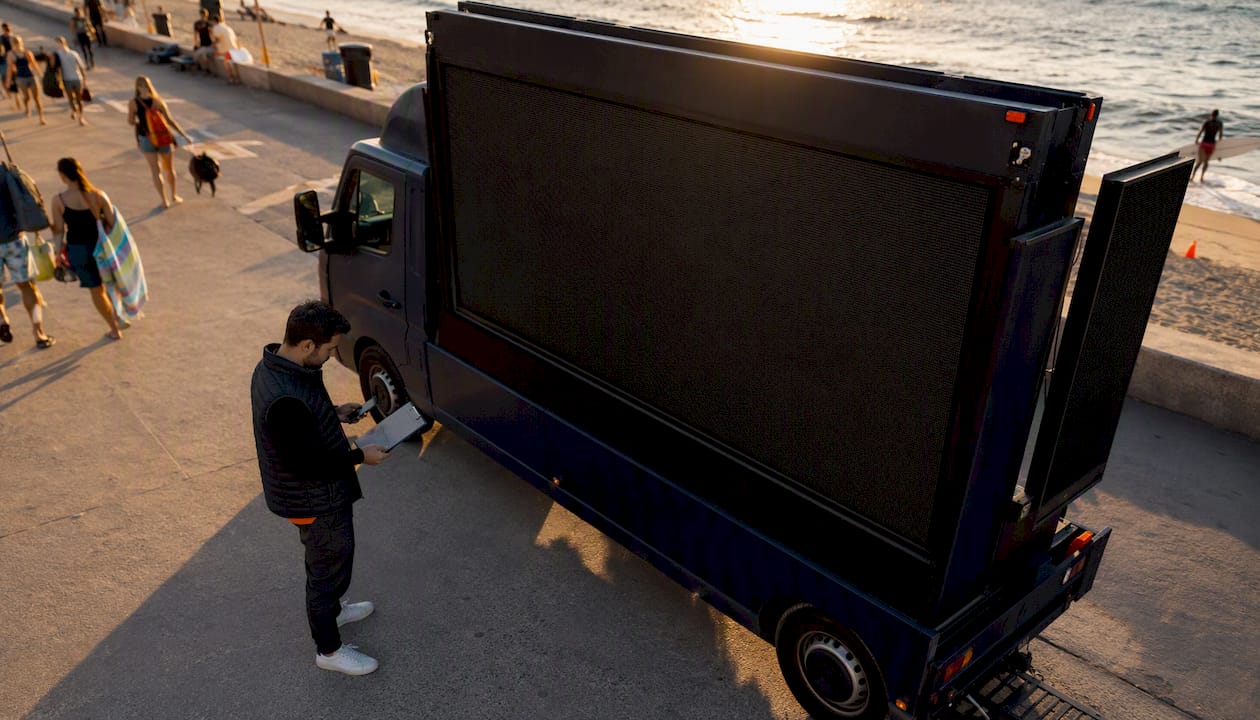
- Mobile LED billboards work best on high-dwell routes: parade paths, stadium perimeters, taxi and rideshare pickup zones, and anywhere attendees stop to take photos. Route timing matters more than truck count. A single truck circling past a stage exit right after a headline set gets seen by more phones than three trucks parked randomly.
- Wrapped rideshare vehicles catch attendees in transit, before and after the event, when they’re primed to notice a bold wrap through a car window. Because Uber and Lyft drivers circulate all day, the same wrap generates repeat impressions across an entire event weekend.
- Geofencing and location retargeting let you build a digital perimeter around a venue and serve ads to devices that entered it, with a retargeting window that continues for days after the event ends.
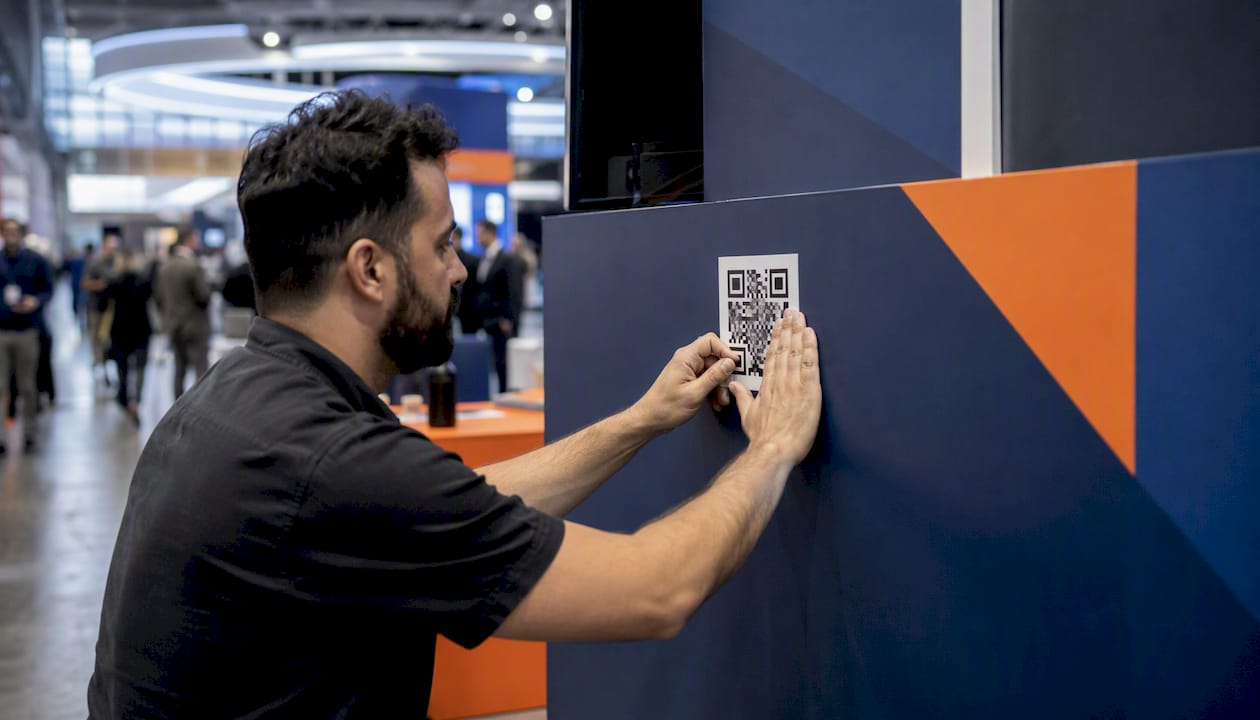
- QR-enabled activations staged just outside official clean zones convert foot traffic into a lead or a redemption on the spot, which gives you a hard number instead of an impression estimate.
- Social and influencer activations extend reach organically, provided the disclosure language never suggests an official tie to the event and follows best practices in influencer marketing.
Legal, Brand, and Disclosure Risks U.S. Marketers Must Avoid
The U.S. has no single federal “ambush marketing” law, but that doesn’t mean non-sponsor advertising is a free-for-all. Event organizers lean on trademark law and local ordinances instead, and both carry real teeth.
Trademark exposure is the biggest one. Using an event’s logo, official hashtag, or phrasing like “official activation” without a license invites a Lanham Act claim, even if your ad sits legally on public property. The safer path is generic language: “near [venue name]” or “event weekend special” instead of anything implying partnership.
Physical enforcement is the second risk. Many organizers establish clean zones, defined perimeters where non-sponsor signage, sampling, or activations are restricted or banned outright, and cities increasingly back these with local ordinances. Non-sponsor activity inside or near a clean zone can be seized, removed, or hit with an injunction, so checking the venue’s permit map before staging anything is not optional.
Third, if you’re paying an influencer to post about your event-adjacent activation, the FTC’s endorsement guides require disclosure that’s clear and impossible to miss, placed visually and audibly if the content mixes both formats.
Pro Tip: Draft two versions of every disclosure line: one for a static image caption and one for a spoken read in video or Stories, since the FTC treats “clear and conspicuous” differently across formats.
How Do You Plan a Compliant Non-Sponsor Campaign?
A tight execution checklist keeps legal, creative, and data teams aligned before trucks ever hit the road.
- Set objectives and KPIs first. Decide whether you’re chasing impressions, QR redemptions, or post-event conversions, because that choice shapes routing and creative.
- Map clean zones and permits. Pull the local ordinance and venue permit boundaries before booking any route or activation site.
- Lock creative specs. No event marks, no implied sponsorship language, and a QR code or short link large enough to scan from a moving vehicle.
- Brief on-site staff. Anyone handing out materials or running a QR activation needs a disclosure script and a clear answer if asked whether the brand is an official sponsor.
- Set up data and privacy safeguards. Confirm your ad partner provides just-in-time notice and opt-in consent for precise location data, since NAI guidance treats precise location as an opt-in category for targeted advertising.
- Collect proof-of-posting after the fact. GPS route logs and timestamped photos are what internal stakeholders and legal teams will ask for later.
A campaign missing step five is the one most likely to draw a data-partner dispute after launch, not a trademark complaint.
How Do You Target and Measure Event Attendees?
Building the digital layer of a non-sponsor campaign comes down to two decisions: how you draw the geofence, and how you prove someone inside it actually converted.
Three geofencing methods dominate. Point-radius geofences are fast to set up but imprecise near dense venues. Polygon geofences trace the venue’s actual footprint, which cuts wasted spend but takes more setup time. Tile-based geofencing splits an area into a grid for granular reporting at the cost of added complexity. IAB’s location-data whitepaper frames all three as a tradeoff between accuracy and operational lift, with indoor beacon methods requiring both opt-in consent and physical infrastructure most non-sponsor advertisers won’t have access to at someone else’s venue.
| Method | Best for | Main tradeoff |
|---|---|---|
| Point-radius | Quick setup, low budget | Less precise near dense venue clusters |
| Polygon | Venues with irregular footprints | Requires more mapping time upfront |
| Tile-based | Granular reporting across a district | Higher operational complexity |
For attribution, panel and app-based location data gives higher-quality signals but depends on opted-in users, while matched-device retargeting connects an exposed device to a later conversion. Track visits, cost per visit, post-event conversions, and frequency across your channel mix, and read Beacon-ads’s retargeting playbook for how the OOH and digital layers reinforce each other.
Creative Ideas That Feel Authentic Without Implying Sponsorship
The best non-sponsor creative earns its way into attendees’ own photos and posts instead of interrupting them.
- Time an LED truck’s route to pass high-traffic exits right as a set ends or a session breaks, when phones are already out.
- Run a QR-led limited offer just off official grounds, like a discount redeemable within two blocks of the venue so redemption is measurable and location is unambiguous.
- Set up branded hospitality near a transit hub, not inside the venue footprint, with signage that reads “not affiliated with [event name]” if there’s any risk of confusion.
- Give influencers a disclosure script that names the brand outright and never implies an official event partnership.
Pro Tip: Event-adjacent OOH paired with retargeting tends to outlast the event itself, since attendees who saw the truck or wrap keep encountering the retargeted ad for days afterward.
When Should You Scale Up or Buy Official Sponsorship?
Read your lift data before deciding anything. If matched-device attribution shows a consistent gap between exposed and unexposed audiences on visits or conversions, and cost per visit keeps improving campaign over campaign, that’s your signal to scale the same tactic mix to the next event.
Sponsorship starts to make more sense once you hit the ceiling non-sponsor tactics can’t clear: broadcast exposure, exclusive category rights, or being the only brand allowed inside the venue itself. If a competitor buying that exclusivity is locking you out of the highest-traffic zones entirely, no geofence radius fixes that.
Either way, keep your documentation. GPS logs, lift study results, and cost-per-visit trends are what get a bigger budget approved internally, and they’re the same records a legal team wants on file if a clean-zone dispute ever comes up.
Turning One Event Into a Repeatable Playbook
The real payoff from non-sponsor advertising shows up in the second and third event, not the first. Pull your proof-of-posting packet, matched-device conversion data, and cost-per-visit numbers as soon as the event wraps, while routing details and audience behavior are still fresh.
Compare performance by tactic, not just overall. A wrapped rideshare fleet might have driven cheaper impressions than the LED truck, but the truck may have generated more QR scans because of where it parked during the encore. Break out cost per visit and conversion rate by channel so you know which piece of the mix to keep, cut, or double for the next event.
Look at timing data too. If your retargeting window ran two weeks and most conversions landed in the first four days, you’re paying for reach the audience already stopped acting on. Shortening the window, or shifting that spend into a second creative wave closer to the next event date, usually recovers budget without losing conversions.

Finally, revisit your clean-zone map and disclosure scripts. Ordinances change between events, and a script that worked fine at one venue might need adjusting if the next one enforces different signage rules. Building this review into your standard post-event process, rather than treating it as optional, is what separates a one-off activation from a campaign you can run at ten events a year.
Working With Venues and Local Authorities Beyond the Permit
A permit gets you legal clearance to park a truck or run an activation. It doesn’t get you a smooth event day. Venue operations teams and city traffic units control the variables that actually determine whether your campaign runs without a hitch: loading zones, street closures, and crowd flow patterns that shift hour by hour.
Call the venue’s operations contact before finalizing your route, not after. They can tell you which streets close for load-in and load-out, where security perimeters expand as doors approach, and which routes get gridlocked once attendees start arriving. That conversation alone often reshapes a route plan more than the permit paperwork does.
Local police and traffic departments matter just as much for anything involving a moving vehicle. A route cleared on paper can still get rerouted in real time if traffic officers redirect flow for a VIP arrival or an emergency vehicle. Keep a driver contact reachable by phone throughout the event window so a route change doesn’t cost you the whole placement.
Building a light relationship with venue security also reduces friction. A truck or QR activation staged legally but unfamiliar to on-site staff sometimes draws unnecessary scrutiny simply because nobody expected it. A five-minute heads-up conversation before doors open, confirming you’re operating legally outside the clean zone, prevents most of those conflicts before they start.

What Does Non-Sponsor Advertising Cost Compared to Sponsorship?
Cost is where non-sponsor tactics separate themselves most clearly from official sponsorship, which routinely runs into six or seven figures for anything beyond a small local event, on top of activation and hospitality costs layered over the sponsorship fee itself.
Mobile LED trucks and wrapped rideshare vehicles are priced as project-based campaigns rather than long-term sponsorship contracts, which gives marketers a way to test a market or event type before committing bigger budget. Geofencing and retargeting add incremental cost on top of the physical media but usually extend the value of that spend for days after the event, since the same impression budget keeps working through retargeted creative long after the truck has gone home.
The real cost-effectiveness comparison isn’t tactic against tactic, it’s total campaign against total campaign. A rideshare wrap fleet paired with a two-week retargeting window can outperform a single LED truck running alone, but the wrap fleet requires more vehicles to hit the same reach a truck gets by parking in one high-traffic spot. Budgeting for both, at a smaller scale than either tactic run at full volume, tends to outperform maxing out one channel alone.
Ask any vendor for a project-based quote scoped to your event dates and target zones rather than a flat rate card, since routing complexity and retargeting duration both move the final number.
The Compliance-First Mindset Most Marketers Skip
Most non-sponsor campaigns fail for a boring reason: nobody checked the clean-zone map until after the trucks were already booked. The legal risk in this category isn’t exotic. It’s trademark language slipping into a headline or a QR offer that a legal reviewer never saw before the creative went to print.
The tactics themselves aren’t the hard part. Mobile LED trucks, rideshare wraps, and geofenced retargeting are mature, well-understood tools. What separates a campaign that runs smoothly from one that gets a cease-and-desist is whether someone on the team owns compliance as a real job, not an afterthought squeezed in during creative review. That means someone reads the local ordinance, someone checks every line of ad copy against trademark risk, and someone confirms the data partner’s consent flow before the first geofence goes live.
The upside for marketers willing to do that homework is real: non-sponsor tactics cost less, move faster, and give you attribution data an official sponsorship rarely matches, since sponsors often settle for logo placement and a stadium mention instead of a matched-device conversion report. The brands getting the most out of this category treat compliance as the thing that makes the creative work, not a tax on it.
— Scott
Get Your Non-Sponsor Event Campaign on the Road
Mobile out-of-home advertising campaigns can use these tactics nationwide, with compliance groundwork built into how campaigns are staged and reported. LED mobile billboards and wrapped rideshare vehicles get routed to the high-traffic zones around an event, paired with geofencing, retargeting, and smart QR codes that turn foot traffic into a lead list instead of a guess.

Every campaign ships with proof-of-posting documentation, GPS route logs, and attribution reporting, the same artifacts recommended earlier for internal buy-in and legal review, detailed further in a guide to precise campaign reporting. If you’re planning a push around a conference or trade show specifically, the LED billboard playbook for conferences and trade shows walks through routing and timing in more detail. Request a pilot route and creative brief at Beacon-ads and set up conversion tracking before the first truck rolls out.
Sources
- FTC’s endorsement guides: what people are asking
- NAI opt-in consent guidance (2020 update)
- Navigating ambush marketing and its impact on event sponsorships | Loeb & Loeb LLP
- IAB whitepaper on location data and measurement
FAQ
Is Non-Sponsor Event Advertising Legal in the U.S.?
Yes, when it avoids trademarked event marks and doesn’t operate inside a designated clean zone. Trademark law and local ordinances, not a federal ambush marketing statute, are what govern enforcement, so checking the venue’s permit boundaries matters as much as the creative itself.
Do I Need Consent to Use Location Data for Event Targeting?
Precise location data used for tailored advertising generally requires opt-in consent under NAI guidance. Confirm your data partner provides just-in-time notice and documents that consent before building a campaign around it.
How Much Does a Non-Sponsor Mobile Advertising Campaign Cost?
Beacon-ads prices LED mobile billboard and wrapped rideshare campaigns on a project basis rather than a flat rate, so cost depends on route length, vehicle count, and retargeting duration. Current pricing details are available directly through Beacon-ads.
What’s the Safest Way to Use Influencers Near an Event Without Implying Sponsorship?
Give influencers a disclosure script that clearly names the brand and never uses the event’s official marks or hashtags. The FTC requires disclosures to be clear and conspicuous, including on interactive formats like Stories or live video.
How Do I Measure Whether a Non-Sponsor Campaign Worked?
Track visits, cost per visit, and post-event conversions using matched-device retargeting alongside proof-of-posting documentation like GPS logs and timestamped placement photos. Comparing exposed versus unexposed audiences is the clearest way to isolate incremental lift.