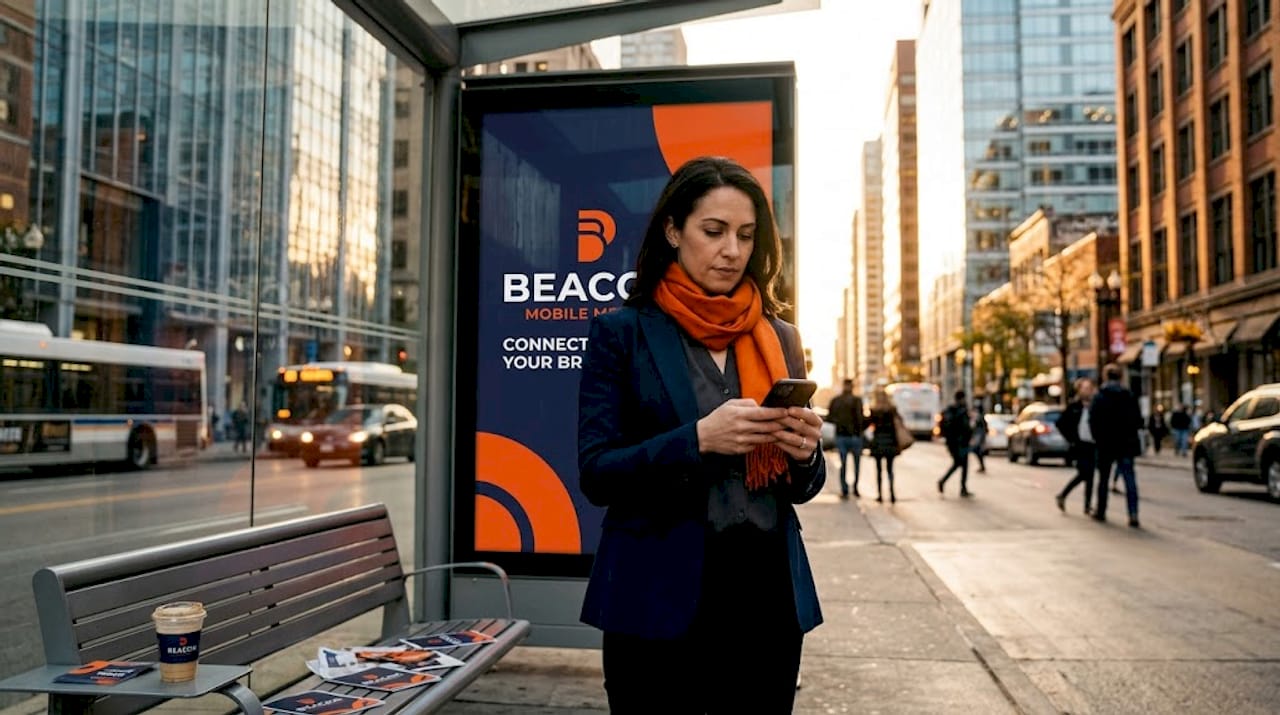
Geotargeting delivers ads to people because of where they live or belong, a city, ZIP code, or radius. Geofencing triggers a message the moment a device crosses a virtual boundary, like walking into a mall parking lot. That’s the whole distinction, and it drives almost every other difference between the two: reach versus timing, breadth versus precision.
If your goal is regional awareness or a product launch across many markets, geotargeting wins on scale and simplicity. If you need to catch someone at the exact moment they’re near a store, event, or competitor, geofencing does the job geotargeting can’t. Most strong campaigns use both, layered with signals like GPS, IP address, and mobile SDKs feeding each tactic differently.
- Geotargeting = static inclusion (who belongs to a place)
- Geofencing = dynamic trigger (who is moving through a place right now)
- Best pairing: geotargeting to fill the funnel, geofencing to close it near high-value locations
Key Takeaways
Geotargeting scales awareness across a defined region, while geofencing converts nearby intent into action at a specific place and moment, and the strongest campaigns run both in sequence with measurement built in from day one.
| Point | Details |
|---|---|
| Core distinction | Geotargeting includes based on region; geofencing triggers based on movement across a boundary. |
| Match tactic to goal | Use geotargeting for regional awareness, geofencing for time-sensitive, place-based conversion. |
| Geocoding accuracy matters | Polygon or rooftop-level fences reduce false positives compared to simple point-radius circles. |
| Measure with holdouts | Prove incremental lift with matched holdout groups instead of relying on impressions or clicks. |
| Layer for full funnel | Beacon-ads pairs mobile OOH with geofencing and QR capture to connect physical reach to attributed leads. |
Table of Contents
- What Is Geotargeting and How Does It Work?
- What Is Geofencing and When Does It Trigger?
- Geofencing vs Geotargeting: A Side-by-Side Comparison
- Marketing Use Cases That Show Each Tactic in Action
- How to Choose Between Geotargeting and Geofencing
- Implementation Mistakes That Quietly Kill ROI
- Measuring Location-Based Campaigns the Right Way
- How an Integrated OOH and Geofencing Campaign Actually Runs
- Sources
What Is Geotargeting and How Does It Work?
Geotargeting works by matching a user’s location data, usually IP address, device location history, or an advertising ID, against a defined region. That region can be as broad as a country or as narrow as a ZIP code, but it’s always inclusion based: if you’re in the zone, you’re eligible to see the ad. There’s no “trigger” moment. The ad simply serves to anyone who qualifies, whenever the platform decides to show it.

This makes geotargeting the workhorse of scaled campaigns. A regional restaurant chain launching in five metro areas uses geotargeting to make sure ad spend concentrates on those five markets instead of leaking nationwide. A CPG brand running a Spanish-language campaign uses geotargeting to layer language and location together.
Where geotargeting operates:
- Display and programmatic networks, where location is one of dozens of targeting layers
- Social platforms like Meta and TikTok, which let advertisers draw radius or ZIP-based audiences
- Search campaigns, where location modifies bid strategy and ad copy
- Email and CRM segmentation, using stored address or IP data
Pick geotargeting when the campaign goal is regional awareness, multi-location reach, or a long-running always-on presence rather than a single moment of action. It’s also the lower-lift option: inclusion-based targeting is easier to set up in standard ad platforms than trigger-based systems, since it doesn’t require app-level permissions or SDK integration.
What Is Geofencing and When Does It Trigger?
Geofencing draws a virtual perimeter around a specific location and fires an action when a device enters or exits that boundary. That’s the entire mechanic: a fence, and a trigger. The tactic Google Maps uses to remind you about a nearby gas station is the same tactic a retailer uses to push a coupon the second a shopper walks into the parking lot.
The technology behind the fence varies. GPS handles outdoor, wide-area boundaries. Wi-Fi triangulation and cell tower data fill gaps where GPS signal is weak, like inside buildings. Fence shape matters too: a simple point-radius circle is fast to set up but catches irrelevant addresses nearby, while a polygon that follows a building’s actual footprint is far more precise.
Geofencing depends heavily on mobile. It typically requires:
- App-based push notifications, which need the user to have opted into location permissions
- SMS or in-app messaging tied to a location-aware app
- Fallback channels like retargeting when a device can’t be reached directly
Geofencing is trigger-based and best suited for time-sensitive, localized engagement, a single building, a stadium, a competitor’s parking lot, rather than a broad region. It shines for footfall campaigns, event activations, and any offer with a short shelf life. The tradeoff is scale: you’re working with whoever happens to be near that fence, not a whole metro area.
Geofencing vs Geotargeting: A Side-by-Side Comparison
The two tactics solve different problems, and the table below breaks down where each one actually earns its place in a media plan.
| Dimension | Geotargeting | Geofencing |
|---|---|---|
| Target type | Inclusion based (region, ZIP, radius) | Trigger based (enter/exit a boundary) |
| Precision | Broad, city or ZIP level | Tight, down to a building or lot |
| Timing | Always-on or scheduled | Real-time, tied to physical presence |
| Scale | Large audiences across markets | Smaller, location-specific audiences |
| Channels | Display, social, search, email | Mobile push, SMS, in-app, retargeting |
| Setup complexity | Low, native to most ad platforms | Moderate, often needs SDK integration |
| Best for | Regional launches, multi-location awareness | Footfall offers, events, time-sensitive promos |
A regional bank rolling out a new mortgage product across multiple states is a geotargeting example: broad reach, no urgency. A coffee chain pushing a flash discount to anyone walking past its storefront is a geofencing example: tight radius, immediate action.
The shortcut for choosing:
- Need broad, sustained reach across a region? Use geotargeting.
- Need to catch someone at a specific place and moment? Use geofencing.
- Need both, funnel awareness feeding into local conversion? Layer geotargeting with geofencing.
Marketing Use Cases That Show Each Tactic in Action
Geotargeting fits campaigns built for reach. A regional grocery chain running city-wide weekend promos, a beauty brand testing language-specific creative for a bilingual metro, or a seasonal retailer timing a launch to hit five markets on the same day, all use geotargeting’s inclusion model to keep spend inside relevant borders.
Geofencing fits campaigns built for a moment. Here’s how that plays out:
- Retail footfall: fence the parking lot, push a coupon the instant a shopper’s phone crosses the line.
- Event marketing: fence a convention center, message attendees with booth directions or a session reminder.
- Stadium and airport offers: fence a terminal or venue perimeter, target captive audiences with time-limited deals.
Geo-conquesting takes geofencing one step further by fencing a competitor’s location instead of your own. It only works with a genuinely sharp switching incentive, someone standing in a rival’s parking lot isn’t easy to move without a real reason. Treat conquesting as a high-risk overlay, not a default tactic.
Pro Tip: Match the offer to the moment. A geofenced push needs urgency (today only, 15% off), while a geotargeted display ad can carry a broader brand message without a deadline attached.
How to Choose Between Geotargeting and Geofencing
Start with the objective, not the tactic. Awareness and multi-market reach point to geotargeting. Immediate, place-based conversion points to geofencing. Most mature marketing programs run both, just aimed at different funnel stages.
Before scoping a campaign, work through this checklist:
- Is the audience reachable through an app with location permissions turned on, or do you need web-based fallbacks?
- What consent and opt-in rate can you realistically expect?
- Is the expected reach a handful of city blocks or an entire metro?
- Is creative ready for both a slow-burn awareness message and a same-day urgency offer?
- Do you have a measurement plan with a holdout group before launch, not after?
If you’re evaluating a vendor or platform, ask about geocoding accuracy, polygon versus point-radius support, sample sizes for lift testing, proof-of-posting documentation, and privacy controls. Polygon geofences with rooftop-level geocoding cut down false-positive captures that plague simple radius fences, and that difference alone can determine whether a small-fence campaign performs or wastes budget.
Implementation Mistakes That Quietly Kill ROI
Most geofencing underperformance traces back to setup, not strategy. A few recurring issues:
- Sloppy geocoding: a point-radius fence around a store’s centroid often catches the neighboring business too; a polygon that follows the actual building footprint doesn’t.
- Low app opt-in rates: if fewer than half your target users have location permissions enabled, plan a web or SMS fallback from day one.
- Fence sizing mismatches: too tight and you lose scale, too wide and you lose relevance, most retail fences work best in the range of a parking lot to a few blocks.
- No attribution hook: connect the fence to your CRM, retargeting platform, or a QR code capture point so a walk-in or scan actually ties back to the campaign.
Pro Tip: Run a small pilot fence around one location before rolling out network-wide. It surfaces geocoding errors and opt-in gaps cheaply, before they scale into a wasted media budget.
Measuring Location-Based Campaigns the Right Way
Store visits, app opens, and attributed conversions matter more than impressions or clicks alone. Incremental revenue, the lift you can prove wouldn’t have happened otherwise, is the number that justifies budget renewal.
Sound measurement requires:
- Holdout groups: a matched audience that doesn’t see the campaign, so you can isolate real lift.
- Proof-of-posting: GPS and photo verification for any physical media tied to the campaign.
- Defined conversion windows: same-day for geofencing, longer windows for geotargeting’s slower-burn awareness effect.
- Minimum sample sizes and test duration: a three-day test with 200 impressions won’t tell you anything reliable.
Modeling the actual conversion path before launch, rather than measuring impressions and calling it a win, is what separates a campaign that proves ROI from one that just generates a nice-looking report. Vanity metrics like raw impressions or click volume routinely create false positives in location campaigns, especially geo-conquesting, where clicks are cheap but switching behavior is rare.
How an Integrated OOH and Geofencing Campaign Actually Runs
Beacon-ads builds campaigns that treat geofencing as one layer in a bigger stack, not a standalone tactic. LED mobile billboards and wrapped rideshare vehicles run custom routes through high-traffic areas, while a geofence around those same routes triggers retargeting the moment a phone passes through.
Smart QR codes on the vehicles capture the scan directly, turning a physical impression into a trackable lead. That closes a loop most standalone geofencing tests can’t: you know the ad was seen (proof-of-posting with GPS and photo verification) and you know what happened after (attribution analytics tied to the scan or the retargeted click).
Pairing physical media with geofenced digital retargeting means proximity isn’t just measured, it’s converted, and every posting comes with the documentation to prove it happened.
- Route customization that follows actual foot and vehicle traffic patterns
- Smart QR capture built into the physical creative itself
- Proof-of-posting and attribution reporting on every campaign
A standalone geofencing test makes sense for a quick pilot. An integrated OOH plus geofencing partner makes more sense once you need scale, physical presence, and a documented attribution trail across a whole market.
The trade-off marketers underrate
Most teams treat geotargeting and geofencing as competing tools instead of sequential ones. Start broad with geotargeting to find where demand actually lives, then narrow to geofencing once timing and proximity become the deciding factor. Skipping the holdout test is the single most common way both tactics get blamed for underperformance they didn’t cause.
— Scott
Beacon-ads Turns Geofencing Into a Measurable OOH Strategy
Running geofencing without physical presence leaves half the funnel empty, and running mobile OOH without digital retargeting leaves impressions unmeasured. Beacon-ads closes that gap: LED mobile billboards and wrapped rideshare vehicles create the physical footprint, while built-in geofencing and smart QR capture turn every route into a trackable lead source.

Every campaign ships with route customization matched to your target zones, plus proof-of-posting and attribution analytics so you can see exactly what a passing billboard actually produced, not just where it drove. That’s the piece standalone digital geofencing can’t offer on its own: a physical presence that gets measured with the same rigor as a digital click.
If you’re planning a campaign that needs both physical reach and digital precision, review geolocation strategies that maximize out-of-home ad impact and request a route plan for your target market.
Sources
- Geotargeting vs Geofencing: location data for marketers (Viant)
- Geotargeting vs Geofencing: difference and which to use (CleverTap)
- Geo-conquesting: what it is and when it’s a bad marketing strategy (Forbes)