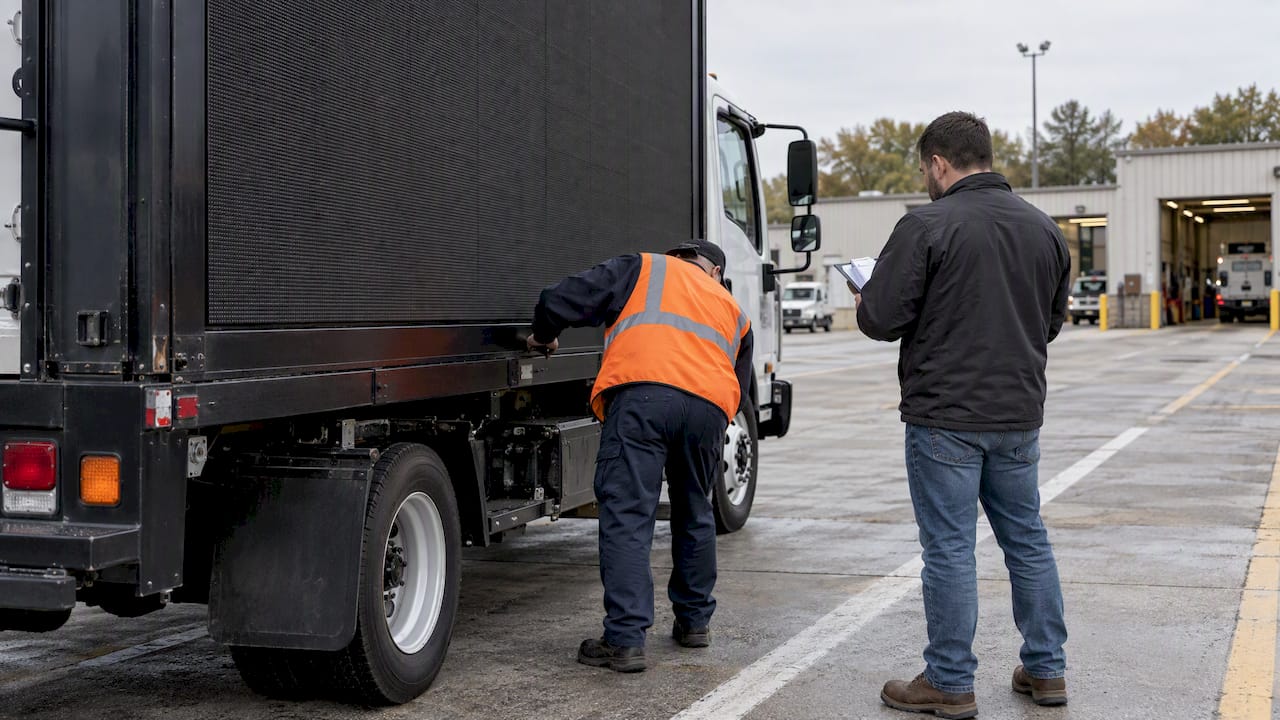
Outdoor advertising generates millions of impressions every day, but most of those impressions quietly disappear. Not because the creative was weak or the location was wrong, but because there was no structured lead generation workflow for outdoor ads in place to catch interested prospects and move them forward. Without a defined capture-to-handoff system, even a well-placed mobile billboard becomes a broadcast exercise with nothing to show in the CRM. This guide walks you through every stage of building a workflow that turns physical ad exposure into qualified, routed, and nurtured leads your sales team can actually close.
Table of Contents
- Preparing for success: essentials for outdoor lead generation workflows
- Executing the lead generation workflow: step-by-step process from capture to handoff
- Avoiding pitfalls and optimizing your workflow for maximum ROI
- Measuring success and scaling your outdoor lead generation efforts
- Why most outdoor lead generation workflows fall short—and what truly works
- Elevate your lead generation with Beacon’s tailored outdoor advertising solutions
- Frequently asked questions
Key Takeaways
| Point | Details |
|---|---|
| Structured workflow essential | A complete lead generation workflow from capture through handoff dramatically improves lead conversion rates from outdoor ads. |
| Optimize mobile experience | Quick-loading, mobile-optimized landing pages with minimal forms reduce friction and increase scan-to-lead conversions. |
| Automate routing and nurture | Automatic lead qualification, routing, and multi-touch nurturing prevent lead leakage and accelerate sales response times. |
| Frequency drives results | Repeated ad exposures increase digital conversions substantially, so sustained outdoor presence and follow-ups are critical. |
| Leverage programmatic AI | Using programmatic and AI tools for planning and execution enables rapid iteration and data-driven optimization of outdoor ad campaigns. |
Preparing for success: essentials for outdoor lead generation workflows
Before a single QR code gets printed or a wrapped vehicle hits the road, the backend infrastructure has to be ready. A practical lead-generation workflow for outdoor ads should follow an end-to-end chain: capture, qualify, route, nurture, and handoff. If any link in that chain is missing, leads leak out, and you will never know they were there.
Start with your physical touchpoints. Identify locations with genuine dwell time: transit stops, event entrances, high-foot-traffic retail corridors, and busy intersections. These spots give viewers enough time to pull out a phone and scan. Placing a QR code on a billboard someone passes at 40 miles per hour without a companion static placement nearby is a workflow that starts broken.
Use dynamic QR codes rather than static ones. Dynamic codes let you update the destination URL without reprinting materials, track scan volumes by location and time, and A/B test landing pages mid-campaign. That flexibility is not just convenient; it is functionally necessary for iterating on a live campaign.
What your landing page and CRM setup must do
Your landing page is where the workflow either lives or dies. It has one job: convert a scan into a captured lead with minimal friction. That means:
- Load speed under 3 seconds on mobile networks, not just Wi-Fi
- One to three form fields maximum (name, email, and optionally phone or zip code)
- A single, specific offer tied to what the ad promised, whether that is a discount, a free consult, or an event registration
- Immediate CRM integration so the lead record is created the moment the form is submitted, not imported overnight
The CRM setup matters just as much as the page design. Build routing logic rules before launch, not after. Assign leads by geography, lead score threshold, or product interest category. When a prospect in Austin scans a Dallas-routed vehicle ad by mistake, the system should catch and reassign that lead automatically rather than sending it to the wrong rep.
The table below summarizes the tools and requirements for each pre-launch stage:
| Pre-launch stage | Key requirement | Common failure mode |
|---|---|---|
| Physical touchpoint selection | High dwell time or repeat exposure | Placing QR codes in fast-moving traffic only |
| QR code setup | Dynamic code with analytics | Static codes with no scan data |
| Landing page build | Mobile-first, sub-3-second load | Desktop-optimized pages with long forms |
| CRM integration | Real-time data sync on form submit | Manual CSV imports or delayed syncs |
| Routing logic | Geography and score-based assignment | One-size-fits-all routing to a single rep |

Now that you know the foundational requirements, let’s walk through the detailed steps to executing an effective lead generation workflow for outdoor ads.
Executing the lead generation workflow: step-by-step process from capture to handoff
Having organized your essentials, follow this detailed workflow to execute a strong lead generation system from start to finish.

Step 1: Capture. Every smart QR code campaign directs the prospect to a mobile-optimized landing page. A QR scan should resolve in under 3 seconds on mobile with minimal form fields to reduce drop-off. Think of the landing page as a short conversation, not an intake form. Ask only what you need to qualify and route.
Step 2: Qualify. Embed simple scoring logic inside your CRM or marketing automation platform. A prospect who enters a zip code in your primary market and selects “interested in pricing” scores higher than someone who just enters an email and bounces. Automated qualification does not require a complex setup; even three or four scoring conditions dramatically improve the quality of what gets passed to sales.
Step 3: Route. Lead routing systems remove delays by automatically assigning inquiries to the right owners and sending immediate notifications. Speed is everything here. Studies consistently show that responding within five minutes of a form submission is exponentially more effective than responding even an hour later. Route by geography first, then by product line or rep availability. Build in fallback rules so no lead sits unassigned.
Step 4: Nurture. Most people who scan an outdoor ad are not ready to buy that day. Build a three-to-five-touch email or SMS sequence triggered automatically on form submission. The first message should confirm what they signed up for and deliver the promised offer. Subsequent messages build on the ad’s core message, add social proof, and offer a clear next step. This is where maximizing OOH impact extends beyond the physical impression into digital channels.
Step 5: Handoff. When a lead reaches a qualification score threshold or takes a high-intent action (like clicking a pricing page link in a nurture email), trigger an automatic handoff to sales. The rep should receive the full record: scan source, form data, email engagement history, and any behavioral signals. A warm handoff with context closes faster than a cold call with just a name and number.
Pro Tip: Set a 24-hour re-engagement trigger for leads who scan but never complete the form. A retargeting ad or a short SMS with a simplified ask (“Still interested? Tap here for 10% off”) can recover a meaningful percentage of those near-misses.
| Workflow stage | Tool type needed | Best practice |
|---|---|---|
| Capture | Dynamic QR + landing page builder | Keep form to 3 fields maximum |
| Qualify | CRM scoring rules | Score by intent signal, not just demographic |
| Route | Automated routing software | Set fallback rules for unassigned leads |
| Nurture | Email/SMS automation platform | 3 to 5 touches within the first 14 days |
| Handoff | CRM with sales notifications | Include full behavioral context in the record |
Avoiding pitfalls and optimizing your workflow for maximum ROI
With the workflow live, these optimization tactics ensure you achieve peak lead generation performance without costly errors.
The single biggest mistake marketers make is treating a QR scan as the only conversion event that matters. OOH effectiveness is strongly frequency-dependent, with digital conversion rates increasing 7.1x from one to ten exposures. A prospect who sees your vehicle wrap six times over two weeks and then searches your brand name is still a lead your outdoor campaign generated, even if they never scanned the code. Multi-touch attribution needs to account for this, or you will chronically undervalue the channel.
Workflow automation prevents lead funnel leakage by eliminating delays and human errors in follow-up and qualification. The most common form of leakage is the 48-hour gap between form submission and first human contact. Automating the first three touches costs almost nothing and prevents the majority of that loss.
“Outdoor advertising creates awareness at scale. The workflow is what converts that awareness into revenue. Without it, you are essentially paying for reach and giving it nowhere to go.”
Here are the most common pitfalls to actively avoid:
- Long or multi-step forms after a QR scan. Every additional field reduces completion rates by roughly 10 to 15 percent.
- No fallback for non-scanners. Include a short vanity URL alongside every QR code for people who prefer typing.
- Single-channel nurture. Email alone is not enough. Pair it with retargeted data-driven OOH digital ads to reinforce the message across platforms.
- Ignoring lead quality metrics. Optimizing purely for scan volume inflates vanity numbers. Track qualification rate and conversion rate, not just impressions.
- Set-and-forget routing rules. As campaigns scale across new geographies, routing logic needs regular audits to stay accurate.
Pro Tip: Run a “lead decay” analysis after your first 30 days. Look at how conversion rates drop as time-to-first-response increases. That single chart usually makes the case for full routing automation better than any vendor pitch.
Measuring success and scaling your outdoor lead generation efforts
Once optimized, these measurement and scaling strategies help you grow your lead gen impact sustainably.
Tracking the right metrics separates campaigns that grow from campaigns that plateau. Start with the basics: QR scan rates by location, landing page completion rates, lead qualification scores, and downstream conversion rates. But do not stop there.
DOOH ads achieve a median lift of 20% for in-person outcomes and 14% for digital outcomes, outperforming many traditional channels on full-funnel impact. Capturing that requires brand lift measurement, foot traffic attribution, and search lift studies run in parallel with your QR-based capture data. Together, they give you a complete picture of how outdoor exposure is driving behavior across the funnel.
Here is a measurement framework organized by funnel stage:
| Funnel stage | Primary metric | Secondary metric |
|---|---|---|
| Awareness | Impressions by route or location | Brand search lift |
| Engagement | QR scan rate | Landing page visit-to-form rate |
| Qualification | Lead score distribution | Cost per qualified lead |
| Conversion | Sales handoff acceptance rate | Revenue influenced by OOH |
| Retention | Returning lead activity | Post-purchase OOH recall survey |
For scaling, follow this sequence:
- Identify your highest-performing locations by cost per qualified lead, not cost per scan.
- Increase frequency in those locations before expanding geographically.
- Use programmatic DOOH booking to add placements flexibly as performance data justifies the spend.
- Apply AI planning tools to compress activation cycles. Programmatic and AI workflows compress planning to activation cycles, enabling rapid iteration and creative testing across placements.
- Expand to adjacent markets once your workflow shows consistent qualification rates, not just scan volume.
- Build real-time dashboards that surface performance trends weekly, so budget decisions are driven by data rather than gut feel.
Scaling without a measurement baseline is how brands end up spending five times their initial budget for two times the impressions and no improvement in leads. The DOOH advertising strategies that compound over time always start from a tight measurement foundation.
Why most outdoor lead generation workflows fall short—and what truly works
Here is the uncomfortable reality most vendors will not tell you: the majority of outdoor advertising budgets produce modest lead generation results not because the medium is weak, but because the workflow behind the ad is either nonexistent or built on wishful thinking.
The “print and hope” model, where you design a beautiful creative, put it on a truck, and wait for inbound inquiries, is not a lead generation strategy. It is a brand awareness exercise with no mechanism for converting that awareness into anything measurable. When OOH and DOOH work best as a performance channel, they are embedded in a full lead management workflow that prevents funnel leakage from slow responses and inconsistent handoffs.
What we consistently see is that the gap is not in the physical advertising itself. LED mobile billboards and wrapped rideshare vehicles generate genuine attention, especially in high-traffic urban environments where audiences see them repeatedly. The gap is in what happens after someone sees the ad. If there is no QR code, no short URL, no retargeting pixel, and no automated follow-up, the impression evaporates.
Frequency is the most underrated variable in the entire lead generation workflow for outdoor ads. A single exposure rarely produces action. But a prospect who sees your wrapped vehicle near their office three times a week for a month and then scans the code is already pre-sold. They know the brand, they trust the consistency of the message, and they are far more likely to complete a form and convert. That is why building routes and schedules around repeated exposure in defined zones matters far more than raw impression counts.
The marketers who consistently get results from outdoor lead generation treat OOH as a full-funnel channel, not a top-of-funnel awareness tool. They use it to drive awareness, reinforce consideration through frequency, and trigger conversion through smart capture mechanisms. Then automation handles the rest, qualifying, routing, and nurturing without human delay. That combination is what separates a campaign that generates 20 sales-ready leads a month from one that generates thousands of impressions and three phone calls.
Elevate your lead generation with Beacon’s tailored outdoor advertising solutions
Building and running a full lead generation workflow for outdoor ads is one of the most effective ways to make your OOH budget measurable and accountable. The challenge is that it requires the right physical placements, the right capture technology, and the right data infrastructure working together.

Beacon Mobile Media brings all three to your campaigns. From LED mobile billboards and wrapped rideshare vehicles running across all 50 states to custom QR code lead capture integrations and real-time attribution dashboards, Beacon builds campaigns designed to generate leads, not just impressions. Our data-driven OOH campaign strategies include route customization, geofencing, and audience targeting that puts your message in front of the right people, repeatedly, in the right locations. If you are ready to treat digital OOH as the performance channel it can be, our team is ready to help you build the workflow around it.
Frequently asked questions
What is the best way to capture leads from outdoor ads using QR codes?
Use dynamic QR codes that direct to a mobile-optimized landing page. A QR scan should resolve in under 3 seconds with minimal form fields, then automatically trigger a follow-up sequence to keep momentum going while interest is fresh.
How does lead routing improve outdoor ad campaign performance?
Lead routing systems remove delays by automatically assigning inquiries to the right rep and sending immediate notifications, which keeps prospects engaged before interest cools and prevents leads from sitting unassigned.
Why is frequency important in outdoor advertising lead generation?
OOH conversion rates increase 7.1x from one to ten ad exposures, which means frequency management and multi-touch nurturing are not optional add-ons but core components of any outdoor lead workflow.
Can programmatic and AI tools improve the lead generation workflow for outdoor ads?
Yes. Programmatic and AI workflows compress planning to activation cycles, allowing you to test creatives faster, reallocate budget in real time, and consistently improve lead quality without manual intervention.