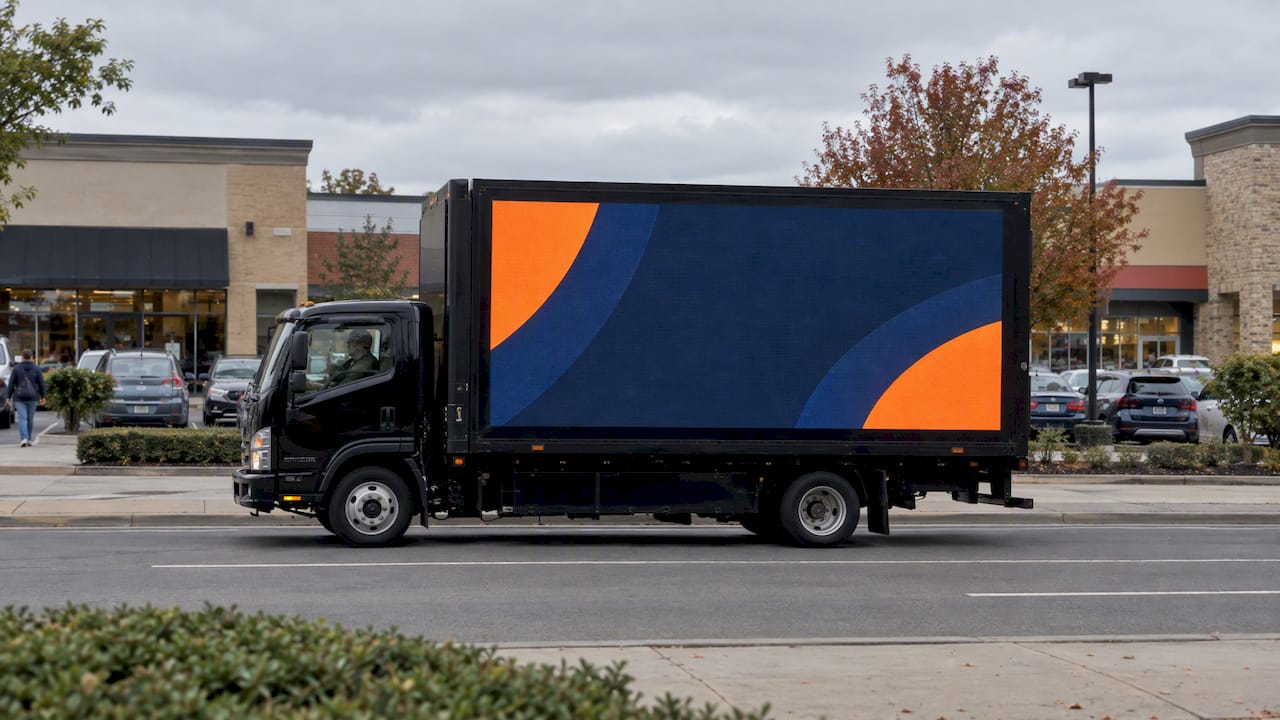
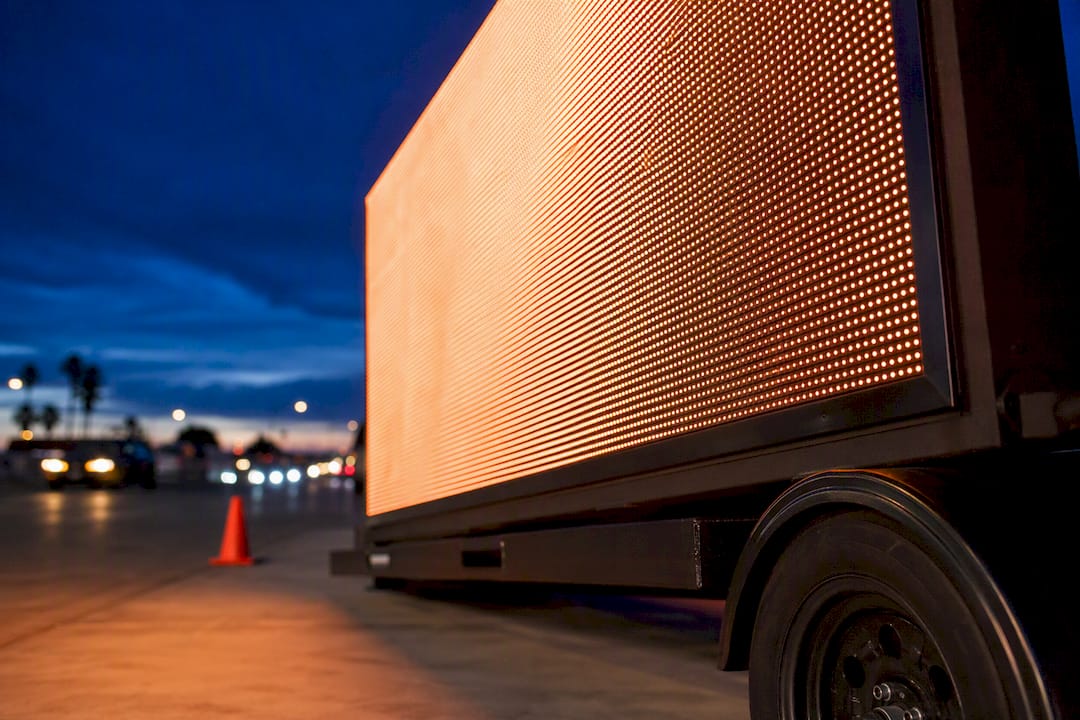
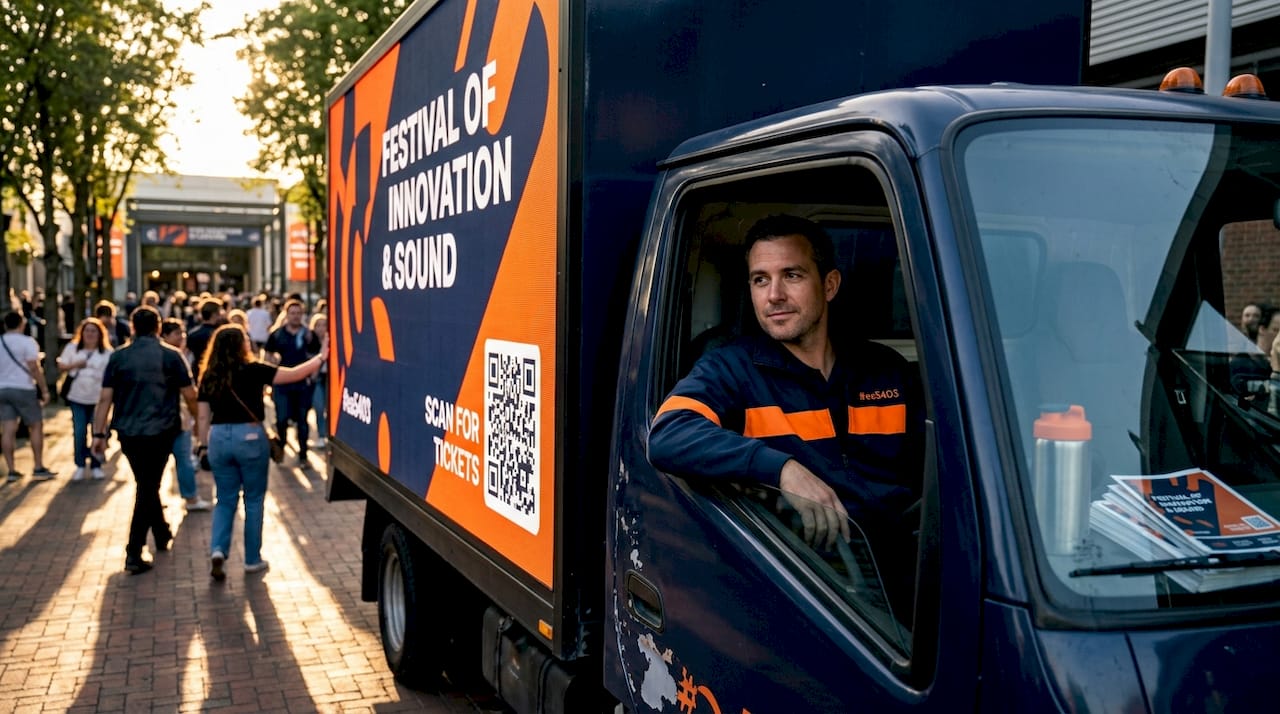
Four formats cover almost every small-business need in sign trailer advertising: full vehicle wraps for long-term brand visibility, vinyl banners or SmartFlute® panels for short-run promotions, and LED or digital trailer rentals for event-driven, time-sensitive calls to action. If you want 24/7 exposure and don’t mind a one-time production cost, wrap the trailer. If you’re running a weekend sale or seasonal push, a printed panel gets you there cheaper and faster. If you need a specific audience on a specific day, a routed LED campaign beats a parked sign every time.
- Wraps: one-time cost, years of exposure, no rental fees
- Vinyl/SmartFlute® panels: low cost, fast turnaround, best for short campaigns
- LED/digital trailers: rented by the day or week, ideal for events and targeted routing
Pro Tip: Keep your message to 3 to 5 words plus a large QR code or phone number. Anything more gets lost at 40 miles per hour.
For businesses that want proof their ad actually ran where it was supposed to, Beacon Mobile Media offers managed, routed LED and wrapped-vehicle campaigns with GPS tracking built in, a meaningful upgrade over a trailer parked in a lot and hoped for the best.
Key Takeaways
The right sign trailer advertising format depends on campaign length and measurement needs: wraps for durable brand presence, panels for short runs, and routed LED campaigns for audience-specific, trackable reach.
| Point | Details |
|---|---|
| Match format to goal | Choose wraps for long-term branding, panels for short promotions, LED for time-sensitive events. |
| Design for motion | Use 3 to 5 words, large fonts, and a scannable QR code sized for quick highway or curbside reads. |
| Budget both cost types | Compare one-time production costs against daily rental rates before committing to a format. |
| Route with intent | Plan around audience movement and peak times rather than defaulting to a static parking spot. |
| Demand proof of performance | Beacon Mobile Media supplies GPS proof-of-posting, QR capture, and attribution analytics for routed LED and wrapped-vehicle campaigns. |
Table of Contents
- Sign Trailer Advertising Formats and When to Use Each
- What Materials and Design Choices Keep a Trailer Sign Readable?
- How Much Does Trailer Sign Advertising Cost?
- Should You Park Your Trailer or Route It?
- What to Ask Before You Order or Book a Campaign
- Maintenance and Legal Checks That Keep Campaigns Running
- Why Beacon Mobile Media’s Approach to Trailer Campaigns Works
- What Conventional Trailer Sign Advice Gets Wrong
- Get a Measurable Trailer Campaign With Beacon Mobile Media
- Frequently Asked Questions
- Sources
Sign Trailer Advertising Formats and When to Use Each
Trailer advertising isn’t one product. It’s four distinct tools, and picking the wrong one wastes money regardless of how good the design looks.
- Full trailer wraps. A cast vinyl skin covers the entire trailer exterior, applied once and left for years. Production takes one to two weeks; there’s no recurring rental cost. Trailer wraps double as a protective layer, shielding paint from sun fading and minor scratches while advertising around the clock.
- Vinyl banners and printed panels. Printed sheets mounted with grommets or bungees, swapped out whenever the promotion changes. Cheapest option, fastest to produce, but they show wear faster in high wind.
- SmartFlute® corrugated panels. Lightweight 4mm plastic sheets, ideal for temporary campaigns that need to ship flat and mount quickly.
- LED and digital trailer units. Rented hardware with a screen instead of static art, letting you change the message by daypart or swap creative entirely mid campaign.
Retailers running a weekend sale often reach for panels. Fleet operators branding a whole truck yard lean on wraps. Event marketers who need a countdown clock or changing offer go LED.
What Materials and Design Choices Keep a Trailer Sign Readable?
Material choice determines whether your sign survives a season or a single storm. Cast vinyl is the standard for wraps because it conforms to trailer curves without lifting at the edges. Printed banners typically use 13-ounce vinyl, a weight that holds ink well and resists tearing in wind. SmartFlute® panels at 4mm thickness handle short-term outdoor use without warping, and any LED unit you rent should carry an IP65 rating or better so rain and dust don’t kill the display mid-campaign.
Design rules matter more than material once the sign is up:
- Keep copy to one bold statement, not three competing messages
- Use fonts at least 3 inches tall for curbside reading, 8 inches or taller for highway speeds
- Stick to high-contrast color pairs (dark text on light background or vice versa)
- Size your logo big enough to read in a rearview mirror, not just up close
- Place QR codes at least 2 inches square and away from grommets or fold lines so scanners aren’t confused by creases
Pro Tip: Fold lines on SmartFlute® panels weaken the material over repeated use. If you’re reusing panels across multiple campaigns, store them flat rather than rolled.
Grommet spacing around 18 to 24 inches keeps banners from ballooning in wind, and a reinforced hem along all four edges prevents the fabric from tearing loose at highway speeds.

How Much Does Trailer Sign Advertising Cost?
Production and rental costs live in very different budget categories, and mixing them up leads to bad comparisons. A partial wrap typically runs a few hundred to around a thousand dollars in materials and labor; a full wrap climbs higher depending on trailer size and design complexity. Vinyl banners and SmartFlute® panels are the cheapest entry point, often a fraction of wrap costs since there’s no adhesive application labor involved.
Rental campaigns work differently. Static mobile trailer rentals commonly range from $500 to $3,000 per day depending on market size and placement, while LED units rent at higher rates given the hardware involved. Some purpose-built LED trailers carry equipment costs well into the tens of thousands, occasionally exceeding $100,000 for high-end units with hydraulic lifts and full-color panels, which is why most small businesses rent rather than buy.
- Placement in a high-traffic event zone costs more than a suburban parking lot
- Multi-day bookings often bring the daily rate down
- Dayparting (running the sign only during commute hours) can lower total spend versus 24/7 display
A rough comparison: a routed LED campaign costing a moderately high daily rate can reach a substantial number of vehicle passes, yielding a cost-per-thousand-impressions metric useful for evaluating local advertising options.
Should You Park Your Trailer or Route It?
Parked placements work when the audience comes to you, think trade show entrances, festival grounds, or a spot outside your own storefront during a sale. Routed campaigns work when you need to go find the audience instead. A mobile billboard gives you control over both geography and timing that a fixed sign can’t match, which is the entire argument for routing over parking whenever your buyer isn’t already walking past your location.
- Define who you’re trying to reach and where they spend their day
- Map peak windows, morning commute, lunch rush, event ingress and egress
- Choose route corridors that intersect those windows, not just busy roads in general
- Confirm any parking or event permissions before committing to a stop
A route hitting commute corridors, lunch spots, and event exits in sequence delivers more brand touchpoints in one day than a static board ever could for a narrowly defined audience.
Pro Tip: Layer trailer routes with digital retargeting so people who saw your trailer get a follow-up ad on their phone. That combination is where attribution actually gets measurable.

What to Ask Before You Order or Book a Campaign
Production and campaign hiring need different checklists, and skipping either one leads to delays or wasted spend.
For production orders:
- Submit vector or high-resolution PDF files with proper bleed and trim marks
- Confirm the color profile (CMYK, not RGB) before final proof approval
- Schedule installation with enough lead time for material shipping and drying
For campaign hires, ask the vendor directly:
- Can you provide a route map and confirmed time windows?
- What’s the expected impression count for this route?
- Do you supply proof-of-posting with GPS and photo documentation?
- What reporting do I get after the campaign ends?
- What’s your policy on insurance, permits, and cancellation or rescheduling?
Any vendor unwilling to answer questions 3 and 4 in detail is asking you to trust results you can’t verify.
Maintenance and Legal Checks That Keep Campaigns Running
Wraps and panels both need periodic cleaning, mild soap and water, never abrasive brushes, to avoid scratching the print layer. A UV-protective laminate film extends the life of both vinyl banners and wraps significantly in sun-heavy climates.
- Inspect grommets and hems monthly during active campaigns
- Reinforce any tear immediately rather than letting wind widen it
- Have a professional install panels on windy days rather than DIY mounting, since wind load on a loose panel can rip mounting points loose
- Confirm local parking and signage ordinances before parking a trailer on public or commercial property
- Secure any required event or municipal permits ahead of the campaign start date, not the day before
Skipping the permit check is the single most common reason a well-designed campaign gets shut down early.
Why Beacon Mobile Media’s Approach to Trailer Campaigns Works
Beacon Mobile Media runs nationwide LED mobile billboard and wrapped rideshare vehicle campaigns with route customization, geofencing, and smart QR code capture built into every deployment. That combination answers the question most trailer advertisers ask: did the campaign actually run where it was supposed to, and did anyone respond?
- Nationwide fleet of LED trailers and wrapped Uber/Lyft vehicles
- Proof-of-posting via GPS and timestamped photos
- Smart QR codes that capture scan data directly into a lead funnel
- Attribution analytics that connect impressions to actual engagement
When you ask a vendor for proof-of-posting, route logs, QR click-through data, and a post-campaign attribution summary, you’re asking for exactly what separates a managed campaign from a sign parked in a lot with no way to verify performance.
Request those four deliverables from any vendor, Beacon Mobile Media included, before you sign a contract.
What Conventional Trailer Sign Advice Gets Wrong
Most guides treat trailer advertising as a design problem: pick a bold font, slap on a logo, done. That’s backward. The design matters far less than where the trailer sits and when, and almost nobody talks about that until after they’ve already spent the production budget.
The overlooked variable is verification. A trailer sign is a promise that your message reached a certain number of eyes in a certain place. Without GPS logs, timestamped photos, or scan data, that promise is unenforceable. You’re trusting a vendor’s word over evidence, which is exactly backward for a paid marketing line item.
What should come first isn’t the artwork. It’s the route. Define who you’re chasing and when they’re actually out in the world, then build the creative to fit that context, not the reverse. A perfectly designed wrap parked in the wrong lot reaches nobody; a rougher design routed through the right commute corridor at the right hour outperforms it every time.
If measurable reach matters to your budget, insist on paid media management and attribution reporting as a baseline requirement, not an upsell. Anything less is spending money on hope.
Get a Measurable Trailer Campaign With Beacon Mobile Media
Beacon-ads is the practical alternative to guessing whether your trailer sign actually reached anyone. Instead of parking a wrap and hoping for foot traffic, Beacon-ads routes LED trailers and wrapped rideshare vehicles through the exact corridors your customers travel, then hands you GPS-verified proof-of-posting and QR scan data to show what happened.

That’s the gap most local trailer campaigns never close: you pay for exposure but never confirm it. Beacon-ads closes it with geofencing, route customization, and attribution analytics built into every campaign, whether you’re running a weekend retail push or a season-long brand presence. If you’re comparing formats and budgets, start with the out-of-home advertising guide to see how routed and wrapped-vehicle campaigns compare for your specific goal, then request a route map and impression estimate for your market.
Frequently Asked Questions
What’s the difference between a trailer wrap and a vinyl banner?
A wrap is a permanent cast vinyl skin applied once and left on the trailer for years, while a banner is a printed panel you swap out between promotions. Wraps cost more upfront but need no rental fees; banners are cheaper per campaign but wear out faster.
How much does it cost to rent an LED trailer for a weekend event?
Daily rates for LED mobile billboards typically run higher than static trailer rentals, which commonly range from $500 to $3,000 per day depending on market and placement, with multi-day bookings often lowering the per-day rate.
Do I need a permit to park a sign trailer in a public lot?
Local parking and signage ordinances vary by city and property type, so confirm requirements with your local municipality and secure any needed event permits before your campaign start date.
Can a sign trailer campaign be tracked for actual results?
Yes, if the vendor provides proof-of-posting with GPS and photo documentation, route logs, and QR code scan data tied to attribution reporting, which is the standard Beacon Mobile Media builds into its routed campaigns.
Sources
- What are mobile billboards? Static vs. digital – OneScreen
- The Power Of Trailer Wraps For Business Advertising – Visibility Signs & Graphics