Before you book a single wrapped car or LED truck, confirm three things: your creative meets FTC endorsement and disclosure rules, your vendor holds the correct local permits or licenses (New York’s TLC license is the clearest example), and your data practices avoid selling precise geolocation tied to sensitive locations. Skipping any one of these can void a campaign or trigger fines. Your first moves: audit local permit requirements for every city on your route, get written compliance warranties from vendors, and lock down clear in-ad disclosures for any sponsored or testimonial content passengers will see.
TL;DR:
- Verify that all advertising devices meet size, brightness, and safety regulations, and request test certificates from vendors before deployment.
- Confirm city-specific permits and licenses, document expiration dates, and require compliance warranties in contracts to prevent legal setbacks.
- Use clear, conspicuous disclosures like “Ad” or “Sponsored” and age-gate campaigns that might reach children to comply with FTC and COPPA rules.
- Restrict data sharing to aggregated or hashed metrics, avoid raw location data, and include privacy language in vendor agreements to limit legal risks.
- Collect GPS and photo proof-of-posting, maintain detailed records, and automate permit renewals to ensure ongoing compliance throughout the campaign.
Table of Contents
- Rideshare Advertising Policies Start With Federal Rules
- Device And Platform Rules That Shape Your Creative
- How Local Rules Change From City To City
- Your Pre-Launch Compliance Checklist
- Privacy And Data Limits You Can’t Ignore
- Contract Clauses And Vendor Due Diligence
- Measuring Results Without Adding Legal Risk
- Where Rideshare Advertising Rules Are Headed
- Run Your Next Campaign Without The Permit Guesswork
- Sources
- FAQ
Rideshare Advertising Policies Start With Federal Rules
Every rideshare advertising policy in the country sits on top of the same federal floor. The FTC’s Endorsement Guides require that any material connection between a brand and an endorser be disclosed clearly and conspicuously, in language a passenger would actually notice. A tiny “collab” tag tucked in a corner of a rooftop screen doesn’t cut it. Simple, direct labels like “Ad” or “Sponsored” work; vague or buried language does not.
The stakes went up in October 2024. The Consumer Reviews and Testimonial Rule now allows civil penalties for fabricated or deceptive reviews and testimonials, and it applies whether that testimonial runs on a rooftop unit, an in-car tablet, or a wrapped vehicle. The FTC has also clarified that even aspirational-sounding endorsements (“I want it”) count as endorsements requiring disclosure whenever money or free product changes hands.
COPPA enters the picture whenever a campaign might reach kids under 13, which matters more than advertisers expect given how many rideshare trips involve families. Practical contract and creative takeaways:
- Repeat disclosures on video content, not just a single frame.
- Avoid vague sponsorship labels; use plain terms like “Paid Partnership.”
- Age-gate any campaign with a reasonable chance of reaching children, and skip persistent identifier collection on that inventory entirely.
- Build disclosure language into the creative brief before production, not after legal review flags it.
Device And Platform Rules That Shape Your Creative
Rooftop screens, in-car tablets, LED trucks, and full vehicle wraps each carry different physical and regulatory constraints, and those constraints dictate what your creative team can actually build.
Rooftop digital advertising devices typically face hard size caps. Florida’s CS/SB 1352 defines a transportation network company advertising device at roughly 20 inches by 54 inches, restricted to side-facing visibility, and operable only while the vehicle engine is running. That single spec sheet effectively sets the template other states borrow from.
Safety rules follow a similar pattern nationwide: no obstruction of driver sightlines, secure mounting and wiring, and durability testing standards such as MIL-STD-810G for weather and vibration resistance.
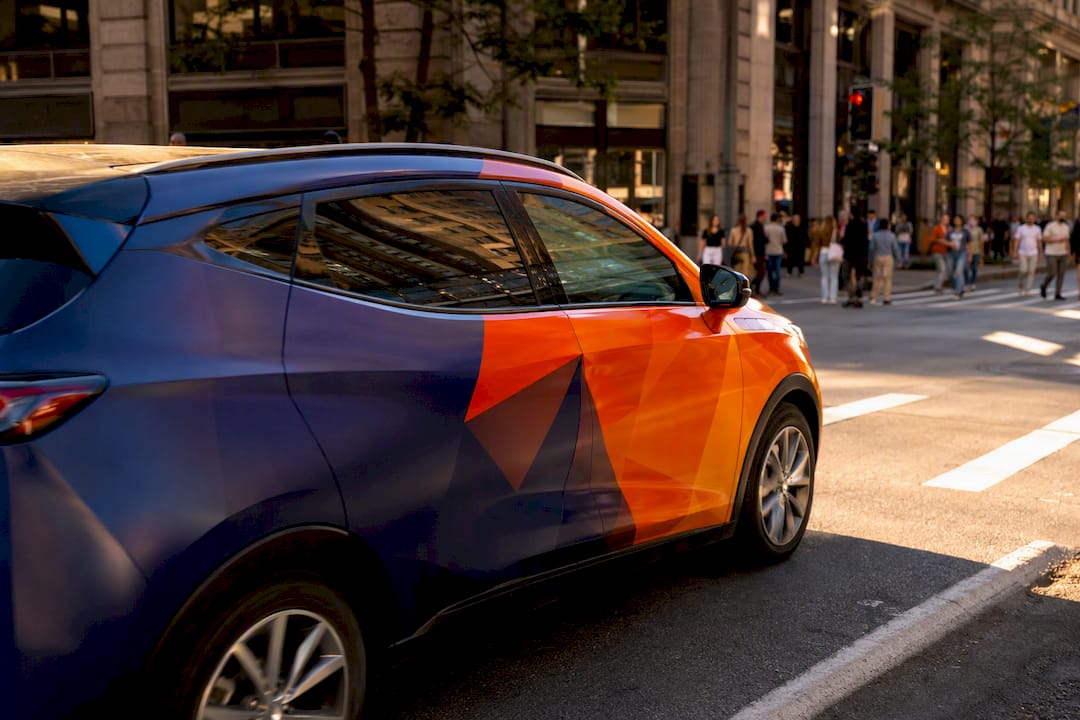
LED trucks and vehicle wraps get treated very differently by most municipalities. A dedicated LED billboard truck is often regulated as a mobile sign, while a wrapped rideshare car doing normal passenger trips usually is not, at least while it’s moving. Park that same wrapped car for hours in one spot, though, and some cities reclassify it as a stationary sign subject to standard sign permits.
- Brightness and motion are usually capped separately from size.
- Content restrictions (alcohol, adult content, political ads) often apply regardless of device type.
- Wraps face fewer restrictions than dedicated billboard trucks in most jurisdictions.
Pro Tip: Ask any vendor for the device’s actual test certificate, not just a spec sheet. “MIL-STD-810G compliant” claimed in a sales deck means nothing without documentation you can hand to a city inspector.
How Local Rules Change From City To City
Rideshare advertising guidelines vary more by zip code than by platform, which is exactly why a national campaign needs a city-by-city verification pass, not a single blanket policy.
New York City is the strictest and best-documented example. Under Local Law 33 and Local Law 56, any company placing interior advertising in for-hire vehicles needs an Interior Advertising Provider License from the TLC, plus monthly reporting of gross ad revenue and driver payments. The TLC’s provider rule also mandates device approval and nondiscrimination protections for drivers who choose to opt out.
Florida took the opposite approach with CS/SB 1352, setting statewide device and safety standards that preempt a patchwork of city rules, trading local variation for predictable specs everywhere in the state.
California and most other states fall somewhere in between: some cities ban dedicated mobile billboard trucks outright while permitting wraps, and enforcement tends to target parking and standing behavior rather than the ad content itself. Before launch, verify the municipal code directly, call the local permit office or TLC-equivalent, and document every permit number and its expiration date. Our NYC mobile billboard rules guide breaks down that specific application process step by step.

Your Pre-Launch Compliance Checklist
Turning regulations into action means running through the same list every time, regardless of how many cities the campaign touches.
- Confirm permits and provider licenses. Record every permit ID, issuing agency, and expiration date in one shared document.
- Lock contract must-haves. Require compliance warranties, indemnity clauses, driver-pay/revenue-share terms where local law mandates them, data-use limits, and audit rights.
- Clear the creative. Check disclosure placement and wording, confirm banned content categories for that market, and verify brightness and motion limits for digital units.
- Vet the data plan. Demand privacy-preserving metrics only, refuse raw mobile advertising ID (MAID) exports, and get written vendor attestations that no data is sold tied to sensitive points of interest.
- Set operational controls. Require GPS and photo proof-of-posting, confirm insurance coverage, and set automated alerts for permit renewal dates.
Pro Tip: Build a single tracking spreadsheet with permit expiration dates across every market before your first truck rolls. Renewal deadlines are the single most common reason campaigns go dark mid-run, not creative disputes.
Privacy And Data Limits You Can’t Ignore
Precise location data is where rideshare advertising policies get genuinely risky, not just administratively tedious. The FTC’s complaint against data broker Kochava showed how MAID-linked, timestamped coordinates can reveal visits to sensitive locations, including places tied to health, religion, or immigration status, and how easily that data can end up resold in third-party feeds.
Practical rules to write into every vendor contract:
- Require aggregated visitor counts only, never point-of-interest-level reporting for sensitive categories.
- Use hashed or aggregated audience segments for retargeting, never raw device identifiers.
- Age-gate or exclude inventory with any reasonable chance of reaching children under 13, per COPPA.
- Get a documented data retention and deletion schedule in writing, not a verbal assurance.
Contract Clauses And Vendor Due Diligence
The contract is where compliance either gets enforced or quietly disappears. Essential clauses include a permit and compliance warranty, indemnity language, content and IP approval rights, driver-pay or revenue-share terms where local law requires them, data-use restrictions, audit rights, and clear insurance minimums.
Deliverables worth requiring in every statement of work: GPS-tagged proof-of-posting photos, route logs, aggregated visit-lift reporting, and full attribution analytics tied back to campaign goals. Standard reporting can include route customization, geofencing, and smart QR code lead capture, so clients receive documentation rather than just a vendor’s word.
- Ask for device testing certificates, not marketing claims.
- Request the vendor’s written privacy policy for any data vendor in the supply chain.
- Ask for sample campaign reports showing proof-of-posting and attribution format before signing.
Pro Tip: If a vendor can’t produce a sample compliance report before you sign, assume they don’t generate one after you sign either.
Measuring Results Without Adding Legal Risk
Good measurement and legal exposure don’t have to trade off against each other. Proof-of-posting should arrive as GPS-tagged, timestamped photos with route logs, on a set cadence, alongside driver-pay reporting anywhere revenue-share rules apply.
For campaign impact, insist on aggregated visit-lift metrics rather than raw device-level data, and never accept a MAID list as a deliverable. Add automated alerts for permit expiration, routine QA on device brightness and orientation, and a weekly compliance summary. Keep records long enough to survive an audit, then delete consumer-level identifiers on a fixed schedule. Our breakdown of rideshare advertising ROI covers how to structure visit-lift reporting that satisfies both finance and legal.

Where Rideshare Advertising Rules Are Headed
Expect more state-level standardization bills modeled on Florida’s approach, paired with continued patchwork city rules everywhere else. Courts have already pushed back on overly broad municipal bans, as seen in Vugo v. City of New York, so the legal landscape stays genuinely unsettled. Budget real permitting lead time, favor vendors who document proof-of-posting as a matter of course, and treat privacy assurances as a contract term, not a sales pitch.
— Scott
Run Your Next Campaign Without The Permit Guesswork
Every requirement covered here, permit verification, disclosure placement, privacy-safe data handling, proof-of-posting, is exactly what a marketing team should demand from any out-of-home vendor before signing. These checks can be incorporated into campaigns: route customization and geofencing help keep creative targeted, smart QR codes can handle lead capture without exposing raw device data, and GPS-and-photo proof-of-posting provides documentation rather than promises.

If you’re weighing wrapped rideshare cars against LED mobile billboards for an upcoming launch, start with a campaign quote and ask directly for compliance documentation and sample attribution reports before committing a budget. Visit Beacon-ads to request proof-of-posting samples and a quote scoped to your target cities.
Sources
FTC Endorsement Guides | NYC TLC in-vehicle advertising rules | Florida SB 1352 analysis | LegalClarity mobile billboard laws | FTC Consumer Reviews and Testimonial Rule
- Consumer reviews & testimonials rule: Q&A | Federal Trade Commission
- Interior advertising in for-hire vehicles — NYC Taxi and Limousine Commission
- Mobile billboard and vehicle advertising laws and permits | LegalClarity
- BILL ANALYSIS AND FISCAL IMPACT STATEMENT — CS/SB 1352
FAQ
Do I Need A License To Run Rideshare Ads In NYC?
Yes. Any company placing interior advertising in for-hire vehicles in New York City needs an Interior Advertising Provider License from the TLC, along with monthly revenue and driver-pay reporting.
What Disclosure Language Do FTC Rules Require?
Disclosures must be clear, conspicuous, and in language a viewer can’t miss, per the FTC’s Endorsement Guides. Simple labels like “Ad” or “Paid Partnership” satisfy this; vague terms like “collab” typically don’t.
Are LED Truck Rules The Same As Rules For Wrapped Cars?
No. Municipalities generally regulate dedicated LED billboard trucks more strictly than vehicle wraps, since a moving wrapped car doing rideshare trips is treated differently than a truck built solely to display ads.
What Happens If My Data Vendor Sells Precise Location Data?
That practice created real legal exposure in the FTC’s action against data broker Kochava, where timestamped MAID data revealed visits to sensitive locations. Require aggregated, hashed data only and put it in writing.
How Much Does A Compliant Rideshare Ad Campaign Cost?
Pricing depends on market, vehicle count, and campaign length, so current rates are available directly through Beacon-ads. Our rideshare advertising cost guide walks through sample budget ranges by campaign type.