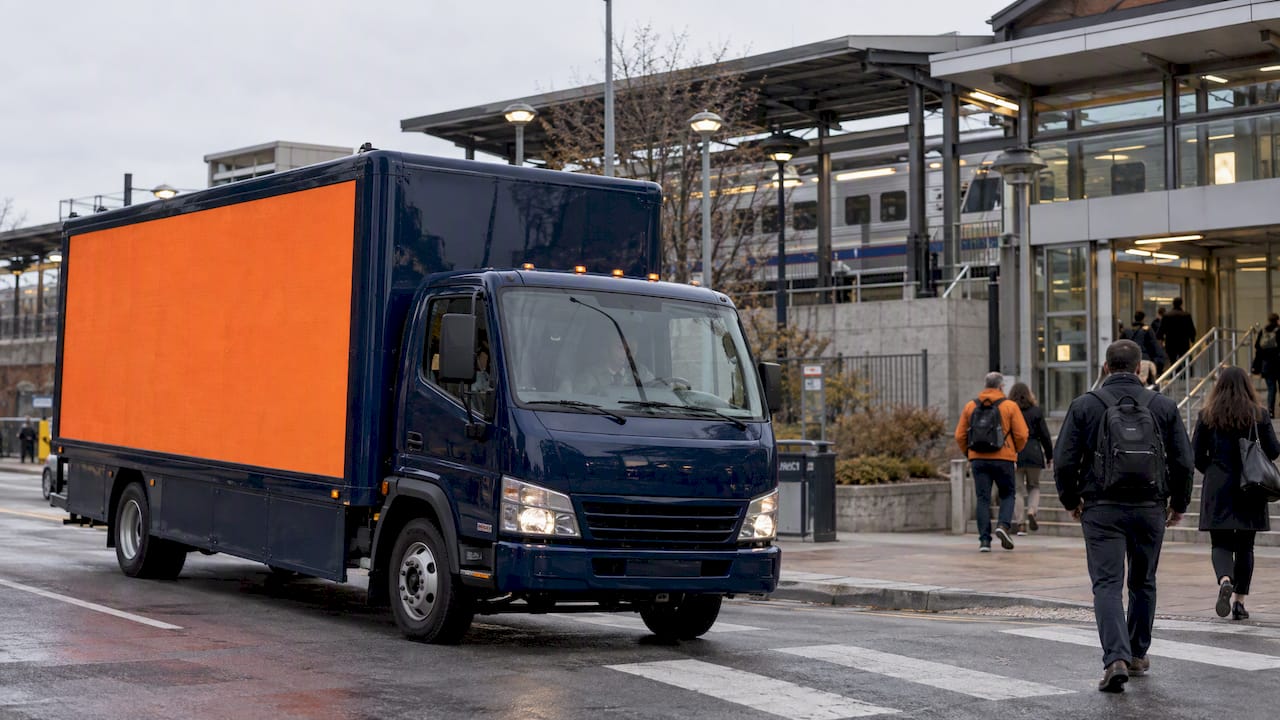
Choose Display & Video 360 (DV360) if your measurement already runs on Google tools and you want YouTube inventory. Choose The Trade Desk if you want an independent platform, open-web reach and log-level data. Both are demand-side platforms (DSPs), meaning software that lets advertisers buy digital ad impressions across many sites and apps. Neither puts a message in front of people at a specific trade show hall, stadium entrance or city block. For that, marketers pair a DSP with physical out-of-home media, such as the LED mobile billboards and wrapped rideshare vehicles we run at Beacon Mobile Media across all 50 states.
TL;DR
- DV360 is Google’s enterprise DSP. It fits teams that already use Google’s analytics and ad stack and want YouTube and Google Ad Manager inventory.
- The Trade Desk is an independent DSP with broad open-web, connected TV and digital out-of-home (DOOH) access, plus log-level reporting.
- Neither publishes a simple price list. Fees are a percentage of media spend, and industry estimates put practical minimums in the tens of thousands of dollars per month.
- Both buy digital screens and impressions. A local launch, trade show or event push also needs physical presence and scan-level data, which is where mobile OOH with geofencing and QR codes comes in.
Table of Contents
- What each platform is
- DV360 vs The Trade Desk at a glance
- Inventory and targeting
- Fees, minimums and access
- Reporting and measurement
- How big each platform is
- Which one should you pick?
- Where DOOH, local campaigns and events fit
- Our perspective
- Add mobile OOH to your plan
- FAQ
- Sources
What each platform is
The Trade Desk describes itself as a demand-side platform that does not own or operate media. It connects buyers to providers of data, measurement, brand safety and inventory. Its self-serve platform covers planning, executing and measuring programmatic campaigns, with identity solutions such as Unified ID 2.0, an industry identifier built on hashed emails that stands in for third-party cookies.
Google’s help center says Display & Video 360 helps teams design creatives, organize audience data, buy inventory and optimize campaigns. It is organized around five modules: Campaigns, Audiences, Creatives, Inventory and Insights. It sits inside Google Marketing Platform, Google’s suite for enterprise advertisers.
One question comes up often: is The Trade Desk an ad exchange? No. An exchange is a marketplace where publishers offer impressions. A DSP is the buyer’s tool that bids in those marketplaces. Both DV360 and The Trade Desk are on the buying side.
DV360 vs The Trade Desk at a glance
| Factor | DV360 | The Trade Desk |
|---|---|---|
| Owner | Independent, publicly traded | |
| Signature inventory | YouTube, Google Ad Manager, open exchanges | Open web, CTV, audio, native, DOOH across many exchanges |
| Identity and data | Google first-party signals, Customer Match, Google Ads remarketing lists | Unified ID 2.0, data partners, first-party data activation |
| AI bidding | Google AI custom bidding | Kokai and Koa |
| Fees | Percentage of media spend, contract-based | Percentage of media spend, reported near 20% |
| Best fit | Teams standardized on Google’s measurement stack | Teams wanting a vendor-neutral stack and deeper data access |
The rows below the table explain where each difference matters.
Inventory and targeting
Inventory. DV360 reaches Google Ad Manager inventory directly, including preferred deals and programmatic guaranteed buys, plus YouTube. The Trade Desk aggregates supply across many exchanges. According to its omnichannel page, that spans audio, connected TV, display, DOOH, mobile, native and video. A practical rule: if YouTube is central to your plan, DV360 is the natural home. If you want the widest open-web and CTV spread outside Google, The Trade Desk is.
Targeting. On DV360, you can build audiences from CRM lists through Customer Match, in-market segments, and Google Ads remarketing lists, with geo targeting down to postal codes. The Trade Desk leans on Unified ID 2.0, data partnerships and its own first-party activation tools. Neither tells you who stood in front of your booth. Both work from online signals and modeled audiences.
Automation. Both lean on machine learning. DV360 offers custom bidding on Google AI, and its API lets teams automate campaign management and creative uploads. The Trade Desk’s Kokai platform automates bids against real-time return signals. Agencies with in-house engineers tend to value the APIs. Smaller marketing teams tend to value how quickly a campaign can be set up and reported on.
Fees, minimums and access
This is where many marketing departments get stuck.
DV360. Google’s documentation says the DV360 fee is a percentage of media spend. There is a higher rate for open auctions, preferred deals and private auctions, and a lower rate for YouTube, Demand Gen and programmatic guaranteed deals. Line items buying impressions on app mediation partners carry an extra 18% fee. Access usually runs through a Google Marketing Platform contract and a sales conversation. One industry comparison puts a practical minimum near $50,000 per month in media spend.
The Trade Desk. The company charges a platform fee as a percentage of spend. Published estimates put it around 20%, and one 2026 analysis describes 20 to 22% at agency rates, negotiable at scale, with a practical floor similar to DV360’s. Platform access generally requires a buyer seat or an agency relationship.
Treat every one of these figures as an estimate. Exact commercial terms are customer-specific, and data and identity add-ons can push non-media costs above the headline percentage. Ask for a written fee schedule that separates media cost, platform fee and data fees before you compare.
A worked example shows why this matters for local work. Say your event budget is $40,000 across all channels for a four-week regional push. A platform with a $50,000 monthly practical floor does not fit that budget on its own, and digital impressions delivered anywhere in a metro area do not guarantee a view near your venue. Many event and local teams therefore buy through an agency, or put the money into media where location is built into the buy.

Reporting and measurement
The two platforms measure differently, and that decides how easily you can prove results.
- DV360 connects to Google Ads, GA4 and Floodlight conversion tracking. It offers scheduled reports and a native BigQuery path for teams that can analyze log-level data, per Improvado’s 2026 comparison.
- The Trade Desk emphasizes independent verification through partners such as DoubleVerify and IAS, plus reporting feeds and APIs for outside tools. Its brand lift study documentation shows reports sliced by age, gender and frequency.
If you run both, standardize five things before joining the data: report date and time zone, currency, cost basis (media only or with fees), one conversion definition and attribution window, and consistent campaign names. A viewability count from one platform cannot be compared with a rate from the other until you convert one to match.
Outside the DSP, clean campaign tagging does as much for your results as the platform choice. Consistent UTM tagging rules for GA4 keep traffic from showing up as unassigned, and our marketing measurement strategies list covers how to connect channels to outcomes. For the wider case for analytics-led budgets, see this piece on analytics and marketing ROI.
How big each platform is
Both are major players, and neither is a fringe choice. In Q1 2026, Google DV360, The Trade Desk, Yahoo and Amazon together handled about 85% of global programmatic spend. DV360 held roughly 41% and The Trade Desk roughly 31%, according to that report. The same report says The Trade Desk’s U.S. growth slowed to low single digits, and Amazon has been taking share.

The Trade Desk’s own numbers show the same pattern. It reported Q2 2026 revenue of $715 million, up 3% year over year. Its 2025 results showed $2.9 billion in revenue, up 18%. Across the whole market, U.S. programmatic advertising revenue reached $162.4 billion in 2025, up 20.5%, per the IAB and PwC. These figures move with each quarterly release, so check the live reports before a budget meeting.
Which one should you pick?
Use three questions.
- Where does your measurement live? If it is GA4, Campaign Manager 360 or Search Ads 360, DV360 gives you the tightest loop. If you run Adobe or a multi-cloud stack, The Trade Desk’s neutrality helps.
- Which inventory do you need? YouTube points to DV360. Broad CTV, audio and open-web supply from many sources points to The Trade Desk.
- Can you meet the spend threshold and staff the platform? Both are built for dedicated buyers or agencies. A small team with a single-market launch may not get value from a seat on either.
Where DOOH, local campaigns and events fit
Both platforms can buy digital out-of-home. The Trade Desk’s DOOH page lists audience-reach-based optimization, venue and geotargeting, omnichannel retargeting, and measurement through analytics and brand lift. DV360 also buys DOOH, and Google separates served impressions from publisher impressions, the latter using a publisher-provided estimate of viewers per play, as HawtAds’ evaluation guide explains.
That guide’s advice on vetting any DOOH buy is useful in either case: give every vendor your markets, dates, venue types, audience and budget, inspect sample coverage and screen photos, and run a pilot with fixed markets and outcomes.
A programmatic DOOH buy puts your ad on screens that someone else owns, in places those screens already exist. A trade show, conference or neighborhood launch has a different problem: you need to be at one address, on certain streets, in a particular window. Mobile OOH solves that, and it works well alongside a DSP. A few ways to combine them:
- Run the DSP for broad digital reach and retargeting. Use LED mobile billboards or wrapped rideshare cars for the physical moments the DSP cannot reach.
- Use geofencing around a venue to follow up digitally with people who were near your truck or your booth. Our guide to geofencing vs geotargeting explains when to use which.
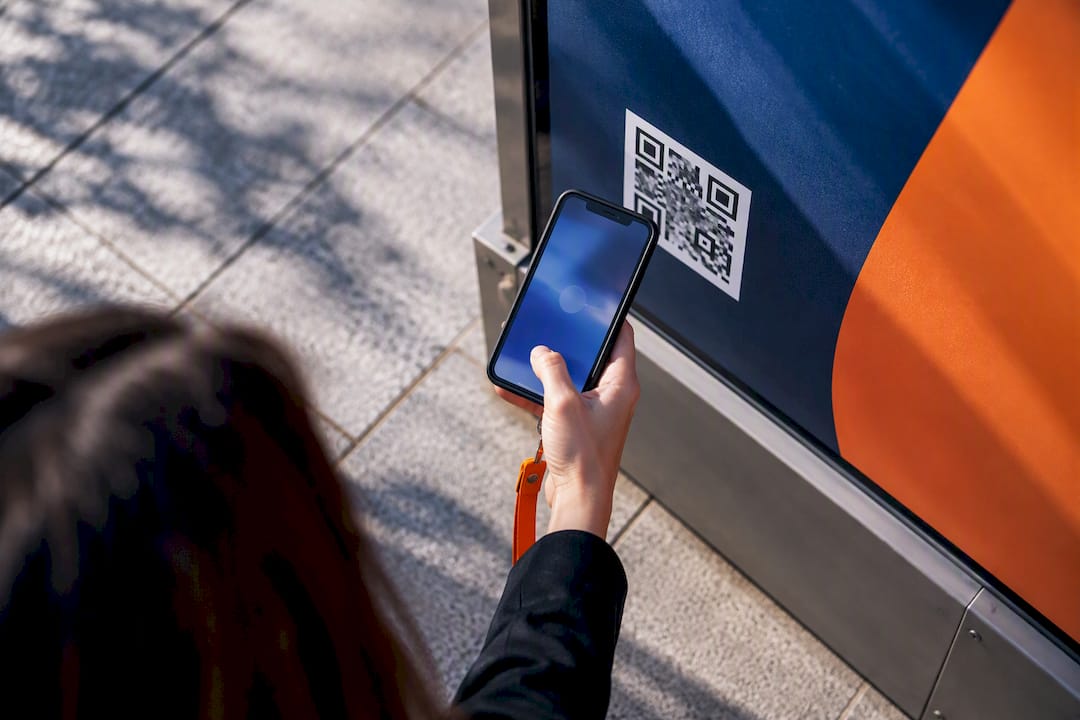
- Put smart QR codes on the creative so scans feed lead data straight to your team.
- Ask for proof-of-posting with GPS and photo tracking so the physical buy is as auditable as a digital log. Our precise reporting guide shows what to look for.
For a deeper look at the physical side, see our guides on targeting conferences and trade shows with LED mobile billboards and digital out-of-home strategies.
Our perspective
Most of the DSP debate is about who owns the pipes: Google or an independent. That matters for a team buying millions of impressions a month. It matters less when the question is how to make a specific neighborhood, venue or event notice you this month.
What we see in the way our service is built is a different kind of accountability. A mobile billboard runs routes you customize. Geofencing and real-time retargeting connect people near the truck to digital follow-up. A smart QR code captures data at the moment of interest. Proof-of-posting and attribution analytics let you show what ran and what it produced.
Our view is simple: pick the DSP your stack and budget justify, then add physical media where location is the whole point. The two work best together, and the reporting should tie back to one set of numbers.
Scott
Add mobile OOH to your plan
Beacon Mobile Media runs LED mobile billboards and wrapped rideshare vehicles on Uber and Lyft across all 50 states, with localized mixed media campaigns that combine them. Campaigns include route customization, geofencing, affinity and demographic targeting, real-time retargeting, smart QR codes, and reporting with proof-of-posting and attribution analytics. Our positioning rests on national coverage and short lead times.

If you are planning a conference, trade show or local launch alongside a programmatic buy, talk to Beacon Mobile Media about a campaign built around your venue, route and audience.
FAQ
Is DV360 or The Trade Desk better?
Neither wins on every count. DV360 suits teams already invested in Google’s analytics and YouTube. The Trade Desk suits teams wanting an independent platform with broad open-web and CTV supply and deeper data access. Your measurement stack, inventory needs and budget decide it.
What are the top DSPs in the U.S.?
The largest are Google DV360, The Trade Desk, Amazon DSP and Yahoo DSP. In Q1 2026, these four commanded about 85% of global programmatic spend, with DV360 and The Trade Desk far ahead.
Is DV360 better than Google Ads?
They serve different buyers. Google Ads is a self-serve tool for search, display and YouTube campaigns at any budget. DV360 is an enterprise platform with deeper inventory access, creative tools and reporting, typically bought through a Google Marketing Platform contract.
Can I run a trade show campaign through a DSP alone?
You can geotarget digital ads and buy DOOH screens near a venue. But a DSP does not place a billboard on the streets around the convention center or capture scans at the moment of interest. Many event marketers add mobile OOH with geofencing and QR codes to the digital buy.
Sources
- Our Demand Side Platform (DSP), The Trade Desk
- Display & Video 360 overview, Google Help
- Omnichannel advertising, The Trade Desk
- DV360 API, Google for Developers
- Partners in Display & Video 360, Google Help
- About the Display & Video 360 Fee page, Google Help
- Google DV360 vs The Trade Desk 2026, MediaPlanningTool
- The Trade Desk vs DV360, Improvado
- Getting started for brand lift study providers, The Trade Desk
- 3 UTM Tagging Rules to Stop GA4 Unassigned Traffic
- Why analytics in marketing drives better ROI in 2026
- DSP concentration report, PPC Land
- The Trade Desk Reports Second Quarter 2026 Financial Results
- The Trade Desk Reports Fourth Quarter and Fiscal Year 2025 Financial Results
- Internet Advertising Revenue Report, IAB and PwC
- Digital out-of-home advertising, The Trade Desk
- How to Evaluate a DOOH Platform, HawtAds