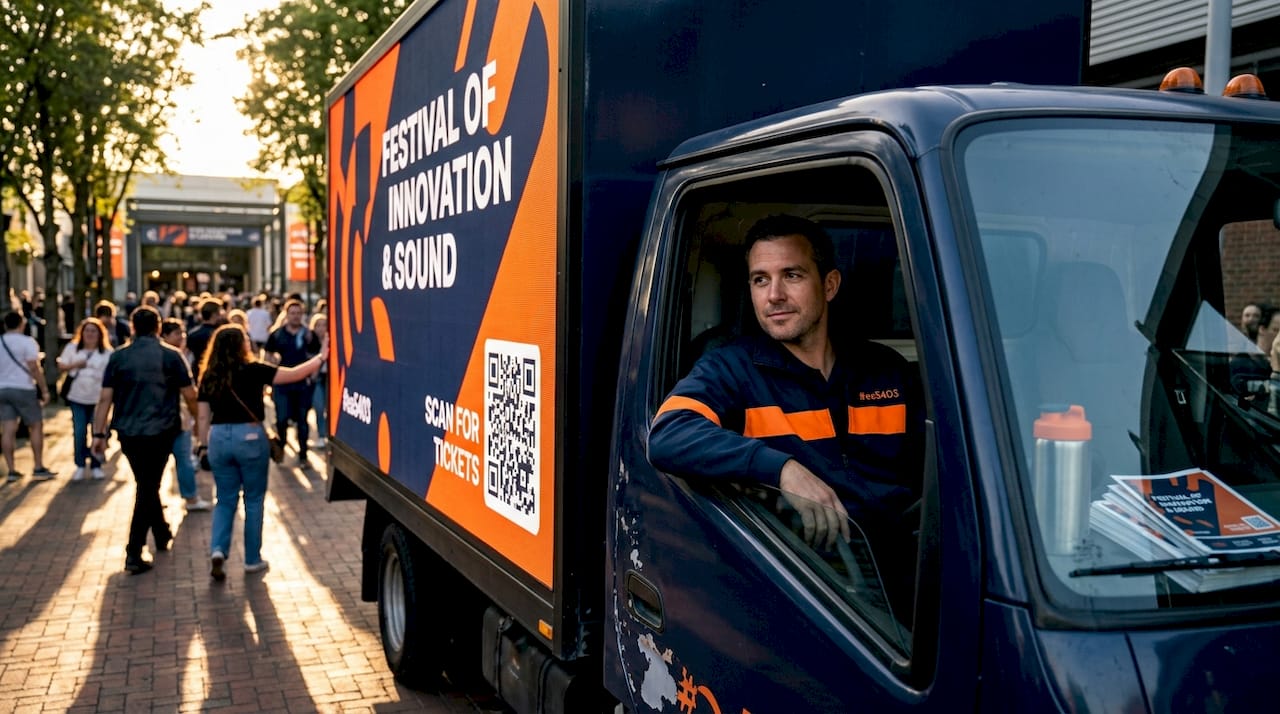
Run short OOH flights of 2 to 4 weeks for events, launches, and tightly targeted bursts, especially on DOOH and mobile LED. Medium flights of 1 to 3 months suit sustained promotions and mixed-format launches, while long flights of 3 to 6 months or more fit broad brand campaigns on static inventory built for reach. The choice always depends on objective, media type, and how you plan to measure results, not on duration alone.
TL;DR:
- Shorter flights of 2 to 4 weeks are ideal for event-driven campaigns like product launches and store openings, where timing and audience are fixed.
- Medium flights of 1 to 3 months suit sustained promotions involving multiple media, with the flight length determined by KPI and media type.
- Longer campaigns of 3 to 6 months or more work best for static inventory aimed at broad brand reach, but actual effectiveness depends on dwell time and viewability metrics.
- Different media types require tailored planning: static billboards need longer minimum durations, while DOOH and mobile LED are flexible with shorter, event-focused bursts.
- Duration alone does not ensure success; measurement of viewable impressions, dwell time, and digital actions is essential, with diminishing reach after most of the target audience has seen the ad.
Table of Contents
- Matching flight length to your campaign objective
- Static, transit, DOOH, and mobile LED each demand a different flight
- Why duration alone doesn’t prove a campaign worked
- Creative fatigue and how to test before committing
- Production timelines that set your real minimum flight
- How Beacon Mobile Media plans flights around these rules
- Choosing duration when budget and timeline conflict
- Run shorter, sharper flights with measurable results
- Where to check the standards behind this guidance
- Sources
- FAQ
Matching flight length to your campaign objective
Every out of home flight should start with a KPI, not a calendar date. Awareness campaigns lean on reach and gross rating points, activation campaigns track visit lift, and direct response campaigns count digital actions like site visits or QR scans.
Once you know the KPI, the flight length becomes a planning input rather than a guess.
- Short (2 to 4 weeks): best for product launches, store openings, conferences, and event-tied promotions where the audience and timing are fixed.
- Medium (1 to 3 months): fits sustained promotions, seasonal pushes, and product launches that need repeat exposure across a mixed media plan.
- Long (3 to 6+ months): works for brand-building campaigns on static inventory, where the goal is cumulative reach across a market over time.
Lookback and attribution windows should follow the same logic. A direct response campaign tied to a short sales cycle might use a 7 to 14 day lookback, while a brand campaign with a longer consideration cycle can justify a 30 to 60-day window. The MRC’s outcomes and data quality standards call for disclosing the methodology behind any extended lookback window, which matters when you are reporting results to a client or internal stakeholder. Matching the KPI, the flight, and the lookback window keeps the whole plan defensible.
Static, transit, DOOH, and mobile LED each demand a different flight
Media type changes what “long enough” actually means. A billboard lease and a programmatic DOOH slot operate on completely different clocks, and treating them the same is where a lot of media plans go wrong.
- Static billboards typically require longer minimums because production and installation costs are fixed regardless of flight length, and lease terms are often built around multi-month blocks.
- Transit and street furniture rely on repeat exposure to the same commuters, so multi-week to multi-month runs tend to outperform anything shorter than a few weeks.
- DOOH and programmatic inventory can run for any length because creative swaps happen in real time. In H1 2025, 15-second video units made up 62% of programmatic video campaign spend, which is a creative-length figure, not a campaign flight length. This distinction matters when you’re setting a budget: the ad unit runs for seconds, while the campaign around it can run for days or months.
- Mobile LED trucks and wrapped vehicles work well as short, event-aligned bursts of a few days to a few weeks, though they can also run multi-week flights when the goal is sustained coverage across several neighborhoods.
The programmatic OOH momentum report also notes that rapid creative swaps let planners pilot micro-bursts tied to a trade show or product drop, then scale up only after seeing early results.
Why duration alone doesn’t prove a campaign worked
Reach counts the unduplicated people exposed to your campaign, while frequency counts how many times each of them saw it. Extending a flight almost always raises frequency faster than it raises reach, because the same commuters and drivers pass the same static panels every day.
The MRC’s final combined OOH standards state that duration is a descriptive metric, not proof of effectiveness on its own. The standards instead point planners toward viewable impressions and dwell time, meaning how long a panel or screen was actually visible and for how long an audience member was near it. A four-week flight with strong dwell time and viewable impressions can outperform a twelve-week flight where half the panels sit in low-traffic corridors.
This is also where diminishing returns show up. Reach growth flattens once most of a market’s regular commuters have already been exposed, so additional weeks mostly add frequency to people who already saw the ad. The practical move is to translate exposure into a measurable action, whether that’s a geofenced visit lift or a digital action like a site visit or app open, and to size the lookback window to the sales cycle rather than to the flight length.

Creative fatigue and how to test before committing
Creative fatigue sets in faster on high-frequency inventory than on low-frequency inventory, since the same people see the same message more often. A panel on a daily commute route wears out its creative faster than a billboard on a highway most drivers pass once.
- Track impression density by location and treat repeated exposure to the same audience as your fatigue clock, not the calendar.
- Refresh DOOH creative every 1 to 2 weeks for event-driven campaigns, since swapping is fast and cheap on that inventory.
- Refresh static creative every 6 to 12 weeks unless you’ve placed a multi-creative buy that rotates automatically.
- Run a pilot before committing budget: two 2 to 4 week geofenced bursts in adjacent but non-overlapping ZIP clusters, same creative, comparing visit lift and digital actions.
- Track QR code engagement as a leading indicator; a drop in scan rate over consecutive weeks often signals fatigue before visit lift data catches up.
Pro Tip: Run the pilot in the smallest market that still gives you a clean read, then scale the winning creative and flight length together.
Production timelines that set your real minimum flight
Every flight length runs into a practical floor set by production and permitting. Static billboards often need weeks of lead time for printing and installation, and permit windows on some transit and street furniture inventory can add more time before a flight can even start. Vehicle wraps have their own install and removal windows that need to be scheduled around the flight dates, not treated as an afterthought.
- Confirm creative production deadlines against the earliest possible install date, not the flight start date.
- Check minimum buy lengths for the specific media type before promising a client a short flight.
- Build in a buffer for permit approval on transit and street furniture inventory.
- Schedule vehicle wrap install and removal as separate line items in the production calendar.
How Beacon Mobile Media plans flights around these rules
Mobile LED billboards and wrapped rideshare vehicles are built for the short, measurable bursts this guidance points toward. Route customization and geofencing let a campaign target a conference, a stadium event, or a specific set of neighborhoods for a few days or a few weeks, while smart QR codes capture leads directly from the exposure and attribution reporting ties the flight back to visits and actions.
- Route customization aligns the vehicle’s path with the event or audience window.
- Geofencing and affinity targeting narrow exposure to the audience segments that matter.
- Smart QR codes turn a scan into a trackable lead.
- Proof-of-posting and attribution reporting document what ran and what it produced.
| Planning step | What it determines |
|---|---|
| Objective | Which KPI and flight range apply |
| Media mix | Static, transit, DOOH, or mobile LED |
| Pilot | Short geofenced test before scaling |
| Flight length | Set from pilot data, not assumption |
| Cadence | Creative refresh schedule during the flight |
| Measurement | Reach, dwell time, visit lift, digital actions |
Choosing duration when budget and timeline conflict
Pick the media type before the flight length, since a static billboard and a mobile LED truck operate on entirely different clocks. Trust pilot data over assumptions about what “should” work, and refresh the creative before extending the flight if fatigue, not reach, is the real problem.
A common conflict: a client wants six months of static coverage but only has budget for three. The fix is usually a shorter, denser flight on higher-traffic panels rather than a diluted long flight across weaker ones.
— Scott
Run shorter, sharper flights with measurable results
Some mobile media companies build campaigns around short, targeted bursts, using LED mobile billboards and wrapped rideshare cars with route customization, geofencing, and smart QR code capture features.

- LED mobile billboards for event-tied and conference-targeted flights.
- Wrapped rideshare cars for sustained coverage across specific neighborhoods.
- Route customization and geofencing to concentrate exposure where it counts.
- Attribution reporting and proof-of-posting to help document campaign delivery and outcomes.
Visit Beacon-ads to plan a pilot flight or talk through the right flight length for your next campaign.
Where to check the standards behind this guidance
- MRC’s combined OOH standards define ad-unit length, loops, and dwell time measurement.
- OAAA’s record revenue report confirms continued advertiser investment in the medium.
- The Silverado programmatic case study shows a multi-month, zip-targeted flight driving brand lift.
- Audience engagement strategies connect OOH exposure to downstream digital actions.
Sources
- Programmatic OOH shows continued momentum in H1 2025 — OAAA
- MRC publishes final combined Out-of-Home Standards (press release)
- Out of home advertising revenue reaches record $9.46 billion — OAAA
FAQ
Is OOH still relevant for advertisers today?
Yes. Out of home advertising revenue reached a record $9.46 billion in 2025, up 3.6% year over year, showing sustained advertiser investment in the medium.
What is the 3-3-3 rule in marketing?
Definitions vary across marketing disciplines, and this article’s sources don’t define a 3-3-3 rule specific to OOH campaign duration. Planners are better served applying the objective-led ranges in this guide, short flights of 2 to 4 weeks, medium of 1 to 3 months, and long of 3 to 6 months or more.
What is the 40-40-20 rule in marketing?
This rule is commonly discussed in direct marketing circles as a split between audience, offer, and creative, but it isn’t addressed in the OOH-specific sources behind this article. It isn’t a duration framework, so it shouldn’t guide flight length decisions for out of home campaigns.
What does the 70:20:10 rule mean in advertising?
The 70:20:10 rule typically refers to budget allocation across proven, adjacent, and experimental tactics rather than campaign duration. It isn’t covered in the measurement standards or industry reports behind this guide, so treat it as a separate budgeting framework rather than an OOH flight-length rule.
How long should a DOOH campaign run compared to its ad units?
A DOOH campaign flight and its ad-unit length are two different things: the campaign can run for days or months while the video or image creative itself runs for seconds. In H1 2025, 15-second units accounted for 62% of programmatic video spend, which describes creative length, not how long the surrounding campaign flight should run.